
By Dr. Kim Narae · 2026.10.08
The back of the head is fine, but only the crown and the M-shaped areas are affected
Androgens are the biggest cause of hair loss. Yet on the same scalp, the back of the head is fine, while only the crown and the M-shaped areas show hair thinning and falling out. Also, depending on the case, the effects of anti-androgen treatment differ. Today, through a paper published in a leading international dermatology journal (Journal of Investigative Dermatology), let us look at how sensitive the dermal papilla cells in the hair loss area are to oxidative stress.
Reactive oxygen species and oxidative stress
Our bodies produce reactive oxygen species, which are toxic substances, due to stress, fine dust, ultraviolet rays, irregular lifestyle habits, and so on. In appropriate amounts, reactive oxygen species are actually important for physiological functions. They are needed for immune responses that attack and eliminate bacteria or viruses that invade from outside, and they transmit signals between cells to help tissue repair. However, when reactive oxygen species are in a state of excessive oxidative stress, they attack normal cells and even DNA, causing systemic inflammation and cell damage.
Hair loss area cells that are vulnerable to oxidative stress
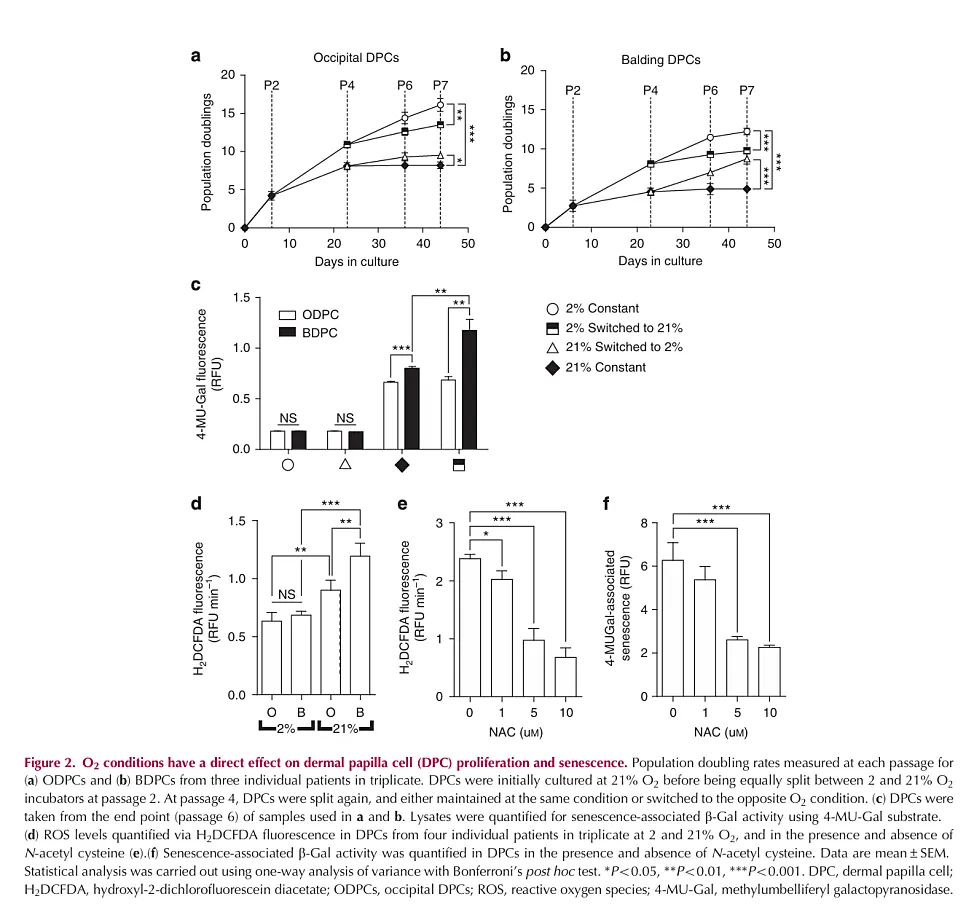
When the research team compared cells from the back of the head of hair loss patients with cells from the hair loss area, the dermal papilla cells of the hair loss area were found to be much more vulnerable to external stimuli such as reactive oxygen species and easily damaged. While back-of-head cells are relatively resistant to oxidative stress, hair loss area cells were damaged by even small amounts of oxidative stress and stopped dividing.
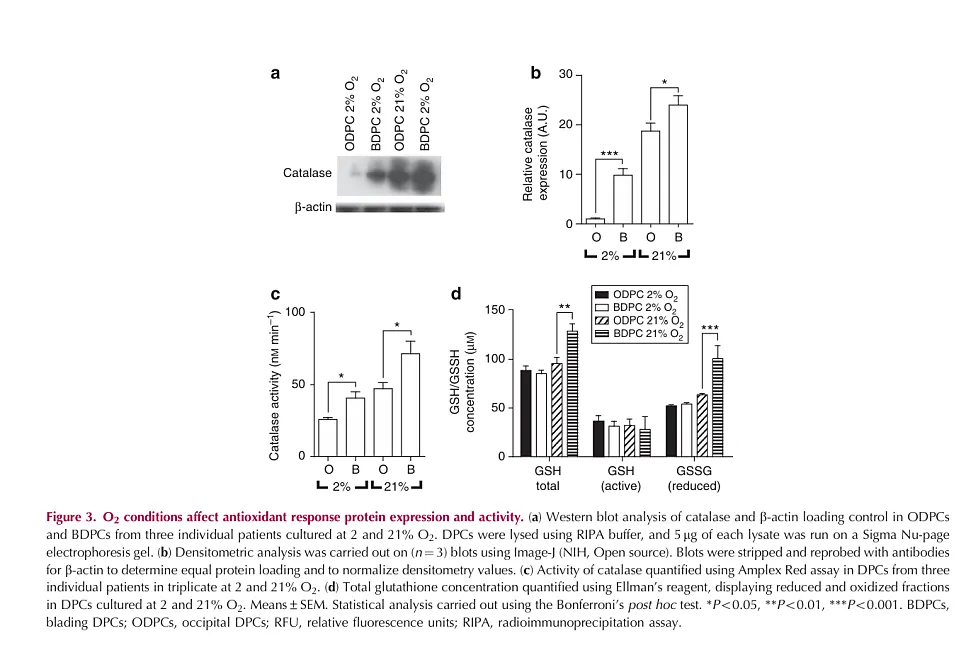
Why is there this difference? The study attributes it to a difference in the cells' antioxidant capacity. Our bodies have an antioxidant enzyme called catalase, which converts reactive oxygen species into harmless water. According to the paper's findings, cells in the hair loss area secrete much less of this catalase than cells from the back of the head, and their intracellular antioxidant (GSH) levels were also kept low. In other words, their ability to protect themselves appears weak.
A comprehensive approach to creating a healthy antioxidant environment
Dermal papilla cells in the hair loss area are vulnerable to harmful oxidative stress because, in addition to genetic and hormonal factors, their own antioxidant defense system is weak. Ultimately, for the treatment and prevention of male-pattern hair loss, a comprehensive approach is most important: not only controlling androgen hormones, but also reducing oxidative stress within scalp cells and creating a healthy antioxidant environment. Through regular lifestyle habits and appropriate scalp care, I hope you will keep the dermal papilla cells, the roots of your hair, healthy.
Reference: Upton, F. M., et al. (2015). Oxidative Stress Induces Premature Senescence in Dermal Papilla Cells Isolated from Male Pattern Baldness. Journal of Investigative Dermatology, 135(5), 1383–1390.


