
By Dr. Kim Narae · 2026.08.22
Various ways to reduce the space on the face
"Yeobaek-ui mi" (the beauty of empty space) refers to an aesthetic restraint in which emptiness lets people imagine more. However, just as anything taken to excess becomes poison, on an East Asian face, wide empty space can make the face look larger and older.
Representative treatments for reducing this facial space include mid-face lifting using ultrasound (HIFU) or radiofrequency (RF) devices, and reducing the volume of a square jaw with Botox. Surgical options that are effective include facial contouring surgery and chin surgery, and forehead reduction or cheekbone reduction may also be considered to reduce the space in the upper or middle face.
Hairline correction surgery to reduce the side space on the face
The part I want to focus on today is hairline correction surgery, the method for effectively reducing the horizontal or side space on the face that runs from the temples and the outer corners of the eyes down to ear level.
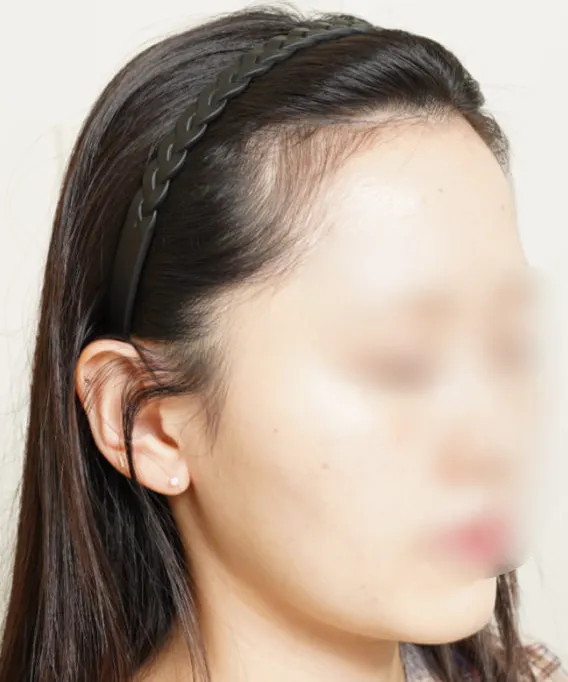
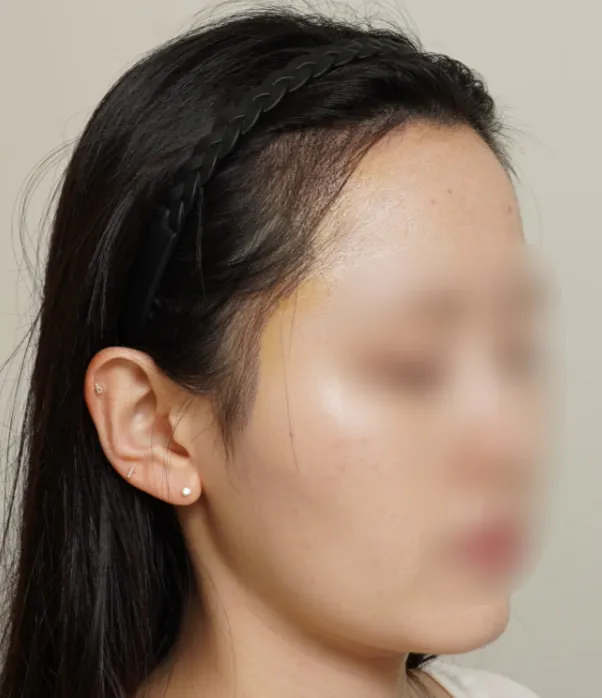
Horizontal space that matters for East Asians
This horizontal space has a particularly important meaning for East Asians. For Westerners, whose heads are narrow from side to side and long from front to back, this space is hardly noticeable. In contrast, many East Asian skulls are wide on both sides and flat from front to back (commonly called "side-wide" skulls), so the horizontal space visible from the front can make the face look larger and older than it really is.
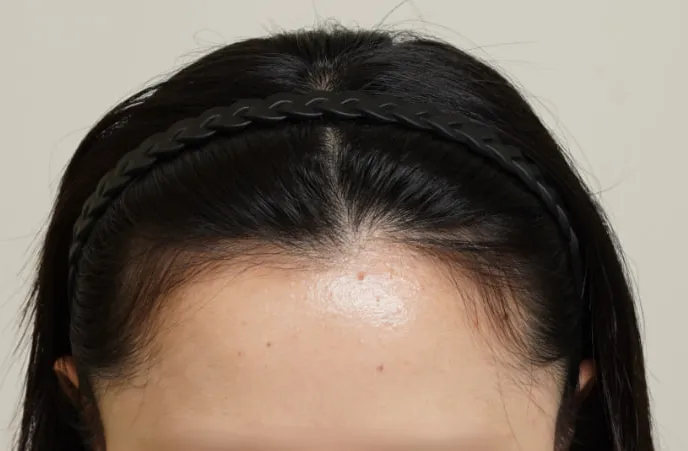
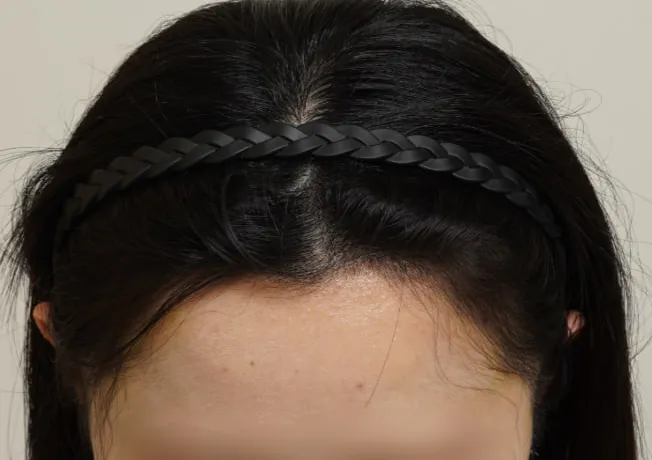
Reducing it is not always the right answer
However, reducing this space without thought is not the only right answer. If the overall balance of the face is not considered and the reduction is excessive, the result can actually look unnatural. Only by narrowing the space gradually, in line with the proportions of your own facial features, while keeping natural hair density and a three-dimensional design even after hairline correction, can you finally complete a smaller and more beautiful face shape.
※ Side effects such as pain, swelling, inflammation, bleeding, and infection may occur after a hair transplant.
※ All photos on this blog are used with the patient's consent.


