By Dr. Kim Narae · 2026.08.18
Early hair loss may be about more than hair volume
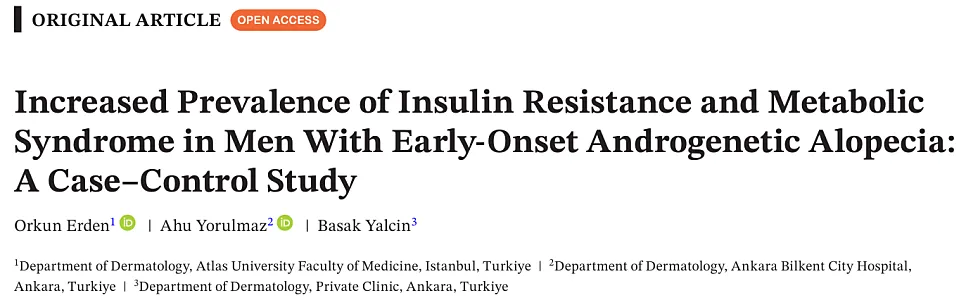
Male pattern hair loss that begins in one's 20s may not be simply a matter of hair volume, it is said. According to a study published recently in the Journal of Cosmetic Dermatology (2025), early-onset male pattern hair loss may be a signal of a metabolic problem in the body.
A study of 200 adult men
This study involved 200 adult men aged 18 to 35. Of these, 100 had early-onset hair loss, and the remaining 100 were a control group without hair loss. With age and body mass index (BMI) matched as closely as possible, the researchers investigated how early male pattern hair loss is associated with insulin resistance and metabolic syndrome.
4.5 times the risk of insulin resistance
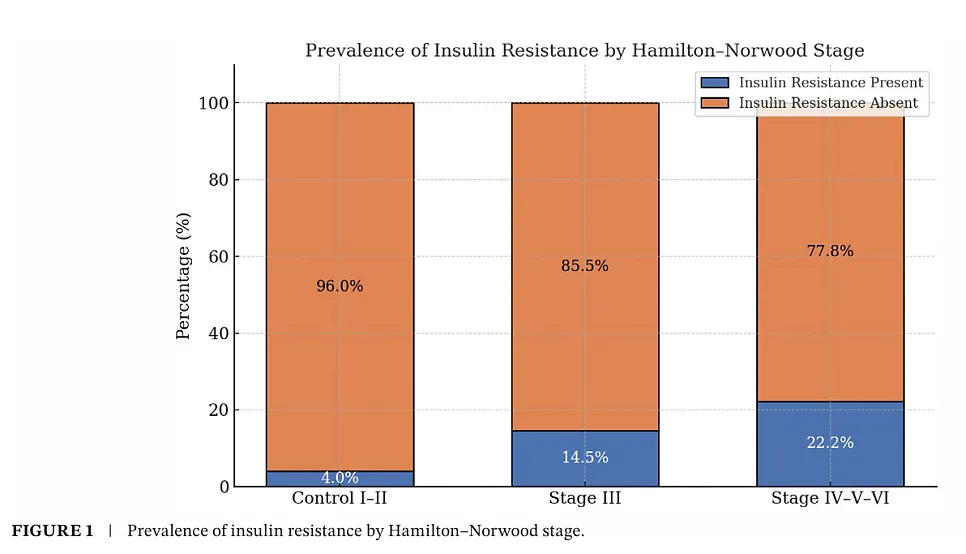
The study found that the group with hair loss had 4.5 times the risk of insulin resistance compared with the control group. In addition, as the stage of hair loss became more severe, the proportion of patients with insulin resistance rose sharply. The rate of insulin resistance was 4% in the control group, compared with 14.5% in the early hair loss group and 22.2% in the progressive hair loss group.
The proportion accompanied by metabolic syndrome was also more than twice as high in the hair loss group. Metabolic syndrome is diagnosed when three or more of the following are present: abdominal obesity, high blood pressure, high blood sugar, high triglycerides, or low HDL cholesterol. In particular, waist circumference was significantly larger in the hair loss group.
Why insulin worsens hair loss
The researchers explain that elevated insulin levels both promote the action of DHT, the hormone involved in hair loss, and impair microcirculation around the hair follicles. In addition, low-grade inflammation in the body, triggered by abdominal fat and other sources, further accelerates insulin resistance and follicle shrinkage, worsening hair loss.
Whole-body metabolic health to protect along with your hair
In conclusion, male pattern hair loss that progresses at a young age may be a sign that something has gone wrong with the body's insulin metabolism.
Of course, depending on genetic factors, treatment with anti-androgen drugs should remain the main approach. But it is important to check fasting blood sugar, insulin, and triglyceride levels at regular health checkups and blood tests, and to protect not only your hair but also your whole-body metabolic health through a healthy diet and regular exercise.
Also, although I have only mentioned male pattern hair loss, in women too, hair loss that progresses from a young age with polycystic ovary syndrome is also caused by increased insulin resistance. Because insulin resistance accelerates hair loss in both men and women, please do not forget the importance of improving your lifestyle habits.
References: Erden O, et al. Increased Prevalence of Insulin Resistance and Metabolic Syndrome in Men With Early-Onset Androgenetic Alopecia: A Case-Control Study. J Cosmet Dermatol. 2025;24(12):e70458