By Dr. Kim Narae · 2026.07.30
Patients visiting for forehead reduction scars
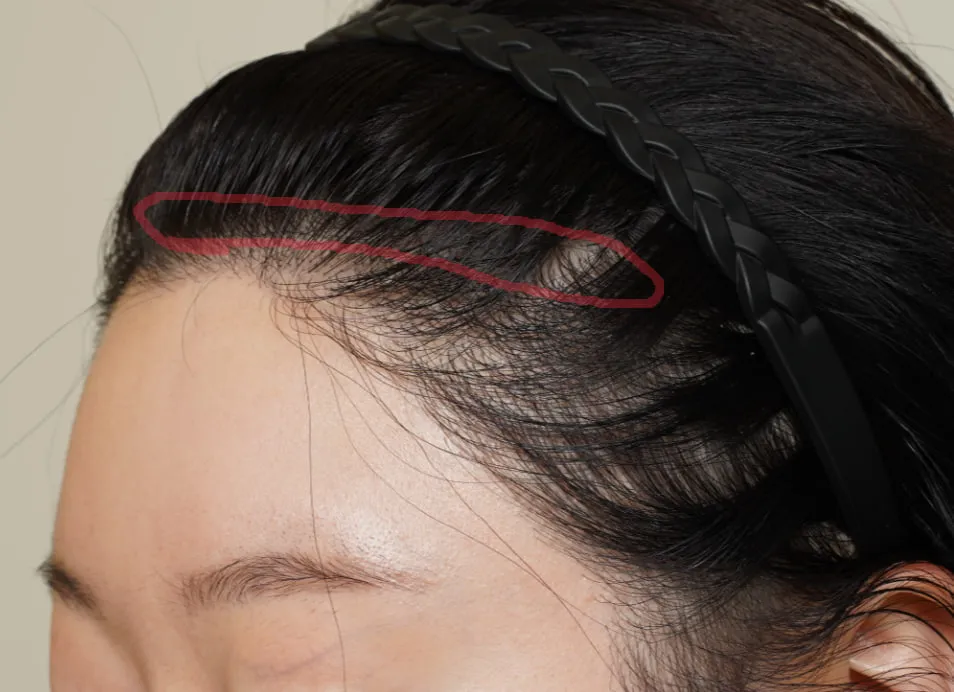
Many people who visit for hairline correction have scars at the transplant area from previous surgery. In particular, I often see cases where the forehead reduction performed to address a broad forehead left a noticeable scar running across the forehead.
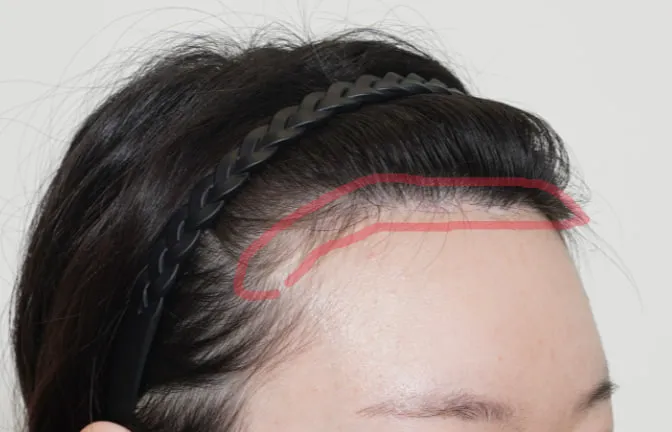
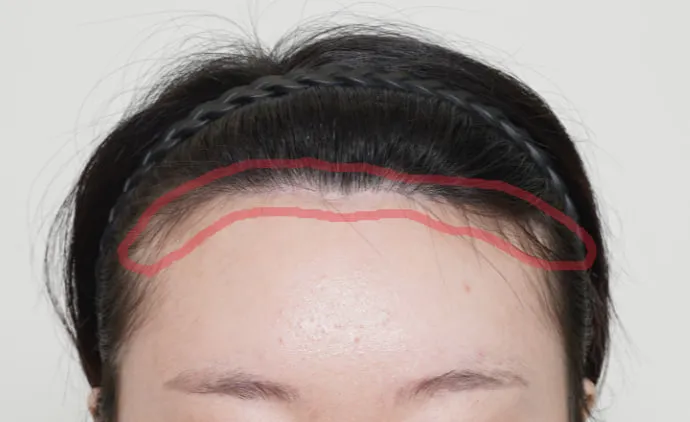
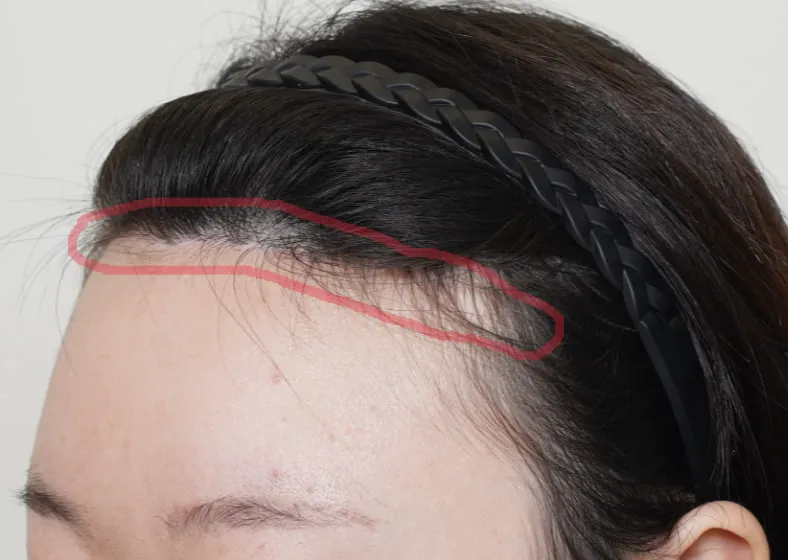
Looking at the main types of visits, there are three. First, those who have already had forehead reduction but want to lower the forehead a bit more. Second, those whose hypopigmented scar across the forehead stands out. Third, those whose scar itself is not very bothersome but who want to refine the hairline to look more feminine.
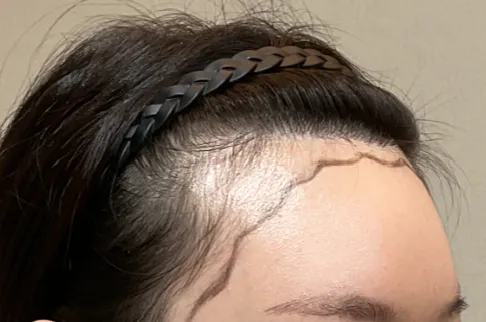
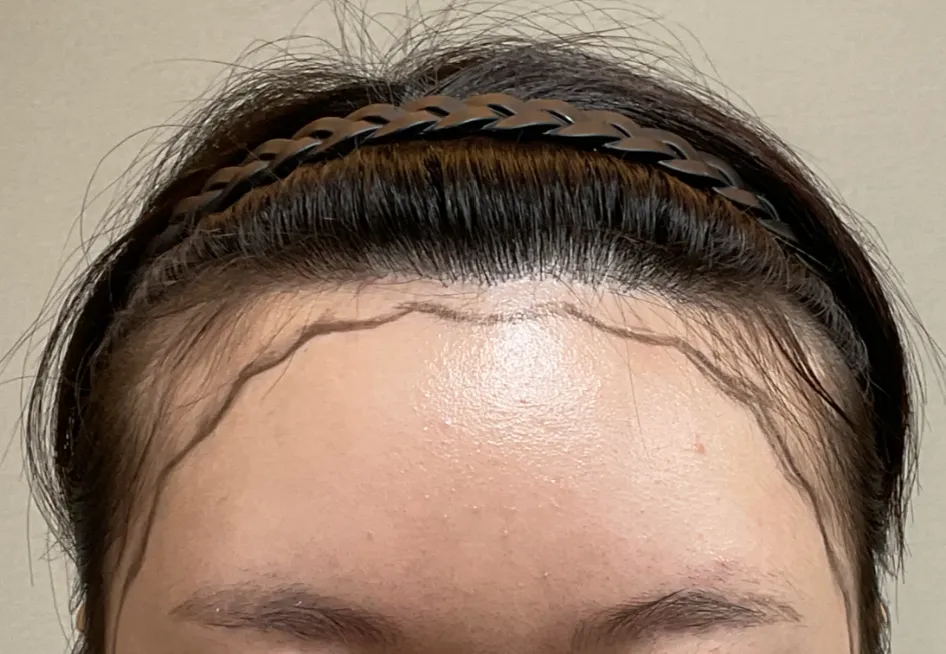
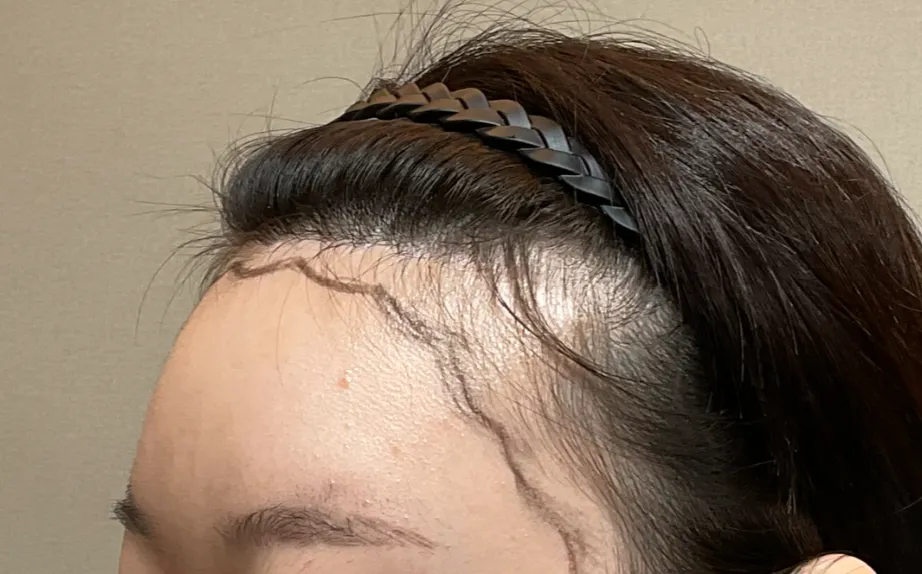
Covering the scar while rounding the hairline
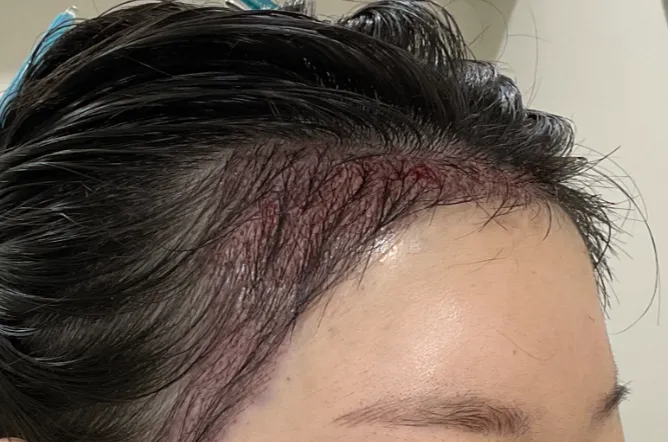
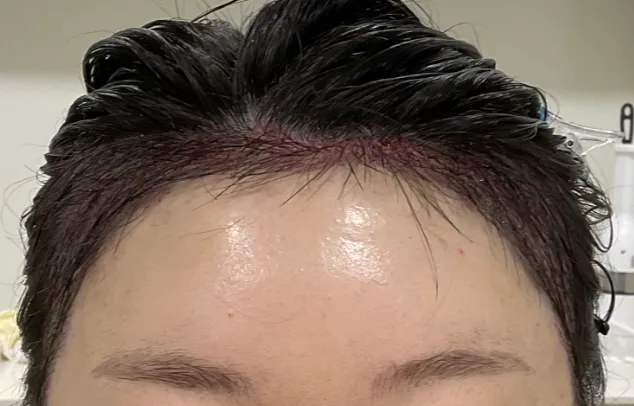
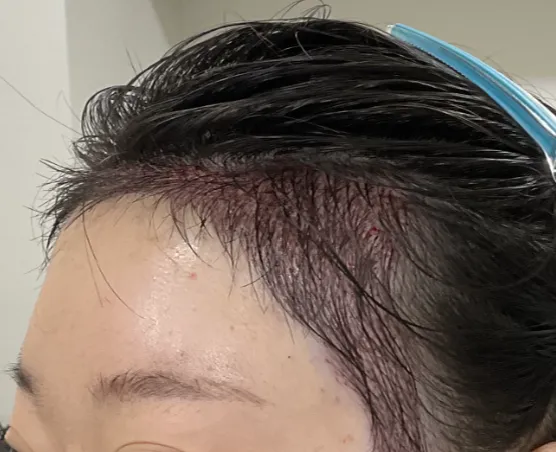
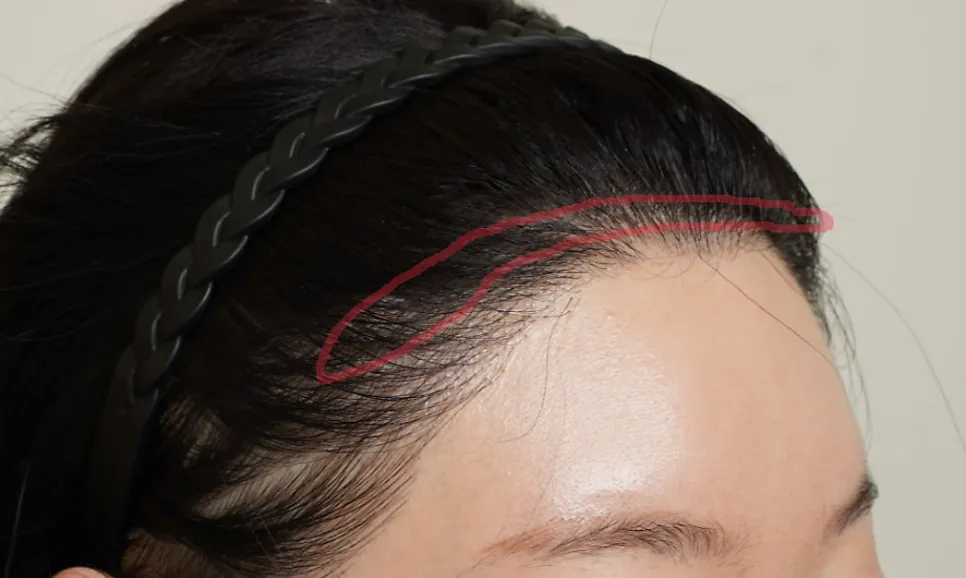
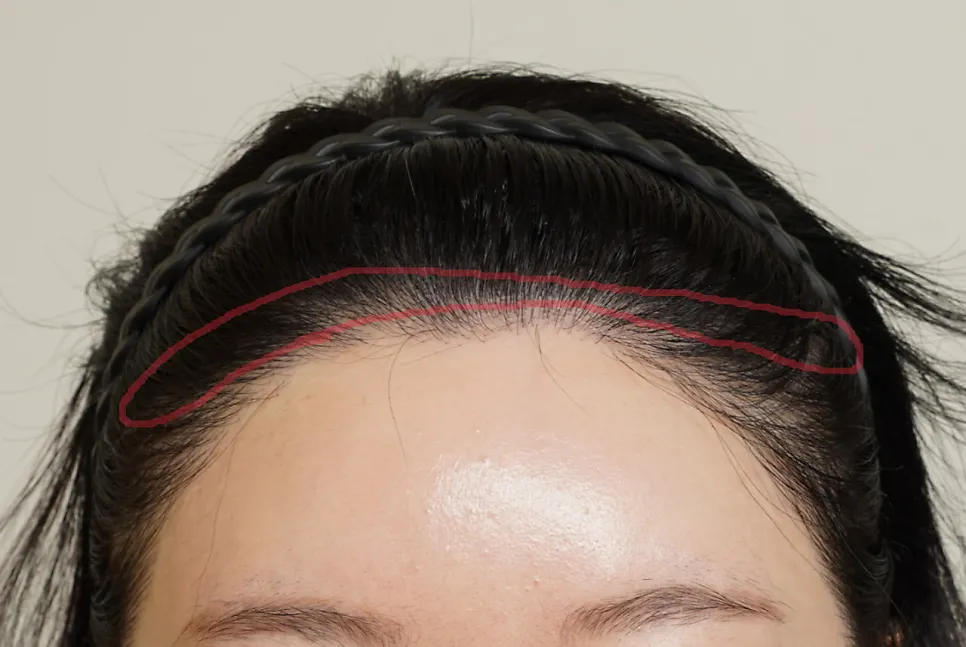
In clinical practice, the most common case is one where the forehead height is lowered slightly so the scar is naturally covered, the M-shaped area is filled, and the overall hairline is corrected into a rounded shape. Sometimes the side hairline must also be refined to maintain the overall facial proportions.
Graft survival in forehead reduction scar areas
In these cases, correction of the M-shaped area or the sides is done on normal skin tissue, but many people worry that hair may not survive well in forehead reduction scar areas. Of course there are individual differences, but unlike scars caused by burns or infection, cosmetic surgical scars such as those from forehead reduction tend to have a relatively well-preserved vascular network in the deeper tissue layers.
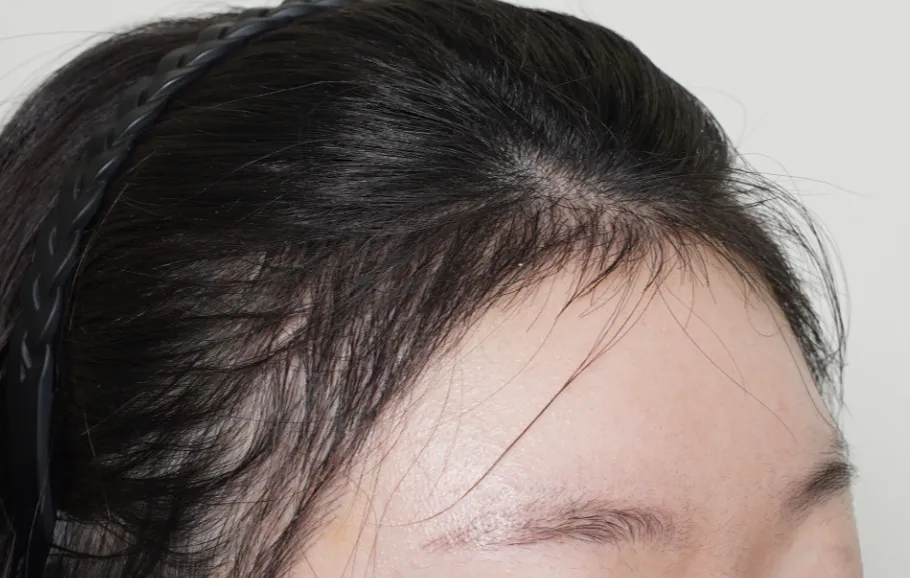
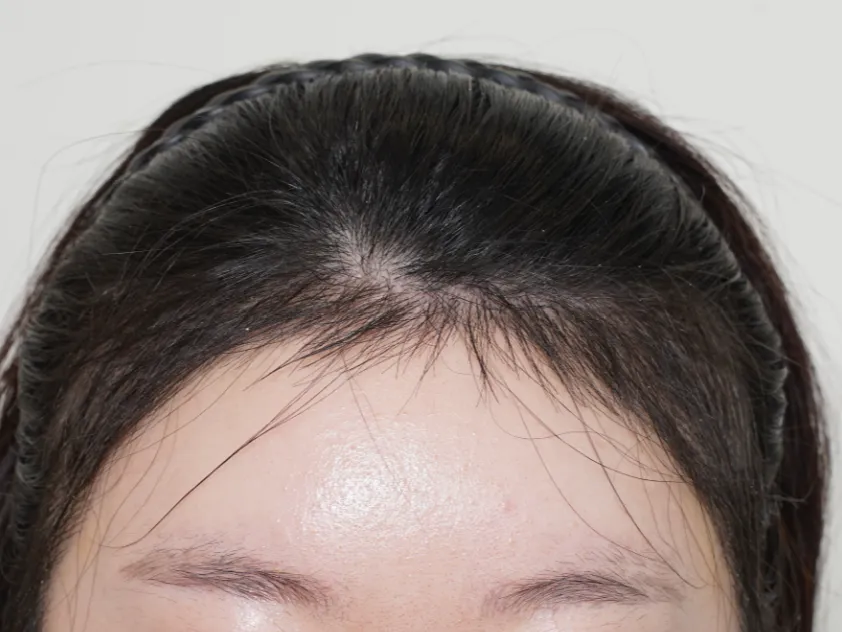
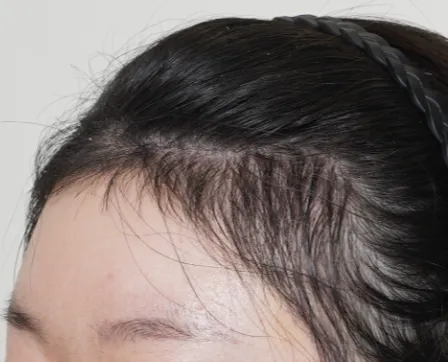
Also, because the incisions and sutures are made precisely in a sterile environment, the inflammatory phase during wound healing is short and there is less excessive fibrotic response. The subcutaneous fat layer is also well maintained, so overall graft survival tends to be higher than expected.
Possibility of scar skin normalizing
There is one point I should mention. A study has also been published showing that when hair is transplanted into a scar area, the thinned epidermis can recover toward normal skin thickness and quality, under the influence of tissue fibrosis-inhibiting cytokines released by healthy hair follicles. Put simply, the hard, shiny skin typical of a scar can gradually normalize, starting from the epidermis around the transplanted follicles, and change into skin with elasticity.
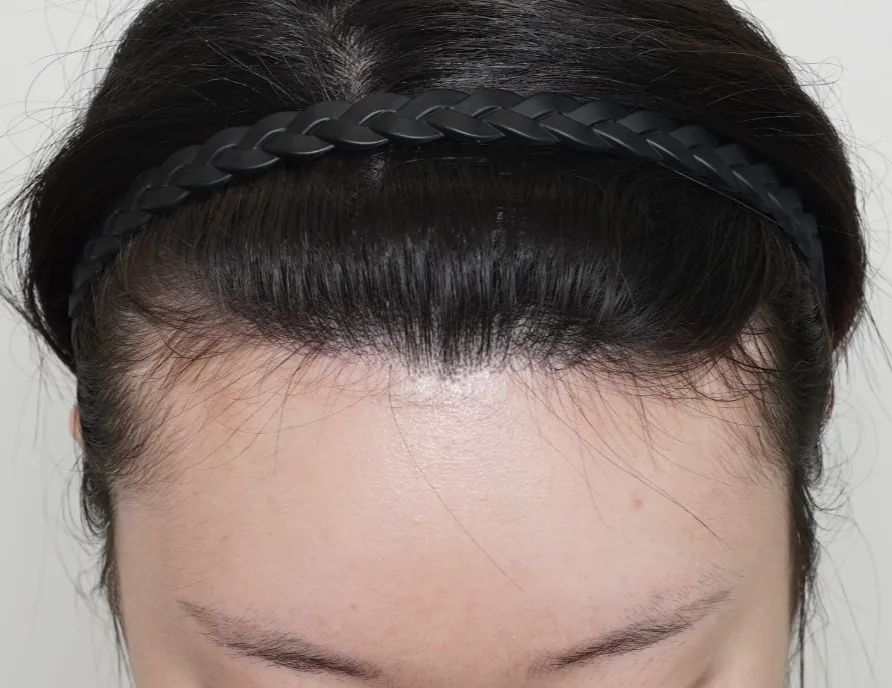
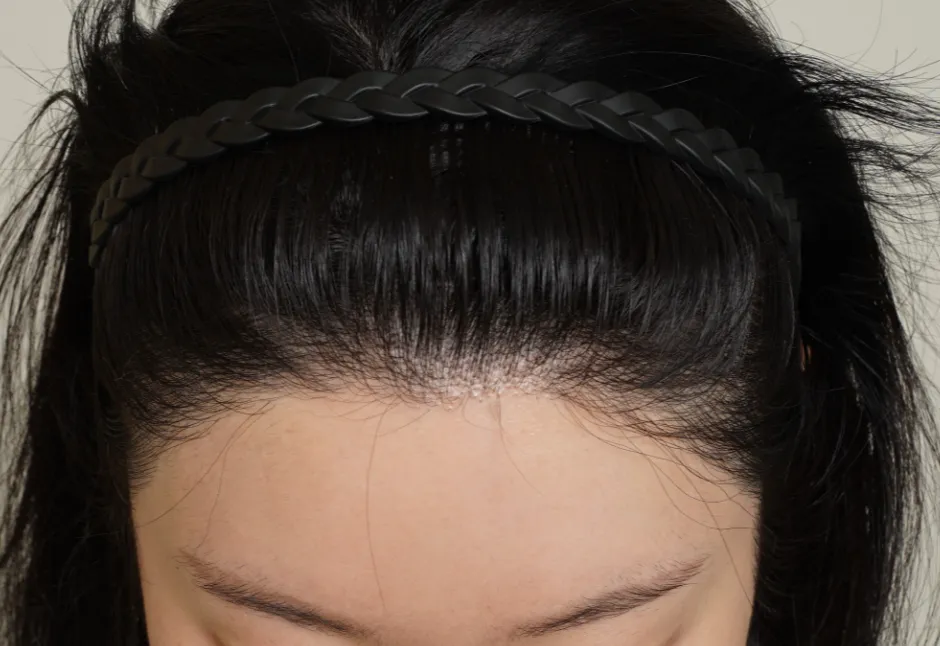
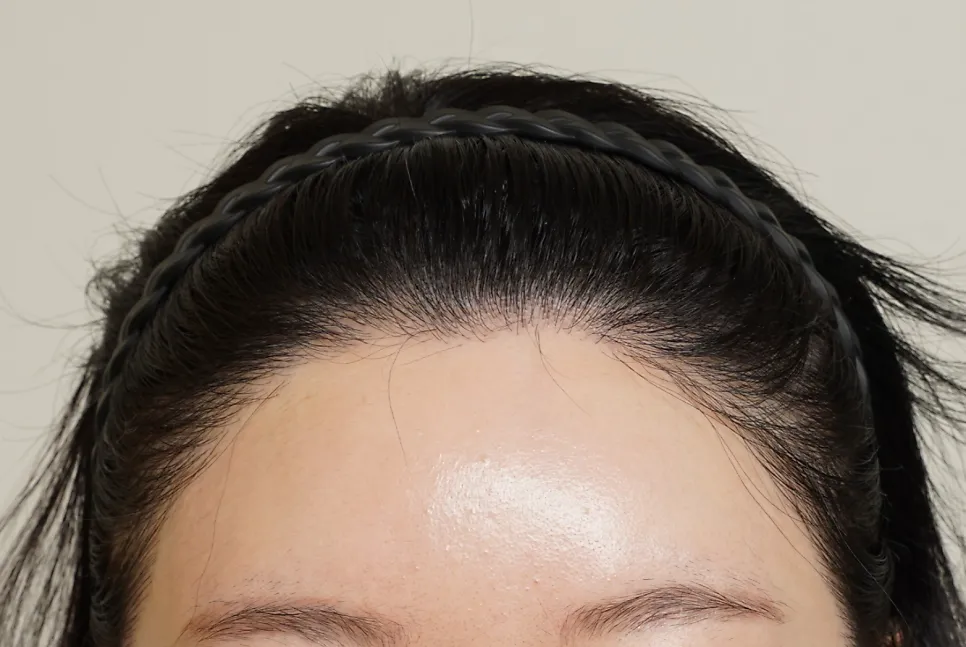
In this way, if the hair not only physically covers the scar but there is also a possibility that the scar skin itself normalizes, I believe it is a sufficiently valuable and highly satisfying procedure, even if the graft survival rate may be somewhat lower than on regular scalp.
※ Side effects such as pain, swelling, inflammation, bleeding and infection may occur after a hair transplant. ※ All photos on this blog are used with the patient's consent.