By Dr. Shin Seungkyu · 2026.07.14
The Biggest Concern in Forehead Reduction: Scarring
The biggest worry for people considering forehead reduction seems to be the scar. Even when they clearly understand that forehead reduction is the surgery they need, it is understandable that they still worry about the scar that will remain after it.
It is natural for a scar to remain after surgery once the wound has healed. However, how noticeable the scar is, and how it is addressed when it bothers you, seems to be what matters.
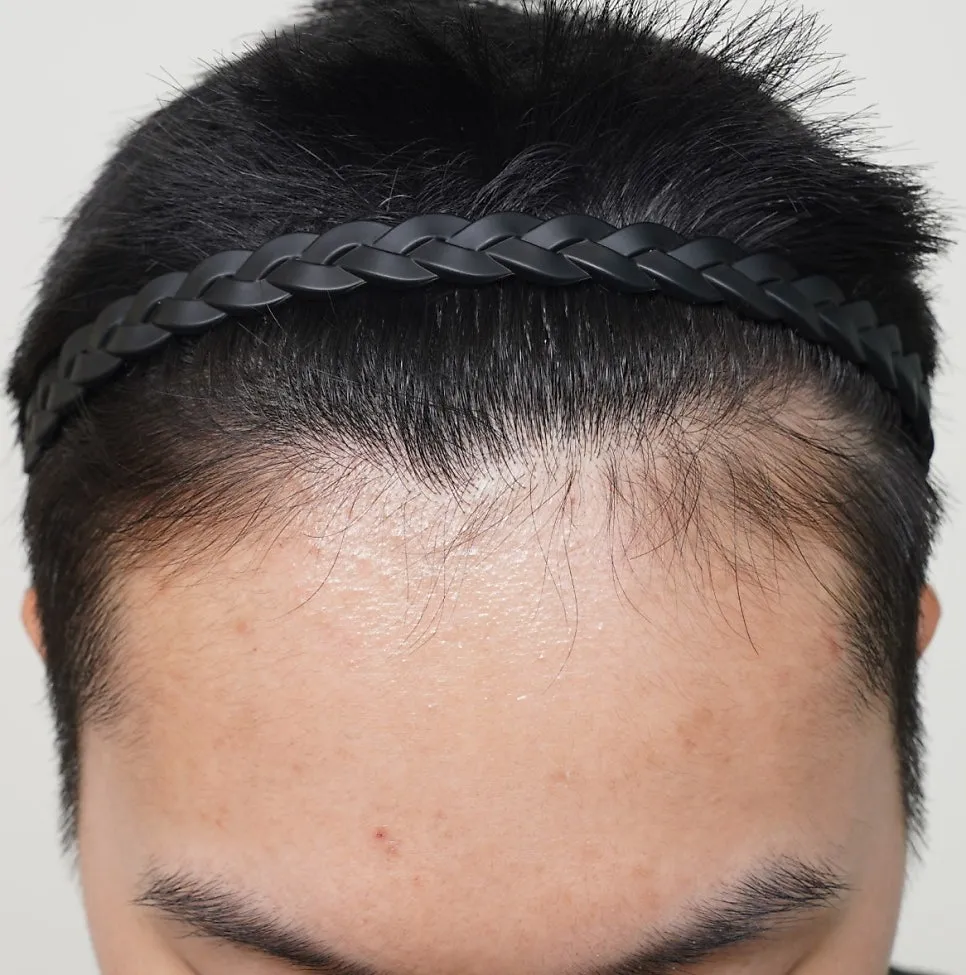
Why I Recommended Forehead Reduction Over a Hair Transplant
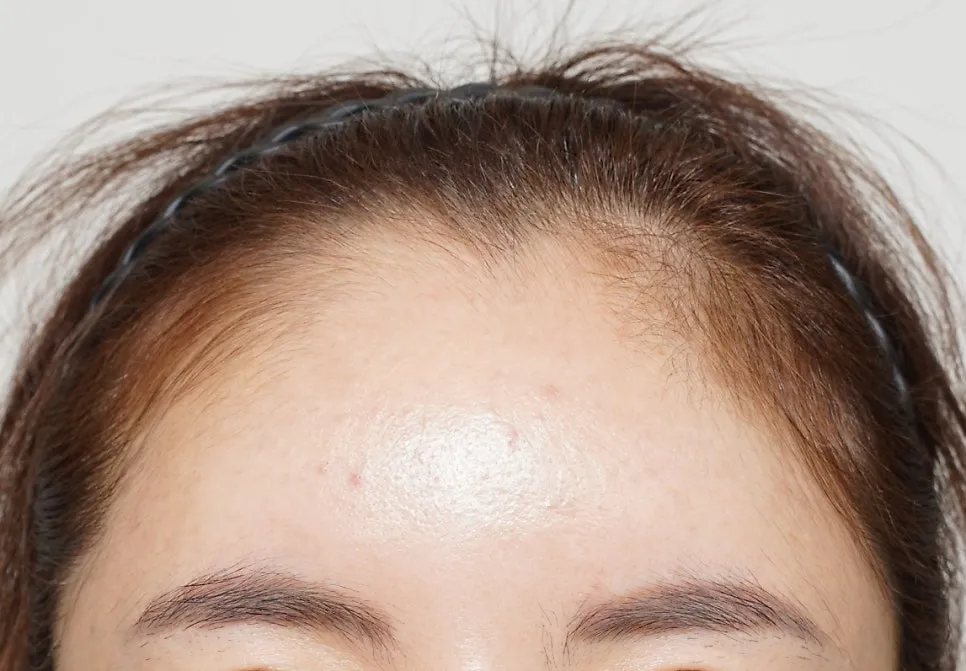
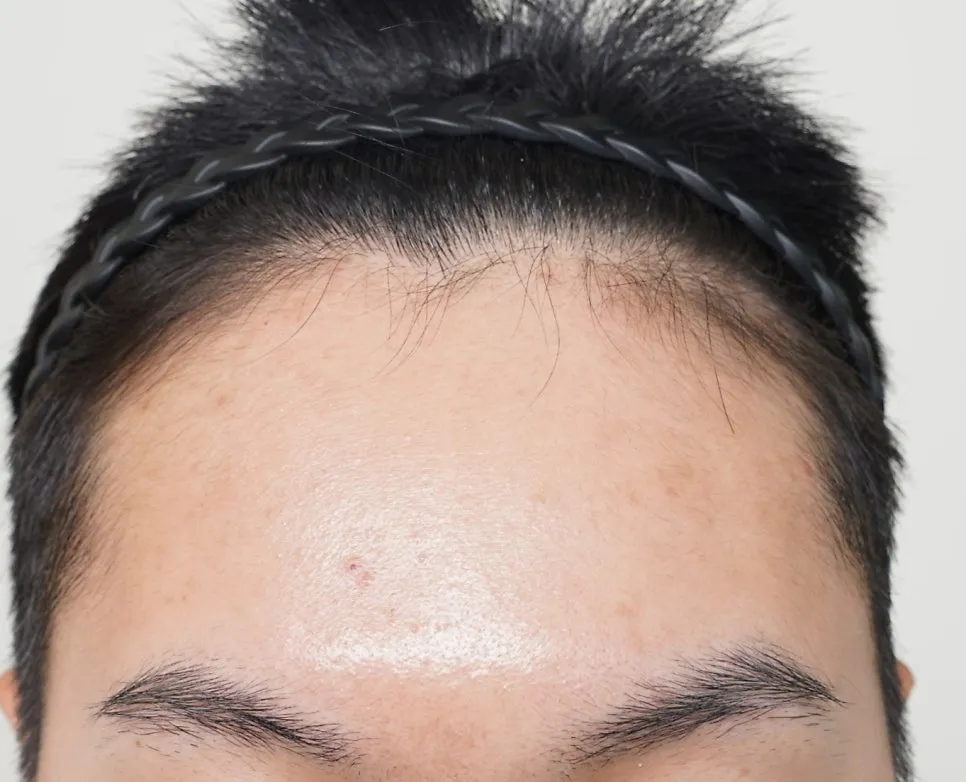
This patient was concerned about a high forehead. They had consulted several other clinics and had been recommended a hair transplant. I found the forehead quite high with no major angular areas, and the scalp was soft, so I recommended forehead reduction, which could save hair from the back of the head, rather than a hair transplant.
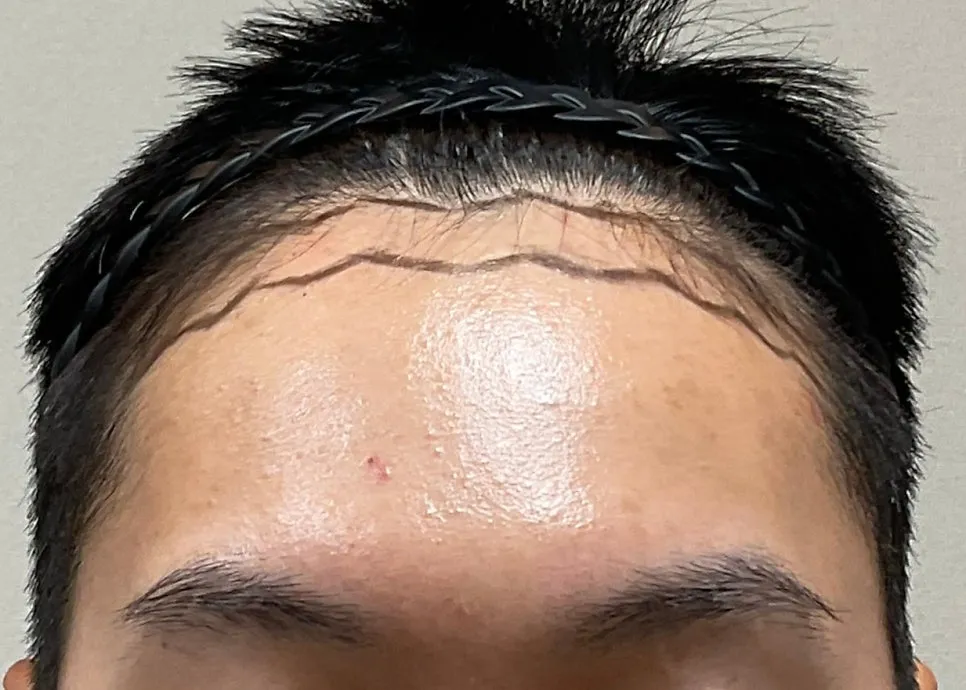
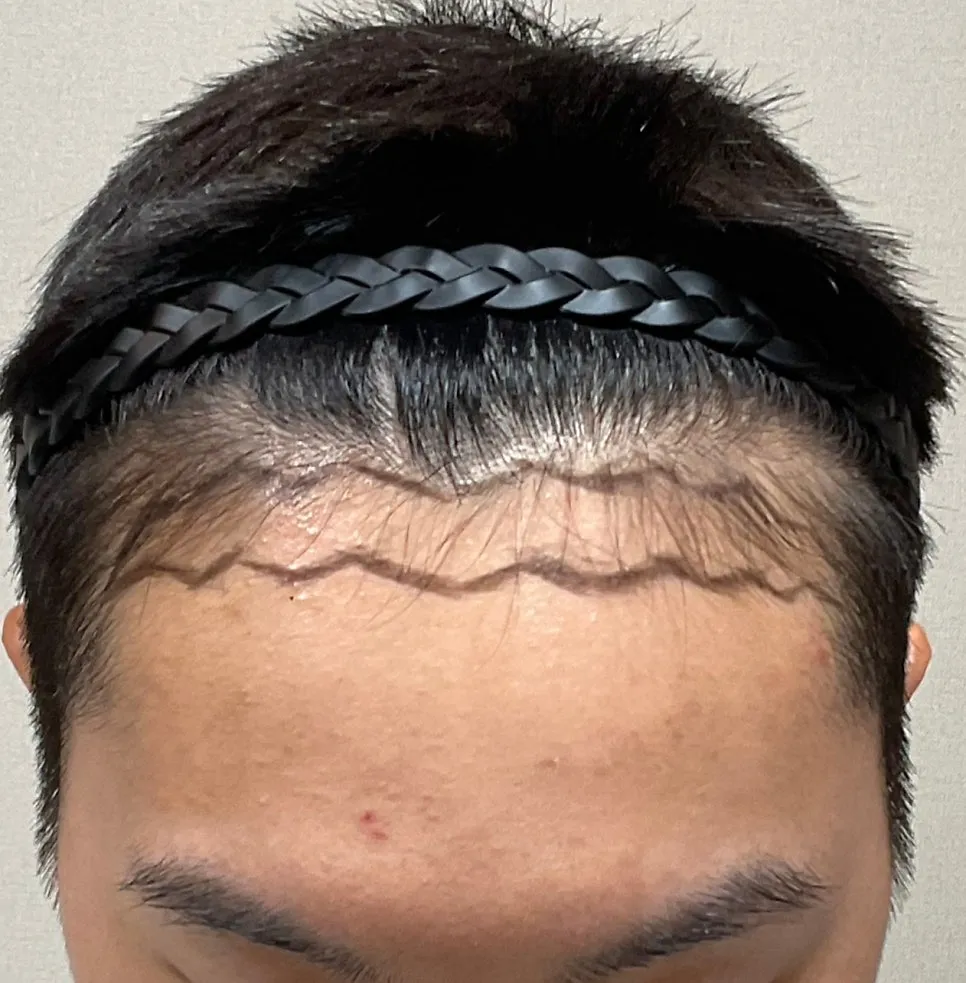
So, as in the photo above, we designed a forehead reduction lowering it by about 1.5 cm. The surgery went well, and they visited us about six months later.
The Scar at Six Months
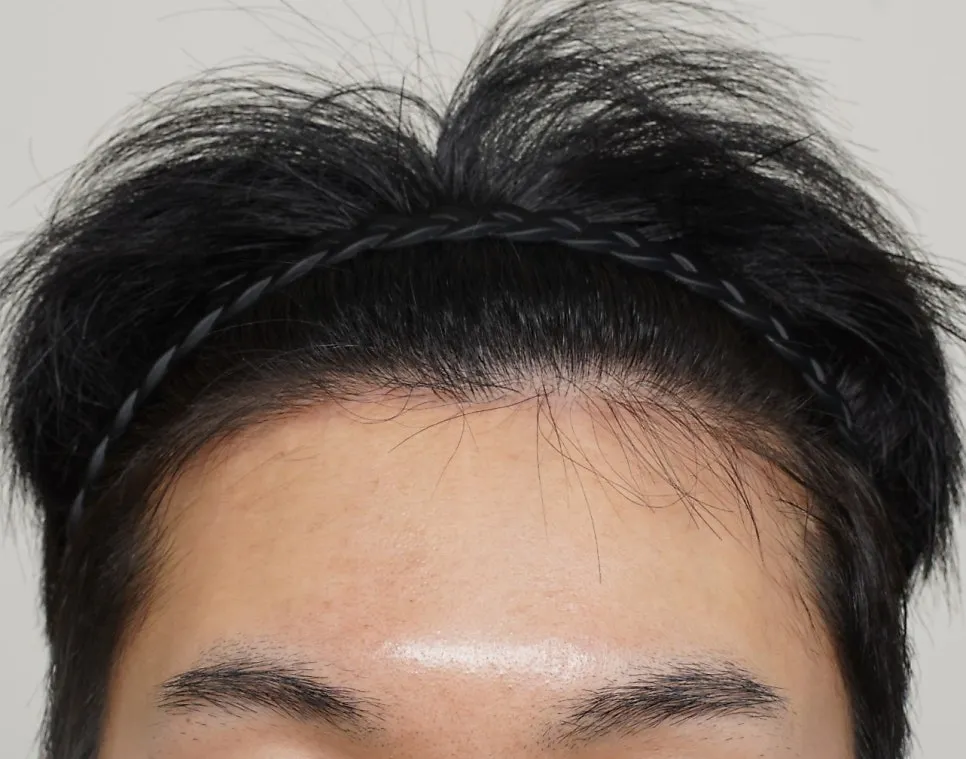
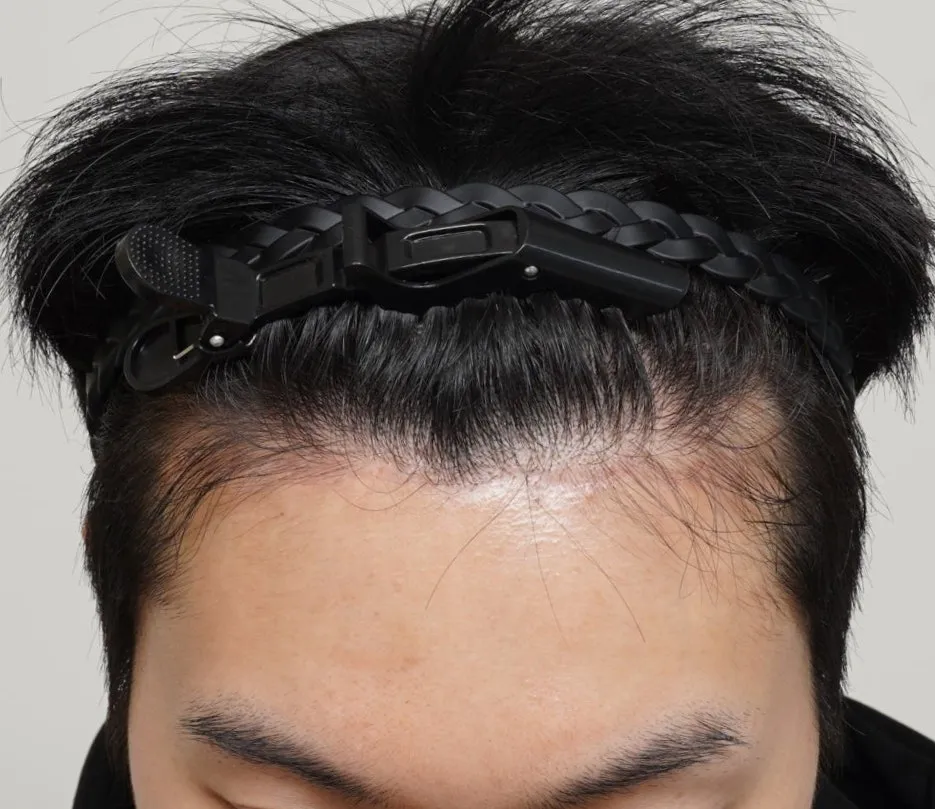
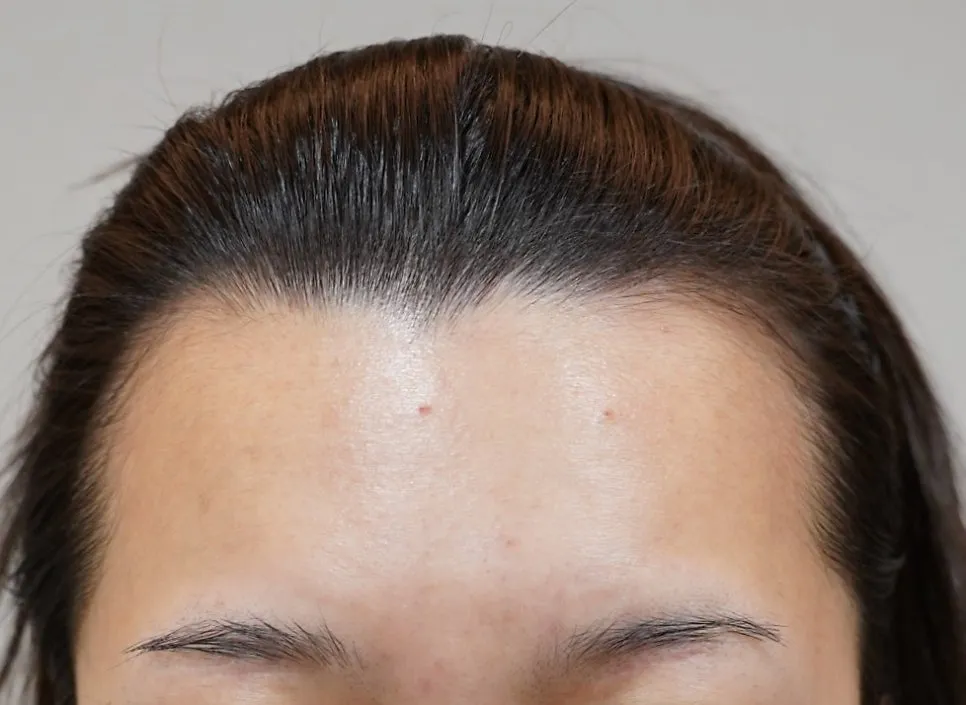
The scar at six months looks good. Six months is not the final stage for the scar, so we explained that it will become even lighter over time. Also, when the scar line is touched by hand, some firm scar tissue is still felt, but we explained that this can improve faster with gentle massage.
If the Scar Bothers You
In most cases, as in the example above, about six months after surgery the scar line looks like a thin white line, so it is not very noticeable and people often don't mind it. However, some people do feel bothered, and in such cases a small hair transplant placed around the scar can help make it a little less visible.
※ Side effects such as bleeding, swelling, pain, altered sensation and infection may occur after forehead reduction.
※ All photos on this blog are used with the patient's consent.