
By Dr. Kim Narae · 2026.06.27
16 Years Ago, Me Before My Wedding
Recently I read the post "A Hair Transplant Done Before the Wedding" written by Dr. Shin Seungkyu. As I read it, I naturally recalled the cases of patients who had received scalp treatment for similar concerns in my own clinic.
At the same time, I remembered my own appearance 16 years ago, when I was full of worries and imagination about my wedding. At that time I was a university hospital intern, working the "full-day duty" (on call every day). I did not have the physical time to prepare for the wedding, but I was busier in my head than anyone, wanting to look most perfect on the wedding day.
"What hairstyle should I choose?" "What kind of makeup should I wear? (My father said he wanted to be able to recognize me as his daughter on my wedding day...)" "Will I be able to go on a honeymoon?" "If I do, will my Crocs be gone when I get back? (I doubt they would treat it as my resignation by throwing out my shoes, but...)"
So when I meet patients who come to see me before their wedding, I often see my own past self in them.
"I just want my hair to look really full on that day." "I won't go with a style that fully reveals the M-shaped forehead, but I want to walk into the venue with it neatly resolved."
The Concern of an Empty Area Behind the Back Whorl
The case I am introducing today is also the story of a patient who came in before their wedding. This patient had a small head shape and a distinctive back-whorl position, so the hair had a flow where it curved and fell at a certain point. Because of this, the area around the back whorl looked especially empty, and the white scalp showed prominently, which was a major concern. In addition, early hair loss at the crown made the part look wide from side to side.
First, to check for any other possible causes, I asked about anemia, polycystic ovary syndrome, and thyroid disease. Fortunately, there were no other factors, and their eating habits were also good, so we immediately began medication along with scalp treatment.
Changes at 3 and 6 Months
Hair loss treatment needs at least 3 months to see a noticeable effect. This is because hair has a growth cycle in which it grows and rests. And as with many things in life, consistency is truly important in hair loss treatment too.
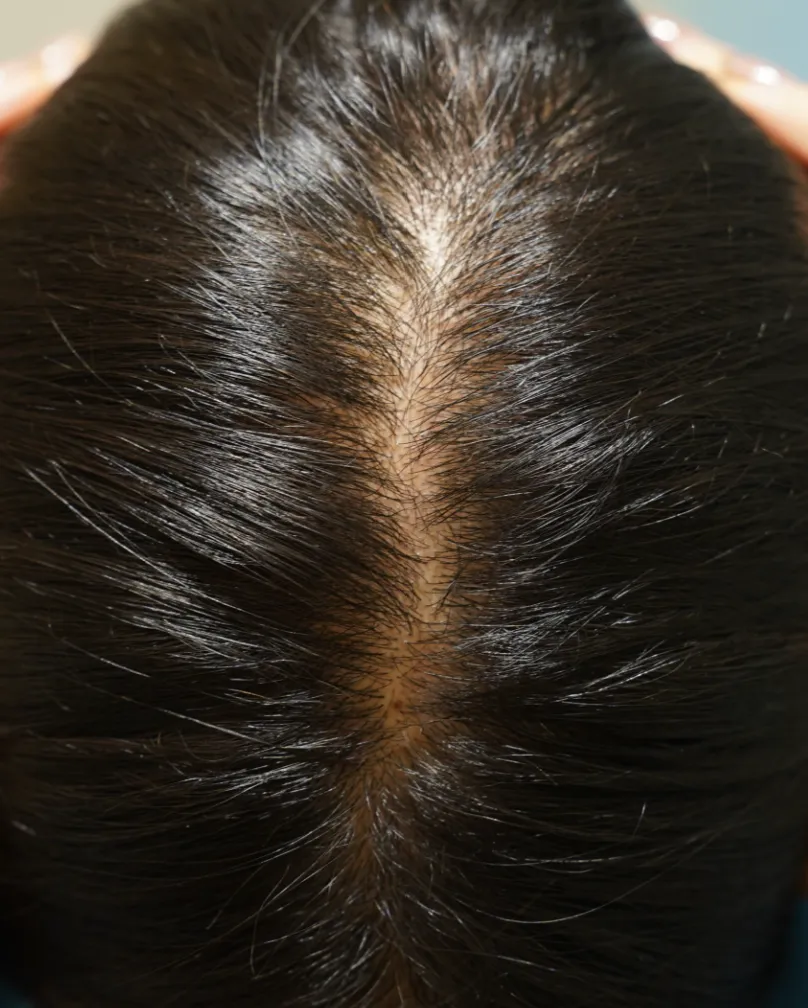
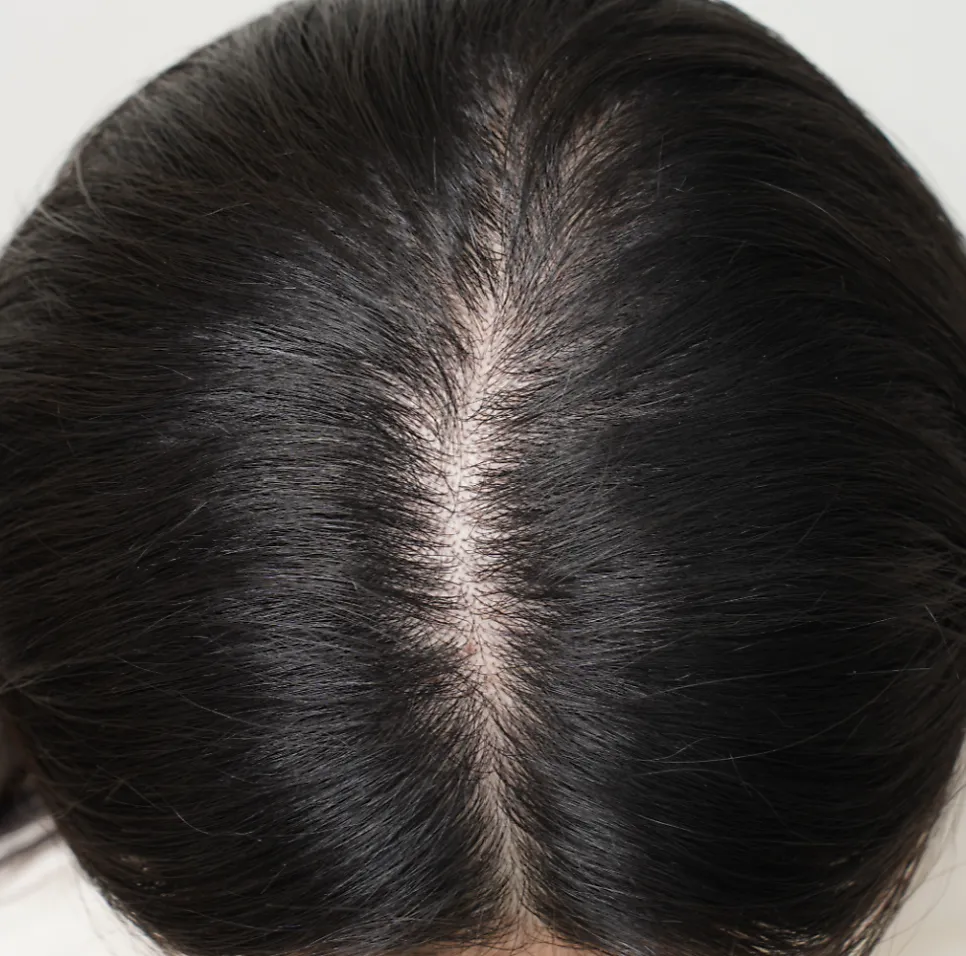
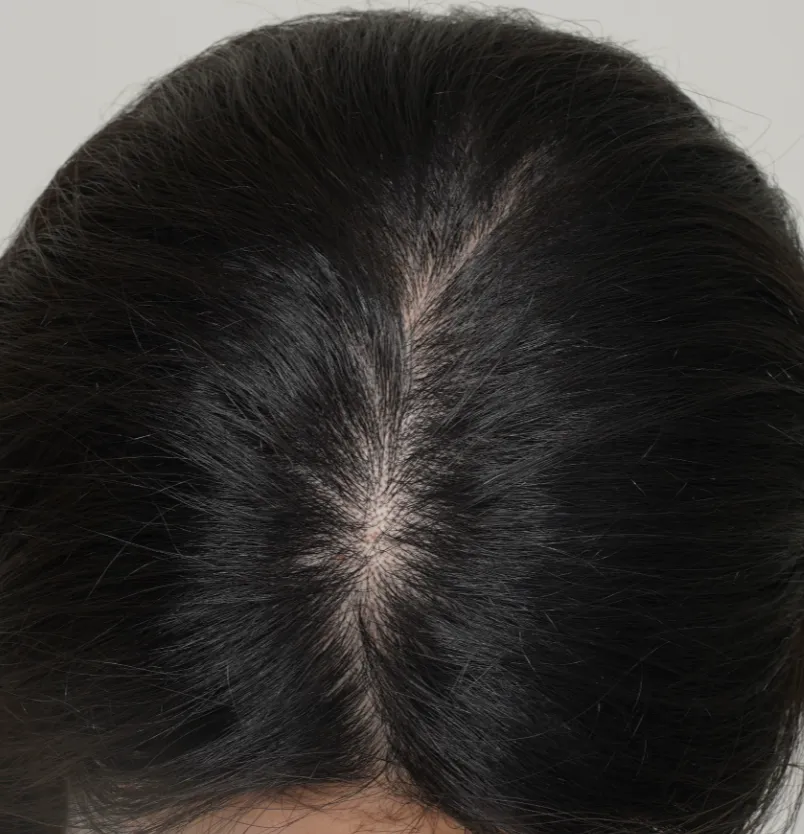
Fortunately, adherence to medication was high, and they came for scalp treatments consistently every 2 to 3 weeks. Noticeable changes appeared after 3 months and through 6 months. The part, which had looked wide because the crown hair had thinned, recovered, and in this photo, one needs to use a bit of imagination, but the area that had been showing through noticeably because of the shape of the head was clearly reduced.
※ Depending on individual constitution, side effects such as pain or infection may occur after scalp treatment (injection therapy, procedures, etc.). ※ All photos on this blog are used with the patient's consent.


