
By Dr. Kim Narae · 2026.06.11
Hairline Concerns of Middle-Aged Women
The regret middle-aged women most often voice in our clinic is their weakening crown and front hair, a deepening M-shaped forehead, and a hairline changed by facelift surgery. We would like to look at patient cases to understand why these changes happen and how these concerns can be addressed.
Changes Caused by Baby Hairs and Facelifts
As people enter their 40s and 50s, it is very common for them to come in for consultation because the M-shaped area deepens and the front hair becomes noticeably thinner. It is similar to postpartum hair loss experienced after childbirth. Fine hairs at the front were never thick hairs to begin with; they grow only short and thin. So depending on the person there are differences, but as the hair growth cycle repeats, they gradually turn into down-like hairs.
Add to this the effects of hormonal changes and surgical scars from forehead lifting, and eventually the area where baby hairs once were becomes exposed, making the M-shaped forehead look even more prominent. Also, when a facelift is performed, the sideburns and side hairline are pulled upward and backward, and the hair direction turns toward the back, making the hairline feel even sparser. In particular, when the incision scar in front of the ear remains noticeable depending on skin type, patients are sometimes upset that the surgical traces are visible, despite having wanted to look more beautiful without anyone knowing.
The patient in the case I am introducing this time also had all three concerns: a crown with hair that is gradually weakening and thinning, a deepening M-shaped forehead with sparse-looking front hair, and side hairlines pushed backward and deformed after facelift surgery. Let us look at the actual treatment process.
Gradually Weakening and Thinning Crown Hair
The patient had early female pattern hair loss and had tried various treatments at other clinics, but had never received continuous treatment. They tried topical minoxidil, but because of skin irritation and other discomforts, continuous use was difficult, so we prescribed oral minoxidil, which has higher adherence and is also clinically more effective.
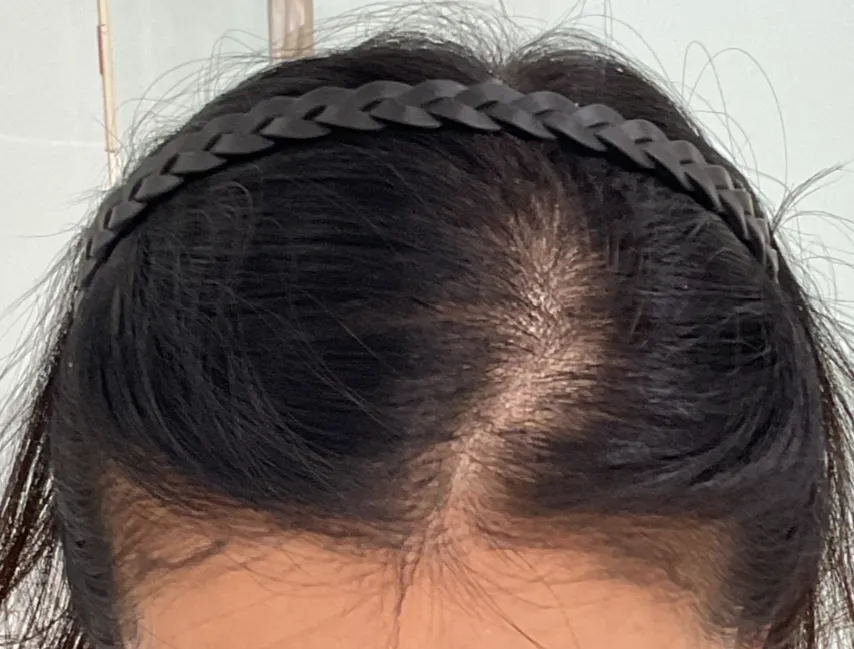
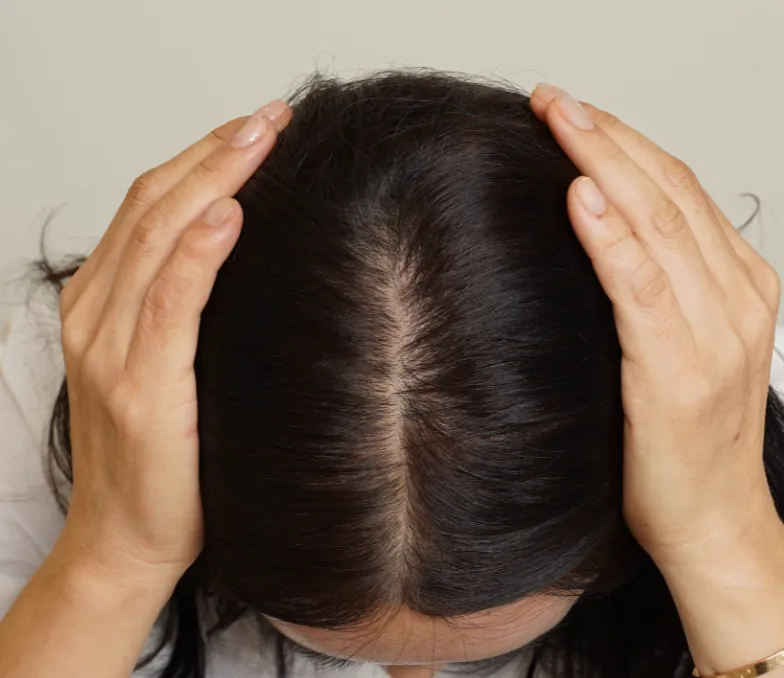
At 8 months of use, separate from the transplanted hairs, the part has become somewhat narrower and the scalp showing through has decreased considerably.
The discomfort most often reported early after starting oral minoxidil is slight swelling in the hands, feet, and eyelids. The discomfort most often reported after taking it for more than 3 months is that facial hair becomes somewhat darker, but many say that their eyelashes grew longer and their eyebrows became darker, enough to offset this discomfort.
Sparse-Looking Front Hair from a Deepening M-Shaped Forehead
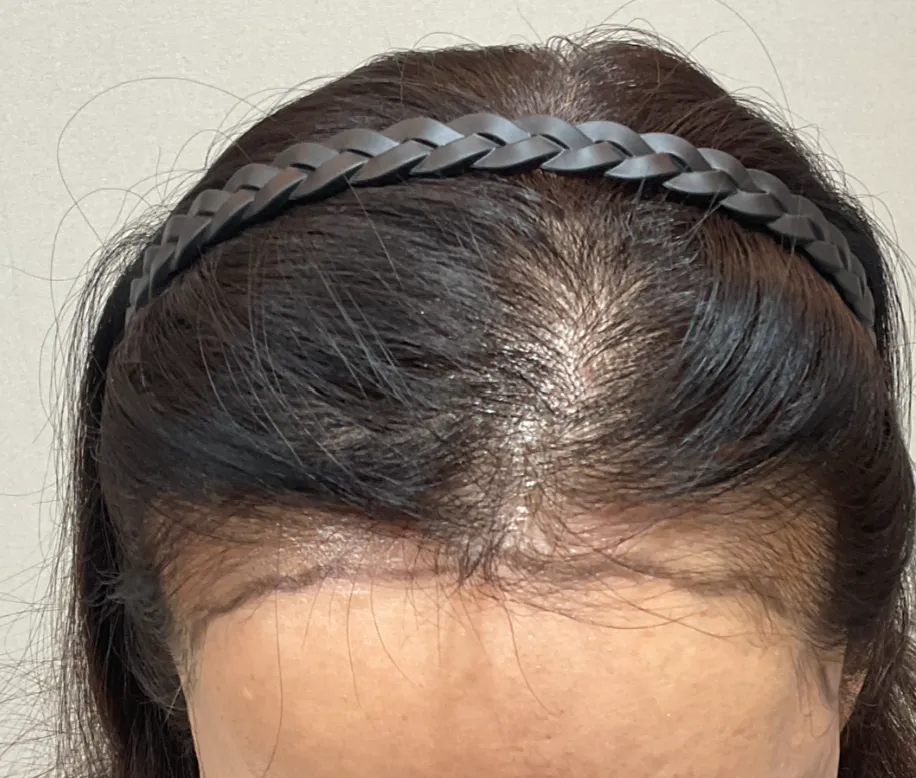
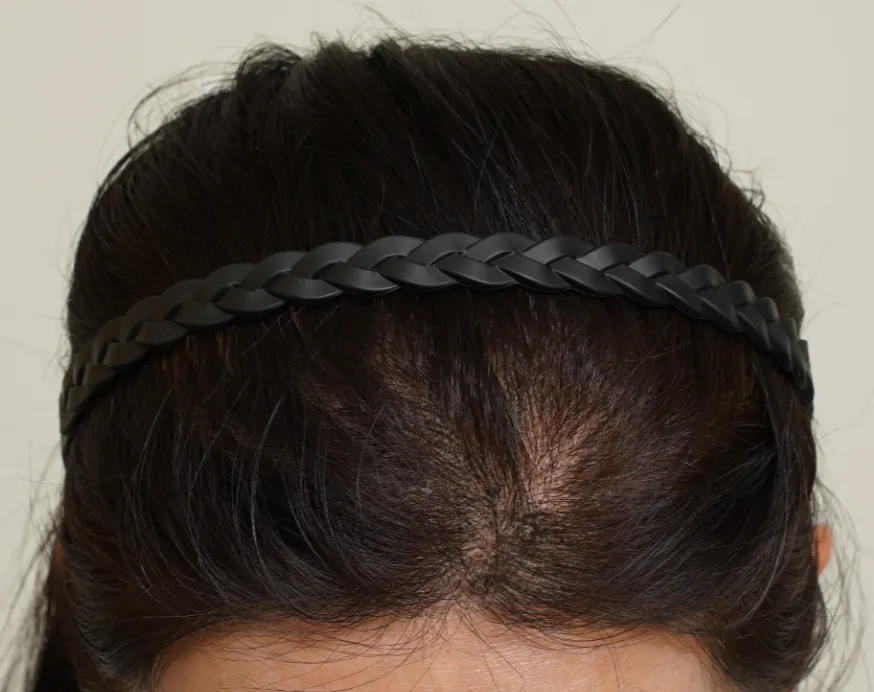
When hair from the back of the head is moved to the M-shaped area and the front, the hair volume at the back decreases by that amount, while the hair at the front increases. If the day comes when follicles can be cloned and implanted, I think it will be truly happy news for patients. In the beginning, the volume at the back of the head decreases considerably and the transplanted hairs placed at the front are still short, so it can be upsetting to feel that the overall volume has decreased.
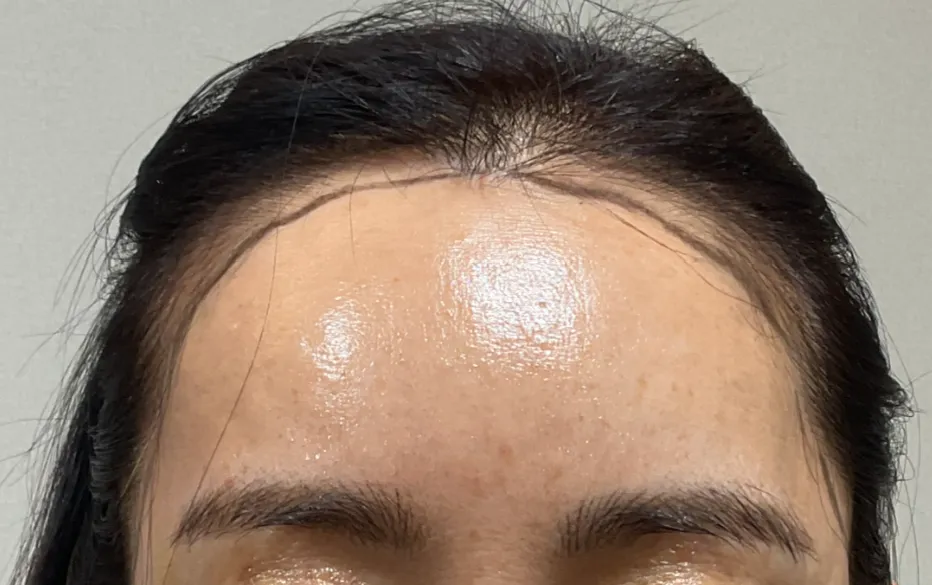
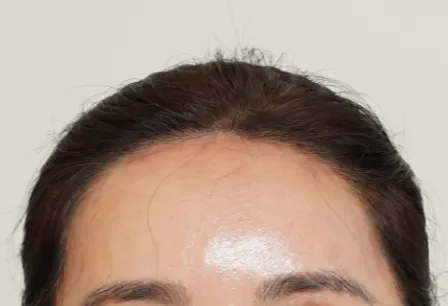
But after just 7 to 8 months, the hair at the back of the head, which had been reduced by shaving, has grown back to some extent, and as volume builds at the front, it creates a more youthful image than any surgery aimed at making one look younger.
Side Hairline Pushed Backward and Deformed After Facelift Surgery
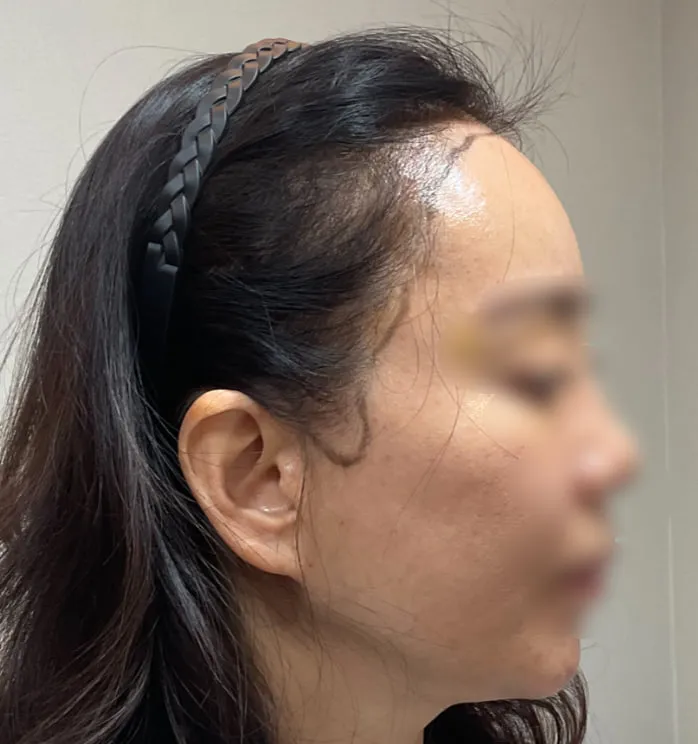
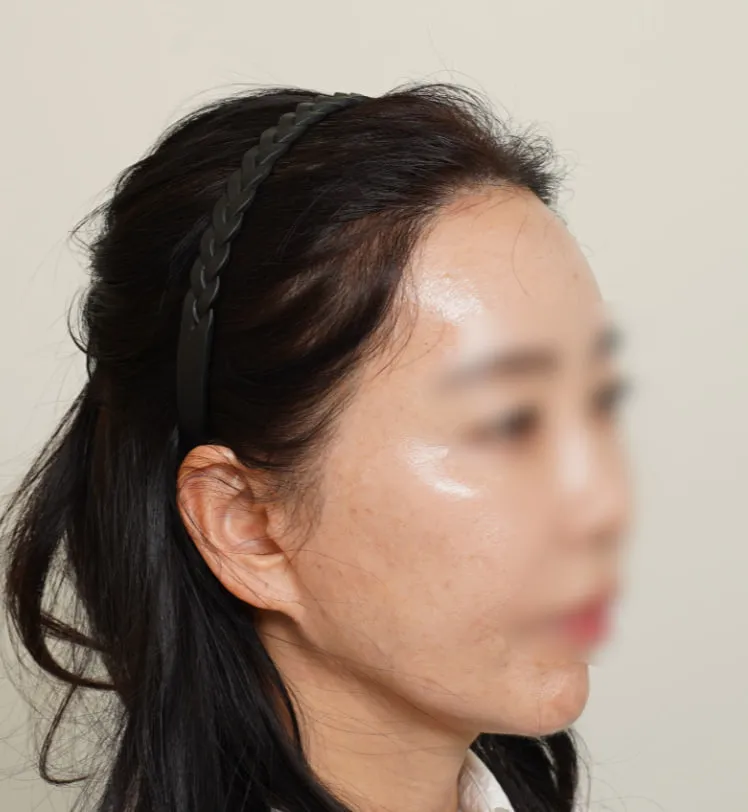
After a facelift, many people achieve a good lifting effect, but often complain of a somewhat uncomfortable feeling that the face looks wider on both sides. When the side hairline as a whole moves upward and backward, the sideburns become shorter and the hair direction all turns backward, which can make the face look even wider on both sides.
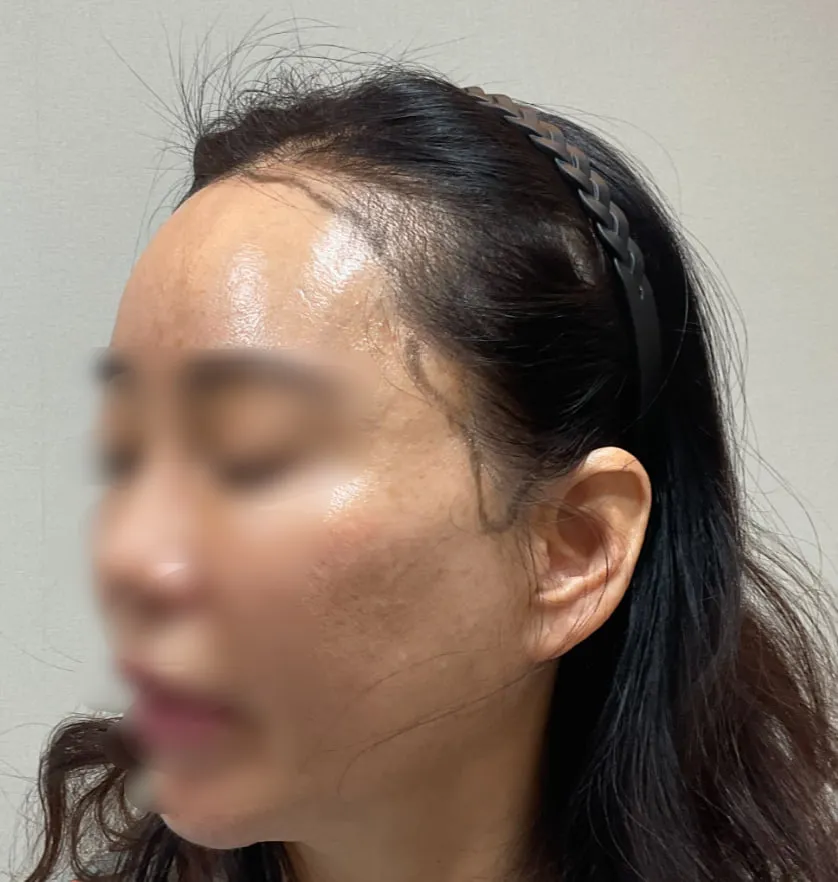
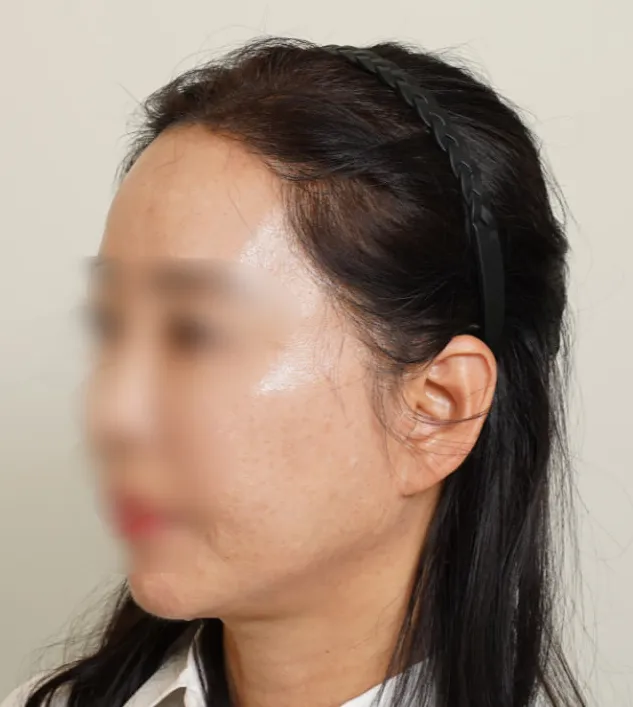
When the sideburns become shorter or disappear, the incision scar remaining in front of the ear becomes more noticeable, so it is common for people to come in for consultation about side reconstruction within a few days after a facelift. Only once the dissected area has normalized to some extent can a high follicle survival rate be expected, so if a transplant includes the scar, it is possible at least 6 to 8 months later; if the transplant excludes the scar, it is possible from one month later.
Waiting to See Results
Both drug and surgical hair loss treatments take time to show results. It takes at least 3 to 4 months, and as long as about a year. But after this period of patient endurance, the welcome change that comes will show that the wait was not in vain.
※ Hair transplant may cause side effects such as pain, swelling, bruising, bleeding, and infection. ※ All photos on this blog are taken and used with the patient's consent.


