By Dr. Kim Narae · 2026.06.05
Vitamin D Deficiency and Hair Loss
When people think of hair loss, they tend to think of heredity, family history, and DHT, a male hormone. However, I will review a paper stating that vitamin D deficiency can cause hair loss, and that correcting it alone can allow hair to grow back. (This post was written based on a paper by Dr. Sharon A. Keene published in the journal of the International Society of Hair Restoration Surgery (ISHRS).)
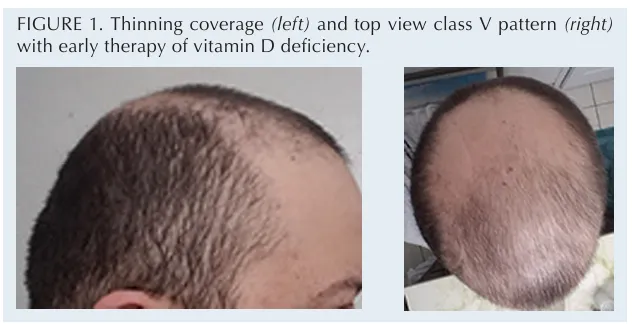
Case of a 41-Year-Old Male Patient in the Paper
The paper introduces the case of a 41-year-old man with male pattern hair loss. His hair loss began at age 22 and had progressed considerably at the crown and the frontal area. While he was preparing for a hair transplant, he learned 6 weeks before surgery that his vitamin D level was in a deficient state at 12 ng/ml. The medical team recommended vitamin D along with finasteride and minoxidil, but the patient, due to concerns about side effects, did not take the hair loss medication and took only high-dose vitamin D3 supplements.
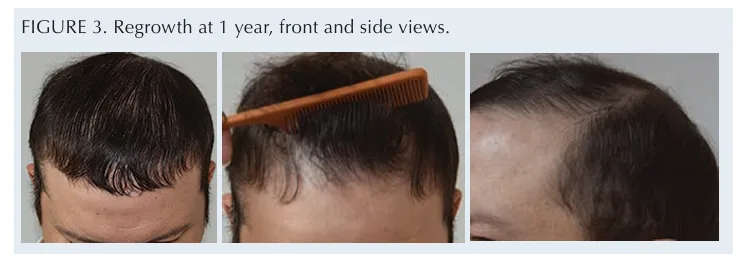
After 6 months, his vitamin D level normalized to 50.6 ng/ml, and his hair loss at the frontal area in particular was confirmed to have improved greatly. By one year the hair loss had improved even at the crown, and reportedly he reached a state where he was satisfied without needing a hair transplant.
The Role of Vitamin D in Hair Growth
We commonly know vitamin D as a nutrient that is good for bone health. In fact, vitamin D acts like a hormone in the body, and it plays very important roles, especially in relation to hair growth, as follows.
Activation of follicular vitamin D receptors (VDR): for the hair cycle of growth and shedding to run normally, the vitamin D receptors in the follicles must work well. When vitamin D is insufficient, the expression of the genes for these receptors is suppressed, and the follicles fail to enter the growth phase and stay stalled.
Immune and gene regulation: vitamin D regulates more than 1,000 genes in the body. In particular, it can also lower the risk of autoimmune hair loss conditions such as alopecia areata.
Checking and Managing Vitamin D Levels
It is said that more than 1 billion people worldwide have a vitamin D deficiency. In particular, office workers in places like Korea, who take care to block UV exposure and work indoors a lot, have a very high likelihood of deficiency.
Getting it from food: salmon, tuna, egg yolk, mushrooms, and vitamin D-fortified milk or cereals can help.
The most reliable treatment (routine recommended in the paper): rather than overusing supplements based on self-diagnosis, it is necessary to first check your 25(OH) vitamin D level through a simple blood test at the hospital, and then make an effort to keep your vitamin D within the normal range.
Diagnostic Criteria by Level and Recommended Treatment in the Paper
Diagnostic criteria by level: deficiency (below 20 ng/ml) requires active treatment. Insufficient is 21 to 29 ng/ml, and normal/sufficient is 30 to 100 ng/ml. For hair health, maintaining 40 to 100 ng/ml is recommended.
Recommended treatment in the paper: for patients with severe deficiency below 20 ng/ml, the recommendation is to take a high dose of 50,000 IU of vitamin D3 weekly for the first 6 to 8 weeks to raise the level quickly, and then, based on blood tests, maintain about 10,000 IU per week.
If you are concerned about hair loss, I recommend keeping an eye on your vitamin D level the next time your regular health checkup comes around. Beyond hair loss, it is closely linked to immunity, so I believe that knowing and managing your body's condition is the first step to good health.
References: Keene SA. Vitamin D Deficiency and Hair Loss: A Case Report and Review of the Literature for Diagnosis and Treatment. Hair Transplant Forum Int. 2022 Jul-Aug;32(4):113-122.