
By Dr. Park Sooho · 2026.05.31
Pain Behind the Ears More Than at the Transplant Area
After a hair transplant, there is almost no pain at the transplanted area, but many people complain that the pain is most severe at the back of the head, especially at the bony bump behind the ear (mastoid process) and just above it. I will explain the cause of this pain from a neuroanatomical perspective, since it is somewhat different from simple surgical wound pain.
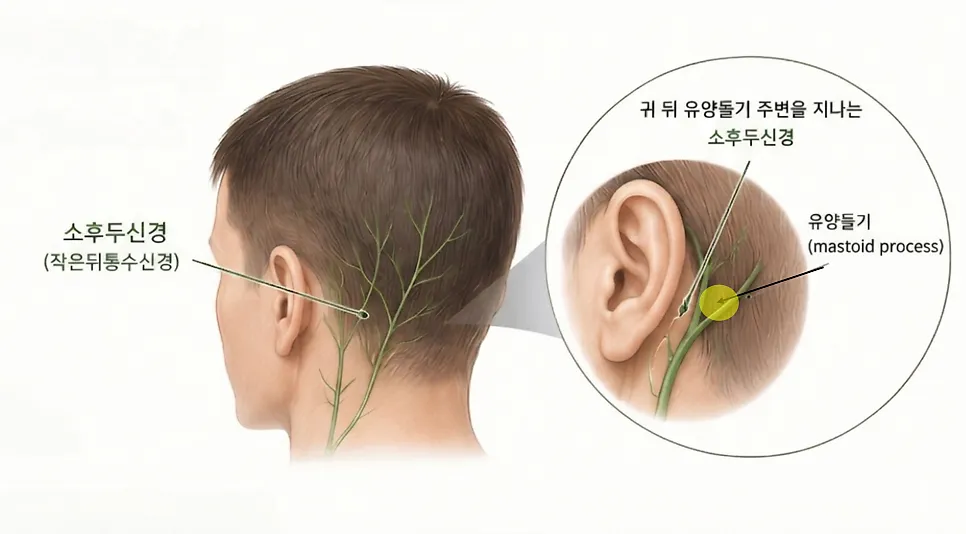
Causes of Nerve-Related Pain
Cause 1: Direct nerve irritation. If the non-incisional punch or the incision line is close to the path of the lesser occipital nerve (small occipital nerve), direct damage to the nerve or to the tissue around it can occur.
Cause 2: Inflammatory swelling. Local tissue swelling after surgery physically compresses the nerve.
Why the Area Behind the Ear Is Especially Painful
Reason 1: The area around the bony bump behind the ear (mastoid process) is where the lesser occipital nerve rises to the skin surface, so it responds most sensitively to surgical irritation.
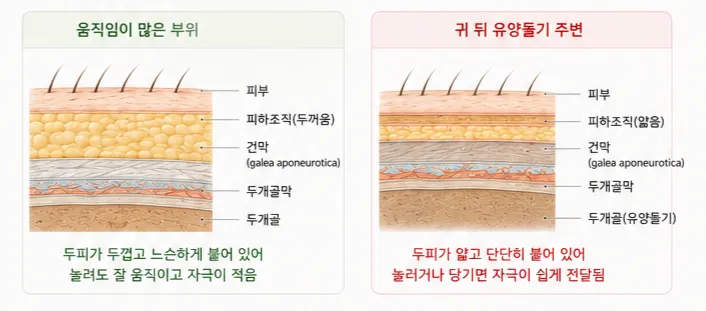
Reason 2: At the mastoid area the skin is thin and sits over the protruding bone, so the pressure from swelling is felt more intensely.
Why the Crown Hurts Even Though It Is Not the Surgical Site
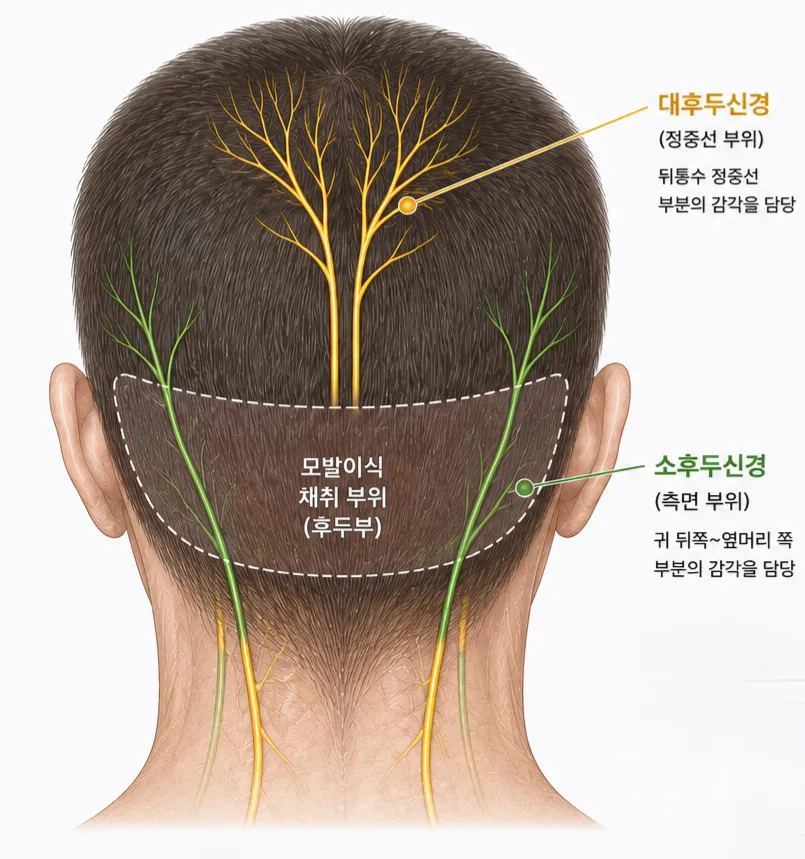
Some people also feel pain up to the upper back of the head, which is not the surgical site. The reason is referred pain, which occurs along the path of the nerve.
As the greater occipital nerve (large occipital nerve) shown in the illustration below is stimulated, the pain radiates up to the crown. This is the source of the feeling that "the crown hurts even though it is not the surgical site."
Pain Progression by Time Period
Day of surgery to Day 1: the pain is strongest within 6 to 12 hours after the anesthesia wears off. Taking the painkillers prescribed during this period is important.
Days 2 to 5: swelling peaks, accompanied by a feeling of pressure and tightness. Pain radiating upward from the mastoid area also concentrates during this period.
Weeks 1 to 2: as the swelling goes down, the pain eases, but a dull ache or intermittent tingling sensation may remain.
1 to 3 months: it mostly disappears completely. In rare cases, pain or an abnormal sensation may remain for several months, but it gradually fades over time.
Could There Be a Problem with the Wound?
If the pain is especially in the area behind the ear after a hair transplant, many people worry that there may be a problem with the wound. In most cases, however, this is caused by this anatomical structure, so please don't worry too much. Even if it is uncomfortable, take your painkillers properly and bear with it for a few days, and it will mostly improve. If the pain is unbearable even after taking painkillers, please contact the hospital.


