By Dr. Park Sooho · 2026.11.01
Side Hairline: The Beanie Peak
When men come in for hair transplant consultations, most want to fill in the M-shaped area. But when I design men's hairlines, there is one more part I consider just as important as the M-shape. That is the side hairline, especially the part that comes down to a point toward the temples. At our clinic, we call this part the “Beanie Peak.”

The reason for the name is simple. When you wear a beanie slightly, if the hairline toward the temples peeks out from under the beanie, the outline of the face comes alive and looks quite stylish. On the other hand, what if this area is empty? Even with the same beanie, it can feel as if the person has pulled the hat down deep to hide a wide forehead. It is a small difference, but it has quite a large effect on the overall impression.
A Patient Concerned About the M-Shape and Forehead Height
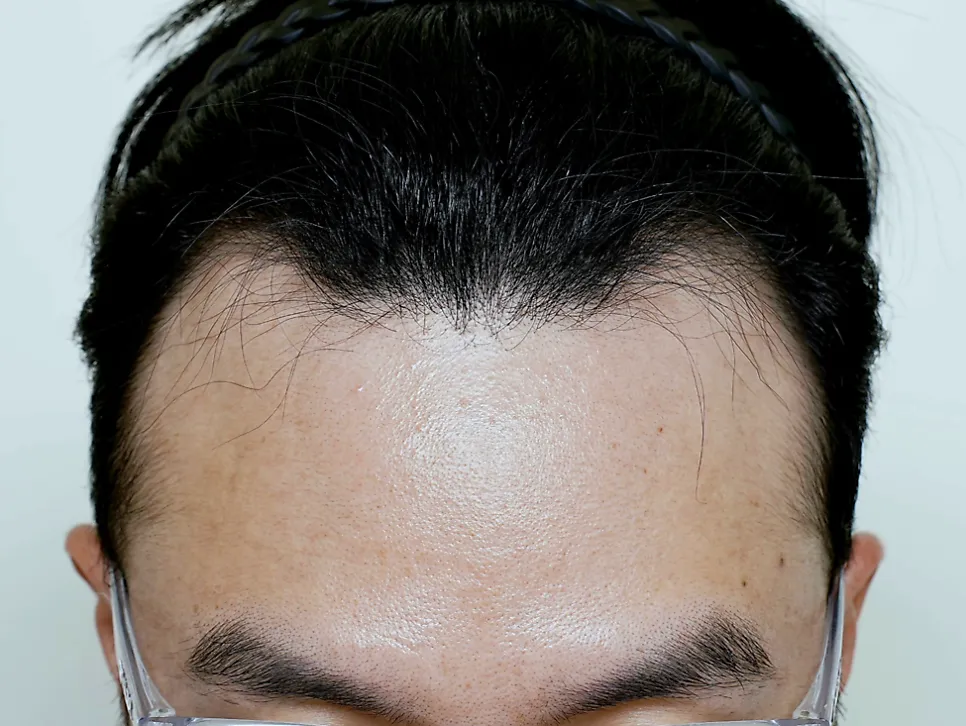
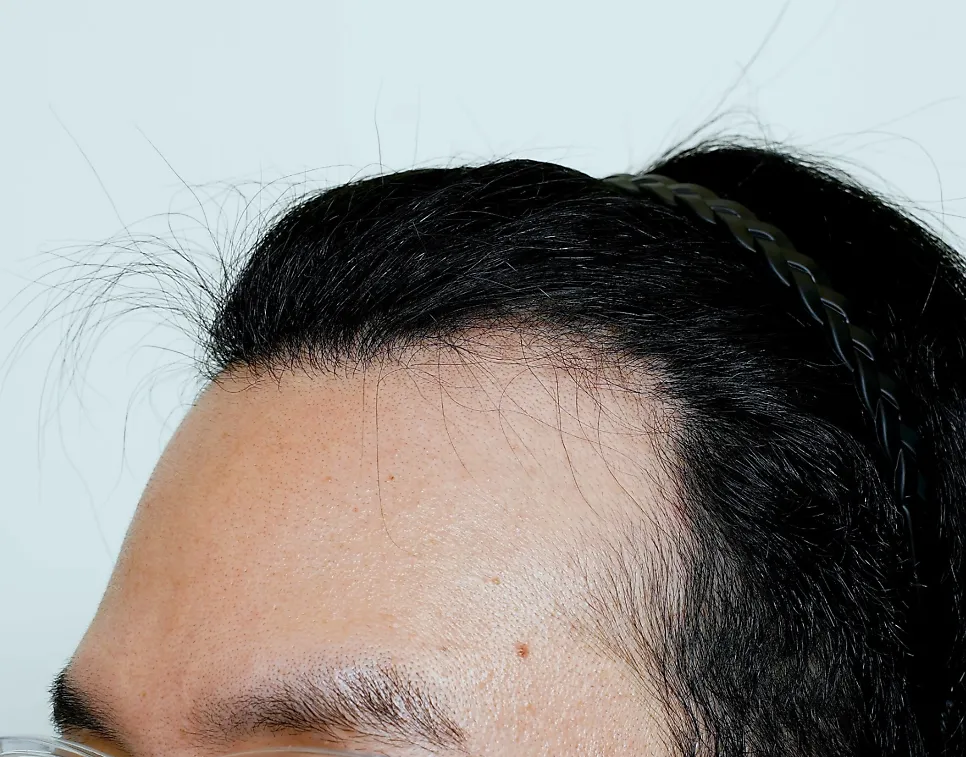
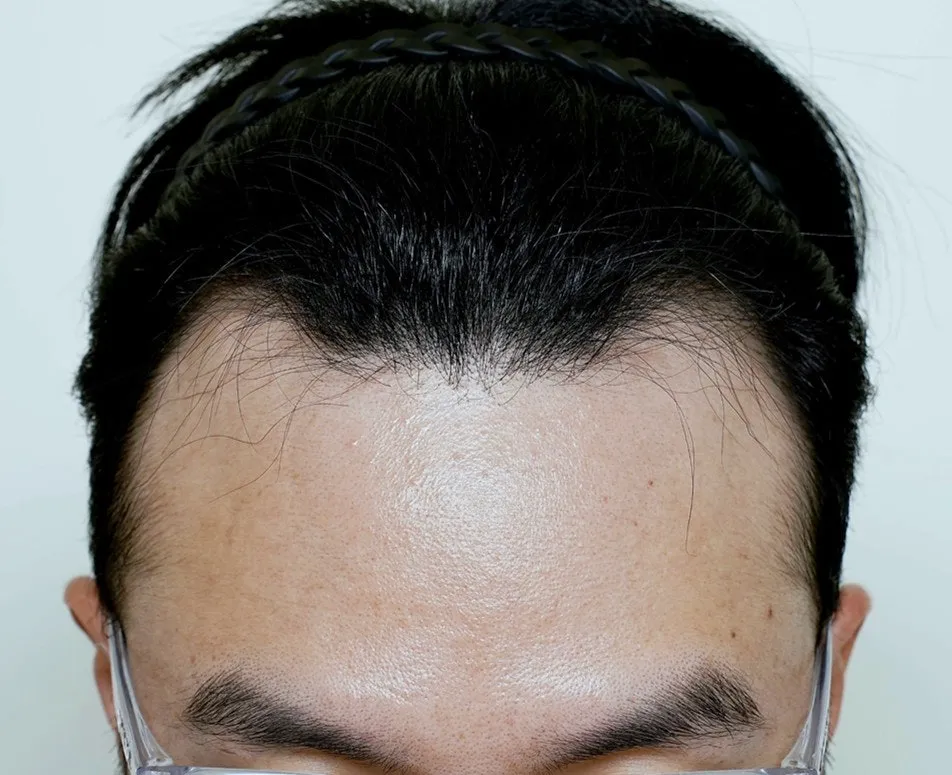
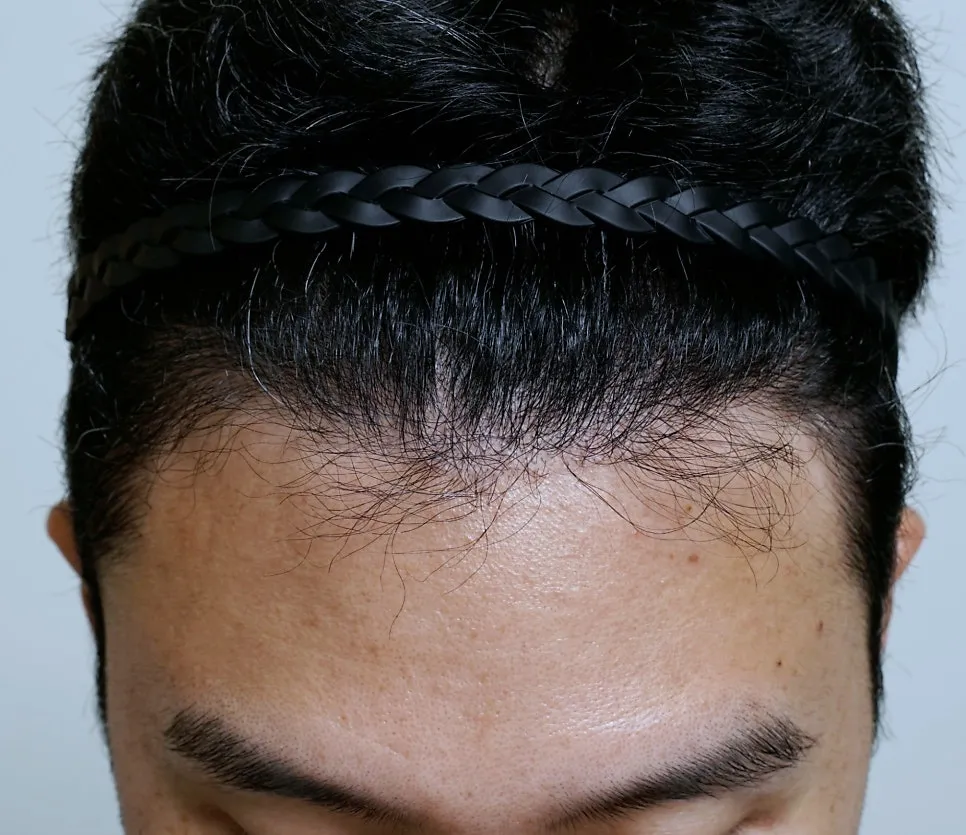
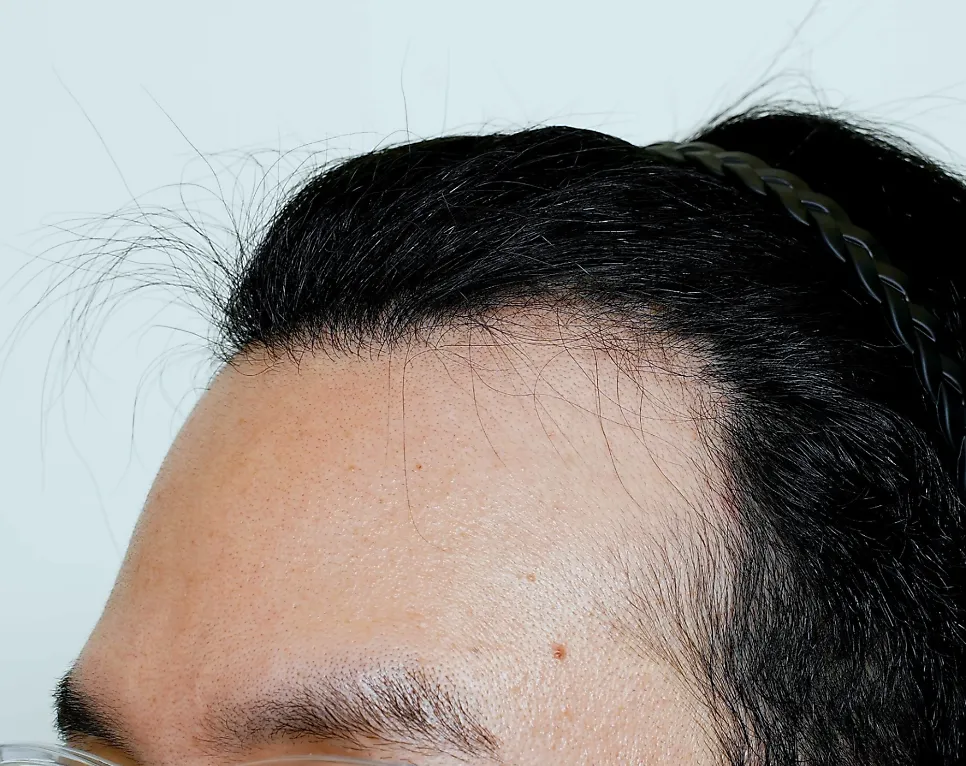
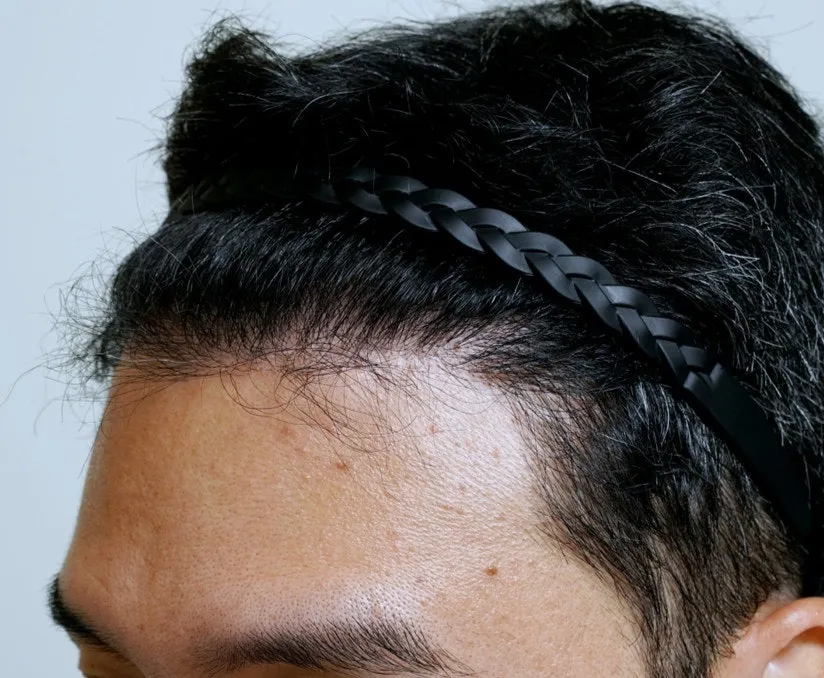
The patient above also came in for consultation because of concerns about the M-shape and forehead height. Lowering the forehead while filling in the M-shaped area can make the width on both sides look relatively wider, so we recommended a design that boldly pulls the sides as well.
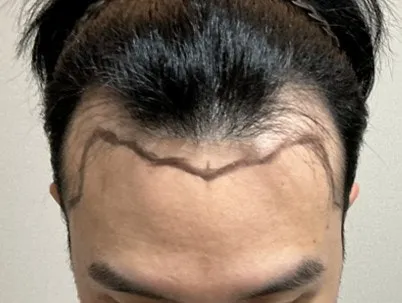
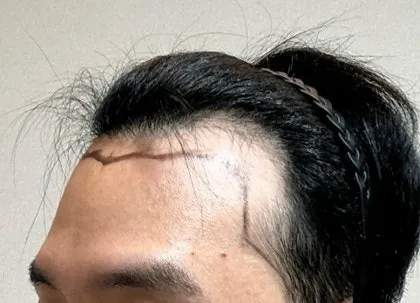
Challenging Side Hair Transplantation
However, side areas are quite challenging for hair transplantation. The biggest reason is the angle and direction in which the hair grows. Unlike the hair at the front, side hair grows almost flat against the skin, and if this natural angle is not reproduced properly, transplanted hair may stand away from the skin or look unnatural. In particular, because men's hair is short, hair that stands up is more noticeable.
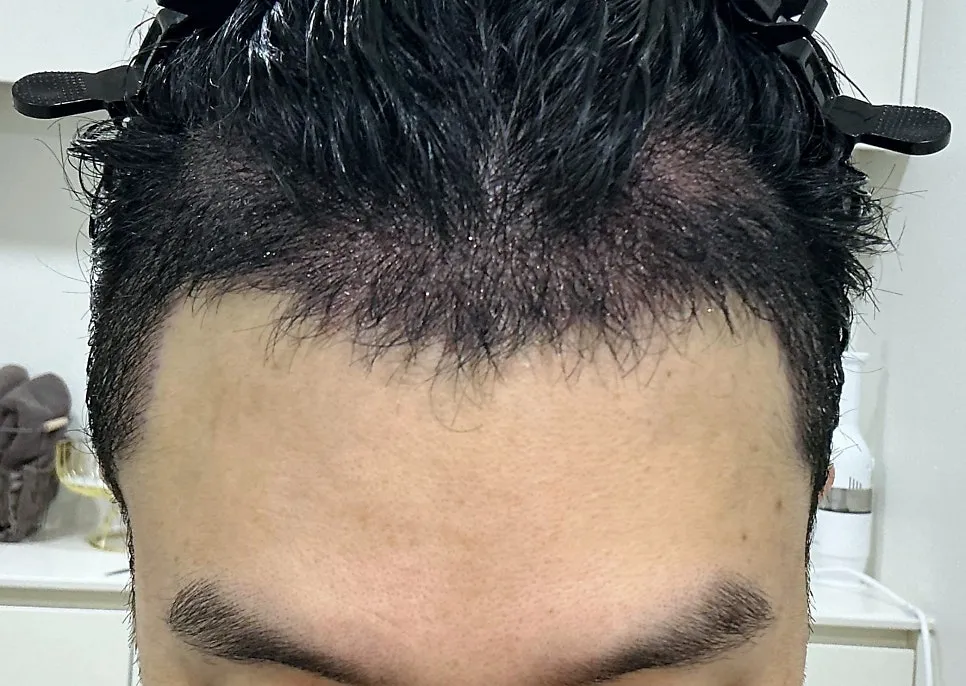
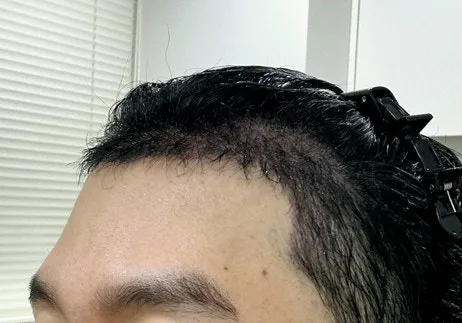
When the hairline is pulled far toward the sides, the number of hairs needed also increases considerably. For this reason, it is not possible for everyone, and there must also be enough hair at the back of the head to harvest. This patient received about 6,200 hairs in total, combining incision and non-incision methods.
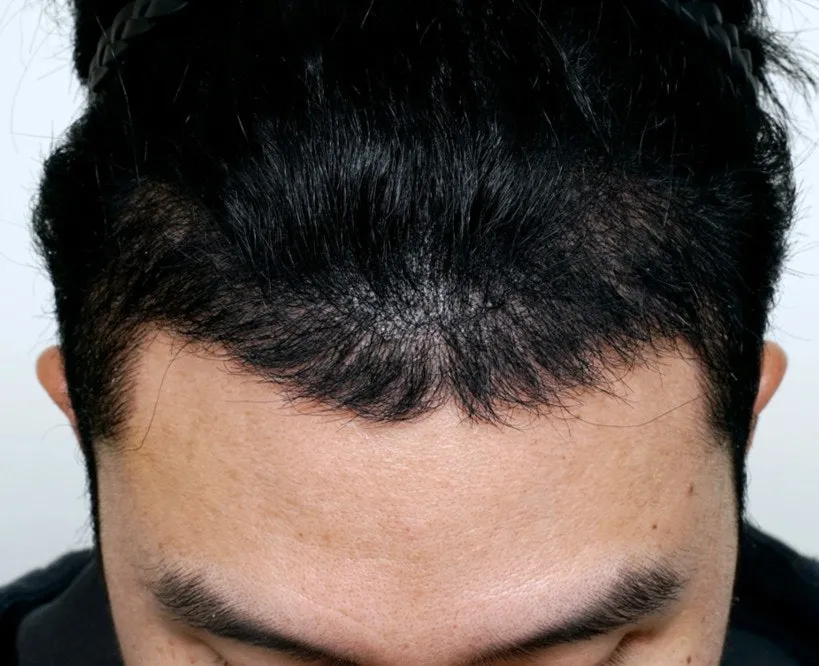
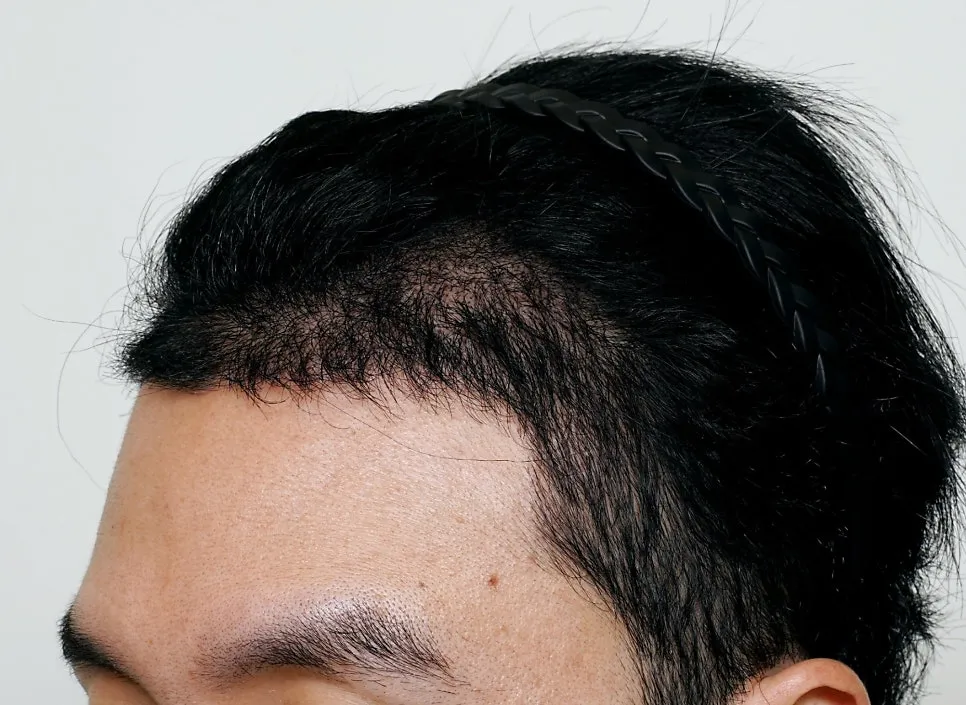
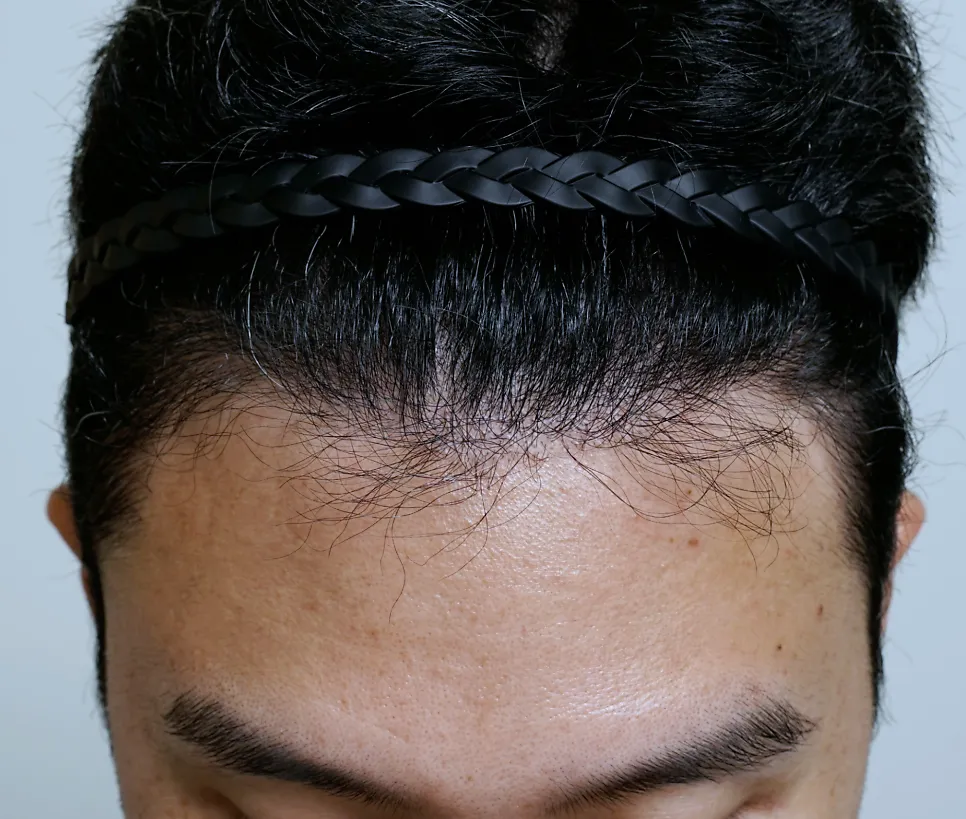
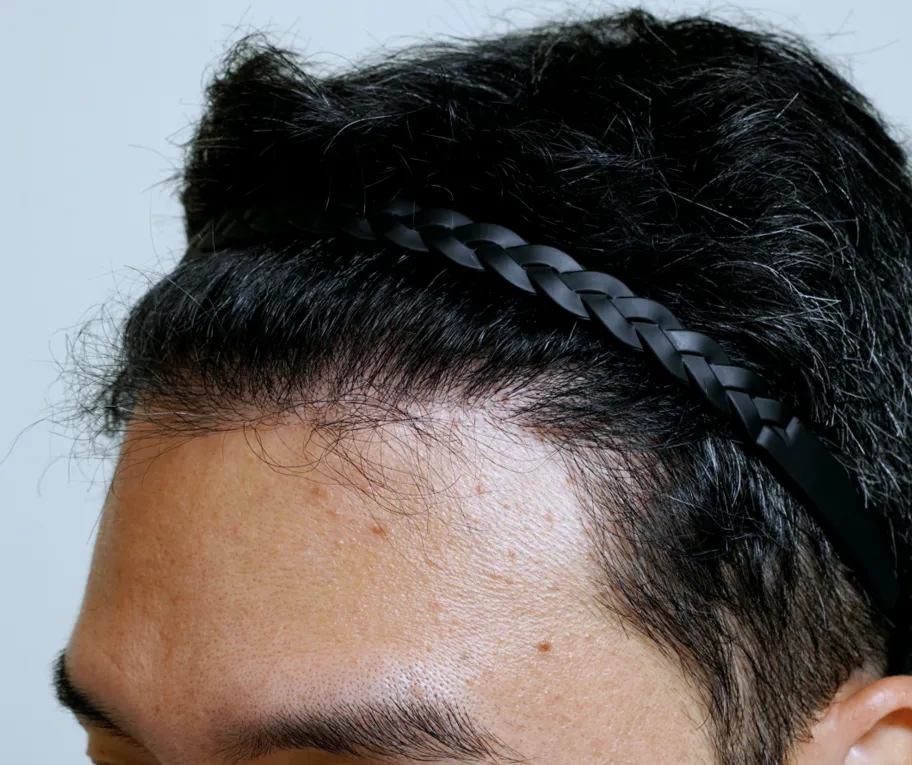
The photos above were taken when the patient came in 10 days after surgery to have the stitches removed, and when the patient recently visited to get a prescription for hair loss medication. Since a lot of hair was taken from the back of the head, it is also important to take hair loss medication consistently. It has been six months, and the hairline is already taking shape nicely. I look forward to seeing how it looks one year from now.
Side Hair Transplantation Is Also Challenging for the Surgeon
Side transplantation is also not easy from the surgeon's perspective. Because the hair must be implanted at an angle nearly parallel to the skin, the surgeon has to hold the wrist in a quite uncomfortable position, and working for a long time puts strain on the wrist. To create a natural side hairline, many single-hair grafts must be used, so more effort goes into selecting and separating follicles, and the procedure takes longer.
For these reasons, some clinics do not actively recommend side hair transplantation for men. However, when a man's side hairline is well formed, he looks really handsome. So, as long as the density at the back of the head is sufficient and there is no problem when future hair loss progression is also taken into account, I intend to keep recommending the Beanie Peak.
※ Side effects such as pain, infection, swelling, and bleeding may occur after hair transplantation. ※ All photos on this blog are used with the patient's consent.