By Dr. Kim Narae · 2026.05.19
Shaved Non-Incision, No-Cut Non-Incision, Long-Hair Non-Incision
Methods for harvesting hair for transplant are broadly divided into incision and non-incision, and non-incision is further divided into shaved non-incision, no-cut (non-shaven non-incision), and long-hair (long-hair non-incision).
Recently, through the latest study by Dr. Georgios Zontos published in the international hair transplant journal Hair Transplant Forum International (2026), I would like to analyze in depth the differences between non-shaven non-incision, which harvests without shaving compared with the conventional non-incision method, and long-hair non-incision, which harvests hair without cutting it.
What Is Non-Shaven Non-Incision?
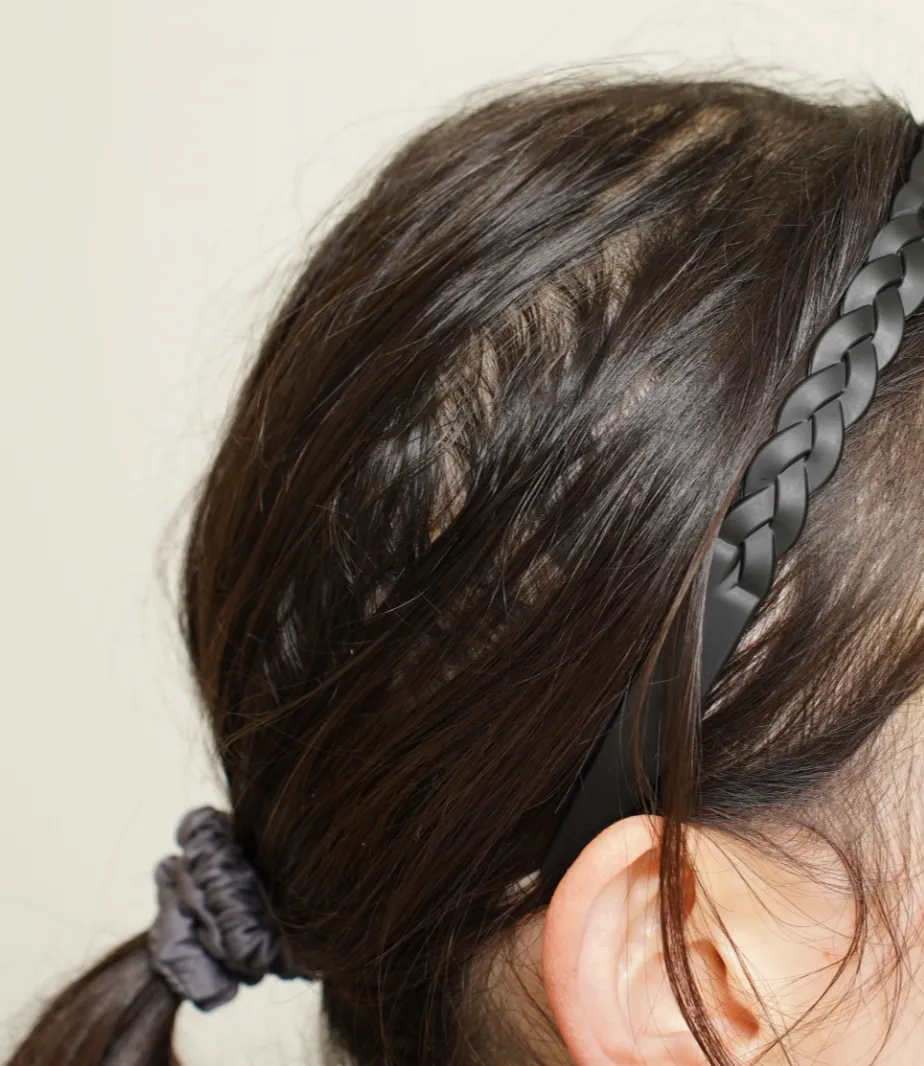
Around the world, non-incision hair transplant is widely performed by shaving the back of the head short and then harvesting the follicles. In Korea, however, the technique of harvesting follicles safely without shaving, known by various names such as no-cut, secret cut, and non-shaven, has been in use for quite some time. The conventional shaved non-incision method often makes the hairstyle look awkward for a period after surgery because of the shaving at the back of the head, which often affects work life and face-to-face activities.
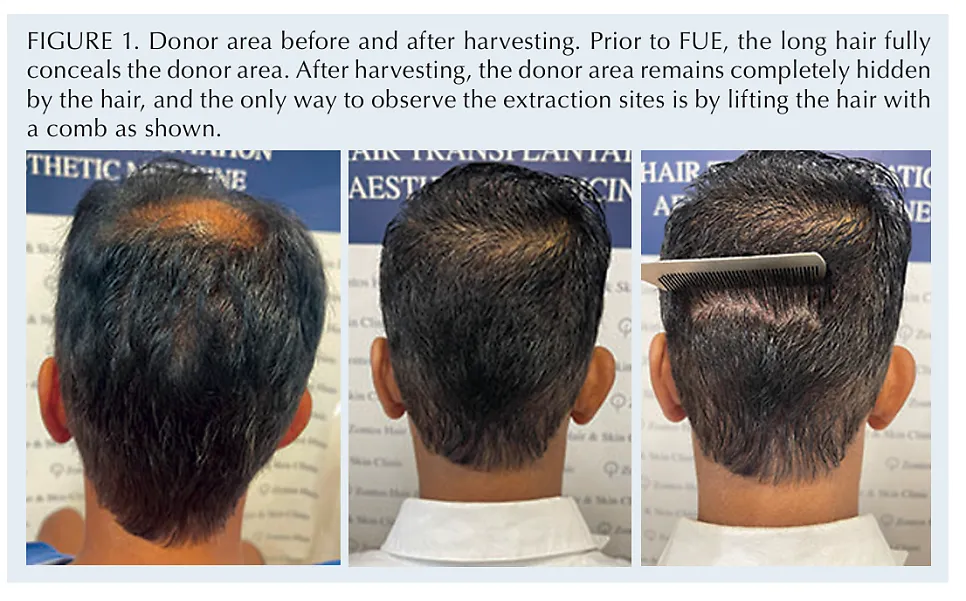
However, the non-shaven non-incision method has the advantage of a much faster return to daily life after surgery. It is a precise surgical technique that selectively harvests only the necessary follicular units without cutting any hair at the back of the head, keeping the long hair as it is. Even right after surgery, the existing hair covers the harvesting marks completely, so there is an overwhelming advantage that no one around you can tell that surgery was done.
Comparison of Conventional Non-Incision, Long-Hair Non-Incision, and Non-Shaven Non-Incision
Based on the content of the paper, we compared the characteristics of conventional non-incision (Conventional FUE), long-hair non-incision (Long Hair FUE), and non-shaven non-incision (NS-FUE).
Shaving at the back of the head: conventional non-incision requires full or partial shaving, while long-hair non-incision and no-cut non-incision require no shaving.
Length of transplanted hair: conventional non-incision transplants very short hair, long-hair non-incision transplants the hair while it is still long, and no-cut non-incision transplants hair in a short state.
Visibility right after surgery: conventional non-incision leaves visible marks from shaving at the back of the head. Long-hair non-incision is not noticeable at either the back of the head or the transplant area, and no-cut non-incision is not noticeable because the back of the head is covered by the existing hair.
Visibility during follicle harvesting: conventional non-incision is excellent. Long-hair non-incision requires high-level technical skill to secure visibility because of the long hair, and no-cut non-incision needs supplementary technical skill to secure visibility.
Follicle damage rate: conventional non-incision is low. Long-hair non-incision can be relatively higher because visibility is limited, so harvesting the same level of follicles requires a lot of experience and high technical skill. No-cut non-incision can be kept as low as the conventional FUE level through technical improvements.
The Key to Technical Improvement
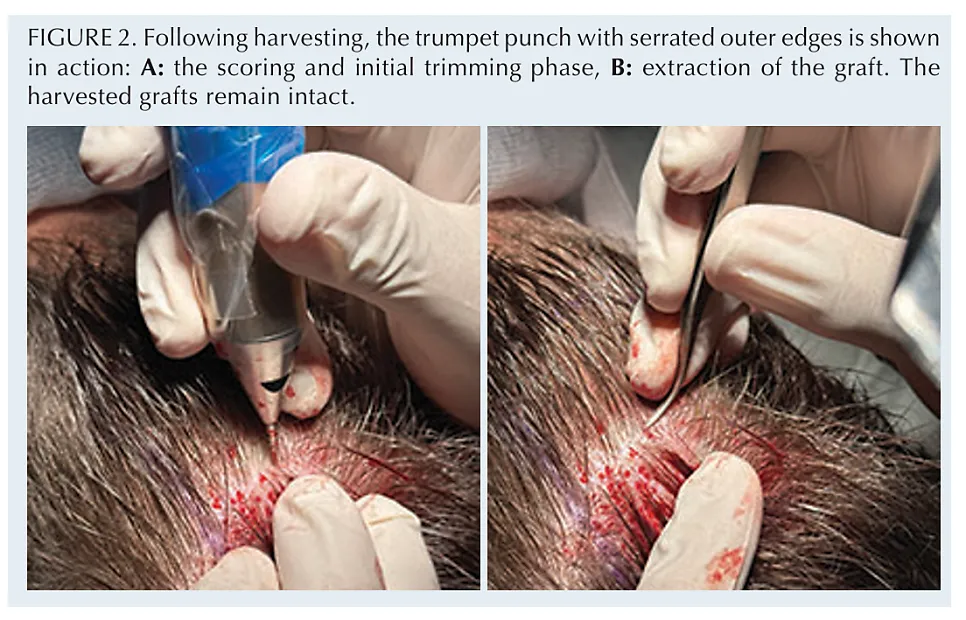
Dr. Zontos states that no-cut non-incision gives patients the greatest satisfaction, but from the surgeon's point of view it is a very difficult procedure, because the follicles must be harvested at the correct angle among uncut long hair. Through this paper, he presented the key technical improvements that overcome these limits and introduced the advantages of non-shaven non-incision.
As a harvesting technique to minimize follicle damage, he explains the importance of the rotation direction and speed of the punch blade as it separates the follicle from the scalp, as well as the anesthetic solution that makes harvesting easier.
Advantages of non-shaven non-incision over long-hair non-incision: long-hair non-incision requires even more skilled technique, because hair can tangle during harvesting and the risk of follicle damage can be greater. On the other hand, with non-shaven non-incision, the hair of the follicles to be harvested is selectively cut very short, so visibility is good, and the follicle quality is also said to be more stable.
Clinical Results and Patient Satisfaction
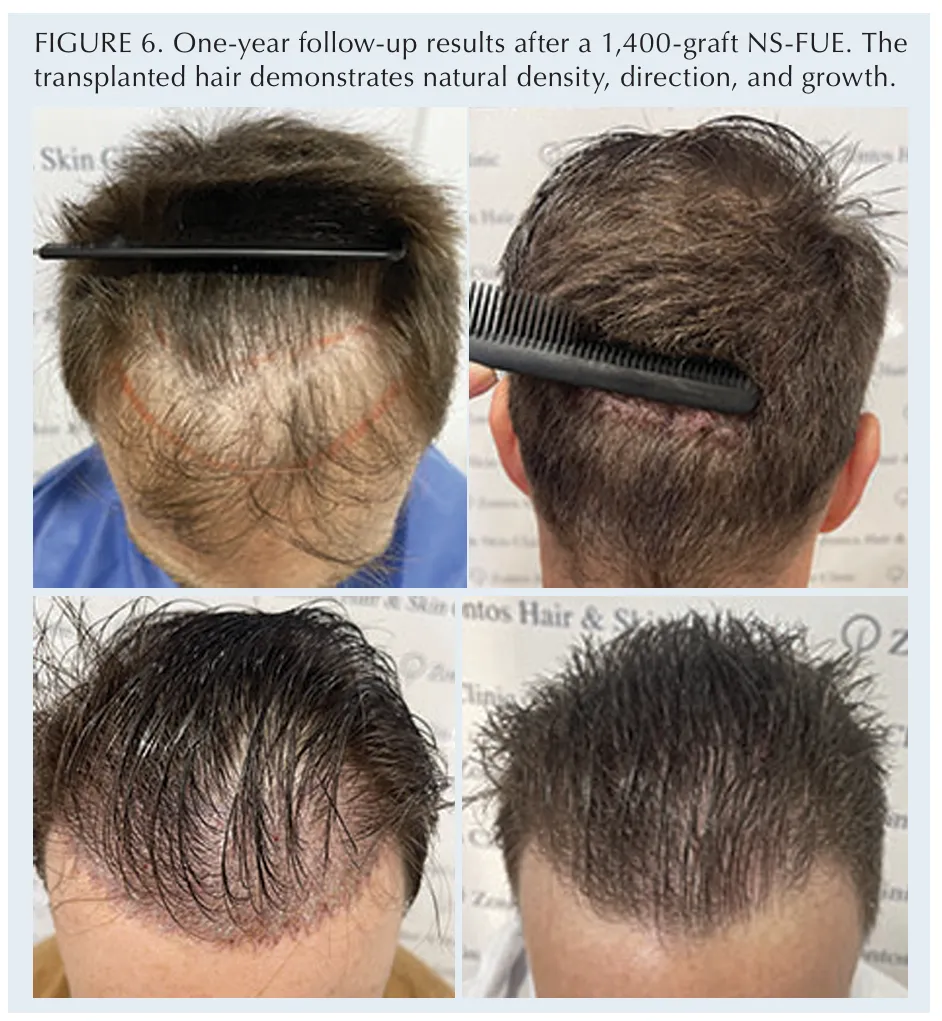
According to the clinical data of this study, patients who underwent non-shaven non-incision showed outstanding results on the following subjective and objective measures.
Complete privacy protection: this is the most important point. Patients were able to keep their surgery completely private, and even when they went to work the day after surgery, their colleagues did not notice.
Preservation of donor-area density: harvesting is distributed according to precise density calculations, which prevents side effects such as a sparse-looking back of the head or prominent scars after surgery.
High follicle survival rate: thanks to precisely harvested follicles, the final hair density and thickness were on par with, and as good as, those of the conventional and non-incision methods.
Options for Patients Who Cannot Shave the Back of the Head
I have many important meetings after surgery and need to get back to social activities right away. I want to have a hair transplant without others noticing. I'm afraid of incision scars, and shaving the back of my head is difficult too.
For many practical reasons it is difficult to shave the back of the head, yet many people feel they must stick to a non-incisional surgery. The no-cut and long-hair non-incision methods explained above may not be a method that can be applied unconditionally to every patient. However, for those who have hesitated about surgery because of the burden of shaving, they are an option with enough value to resolve that concern.
In the end, the key is finding a hospital that can fully realize these various technical options and possibilities. As many papers also emphasize, no-cut and long-hair non-incision are high-difficulty areas that require the surgeon's precise hand skills and extensive clinical experience. Therefore, please be sure to discuss in depth with an experienced hair transplant specialist, and we recommend planning the surgical approach most suitable for your hair condition and lifestyle.
References: Georgios Zontos, "Non-Shaven Follicular Unit Excision (NS-FUE): Technical Refinements, Clinical Outcomes, and Comparison with Conventional and Long Hair FUE," Hair Transplant Forum International, 2026.