
By Dr. Park Sooho · 2026.05.03
Cowlick
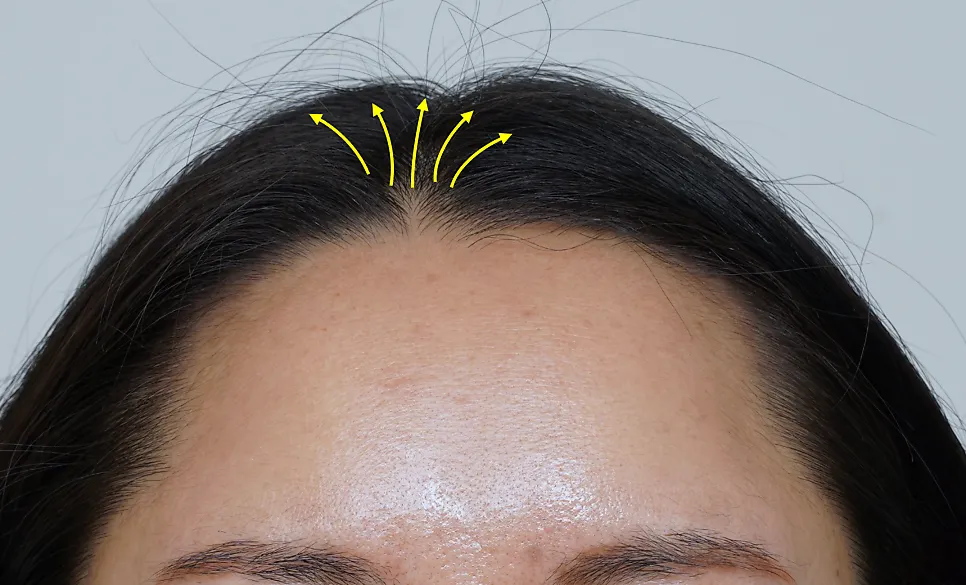
Hair at the front of the hairline that grows backward is called a "cowlick." In English it is also called "cowlick" (as in a cow licking), which is interesting. However, for people who actually have cowlicks, it is not all fun, because it makes it hard to achieve the hairstyle they want and is inconvenient in daily life.
So among people who come for hair transplant consultations and have cowlicks, we try as much as possible to correct the cowlick by changing the direction of the hair. Let me introduce two methods of correction.
Gradually Matching the Original Hair Direction
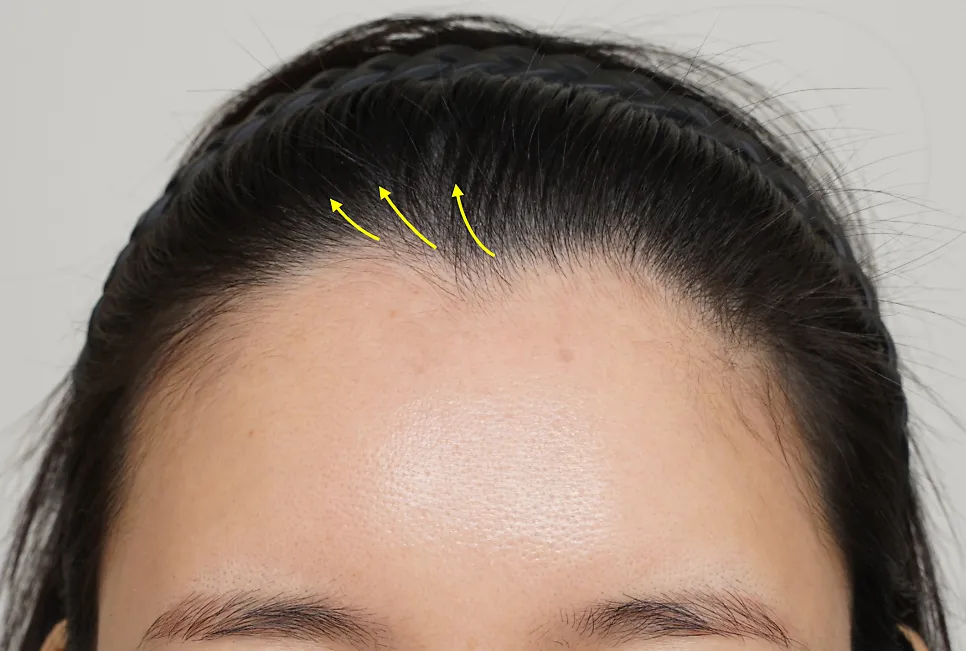
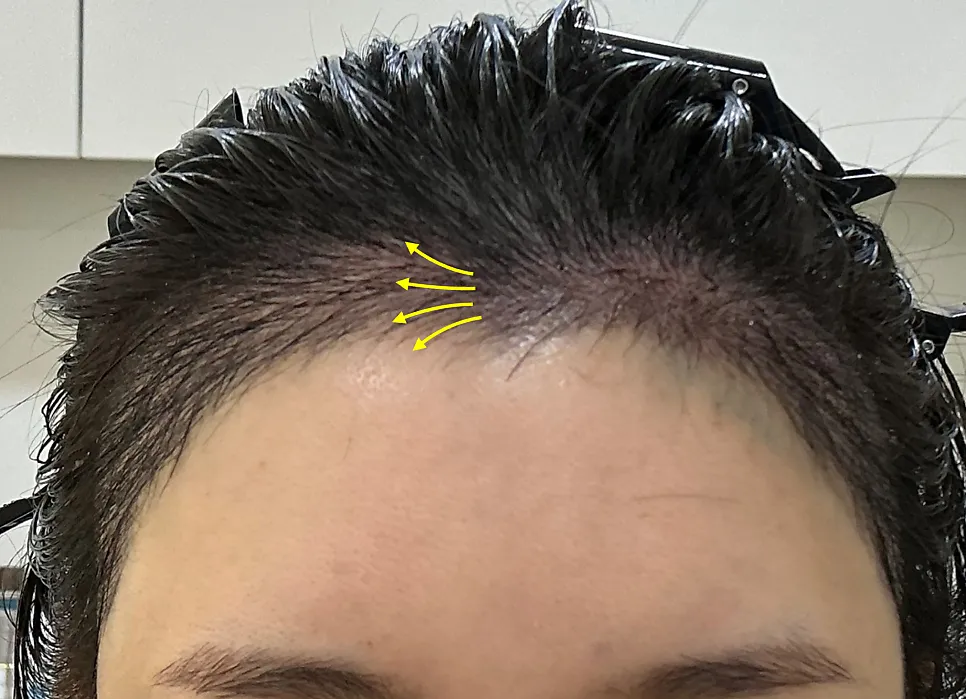
The first method, as shown in the photo above, is to make the frontmost direction of the hairline being corrected fall downward, and gradually match the original hair direction toward the back.
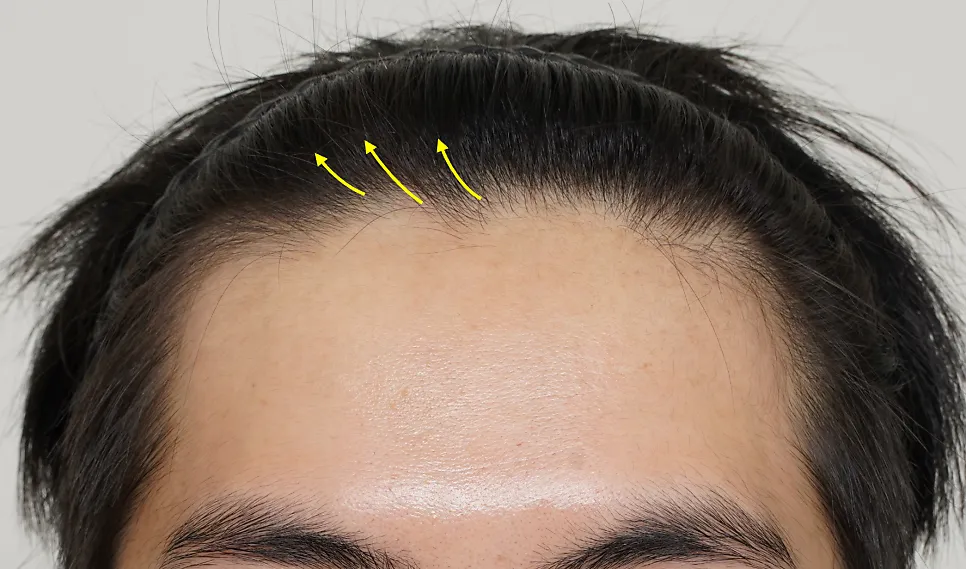
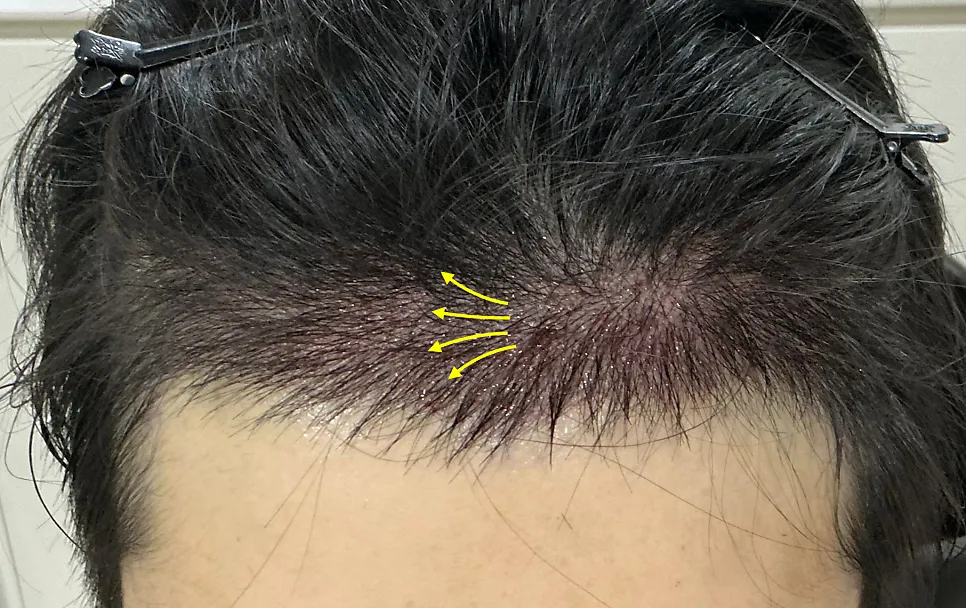
The same applies to men. Usually, many have a cowlick only on the right side, so you simply transplant following the hair direction on the left side and gradually change it on the right side.
However, when there are cowlicks on both sides or the hair direction changes abruptly, this method is difficult to use for correction.
Transplanting with Substantial Overlap
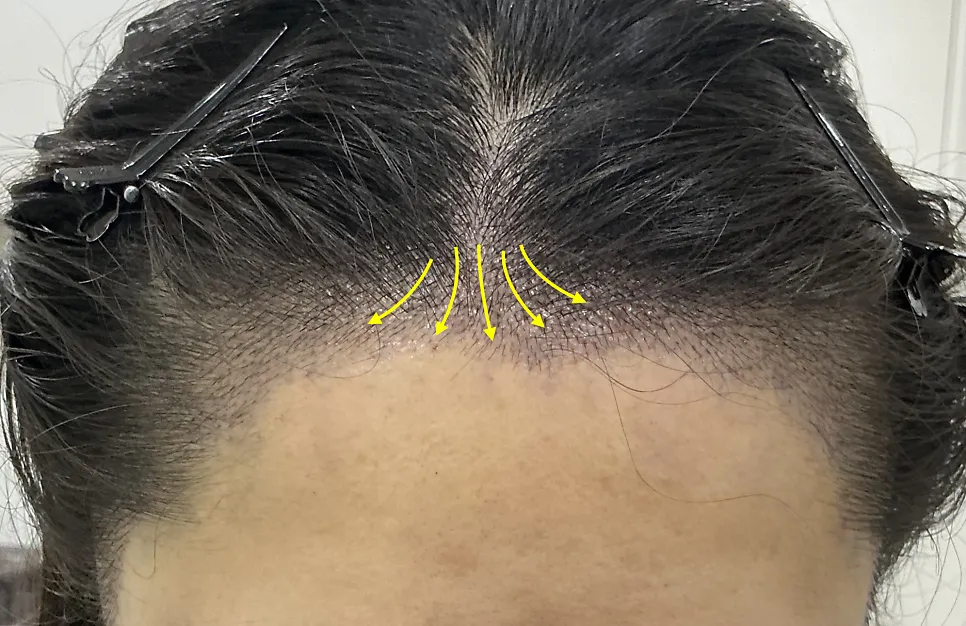
The photo above shows a person with cowlicks on both sides. In such cases, the transplant is done in a new direction regardless of the original direction, and since the direction of the existing hair and the transplanted hair differ, the boundary may look empty, so the transplant must overlap considerably to prevent a gap at the boundary.
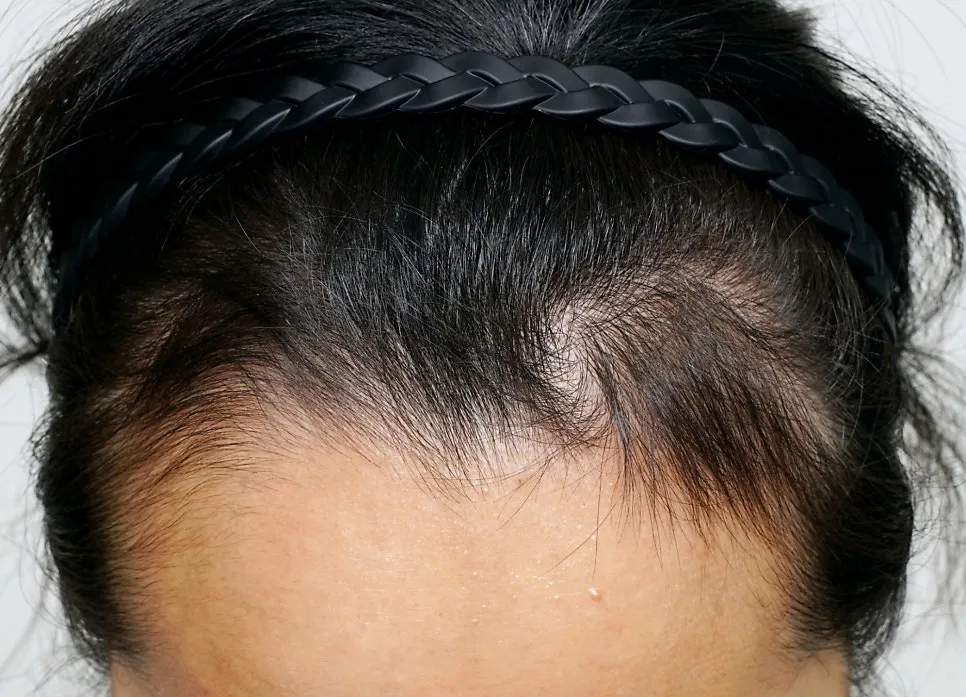
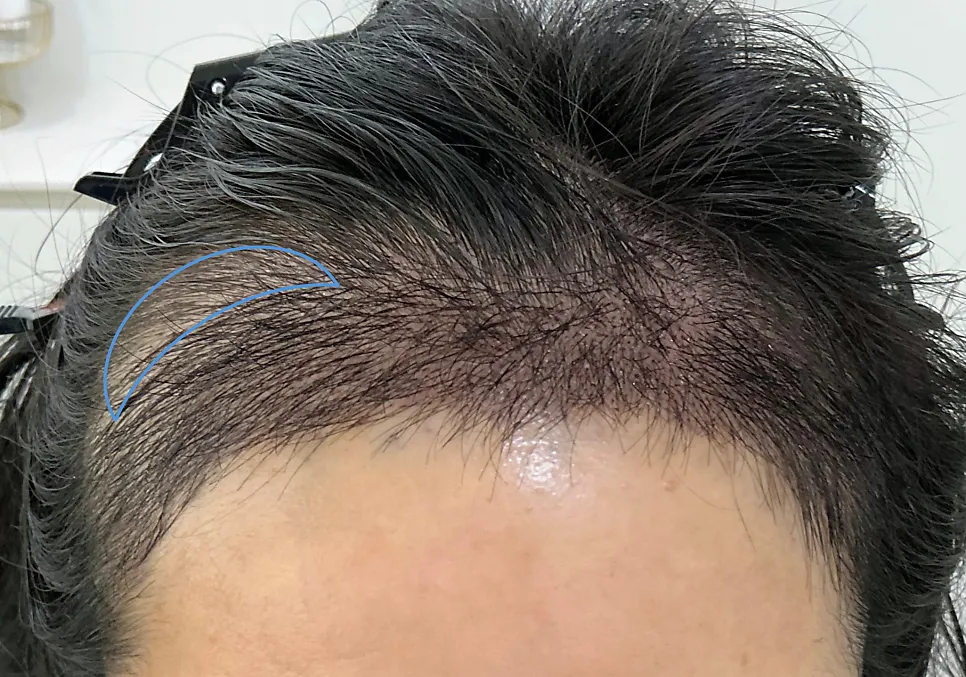
The patient above has a distinct front whorl, so the direction of the hair changes sharply along the hairline. Even in a case like this, it is difficult to change the direction gradually, so the correction can be made by grafting the whole whorl area and the cowlick area together. When such a wide area is grafted in an overlapping way, the number of hairs needed also increases a lot.
During the surgery, the area that needed to be overlapped turned out to be wider than expected, so even after using all the hairs harvested with the incision method, there were slightly not enough hairs. To make up for the shortfall, we harvested more hairs with the non-incisional method and filled in the density at the back. The short hairs planted inside the blue outline in the photo are the hairs harvested with the non-incisional method.
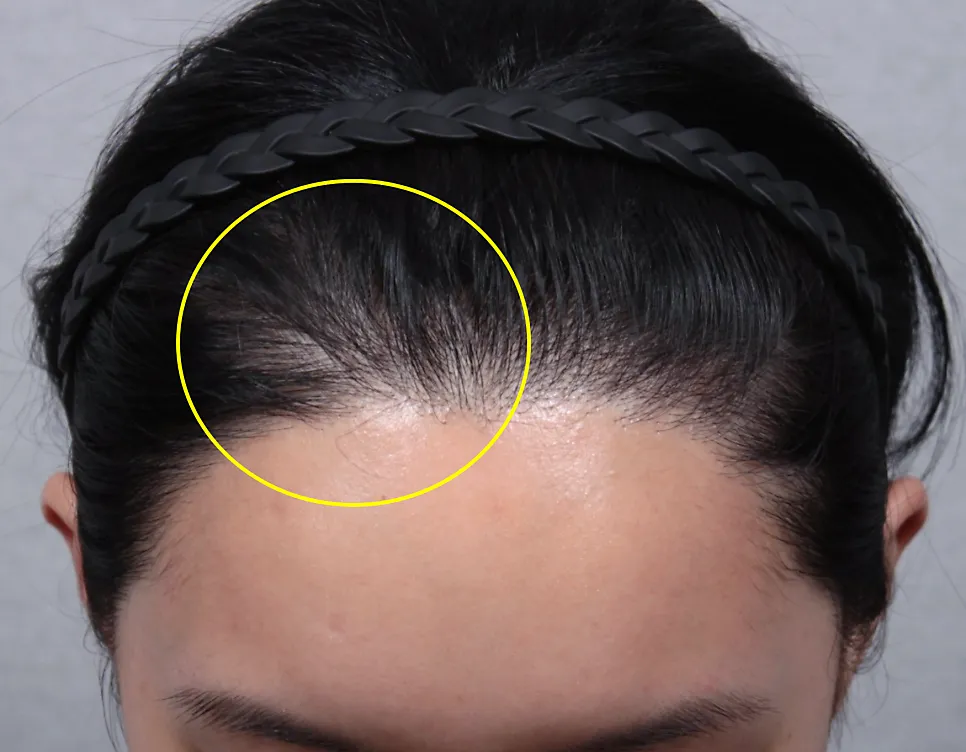
Density at the point where the direction changes
When the cowlick is corrected, as in the photo above, the density may look lacking at the point where the original hair direction meets the direction of the transplanted hair. In such cases, reinforcing the border area with a small amount of hair transplant mostly resolves the issue.
What people who have had their hairline corrected say most often is this.
"It takes so much less time to style my hair." "My daily life has become so much more comfortable."
※ Side effects such as pain, swelling, inflammation, and bleeding may occur after hair transplant surgery. ※ All photos on this blog are used with the patient's consent.


