By Dr. Kim Narae · 2026.04.30
Incisional or Non-Incisional: Which Fits Which Case?
Many people who are about to undergo a hair transplant agonize over choosing between the incisional and non-incisional methods. In fact, about half of the patients who visit us are recommended the harvesting method best suited to their case through consultation, so let me outline which method is more suitable in which situations.
When Non-Incisional Is Recommended
If scalp elasticity is poor and it is difficult to secure the needed hair count with the incisional method, we recommend the non-incisional method. The incisional method determines the harvest count by calculating scalp elasticity and the length that can be incised. Within the same sex, the variation in incisable length is not large, but the variation in elasticity is fairly large.
If the hair count available is not far short of what is needed, adding a small non-incisional harvest can also be an option. However, when the gap is large, we tend to recommend the non-incisional method rather than doing both incisional and non-incisional together, because, without a special reason, you may end up experiencing the drawbacks of both methods.
For crown hair loss transplants with a high ratio of single-hair follicles, we recommend the non-incisional method. In particular, in women there is a need to place multi-hair follicles as much as possible along the part line, and when the occipital density is poor and the ratio of single-hair follicles, where one follicle produces only one hair, is high, we recommend the non-incisional method. (In men, the occipital area often still has good density, and beard hair can also be used as a donor source, so this often does not apply.)
Of course, there is also a method of pairing two or three single hairs so that they grow as multi-hair follicles when transplanted. However, when the occipital area is poor like this, there are many cases where a considerable number of multi-hair follicles remain near the nape, areas that are hard to harvest with the incisional method, and the non-incisional method has the advantage of selectively picking multi-hair follicles from the occipital area. When occipital density is quite low, harvesting all the needed hair with the incisional method requires fairly good scalp elasticity both above and below the incision; if not, the non-incisional method alone is used to harvest safely without creating a linear scar on the back of the head.
For cases where pain or the psychological burden of the incisional method is significant, we recommend the non-incisional method. Even with the incisional method, major pain subsides in about 3 days with appropriate pain medication, but for those who feel fear about the act of incision itself, the non-incisional method, which offers greater psychological comfort, is recommended.
The non-incisional method is recommended when avoiding a linear scar is preferred or when post-operative care is limited. There are cases where it is hard to come back to the clinic to have the sutures removed 10 days after surgery. Even within Korea, if the distance is too far or the patient lives overseas, and if they are averse to a linear scar itself, the non-incisional method can be a reasonable choice.
When Incisional Is Recommended
Incisional may be recommended for those whose occipital density has decreased due to a past non-incisional procedure. Repeated non-incisional harvesting two or more times can cause areas that are partially uneven and have severe density loss. Styling also becomes harder, and it is difficult to secure a sufficient amount of hair during harvesting.
In this case, harvesting the hair from the central occipital area, which lasts longest in the donor area, with the incisional method has the advantage that the transplanted hair can be used for longer in the recipient area, and it is also a way to maintain the volume at the back of the head. Regardless of past non-incisional procedures, if the back of the head is very flat, incisional may be recommended to maintain volume.
When a large number of single hairs is needed, incisional may also be recommended. The non-incisional method targets multi-hair follicles in order to leave as little scarring as possible and for surgical efficiency.
For designs that require a large number of single hairs, for example a design where the side margins are very large and the side hairline has to be moved backward and upward by a facelift, so that the entire side line up to the sideburns has to be newly created, incisional may be recommended because natural single hairs are also harvested. Even in women with very thick hair, more single hairs may be needed for the same design, so the incisional method can be advantageous.
When a Combo of Incisional and Non-Incisional Is Recommended
When the transplant area is extensive and more than 5,000 hairs are needed, a combo approach may be recommended. The combo method, which uses both the non-incisional and incisional methods, harvests as much as possible from the safe donor area with the incisional method, and only the shortfall in hair count is harvested non-incisionally above and below the incision line. It has the advantage of maximizing harvesting efficiency and collecting a large amount of hair in a short time.
So far we have looked at cases where incisional is recommended, cases where non-incisional is recommended, and cases where a combo approach using both methods is recommended. These include some of my personal views, and since it is difficult to list every case, I have only introduced the tip of the iceberg. Finally, I would like to introduce one case of surgery using a combo approach.
A Case Treated with a Combo Approach
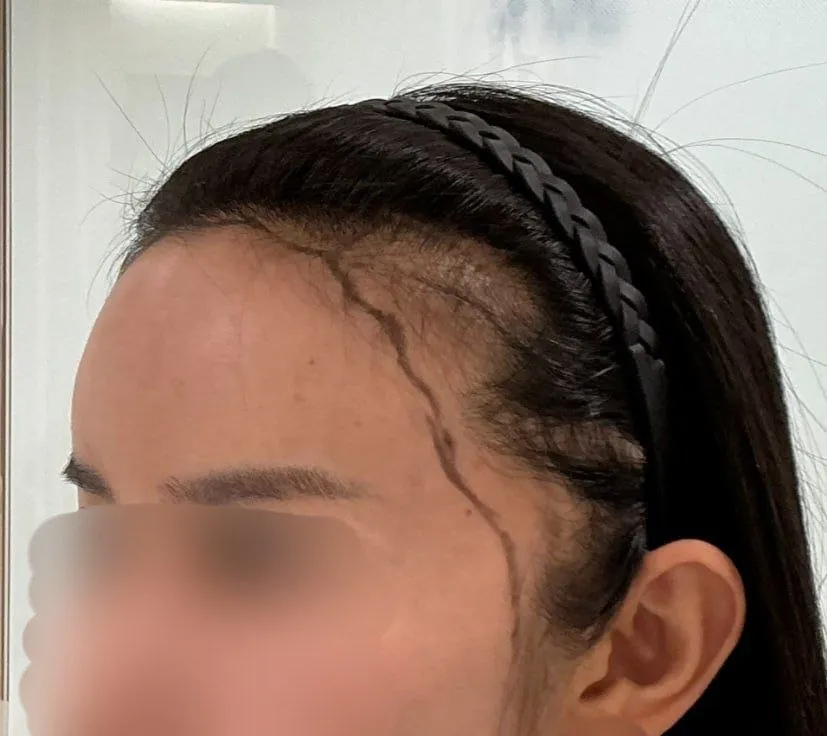
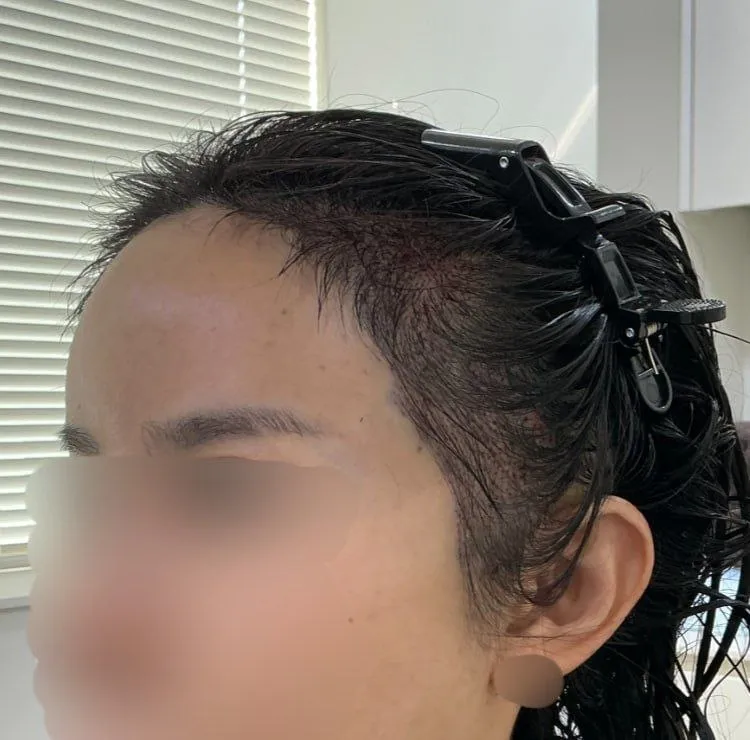
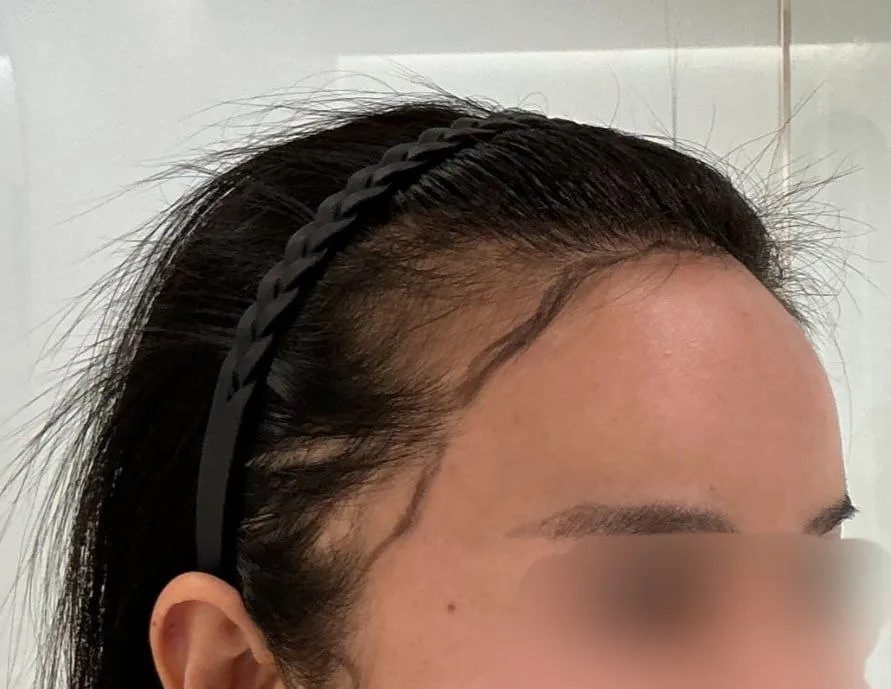
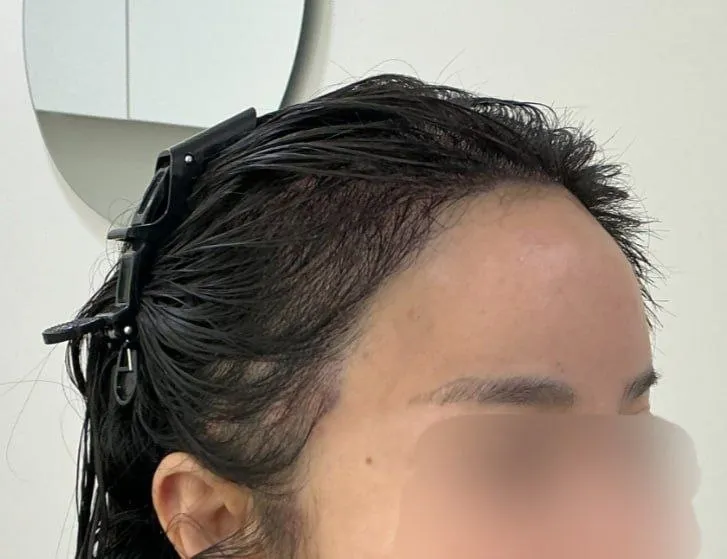
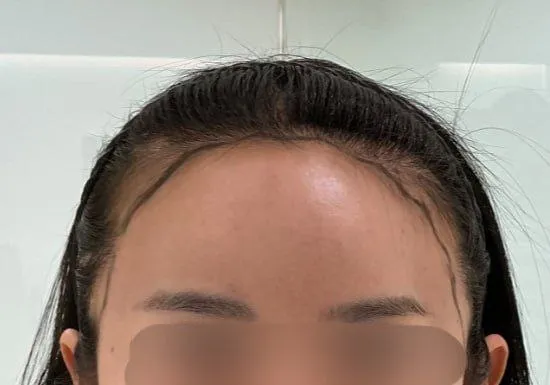
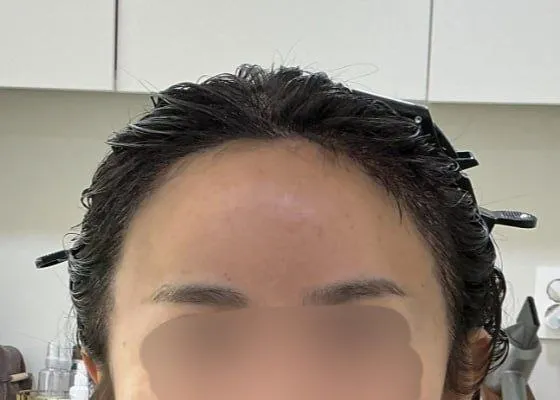
The total area of scars inside the scalp from various facial plastic surgeries, including facelift and brow lift, was fairly large, and because the facelift had moved the side hairline backward and upward, the side margins had also widened. About 4,300 hairs were needed in this case.
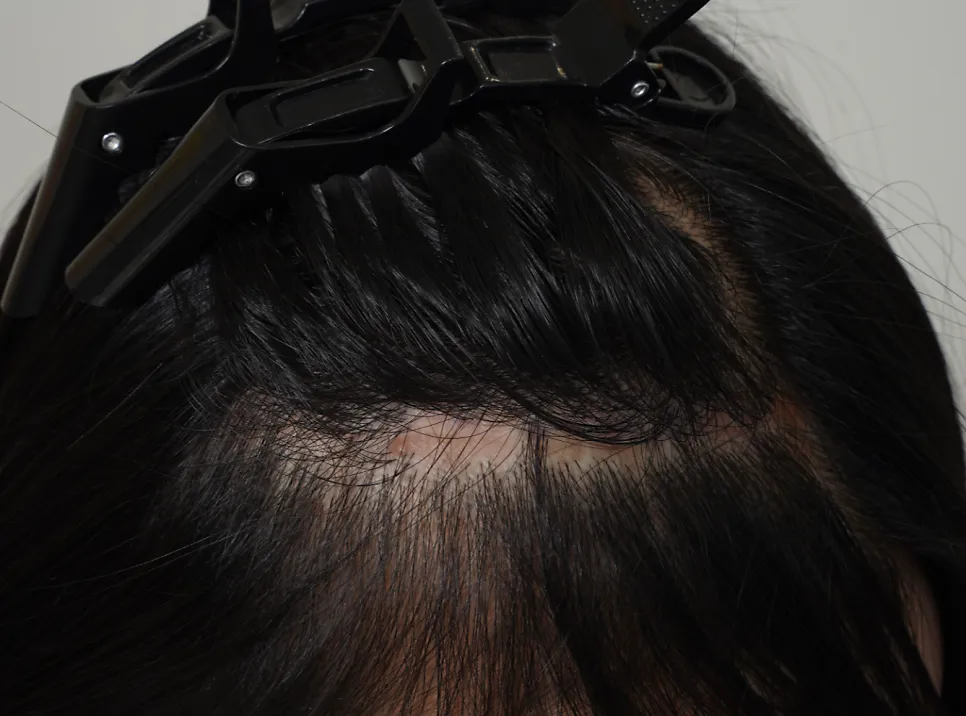
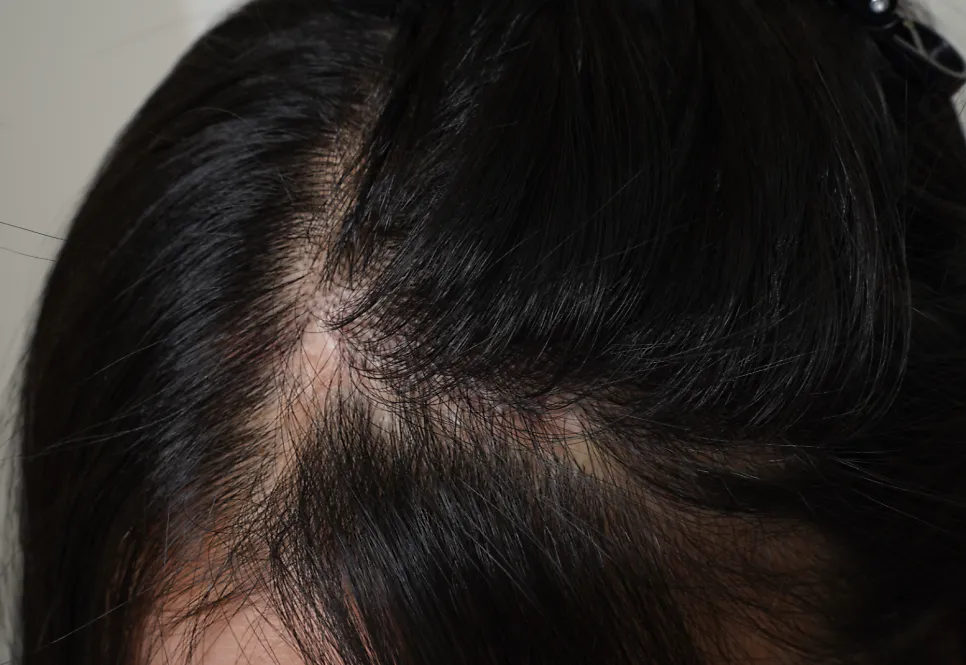
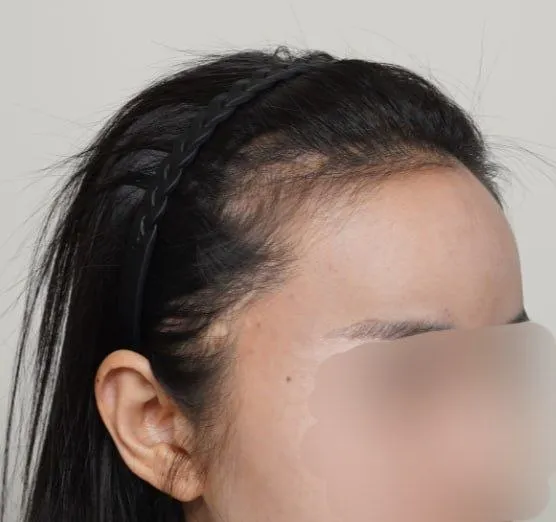
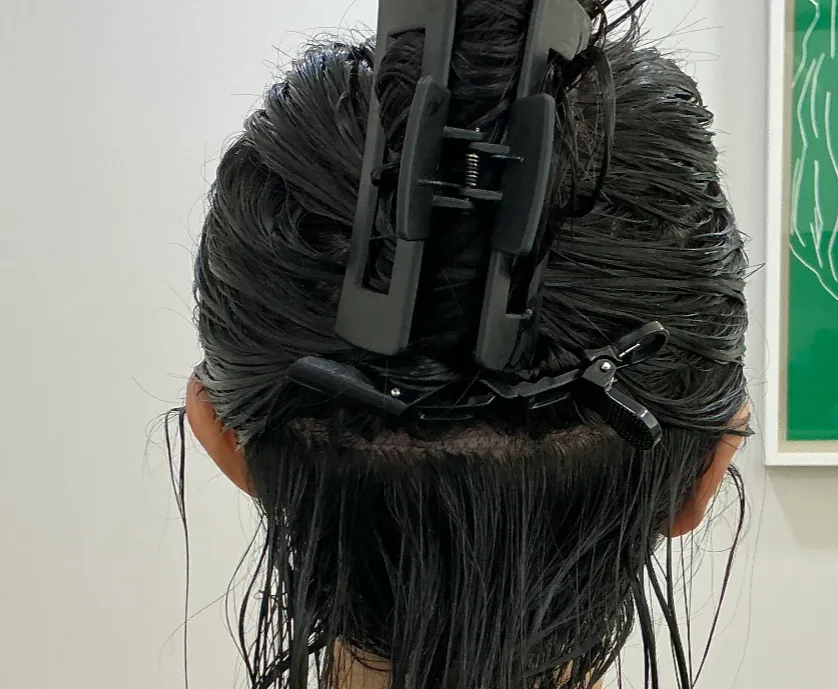
The patient wanted the transplanted hair to be transplanted as long hair. When scalp elasticity was measured, up to about 3,000 hairs could be harvested incisionally, so it was decided to harvest the remaining 1,300 hairs with non-incisional long-hair harvesting. When transplanting long hair like this, there is also the advantage of previewing the final result right after surgery, and within a day or two it becomes so natural that one could mistake it for the original hairline. However, the shedding period occurs in the same way, so I do not think it is a method that applies to every case.
Deciding the Surgical Method After Thorough Consultation
What I have introduced here is my personal view based on clinical experience, and it covers only a small part of the many factors to consider case by case. In particular, the optimal method can vary depending on each patient's unique occipital conditions, transplant area, and design.
However, hair transplantation goes beyond simply moving hair; it is a process of rebuilding a person's confidence. So I believe better results can come from deciding the surgical method after thorough consultation with experienced medical staff.
※ Side effects such as swelling, inflammation, bleeding, infection, and pain may occur after a hair transplant or forehead reduction. ※ All photos on this blog are used with the patient's consent.