
By Dr. Park Sooho · 2026.04.20
Large Transplants of More Than 5,000 Hairs
When a large transplant of more than 5,000 hairs is needed, it is important to choose the most suitable method according to the elasticity and density of the occipital scalp, rather than insisting on one approach, whether incisional or non-incisional.
If the scalp has good elasticity and density, more than 5,000 hairs can be harvested with the incisional method alone, and if hair density is high, even harvesting more than 5,000 hairs with the non-incisional method will not show the scalp through. However, when both the elasticity and density of the scalp are insufficient, a combined method using incisional and non-incisional harvesting together is often the best choice.
Cases Where Both Elasticity and Density Were Lacking
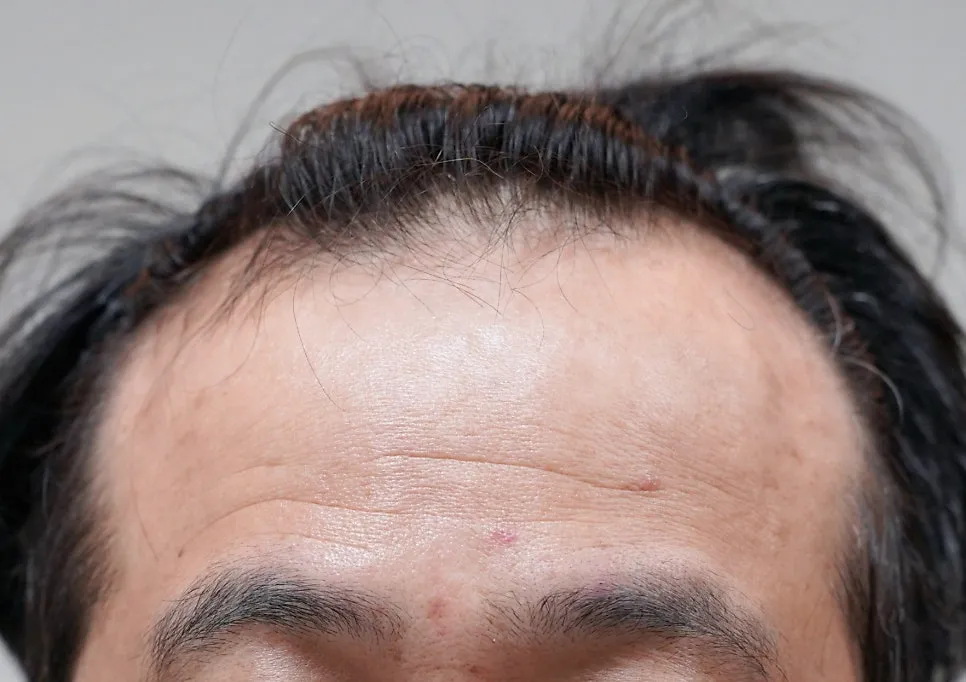
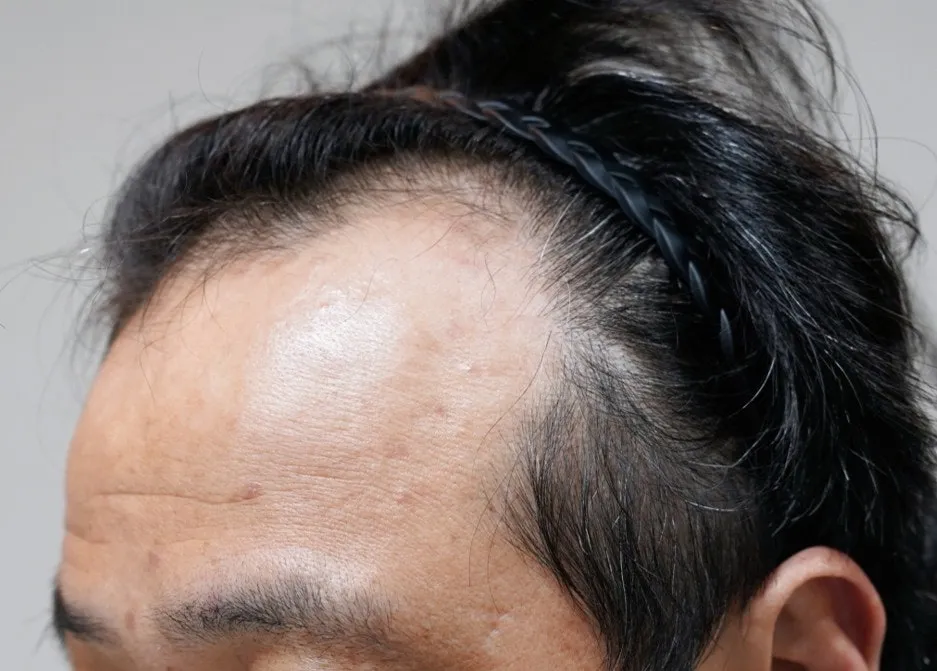
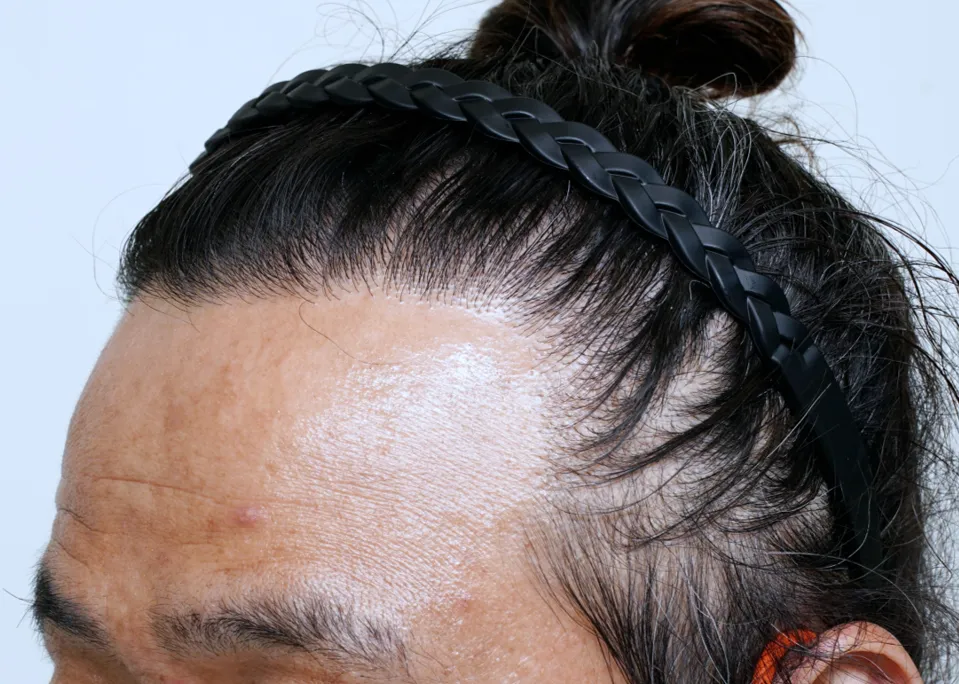
This patient came for a hair transplant due to deep M-shaped hair loss. The M-shaped area was deep and wide, and the density along the boundary was also much reduced, so about 5,000 hairs were needed to rebuild the hairline and fill in the density.
However, the problem was that harvesting 5,000 hairs with the incisional method would have required more scalp elasticity than was available, and since the overall hair density was relatively low, harvesting a large amount with the non-incisional method would have made the occipital scalp show through. This was a concern because the patient had already received a scalp tattoo.
We Decided on a Combined Incisional and Non-Incisional Approach
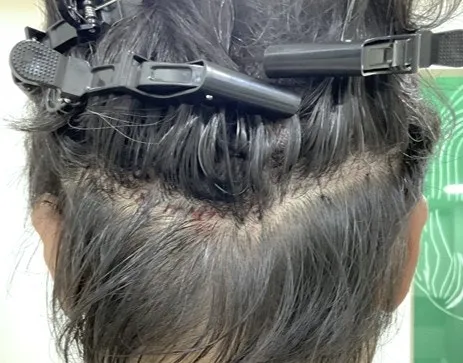
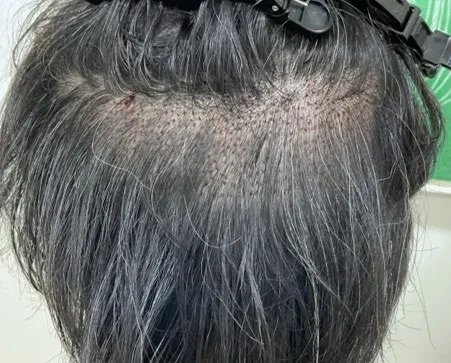
So we decided on a combined incisional and non-incisional approach. About 3,500 hairs were harvested with the incisional method from the area at the back of the head where the hair is sturdiest and densest, and the rest was harvested with the non-incisional method, not too densely.
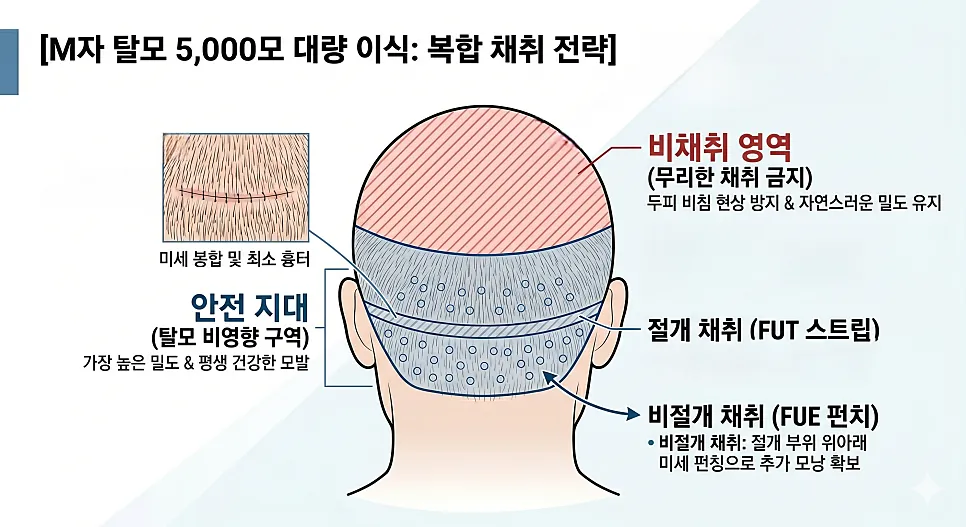
If you harvest 5,000 hairs using only the non-incisional method, you would need to harvest quite densely up into the upper back of the head, and in that case, you would likely have to harvest a large amount beyond the safe zone shown in the diagram above.
Follicles harvested from the non-harvest areas marked in red become thinner as hair loss progresses, and the remaining areas also lack hair density, so the scalp can easily show through.
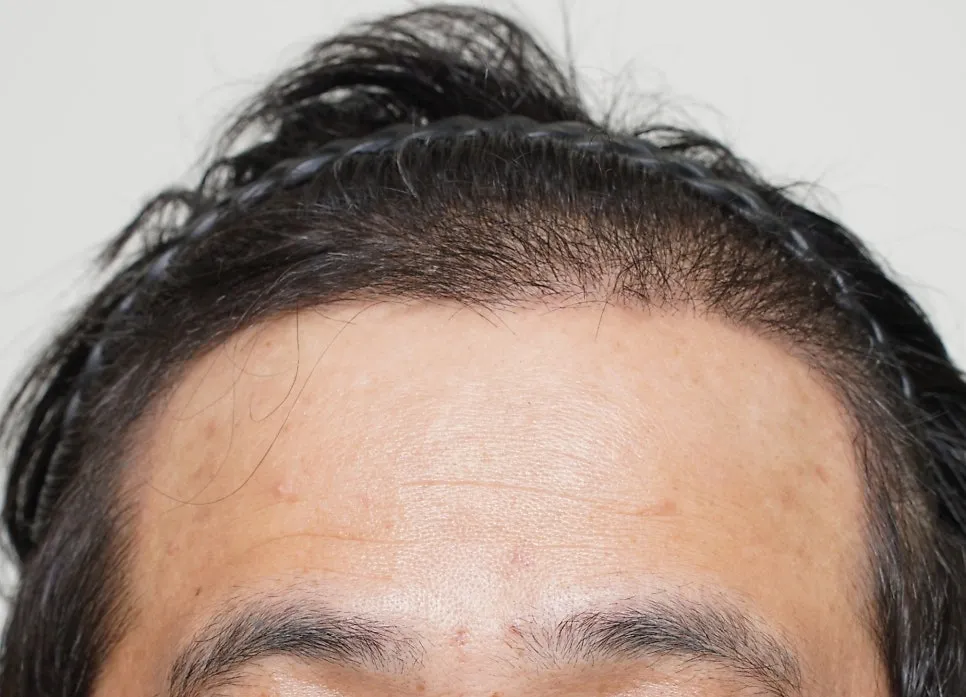
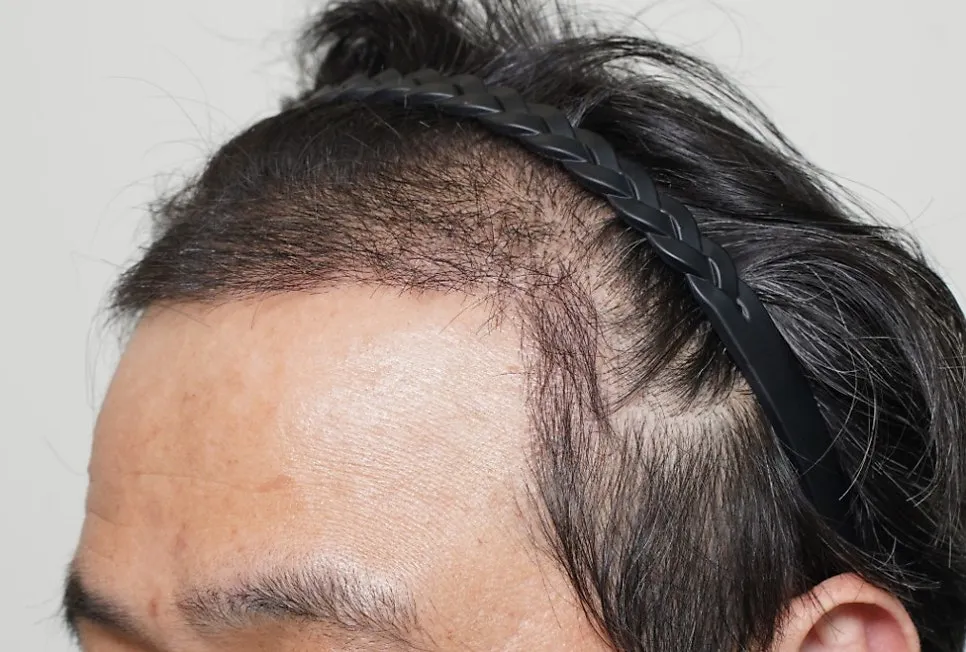
When transplanting with a combination of incisional and non-incisional methods, the long-hair follicles harvested with the incisional method are placed first in a clearly visible position at the front of the hairline, and the short non-incisional follicles are transplanted at the boundary with the existing hair, so the result looks natural right after surgery.
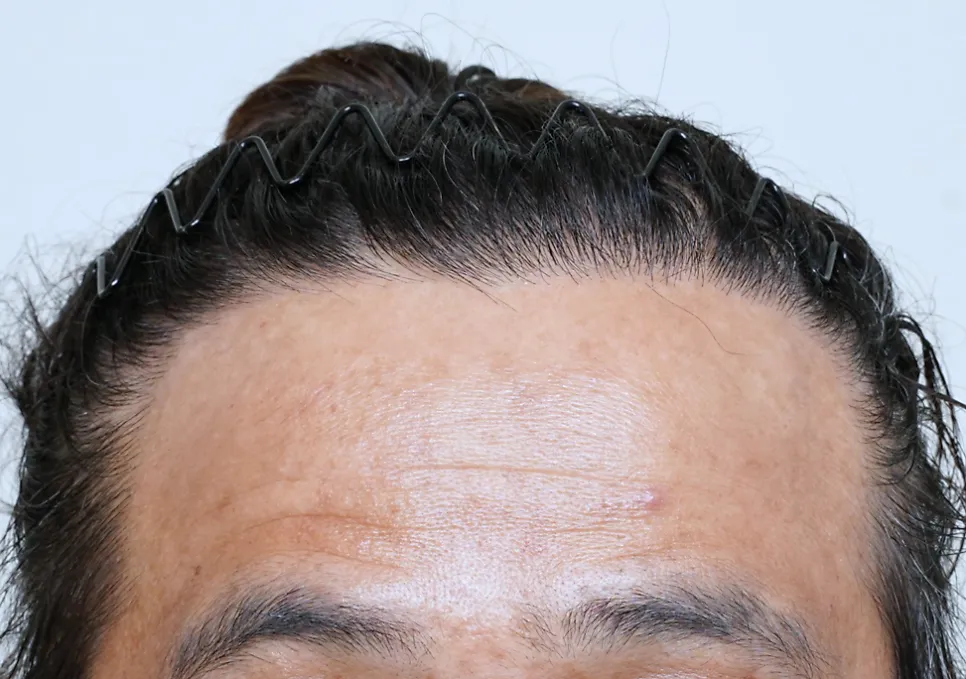
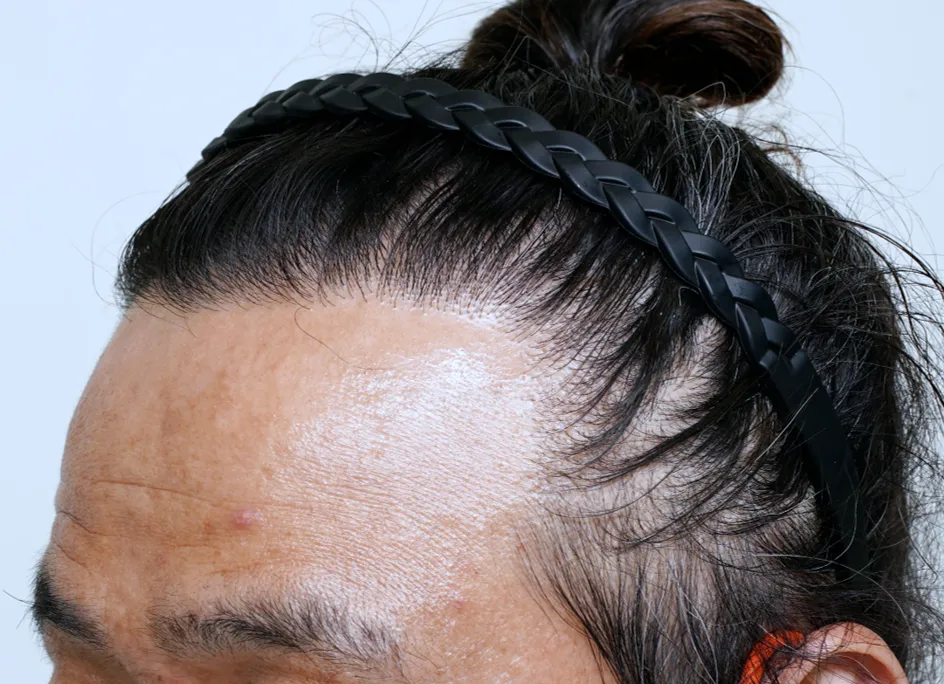
Follow-up After One Year
When the patient returned one year later for a check-up, they said that thanks to the neat hairline, they can now tie their hair up and cover the crown that used to look thin. They wanted to lower the hairline a little more, but said they would be satisfied with this, because doing so might make the back of the head show through too much. They also said they continue to take hair loss medication as prescribed, and they received a new prescription on the way out.
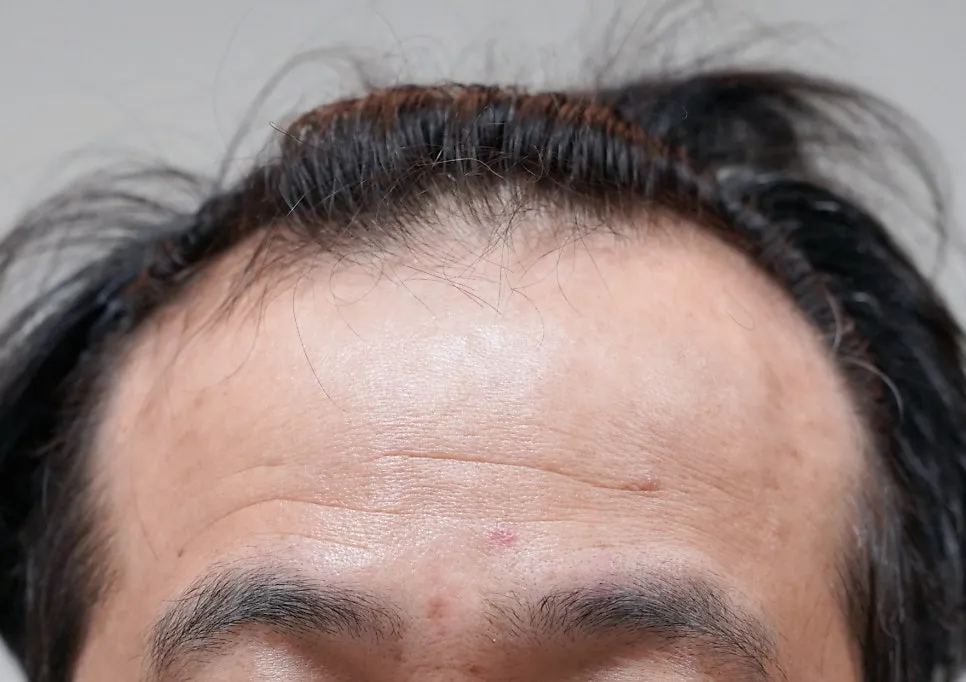
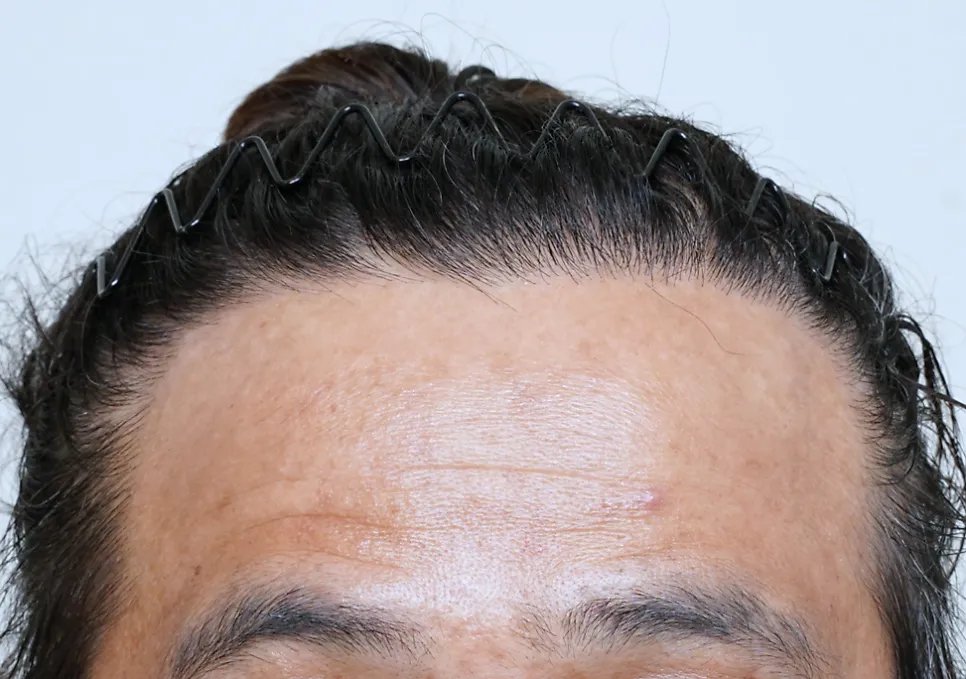
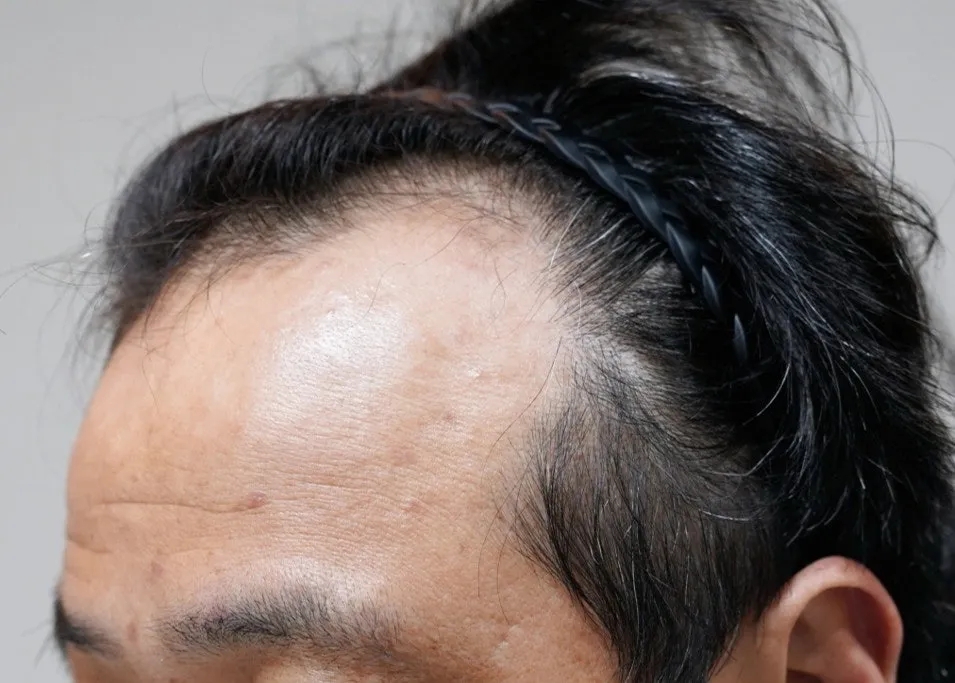
There Is No Single Right Harvesting Method
In large hair transplants, the combined incisional and non-incisional approach is very useful when a single method has limits due to insufficient scalp elasticity or hair density. This is because the sturdiest and longest-lasting follicles can be harvested as much as possible incisionally, and the rest can be harvested non-incisionally within a range that is not excessive.
There is no single correct harvesting method; there is only the one that is right for you.
※ Side effects such as pain, infection, bleeding, and swelling may occur after a hair transplant. ※ All photos on this blog are used with the patient's consent.


