By Dr. Shin Seungkyu · 2026.02.07
What Is Cow-Licked Hair?
I previously wrote a blog post about transplanting into cow-licked hair while changing its direction. Please take another look at the blog post below.
https://blog.naver.com/banal_ps/223646360390
Cow-licked hair refers to hair that grows upward, as if licked by a cow's tongue, with its direction pushed up. When hair grows upward and backward like this, the direction must be carefully chosen when transplanting.
As described in the blog post above, for cow-licked hair where the forehead is also high and the height needs to be lowered, changing the transplant direction to correct it can create a hair direction that is a bit easier to style. However, when the forehead is not high, the hair can be planted without changing its direction and still look natural.
An Angular Forehead That Is Not Very High
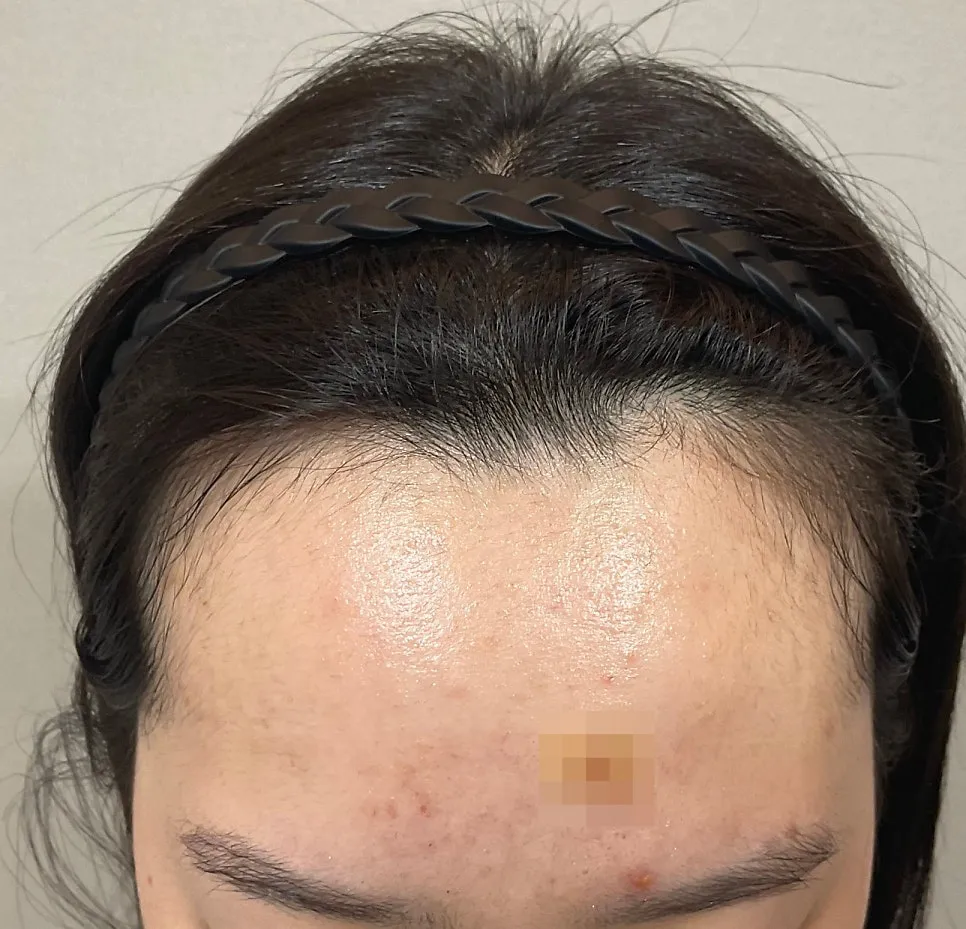
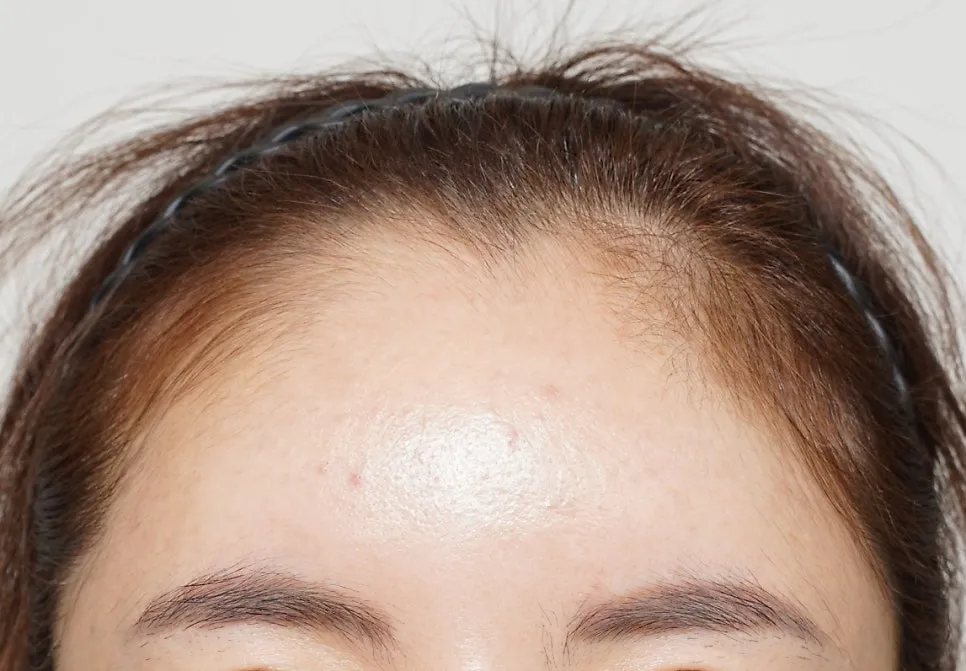
The patient in the photo did not have a very tall forehead, and the hairline had angular corners. In the center of the photo, a cowlick rises toward the top and back, and the left side of the center has a faint hair whorl. The hair at the back of the head is also fairly thick, so we recommended transplanting enough to fill in the angles while keeping the height.
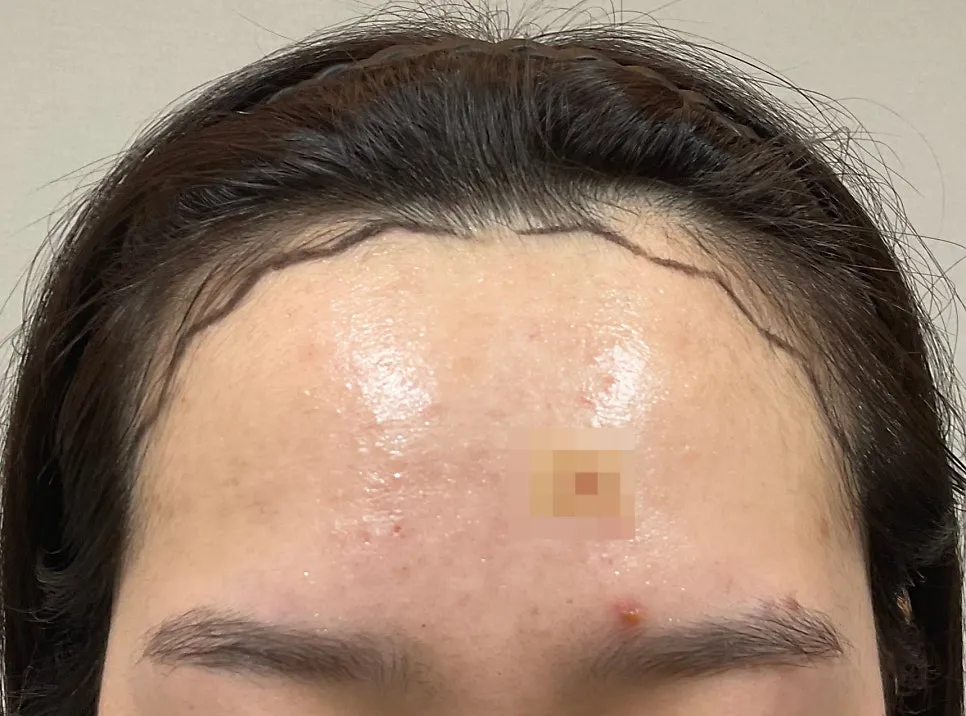
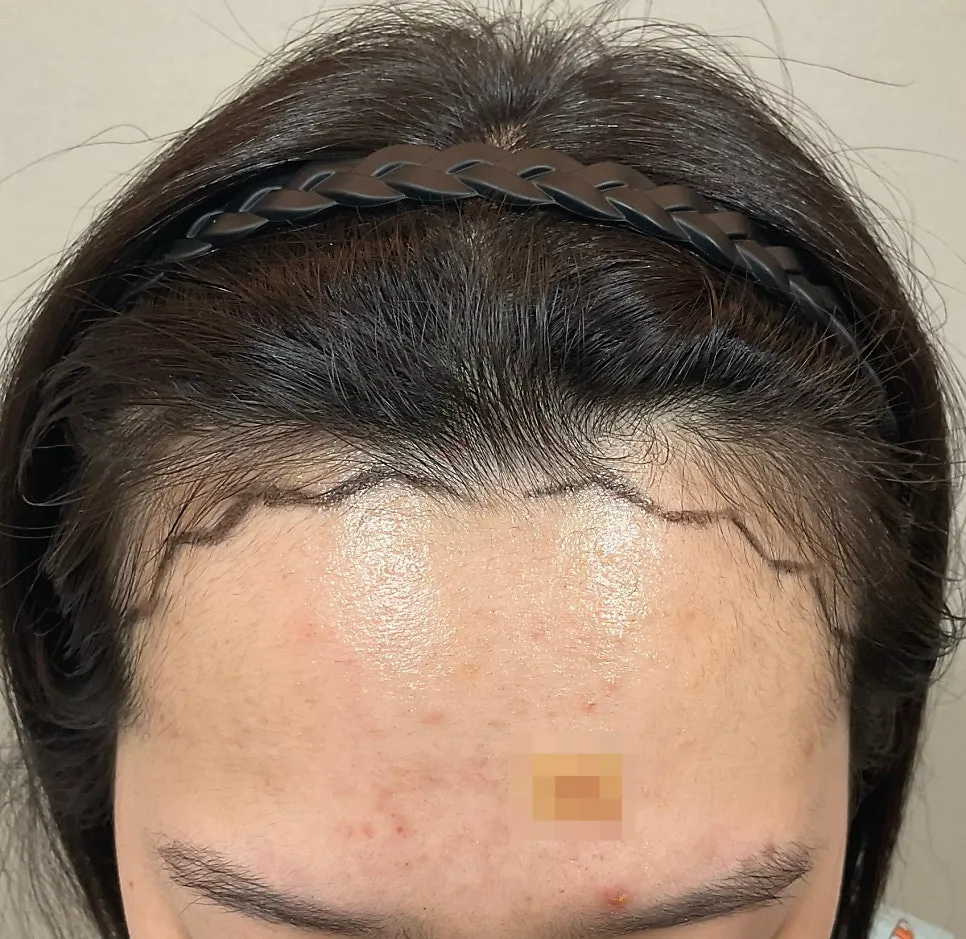
As in the photo above, we kept the height and designed the hairline to fill in the angles, and transplanted about 2,600 hairs.
Maintaining the direction, but changing only the hair whorl,
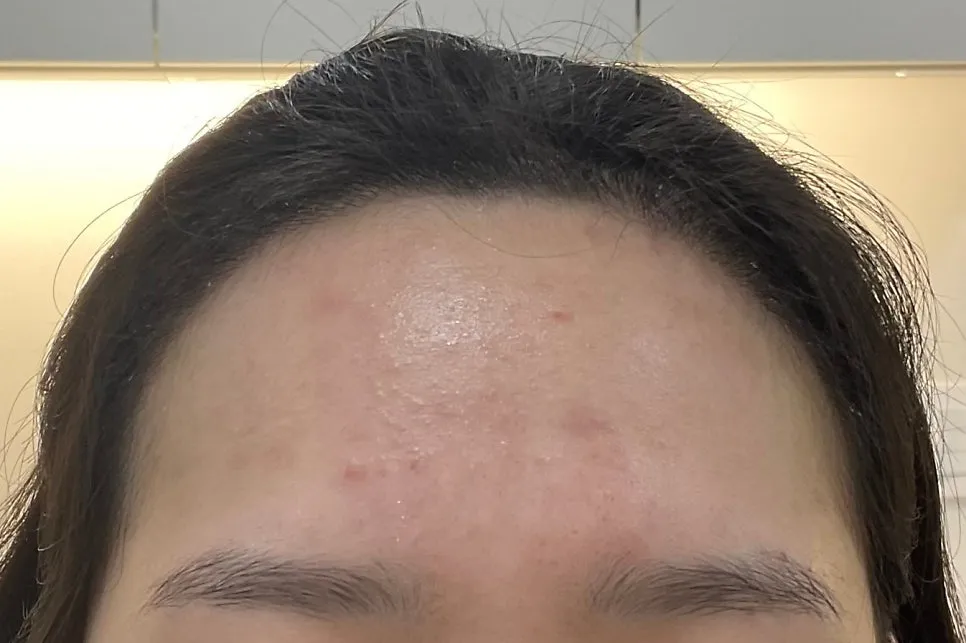
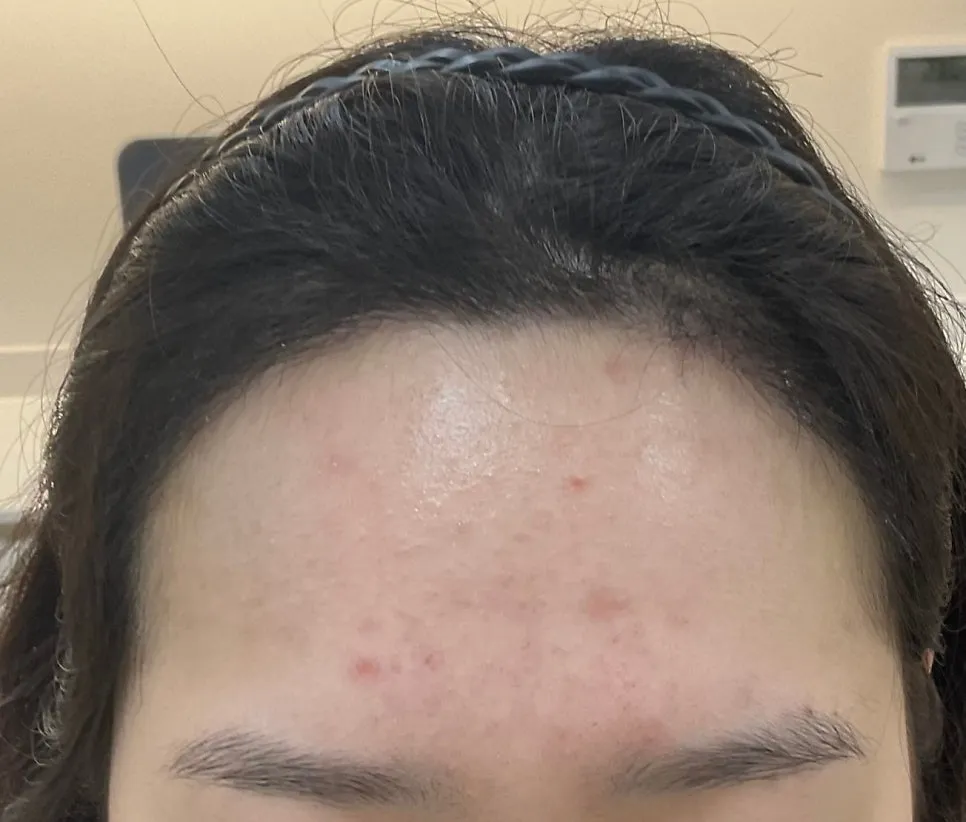
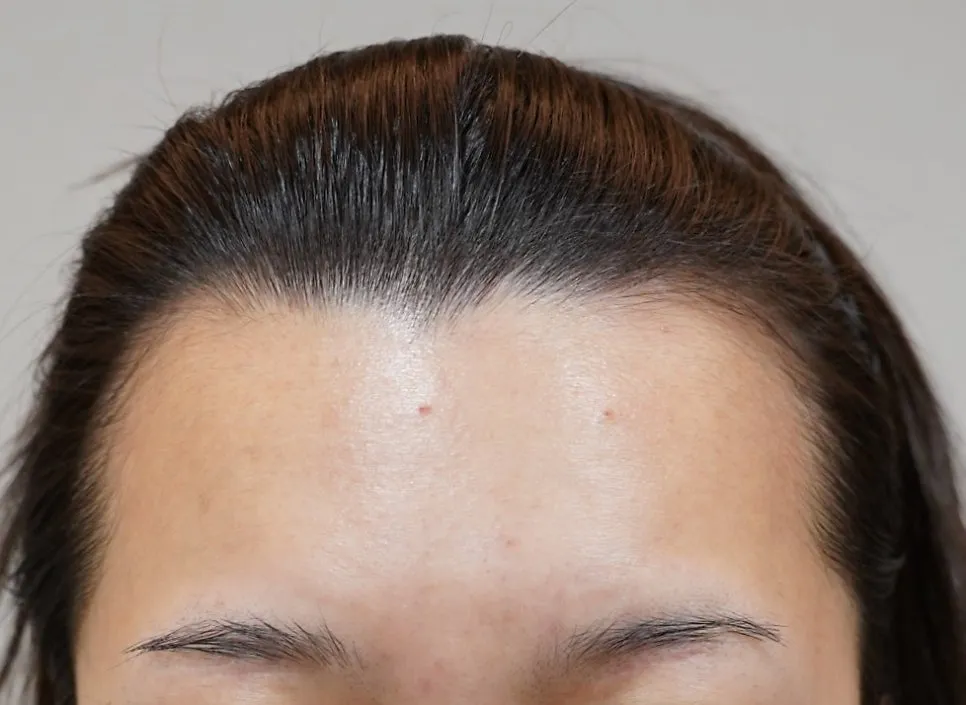
This is a photo taken 12 days after surgery. As in the photo above, when the cowlick is not lowered in height, we transplant while keeping the direction of the hair. However, for the hair whorl on the center left, we changed the direction slightly so that it has a consistent direction.
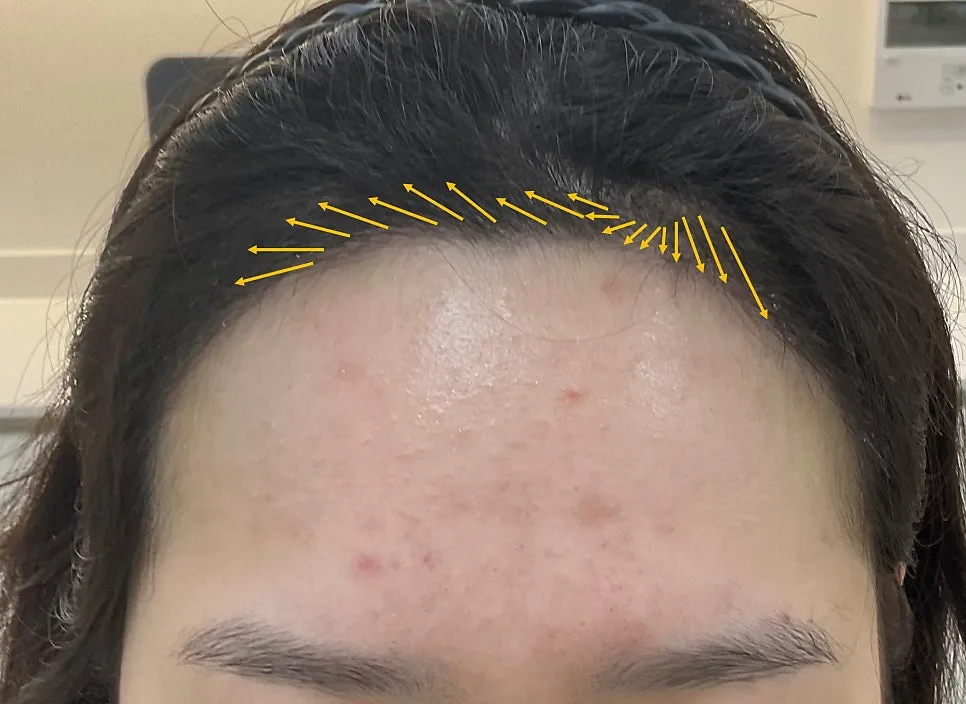
To put it simply, it was transplanted as shown in the diagram above. From the right up to the cowlick area, we followed the direction while transplanting, and at the crown whorl, we changed the direction before transplanting.
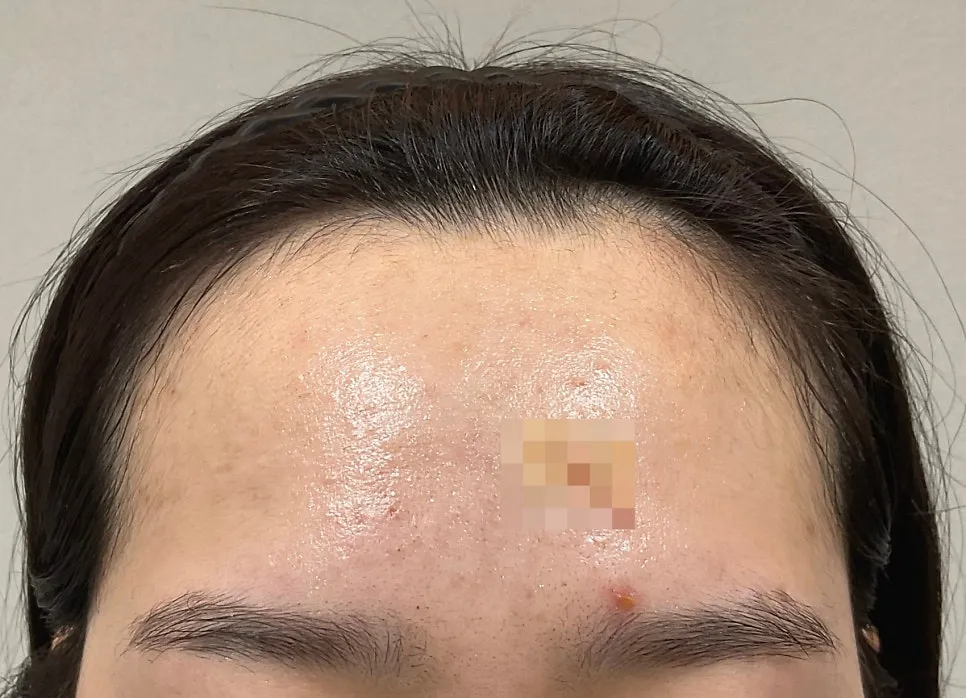
2 Years After Surgery
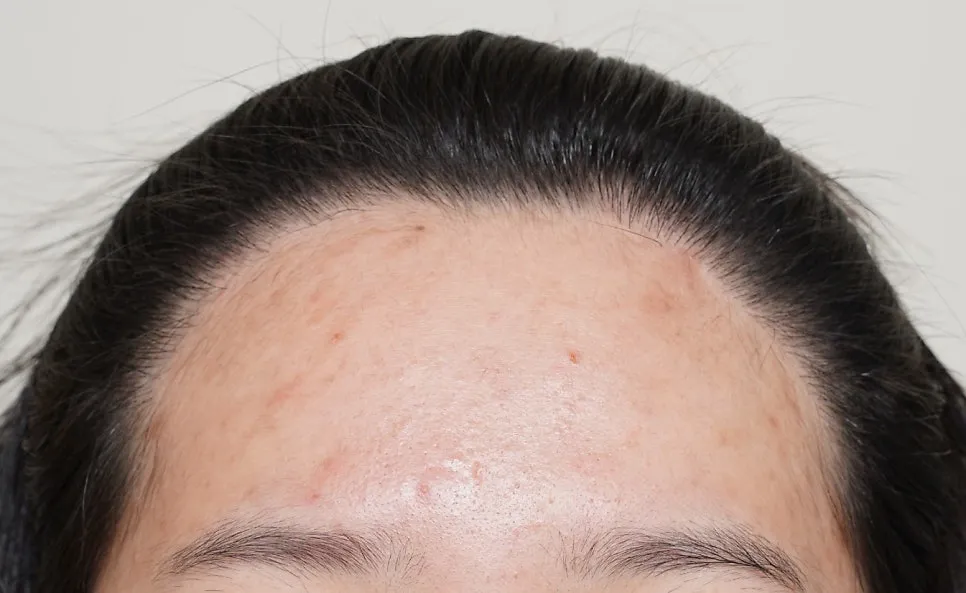
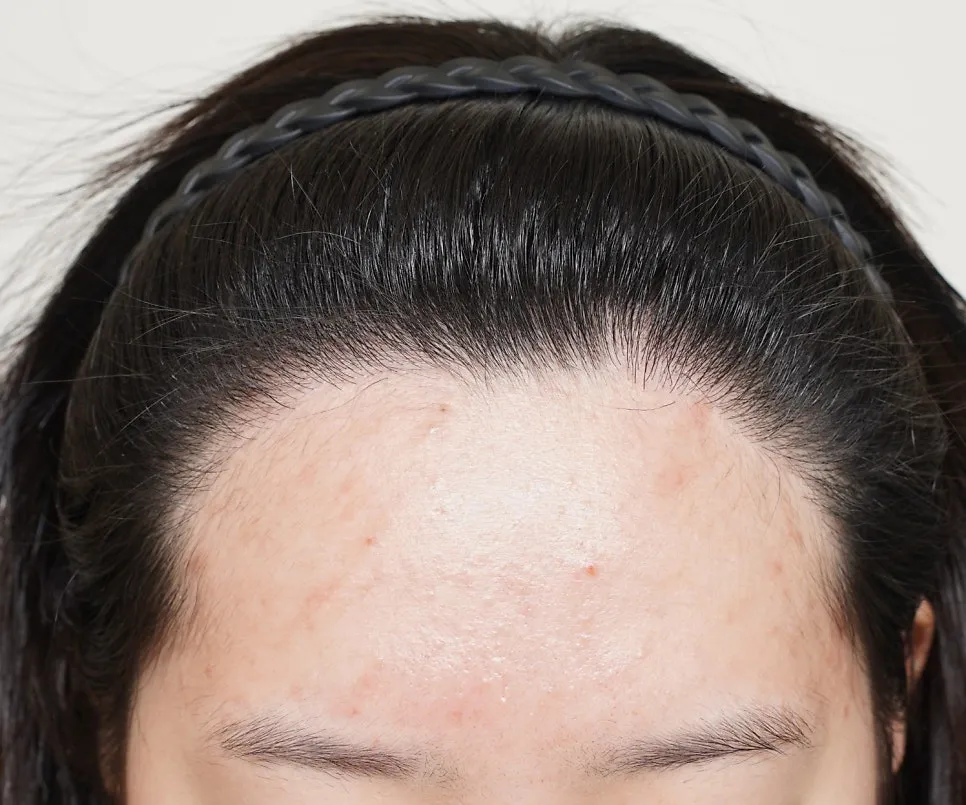
About two years after surgery, the patient came back for a visit. The transplant line looks natural, and the patient was also satisfied with the density.
In this way, the cowlick can either have its direction changed or be transplanted to follow the existing direction. We need to consider how much the height should be lowered, the position and extent of the cowlick, the thickness of the hair, and the direction the patient wants. We will transplant to suit each person's characteristics.
※ Side effects such as pain, swelling, bleeding, infection, and shock loss (shedding of nearby hair) may occur after a hair transplant.
※ All photos on this blog are used with the patient's consent.