
By Dr. Park Sooho · 2025.12.07
Planting baby hairs is difficult
The key to a natural hairline is baby hair. You might ask whether baby hairs can be planted during a hair transplant too, but planting baby hairs is practically almost impossible. First, it is difficult to obtain enough baby hairs from the back of the head, and transplanting a small amount of harvested baby hair has a poor graft survival rate.
How to make baby hairs grow at the hairline
Then is there no way to make baby hairs grow at the hairline during a hair transplant? There is. The real ways to create baby hairs at the hairline are transplanting while preserving the existing baby hairs, and applying minoxidil to the hairline so that baby hairs grow.
Beyond that, instead of real baby hairs, there is a method of selecting fine hairs from the back of the head to create a gradation effect that looks like baby hairs.
Case where existing baby hairs were preserved during the transplant
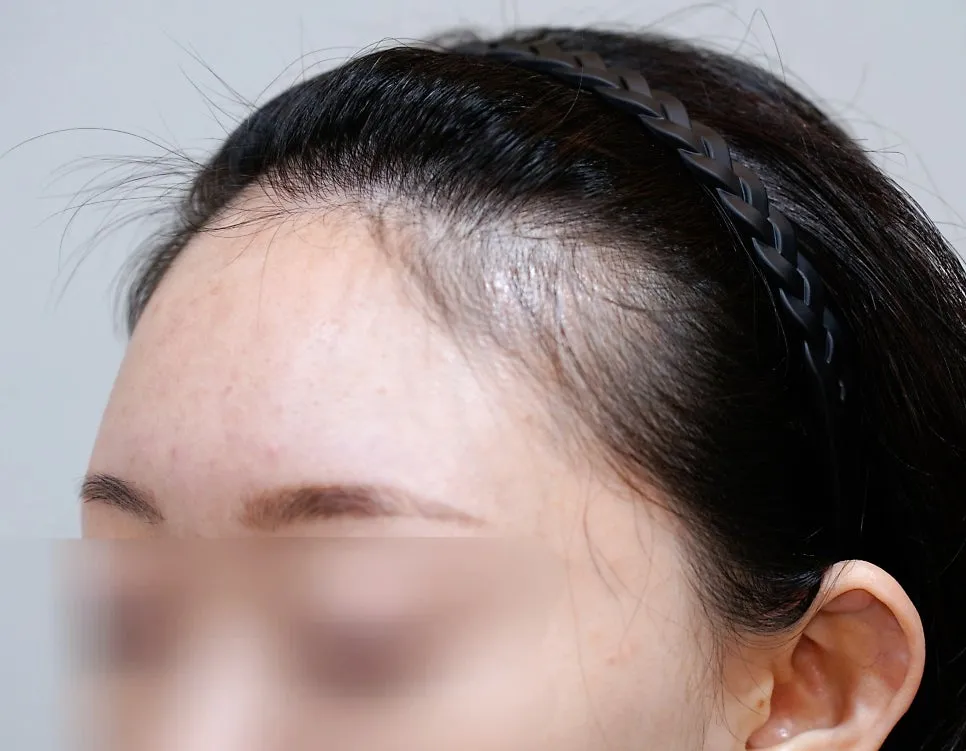
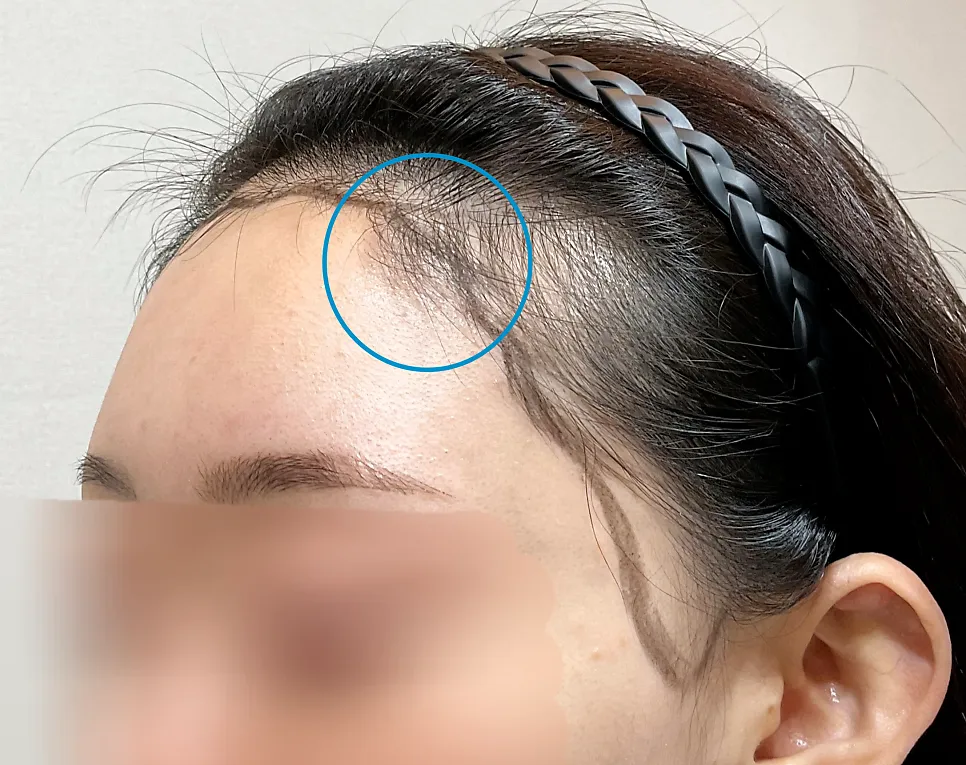
The patient above originally came in considering forehead reduction because the flat-looking forehead bothered them. However, since the flat-looking forehead was not severe, and the M-shaped area and sides looked wide instead, I recommended a hair transplant rather than forehead reduction.
Lowering the height slightly and pulling the sides in strongly to create sideburns would make the proportions just right. Since there were quite a few baby hairs near the M-shape, we set the line while preserving the existing baby hairs as much as possible. This is because even a few baby hairs remaining in front of the transplant line help create a much more natural feel.
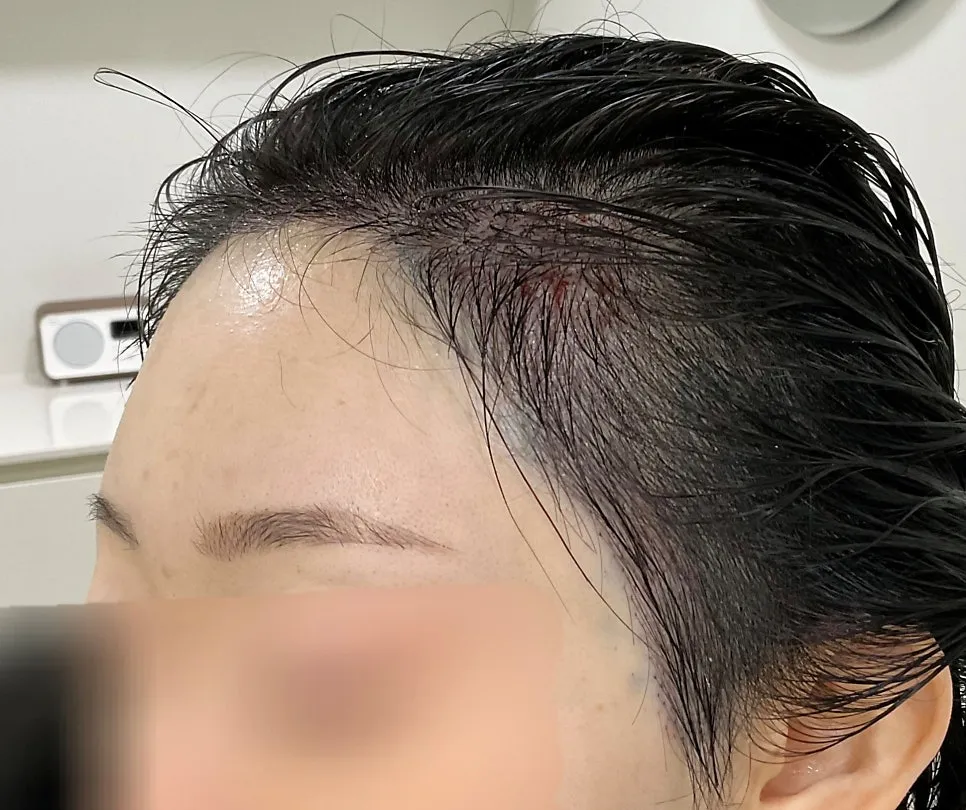
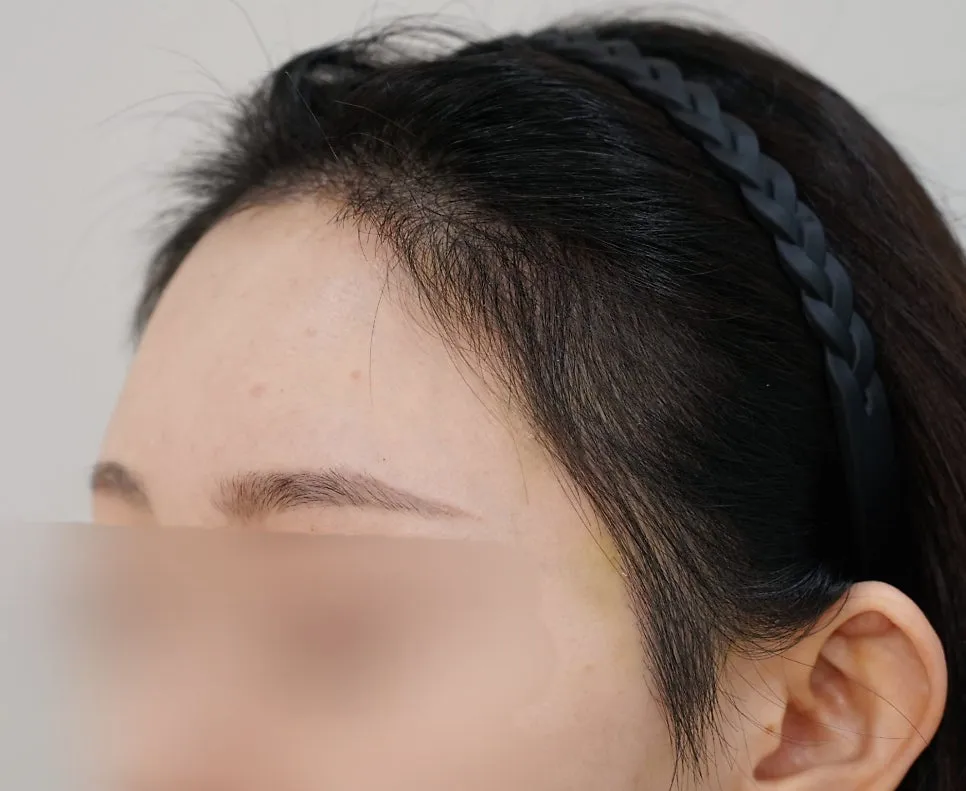
At 10 days after the transplant with long hairs, it already looked natural as it blended with the existing baby hairs. Even when baby hairs are present, the transplant must be done with attention to gradation: thin hairs are chosen and planted at the front, density is gradually increased, and the line is kept from looking too straight so that it blends well with the existing baby hairs.
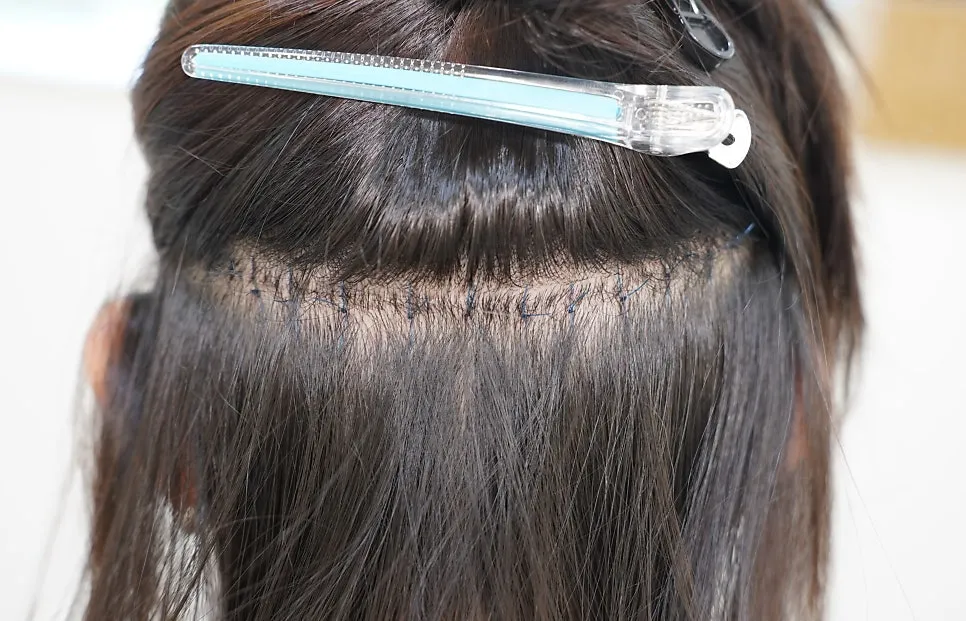
This patient had a flat-topped head shape at the upper back of the head, so if we harvested up to the upper back of the head using the non-incision method, the volume would likely decrease further, so we recommended an incision. About 2,800 hairs were harvested, and fortunately they said there was almost no pain even the day after surgery.
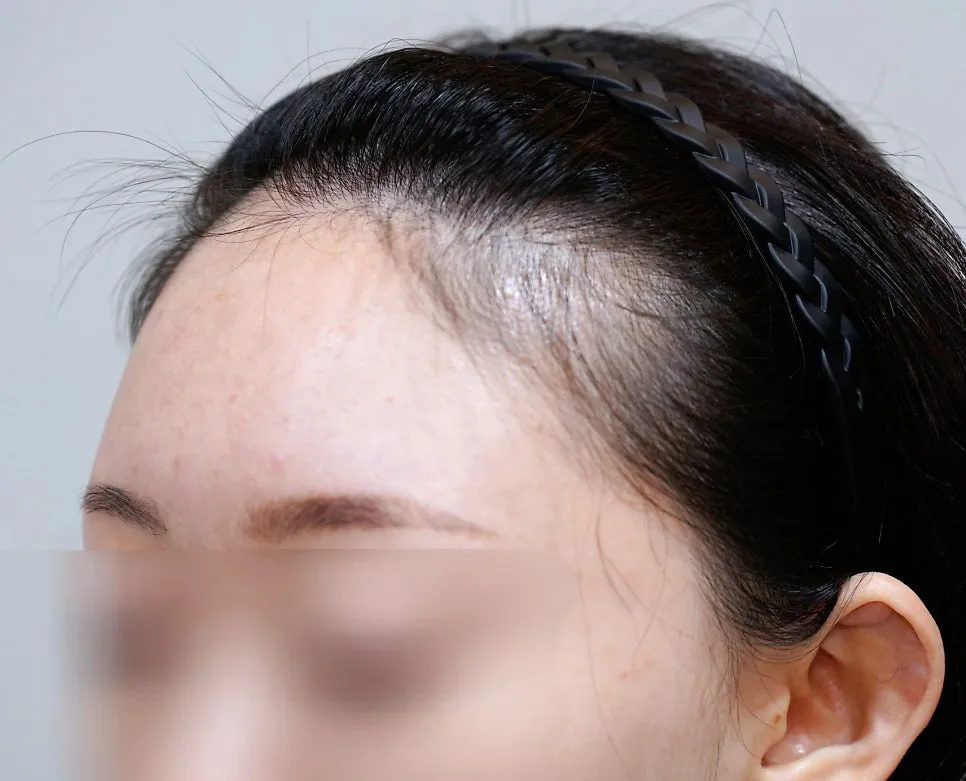
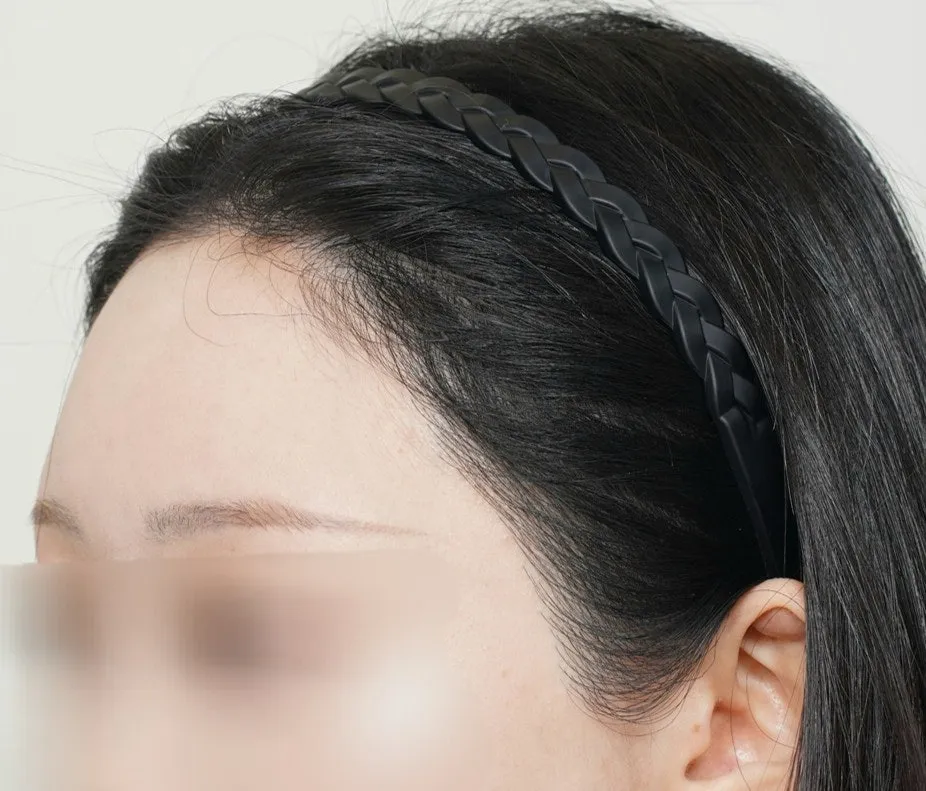
Between a more natural hairline and a narrower forehead
When they visited a year later to check progress, they were still satisfied, but asked whether the forehead could be reduced a little more. It is natural to want a bit more when the result comes out so naturally.
However, because the current naturalness was achieved by preserving the existing baby hairs, I explained that if the line were lowered further, the baby hairs would be covered and the result would inevitably look less natural than it does now.
You have to choose between a more natural hairline and a narrower forehead. What I recommended was a compromise: creating a slightly higher peak at the center of the forehead so that the height looks slightly lowered.
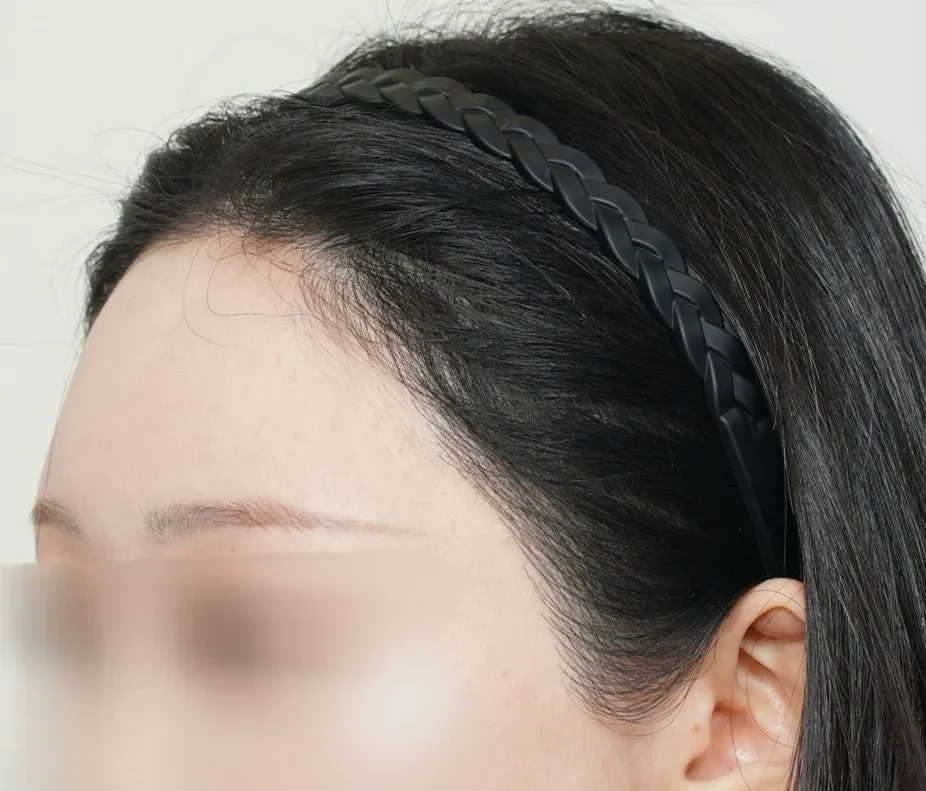
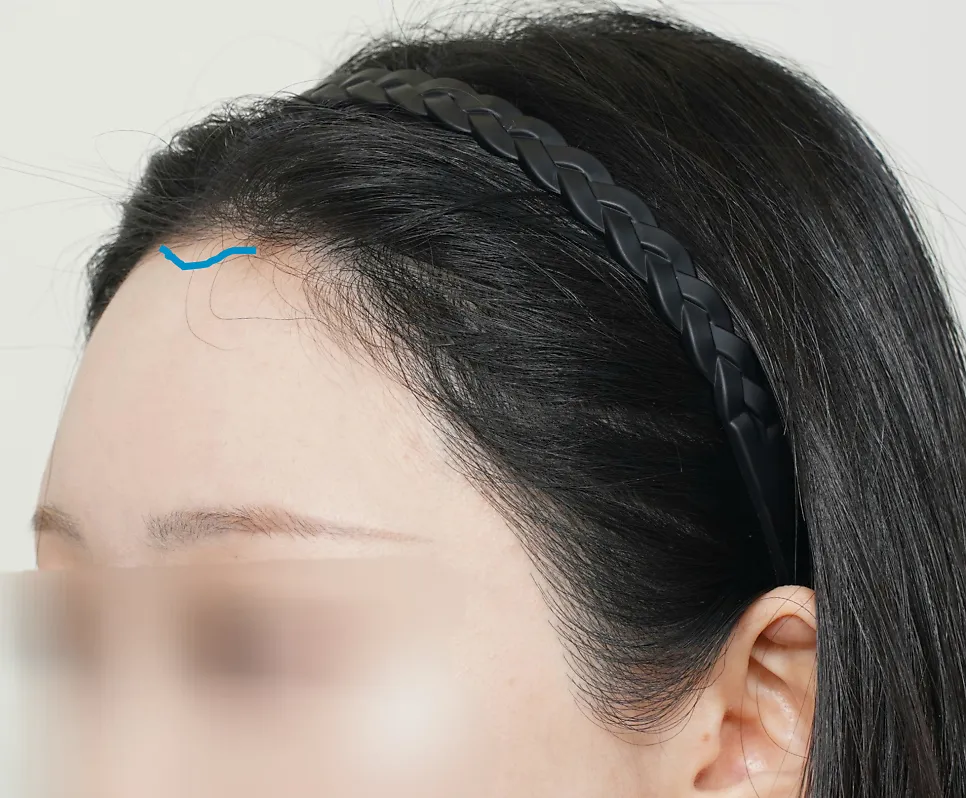
Something like this, in fact.
The whole of baby hair transplant
The whole of baby hair transplant comes down to this: preserve as much of the existing baby hair as possible, and if that is not possible, make it look as much like baby hair as possible using hair from the back of the head. Applying minoxidil after surgery is also an excellent method.
※ Side effects such as pain, swelling, bleeding, infection, and shock loss (shedding of nearby hair) may occur after a hair transplant. ※ All photos on this blog are used with the patient's consent.


