
By Dr. Kim Narae · 2025.12.06
Will a higher DHT level mean more severe hair loss?
Have you ever heard that high male hormone levels mean more severe hair loss? It is already well known that DHT, dihydrotestosterone, is identified as the main culprit of androgenetic alopecia. So, does a higher DHT level mean more severe hair loss? There is an interesting paper on whether measuring DHT levels is effective for diagnosing male androgenetic alopecia, so let's take a look at it together.
The Effectiveness of Measuring Dihydrotestosterone Levels in Diagnosing Androgenetic Alopecia Beitollahalakbar S. The Effectiveness of Measuring Dihydrotestosterone Levels in Diagnosing Androgenetic Alopecia. Hair Transplant Forum Int. 2025 Mar-Apr;35(2):50-2.
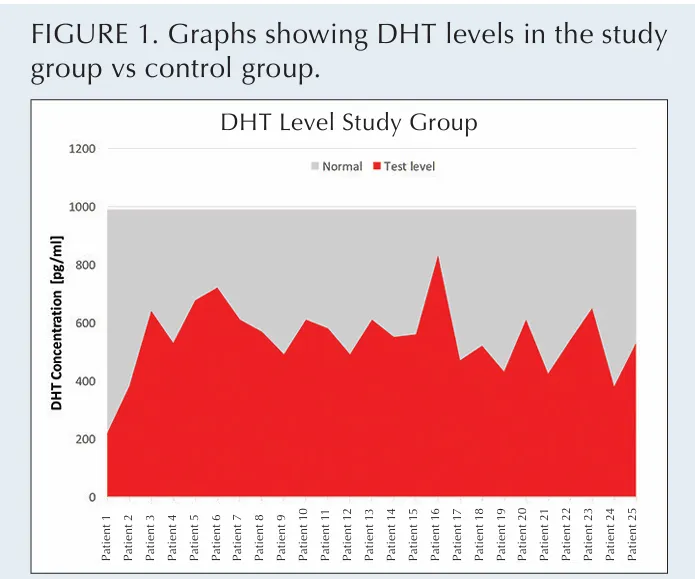
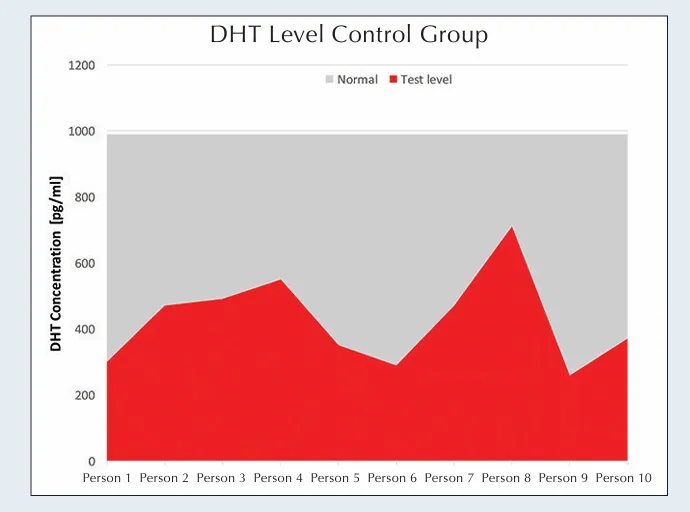
DHT levels in the hair loss group and the normal group
In total, blood DHT levels and various other information were collected from 25 volunteers with hair loss and 10 volunteers without hair loss. Surprisingly, there was no significant difference in blood DHT levels between the hair loss group and the normal group. In addition, the DHT levels of all 35 participants were within the normal range. Therefore, the study concluded that measuring blood DHT concentration alone is not a reliable tool for diagnosing male-pattern hair loss.
Genetic predisposition and follicle sensitivity
Then why is the degree of hair loss different even when DHT levels are the same? It is because genetic predisposition and the sensitivity of follicles to DHT differ. The study also found that more patients in the hair loss group had a family history of hair loss than the control group, once again emphasizing that genetic factors play an important role in hair loss. It also states that how sensitively the follicle cells respond to DHT matters more than the DHT level, and that the number of DHT receptors can increase in the follicles of scalp where hair loss is progressing.
Lifestyle and environmental factors
Having a genetic predisposition does not mean everyone will develop hair loss. Because hair loss is a chronic condition, lifestyle and environmental factors are closely related. Most people who visit for evaluation because they think they may develop hair loss have already experienced considerable hair loss. If you are worried about hair loss now, we recommend starting by seeing a hair loss specialist.


