
By Dr. Kim Narae · 2025.11.11
The impression an M-shaped forehead gives
For women with an M-shaped forehead or angular hairline, the face can look larger, and the empty space can reduce the dimension of the forehead and give a masculine impression. Of course, this does not apply to everyone. Depending on the head shape, the depth of the M-shaped corners, facial proportions, and whether baby hairs are present, an angular forehead can also look very attractive.
However, East Asians, including Koreans, often have a brachycephalic skull shape (wider from side to side than it is long from front to back), so the tips of the M-shape are visible all the way across from the front, and the face area often appears larger as a result.
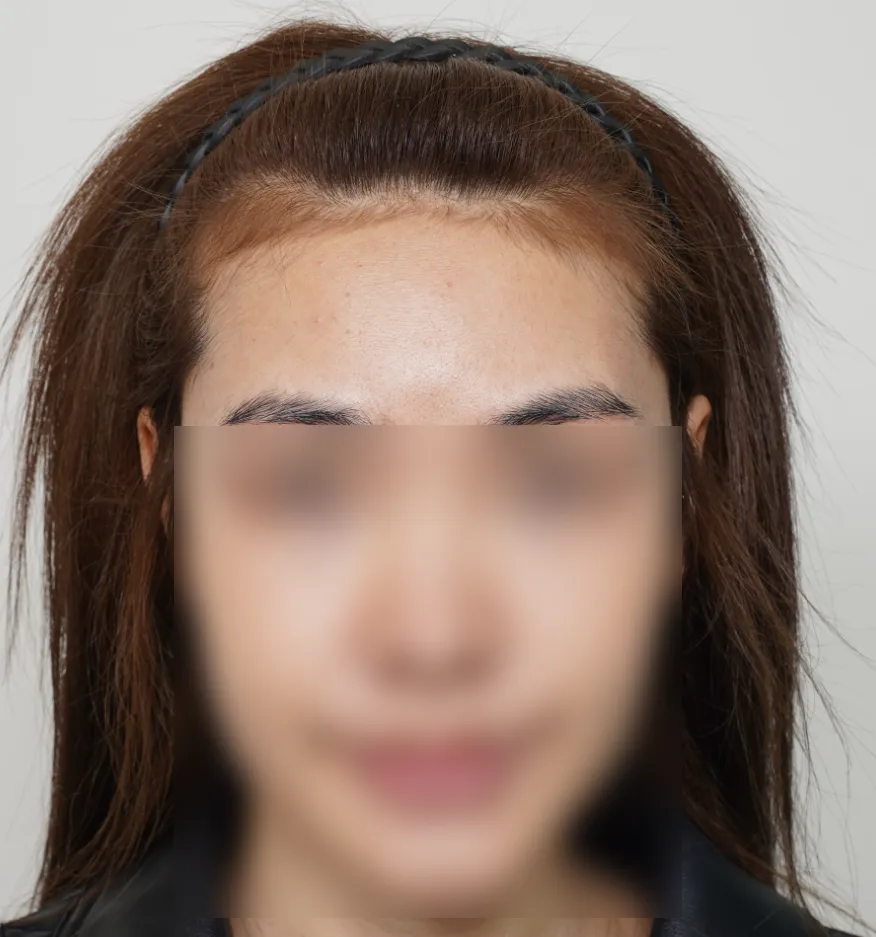
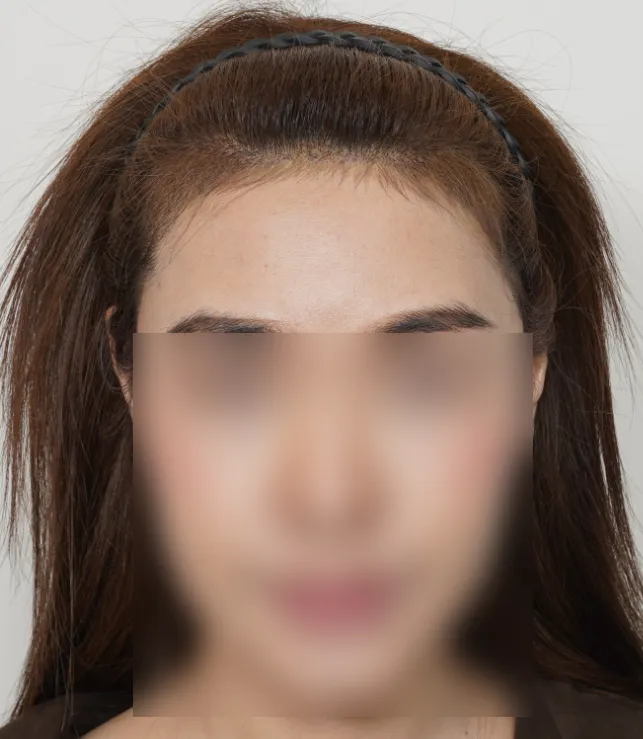
Natural gradation starting from the thickness of baby hairs
In such cases, the ratio of the upper, middle, and lower facial thirds is set at about 1:1:0.8. And to keep the patient's existing baby-hair look, hairs closest in thickness to the baby hairs are placed first, then gradually thicker hairs are transplanted, which creates a natural gradation; the result is very natural and can create a younger-looking image.
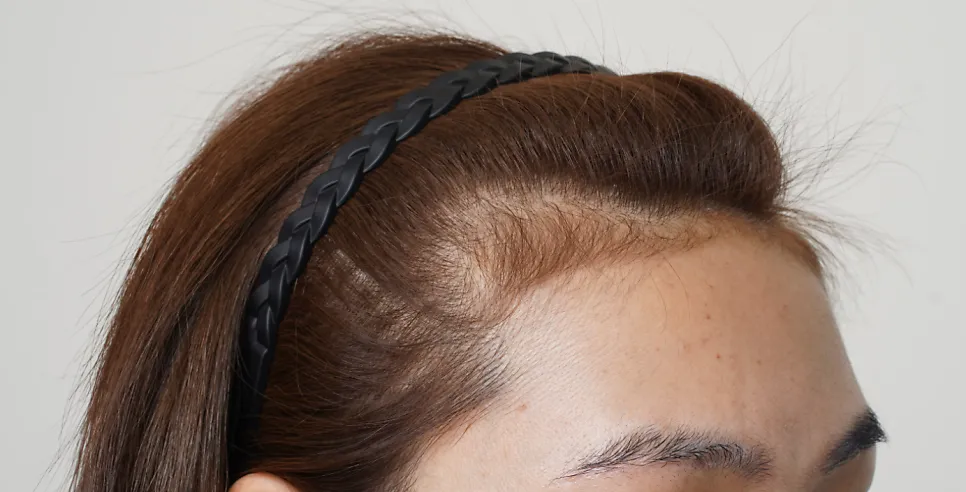
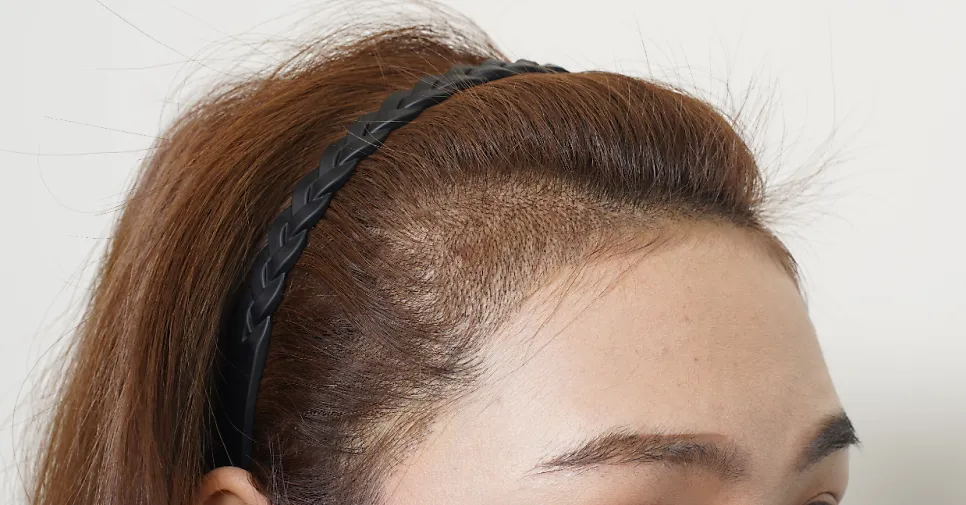
Readjusting the side proportions
As the forehead is narrowed, the face becomes smaller, but if the middle third of the face is relatively long, the forehead's proportion becomes smaller and the middle third can stand out. So readjusting the side proportions as well means the face does not look long even from the side, giving a more feminine feel.
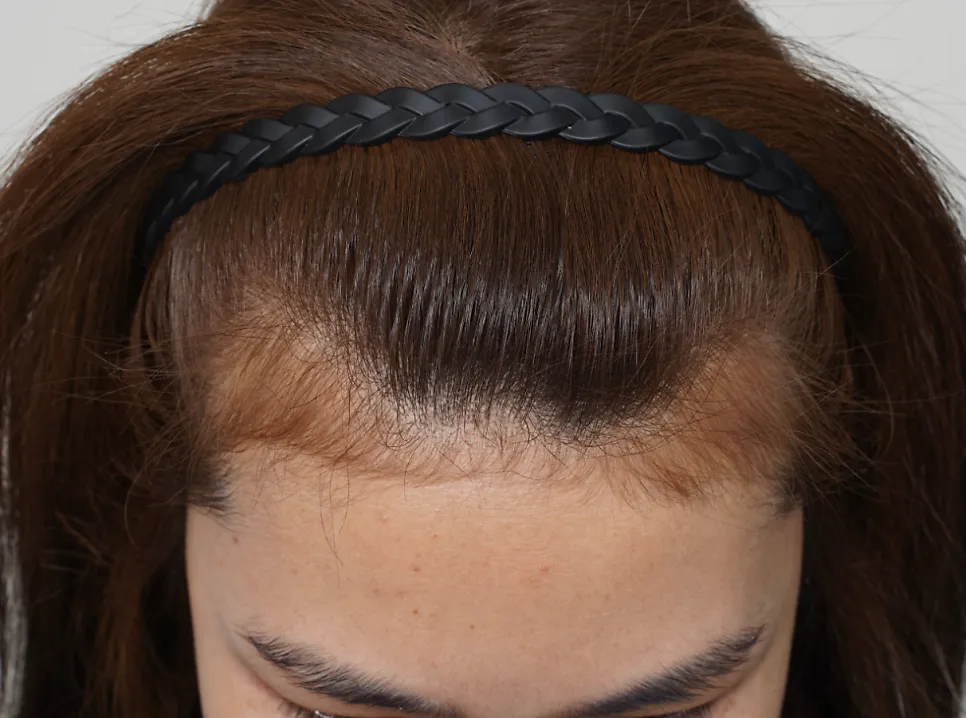
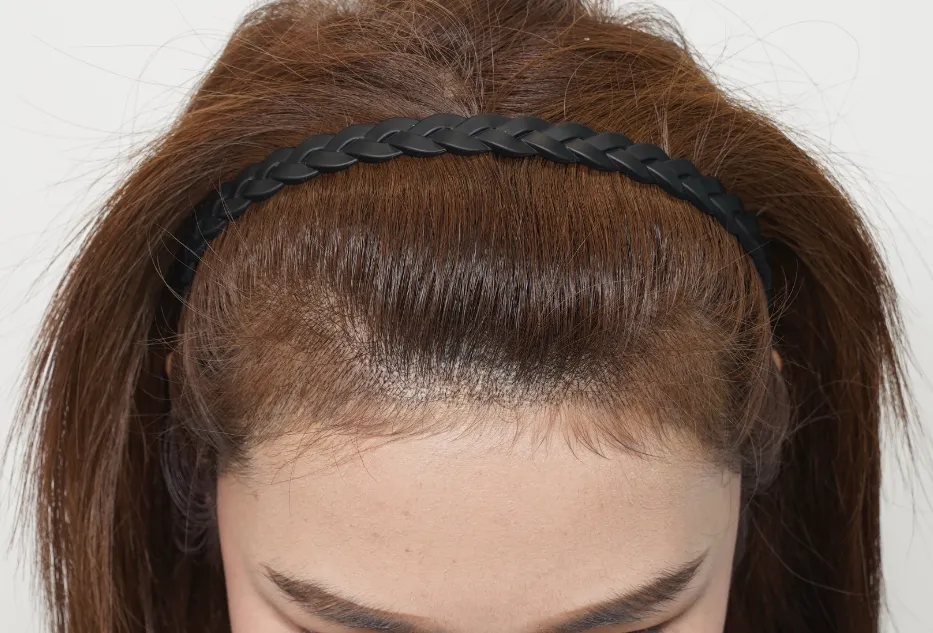
Filling in the M-shape to make it round
When the female M-shape is filled with hair transplant to make it round and the empty space at the sides is also reduced, the forehead gains dimension and a feminine image is emphasized, even without additional procedures on the forehead.
A woman's hairline does not have to be round or slender to be beautiful, but if the M-shaped hairline makes the forehead look masculine depending on the head shape, I believe this hair transplant approach can be a good solution.
※ Side effects such as swelling, bruising, pain, inflammation, and bleeding may occur after hair transplant surgery. ※ All photos on this blog are used and taken with the patient's consent.


