
By Dr. Park Sooho · 2025.11.02
When Both Hair Transplant and Forehead Reduction Are Needed
When the forehead is high and wide, the face may look larger even if it is not actually large. In such cases, reducing only the forehead can give the appearance of a smaller face. There are two ways to reduce a wide forehead: hair transplantation and forehead reduction. Depending on each person's situation one method may be better, but some people need both.
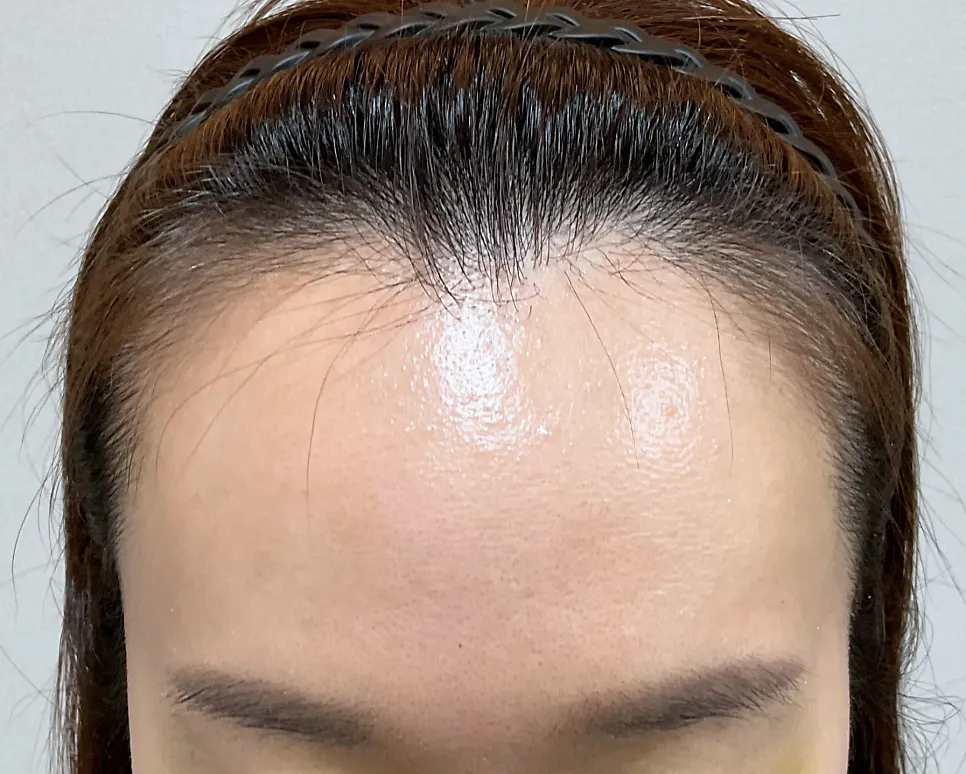
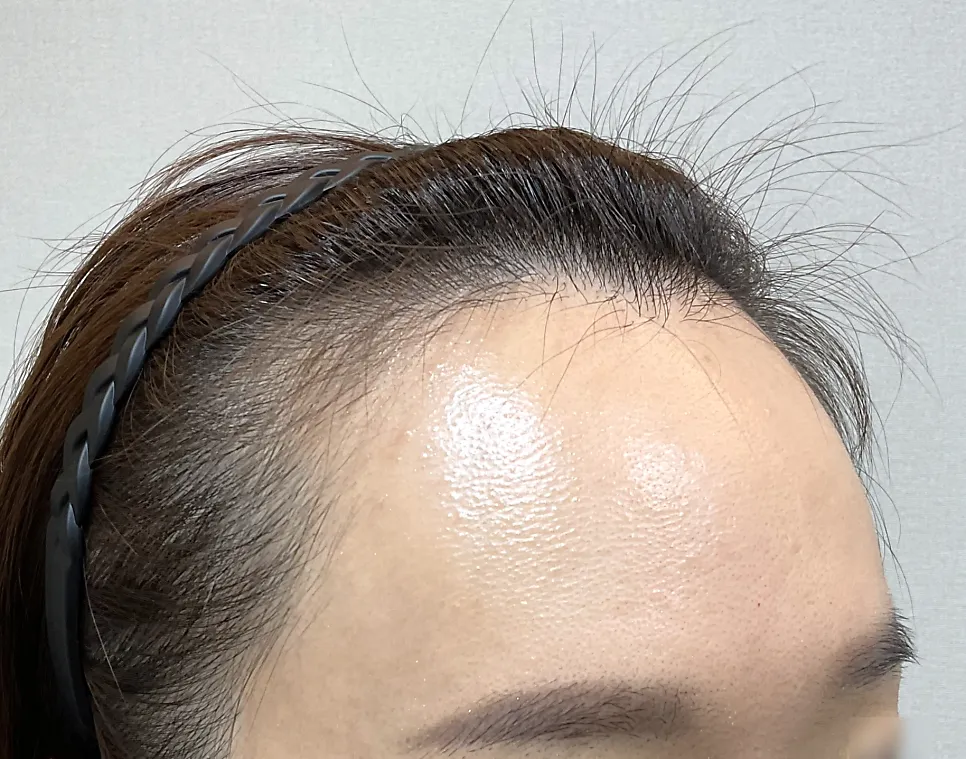
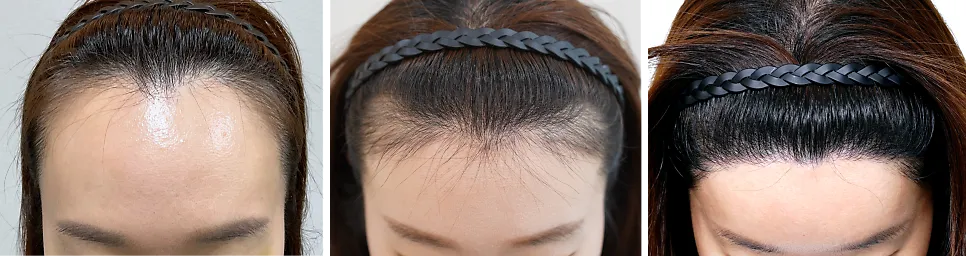
For this patient, the forehead was wide overall compared with the face, so the forehead height had to be reduced considerably to match the facial proportions. Since reducing the height a lot with hair transplantation often leaves the density at the parting area lacking, we suggested first reducing the height as much as possible with forehead reduction and then considering hair transplantation.
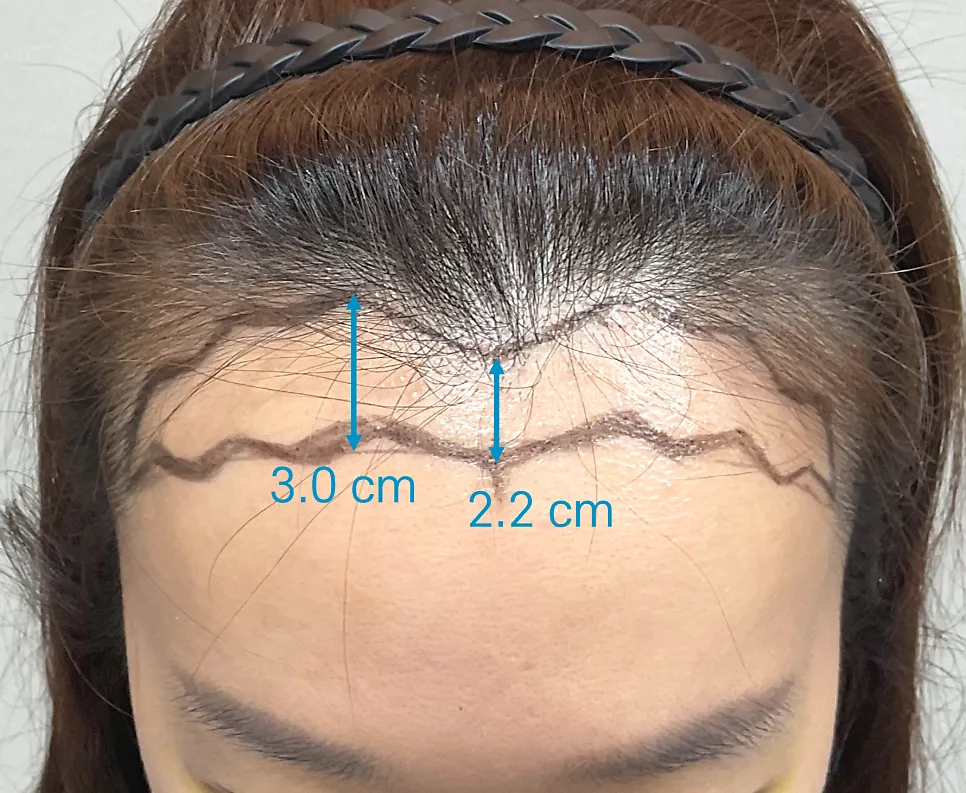
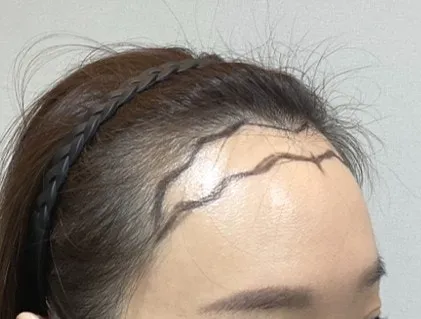
Saving 3,000 Hairs From the Back of the Head With Forehead Reduction
The forehead reduction design was 2.2 cm at the center and 3 cm at the highest point. If this width were to be filled with hair transplantation, about 3,000 hairs would be needed. In other words, forehead reduction saves 3,000 hairs from the back of the head.
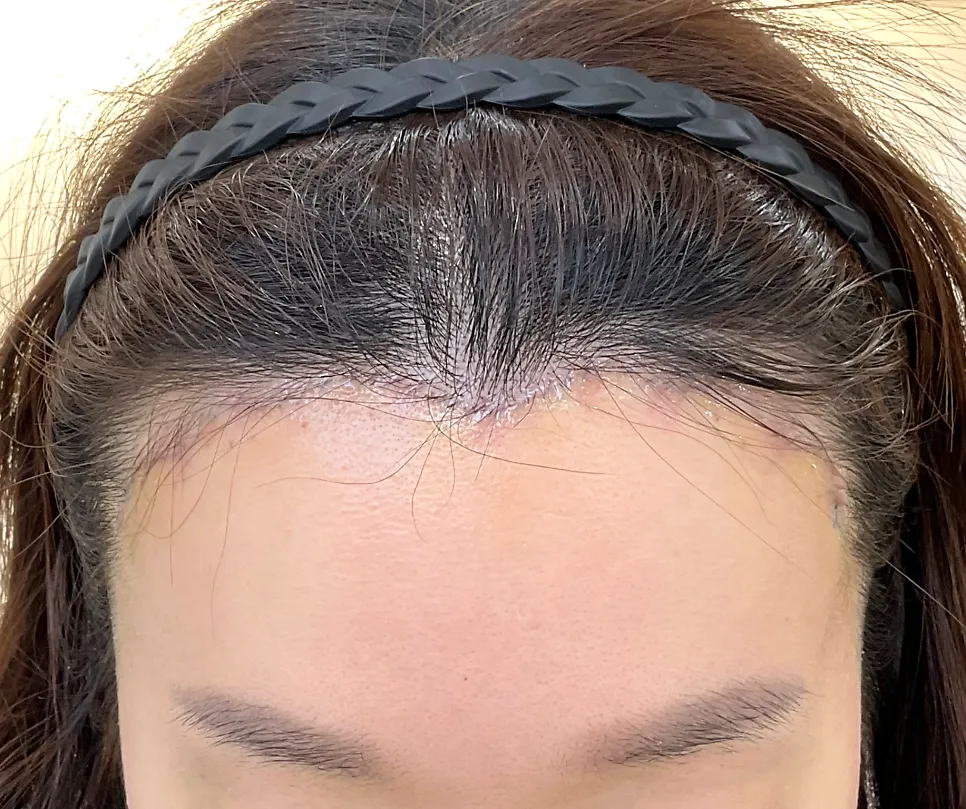
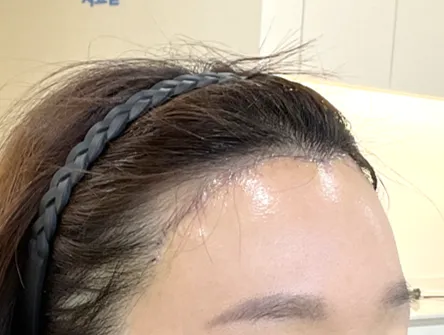
Some people feel that if the incision line is designed to preserve the baby hairs in the M-shaped area as much as possible, they may not need hair transplantation after forehead reduction. This patient's M-shape was wide but had many baby hairs, so the incision line was set to preserve as many of them as possible.
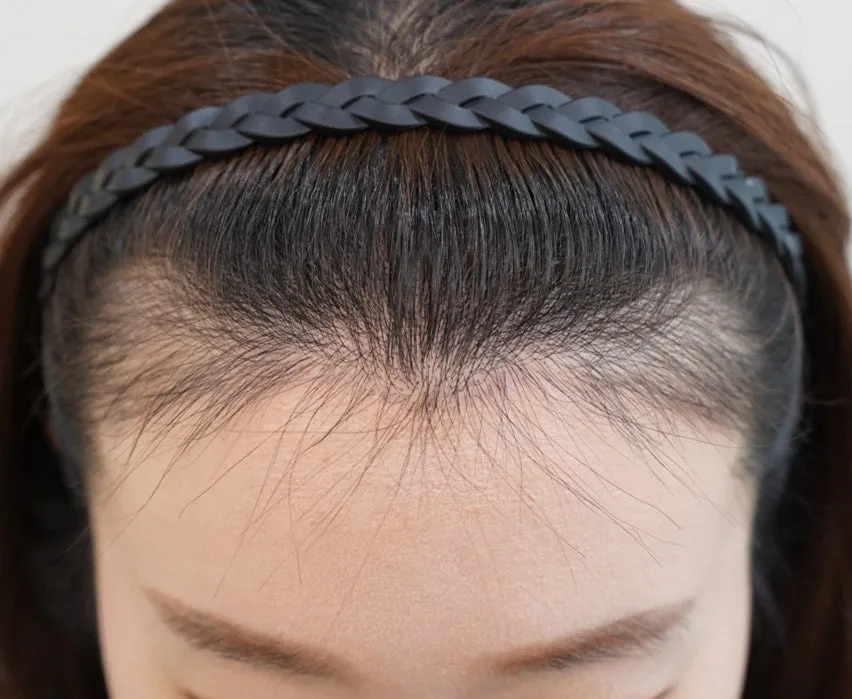
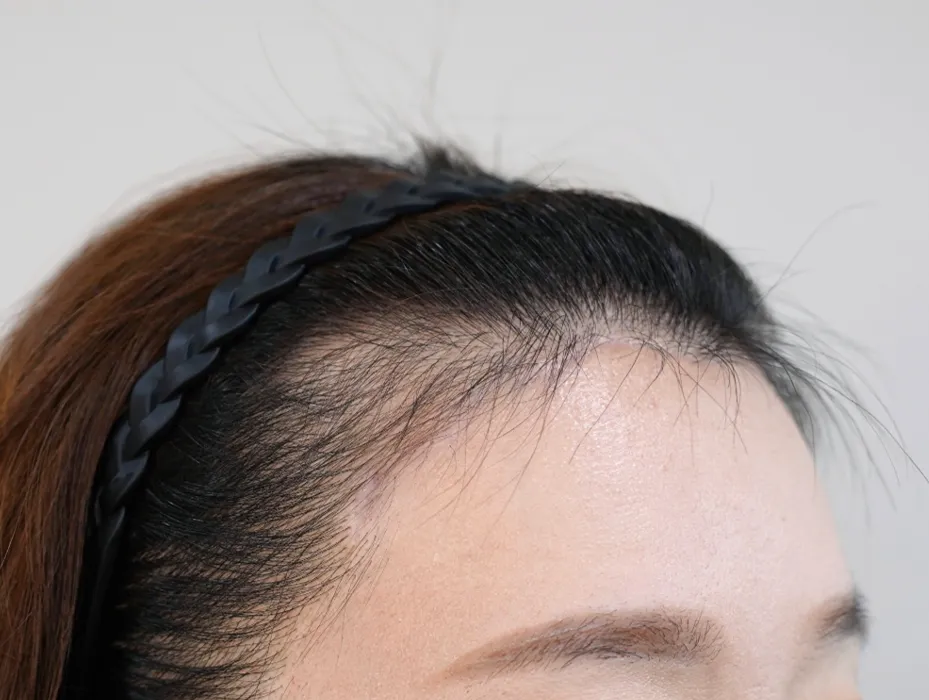
4 Months After Surgery
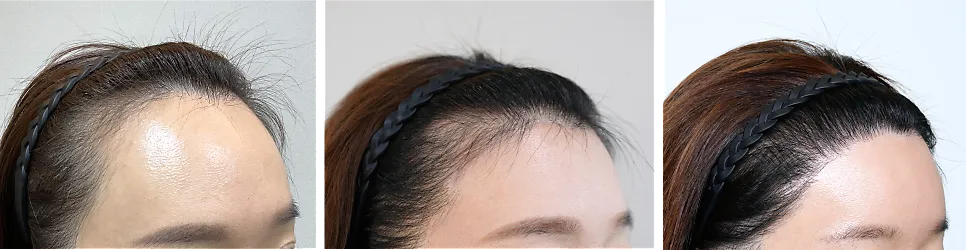
At 4 months, the patient came in together with an acquaintance they had referred, so the follow-up was seen a bit early. Usually the final follow-up for forehead reduction is done after 6 months, but at 4 months this patient's scar and sensation were already improving.
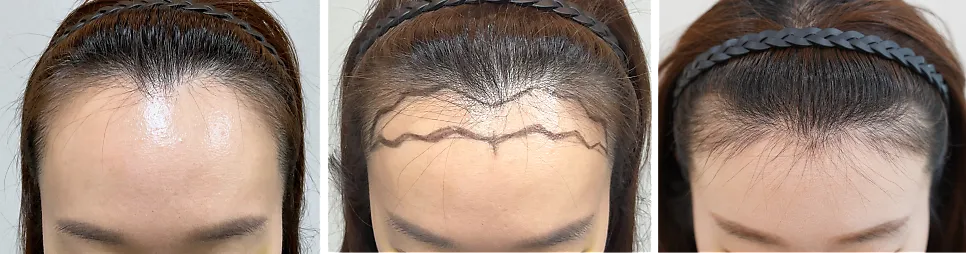
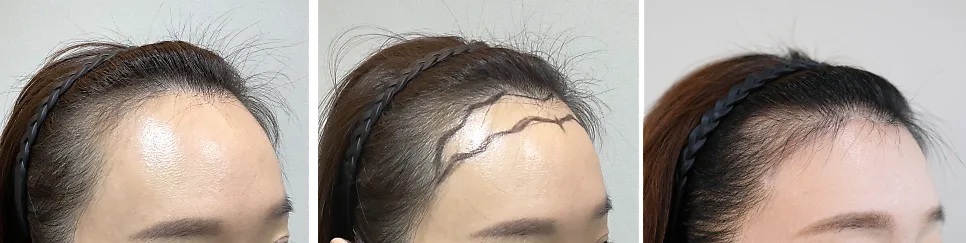
Even now, the baby hairs cover the M-shaped line and the scar line quite well, but the patient also wanted to cover the small visible scar at the end of the incision line and wanted a clearer line and more volume, so they decided to have hair transplantation as well.
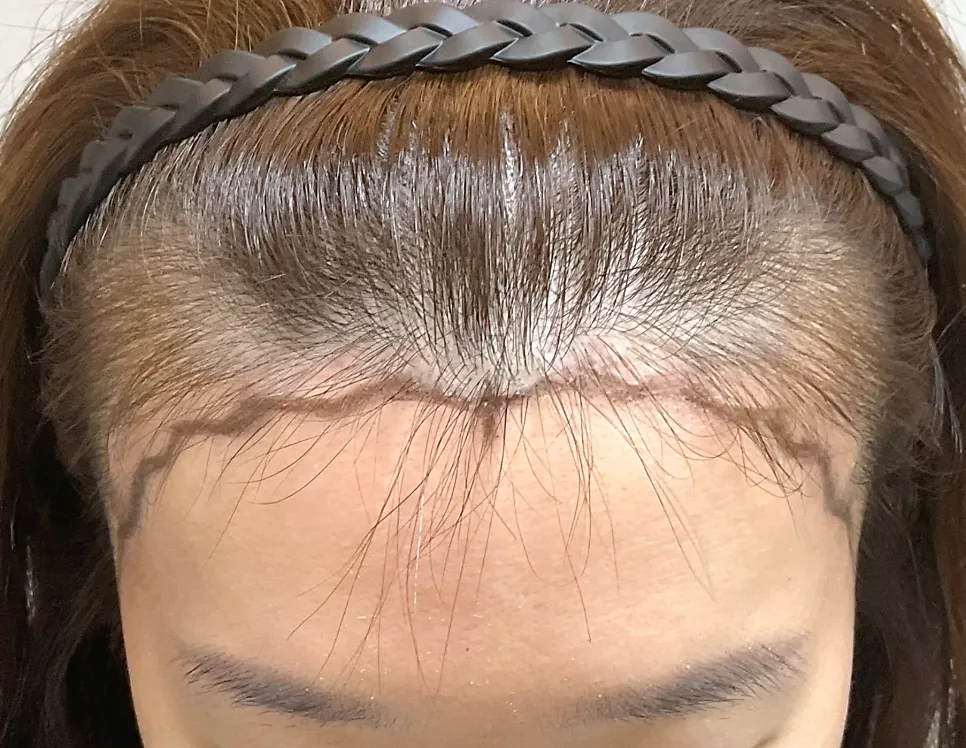
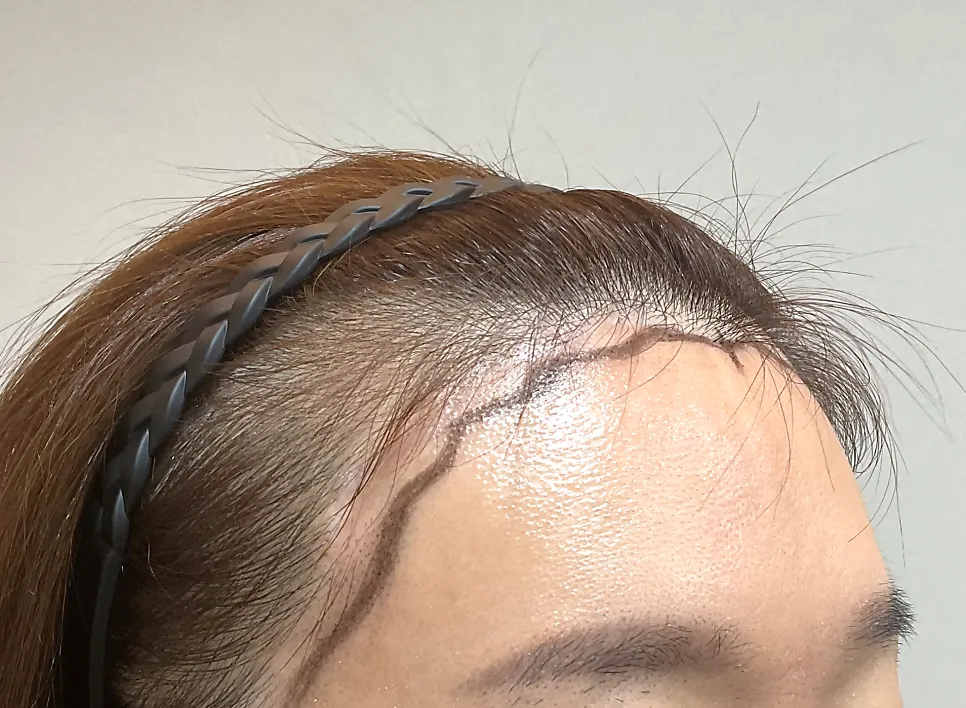
Five Months After Forehead Reduction: Incisional Transplant of 2,400 Hairs
Hair transplantation was scheduled for 5 months after forehead reduction, and it was decided to transplant 2,400 hairs using the incisional method. The design partly covered the forehead reduction scar line and also pulled the sides slightly, so that the overall forehead became smaller.
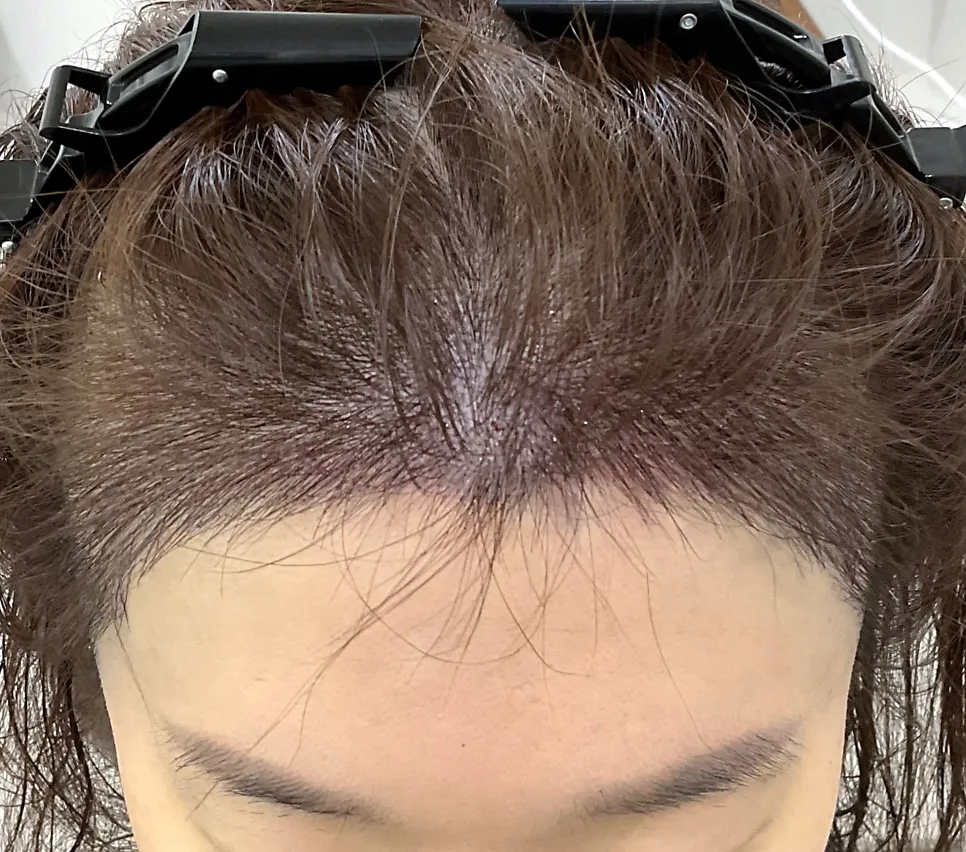
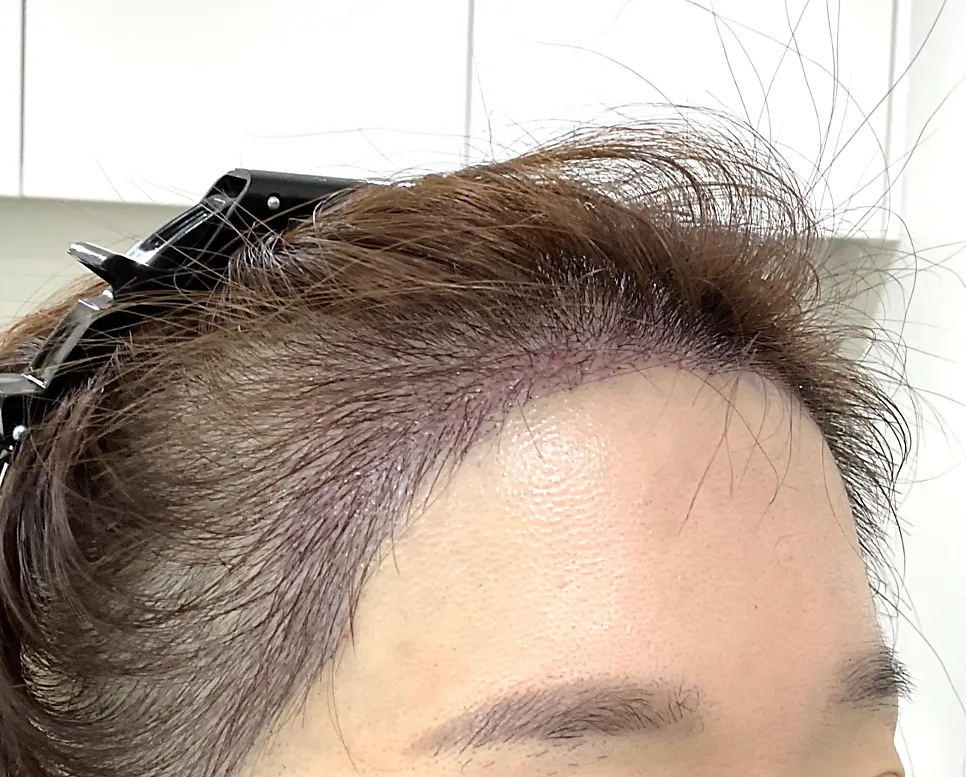
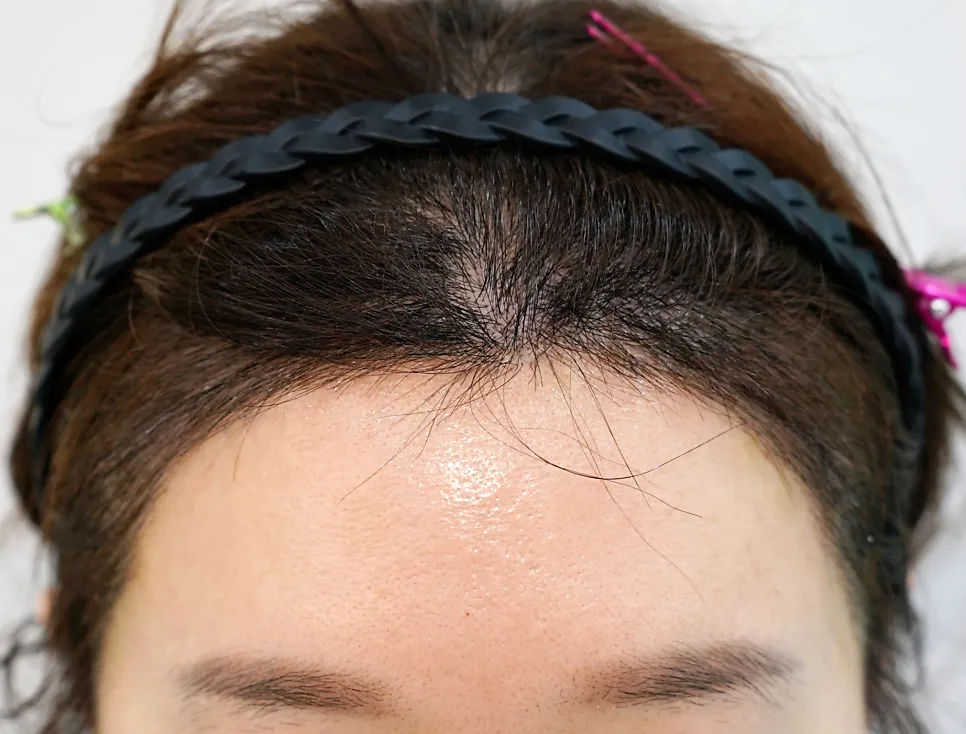
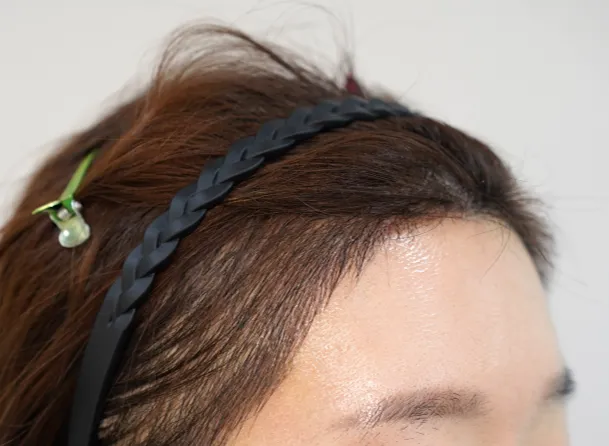
Many people worry about graft survival when transplanting into a scar line. When the scar line is wide and there is also a large amount of scar tissue under the skin, graft survival is more likely to be lower, but when the scar itself remains thin like this, graft survival is not significantly affected.
The Right Method and Order for Each Person
A wide forehead can look open and airy, but when the facial proportions are off, the eyes, nose, and mouth can look crowded toward the bottom, the face can look larger, or a person can look older.
When the forehead needs to be reduced a lot, it is important to choose the method and order, forehead reduction or hair transplantation, that best suits each person's situation, so that the forehead looks best with their face.
※ Pain, swelling, bleeding, infection, abnormal sensation, and other side effects may occur after forehead reduction and hair transplantation. ※ All photos on this blog were used with the patient's consent.


