
By Dr. Kim Narae · 2025.09.16
Scalp Scars That Bother You Every Day
When I search for scalp scars, related searches such as 'planting hair on a scalp scar' and 'how to plant hair on a scalp scar' come up. Today we will look at how hair transplant is performed on scars formed on the scalp.
When evaluating the back of the head in the clinic, there is always at least one small scar that is not noticeable. When there is a small scar that you yourself don't know when it formed, it is not a problem at all.
However, scars near the hairline that you see every time you look in the mirror, scars in the middle of the crown that others can see more easily, scars at the back of the crown of men with short hair, and scars along a parting that can only be made in one direction are bothersome every day.
Limits of Scalp Tattooing
Scars in places that are not easily seen, but that you still notice from time to time and want to hide, can be helped with scalp tattooing, because it reduces the color contrast with the hair.
However, when a scar is in a very visible place, scalp tattooing has limits. Scar skin tissue is hard and fibrotic unlike normal skin, and the soft tissue thickness differs, so depending on the practitioner's skill, pigment spreading easily occurs and satisfaction with the result may not be high.
Points to Consider When Planting Hair on Scalp Scars
So how can a visible scalp scar be addressed?
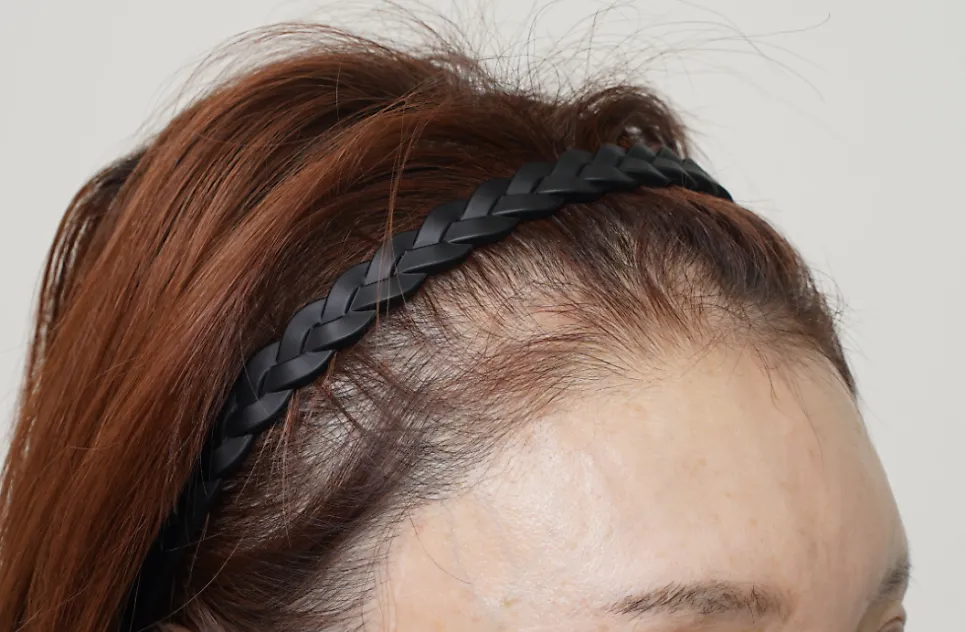
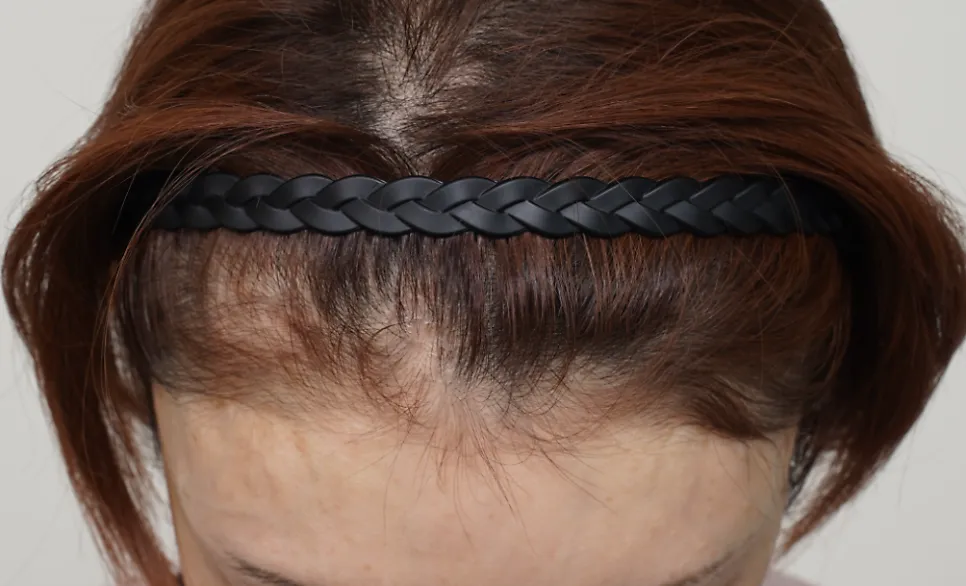
First, let's look at the points to consider when planting hair on a scalp scar.
A detailed medical history of how and why the scar formed is important. Scars from brain surgery, hair transplant surgery, and similar procedures are more likely to have a higher graft survival rate than scars caused by burns, inflammation, or chemicals. The surgical plan also changes depending on the scar's thickness and characteristics, such as whether its texture is soft, whether its small blood vessels refill, and whether it is hypertrophic or keloid.
Depending on the texture of the scar, high-density transplantation may not be possible in some cases. There are also times when the most suitable technique must be used, such as making slits in advance and transplanting into them rather than using an implanter. In such cases, the density is kept lower than in a standard hair transplant to maximize graft survival, and then after 8 to 10 months, a second surgery can increase the density slightly.
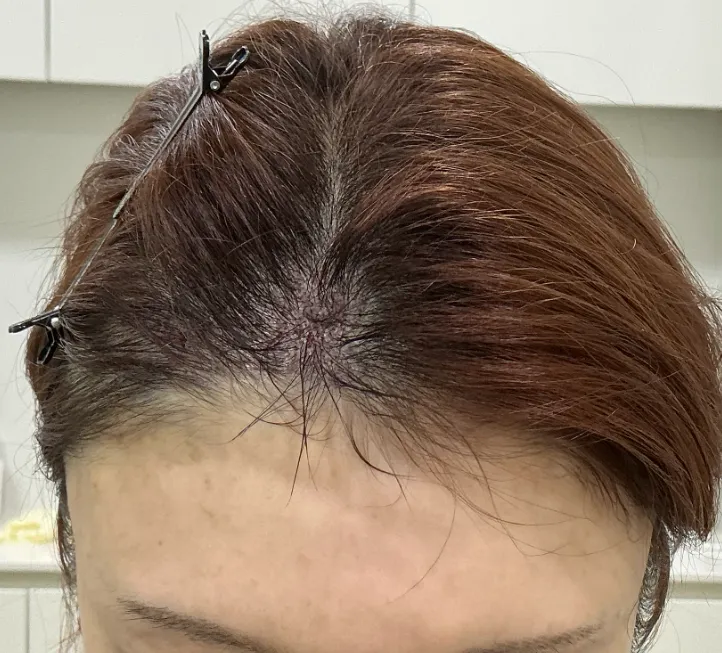
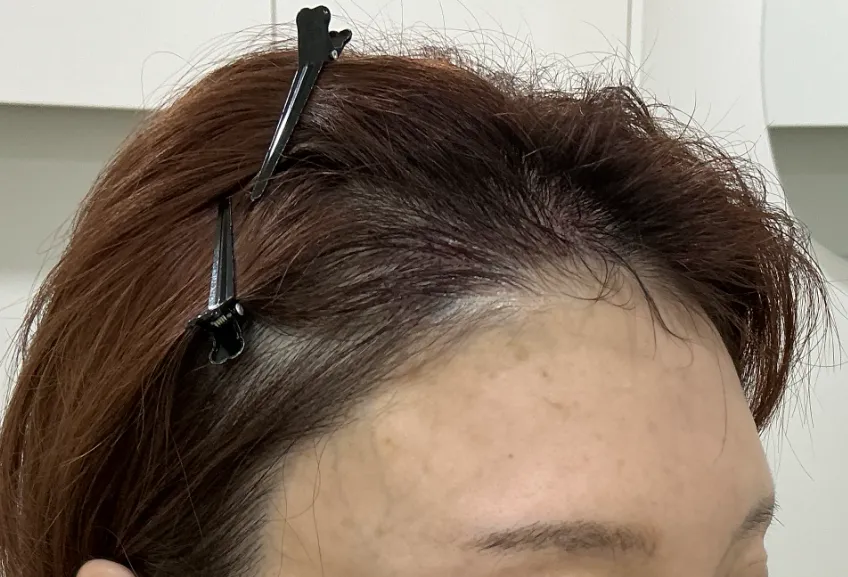
Transplantation by Scar Size and Location
Depending on the size of the scar, if the scar is very long or large, including in a very visible area, and a considerable number of follicles (more than 1,000) are needed, one option is to limit the transplant first to the most visible area, observe the progress, and then expand the area in a second stage.
Conversely, when a scar is small and in a highly exposed area, such as a scalp scar right behind the baby hairs at the hairline, and its texture is suitable for normal-density transplantation, the transplant is done at a density that matches a natural hairline. Transplanting with longer hair can create a more seamless look, and although some hairs may shed due to the telogen phase within one month after transplantation, the remaining longer hair can partly conceal the scar.
Transplanted Follicles That Remodel Scar Tissue
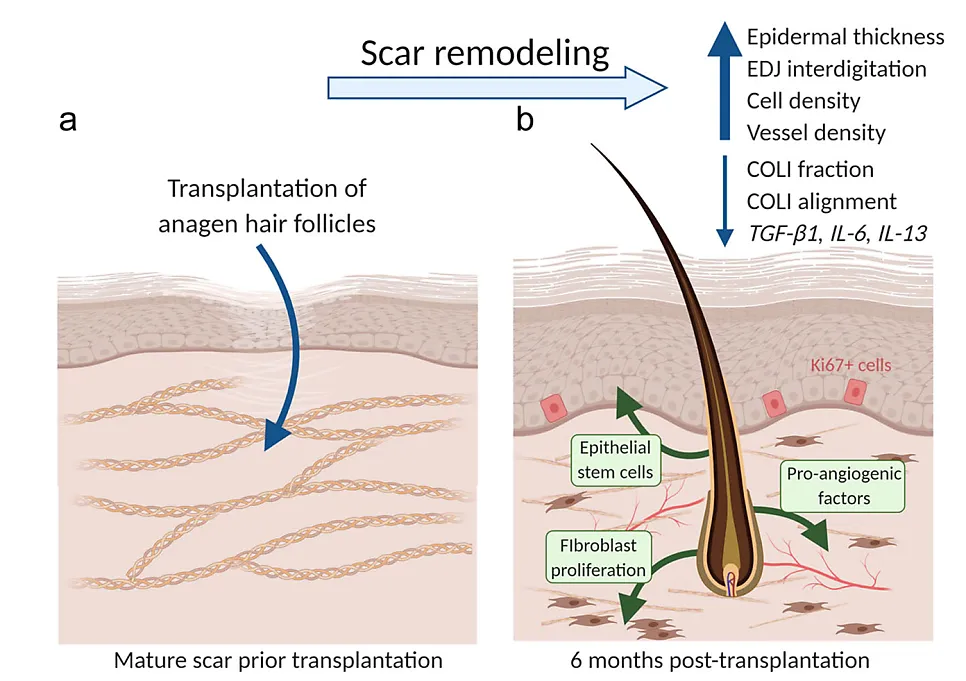
Recent research has shown that when hair is transplanted into a scalp scar, the transplanted follicles go beyond simply covering the scar and help remodel the scar tissue itself into healthier tissue. After a tissue biopsy of the scar, hair was transplanted into it, and the scar tissue around the transplanted hairs was then compared through tissue biopsies at 2, 4, and 6 months.
At 6 months, the epidermis had doubled in thickness, the boundary between the epidermis and dermis had been restored to resemble healthy skin, blood vessel distribution and dermal cells had increased, and collagen fibers had rearranged, showing changes that indicated the scar was becoming softer.
If the surface texture of a scar does not change even after transplantation, the scar may still be noticeable. In my experience, scars that were noticeable before transplantation, because their skin texture was different and they had low pigmentation, were often hard to find after transplantation. Through this paper, I also learned something new.
Source: Plotczyk M, Jiménez F. Anagen hair follicles transplanted into mature human scars remodel fibrotic tissue. npj Regenerative Medicine. 2023;8(1):1. doi:10.1038/s41536-022-00270-3.
※ Side effects such as swelling, bruising, pain, inflammation, and bleeding may occur after hair transplant surgery.
※ All photos on this blog are used and taken with the patient's consent.


