
By Dr. Kim Narae · 2025.08.06
Patients Who Show Photos of Celebrities
These days, many patients show us photos of female celebrities or influencers in the clinic. The celebrities they show change frequently with trends. Photos of BLACKPINK's Jennie also come up often.
Ten years ago, patients mostly expressed hopes such as getting rid of an M-shaped forehead or making a very high forehead look similar to others'. But recently, there are far more cases where they mention very specific details, such as the height of the forehead, the density of the hairline, and the position of the T-point (temple peak).
Lowering Only the Forehead Height Can Make Flaws Stand Out
Did you know that even when a hairline surgery turns out well, it may not make everyone more beautiful? If you refer to Jennie's hairline and only consider the height of the forehead and lower it a lot, the cheekbones, which may have been attractive, can become a new concern, and the midface may look longer. In particular, with the brachycephalic skull shape common among East Asians (wider from side to side than front to back), the face may look relatively wide compared to its vertical length, and these weaknesses may become more noticeable.
So we keep researching nonstop to preserve the beauty the patient is seeking, while not highlighting weaknesses and creating an elegant image.
Three-Dimensional Design Considering the Front, Side, and 45-Degree Angles
The current trend is probably a narrow forehead and a small face. However, if the midface is long, or the sideburns and side hairline are positioned high, narrowing only the forehead may make the lower face look longer. To make the forehead narrow while still keeping the overall proportions balanced and harmonious, a three-dimensional design is needed that considers not only the front and side designs but also the 45-degree (oblique view) design.
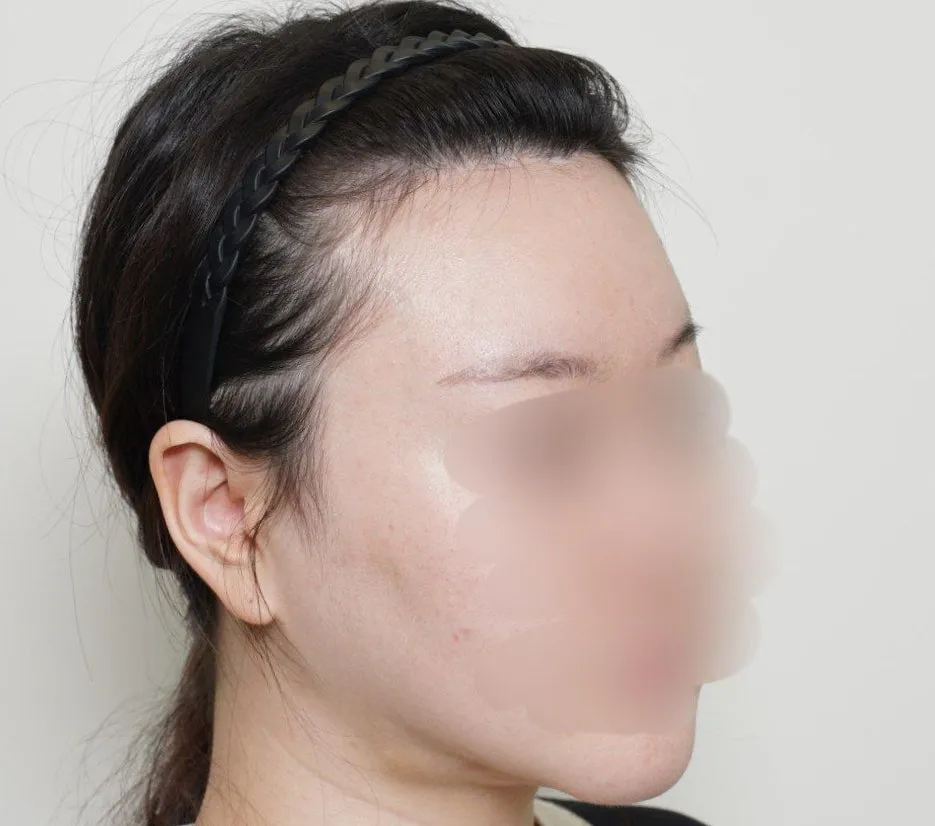
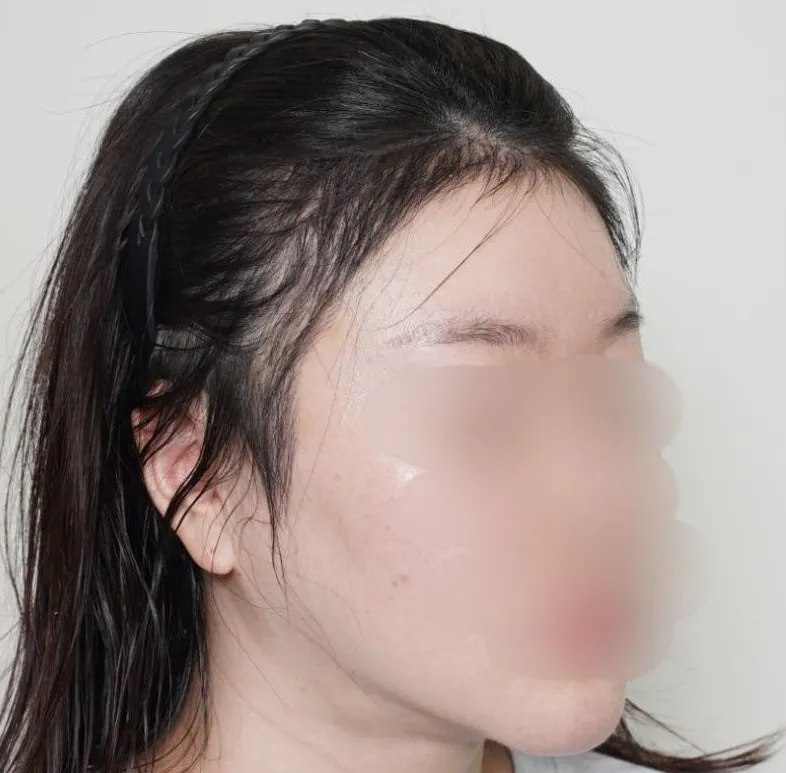
When the hairline is positioned high overall like this, we reposition the temple point downward while considering its distance from the eyes and eyebrows, extend the sideburns, and improve the side margin within the space allowed between the temple point and the starting point of the sideburns. At this time, the size and contours of the orbit and cheekbones must also be considered.
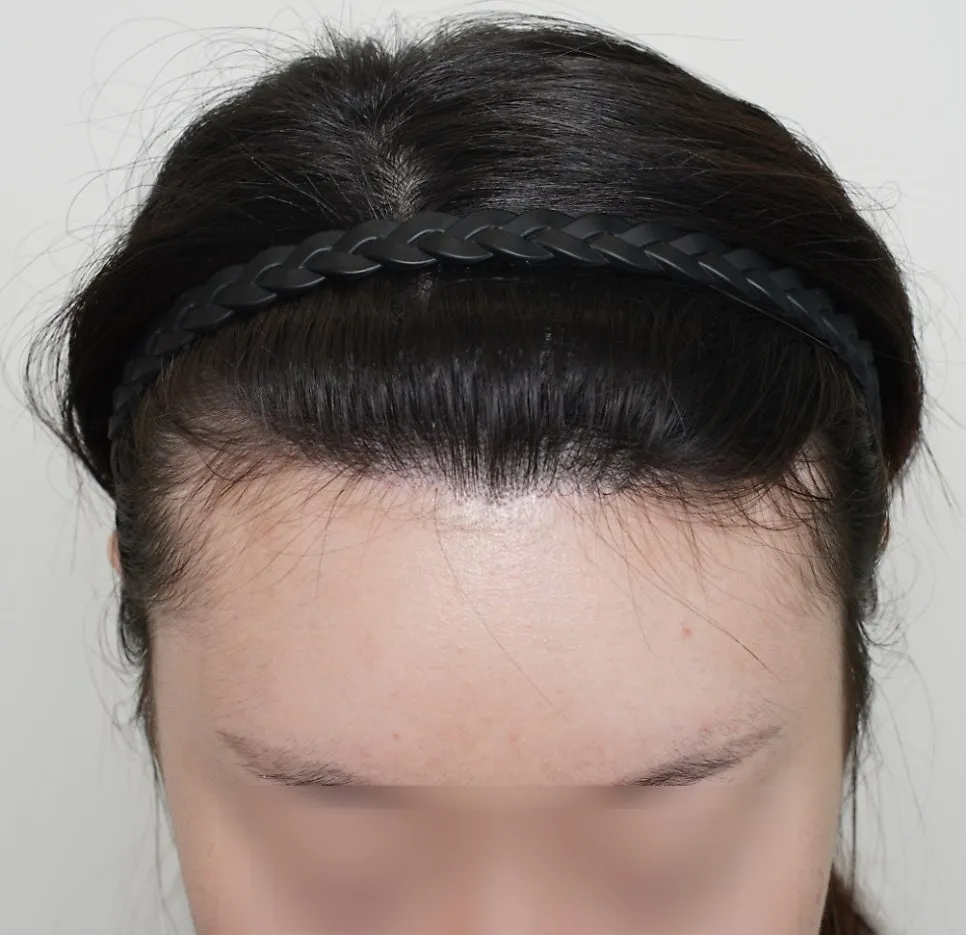
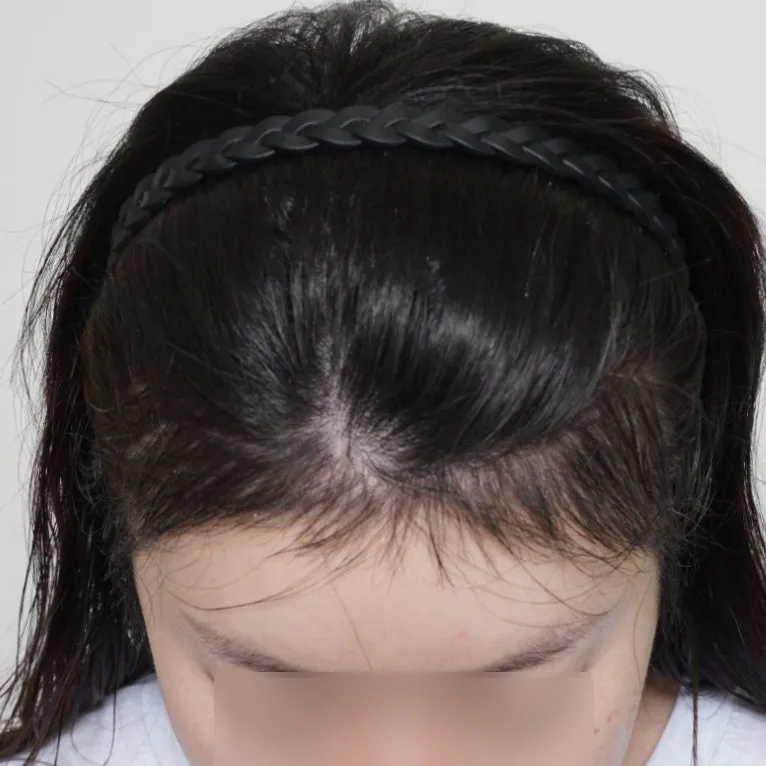
We designed it to create a narrow forehead while keeping the middle and lower face from looking relatively longer.
The Process of Finding a Harmonious Design
As with any surgery, women's hairline correction involves a great many considerations, especially when the sides are included.
I believe that the core of achieving a satisfying result is the process of comprehensively analyzing various factors, such as face shape, skull shape, forehead contour, eyebrow shape and density, hair thickness, relative length of the midface, presence of a posterior cheekbone, presence of scars, existing hair density, position of the fine hairs, development of the temporalis muscle, and degree of facial asymmetry, and communicating thoroughly with the patient to find the most harmonious design.
※ Side effects such as postoperative pain, inflammation, swelling, bleeding, and infection may occur, and results may vary from person to person.
※ All photos on this blog are used with the patient's consent.


