
By Dr. Park Sooho · 2025.06.28
The Habit of Pulling Out Hair: Trichotillomania
Have you heard of the habit of pulling out hair? Medically, it is a condition called “trichotillomania.” It is not simply a habit or a stress response; it is one of the impulse control disorders diagnosed in psychiatry. Surprisingly, quite a few people struggle with this symptom. In particular, repeatedly pulling hair can lower density in certain areas, and in severe cases, noticeable hair loss may occur.
A Hair Transplant Is Possible One Year After Stopping the Habit
Is a hair transplant possible for hair loss caused by trichotillomania? Yes, but there is a prerequisite: the habit of pulling out hair must be completely overcome. A hair transplant can be done one year after the habit is overcome.
The first reason is that if the transplanted hair is pulled out again, the surgery becomes meaningless, and precious hair from the back of the head would be wasted. Second, the pulled-out hair needs to grow back sufficiently before it is possible to know where and how much to transplant.
Clues Seen Under a Scalp Magnifier
In practice, many patients do not mention their trichotillomania at first. They often come in saying only that hair has fallen out in a specific area, and to the naked eye it may look little different from common hair loss. However, when observed under a scalp magnifier, clues can be seen: broken hairs, uneven fine hairs, and abnormal signs of damage.
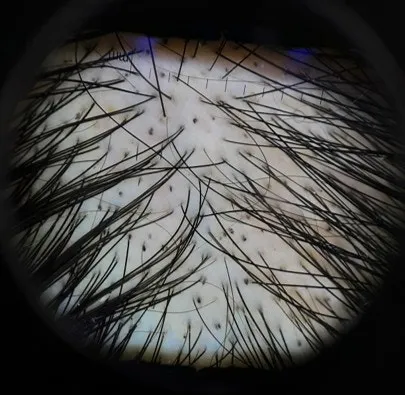
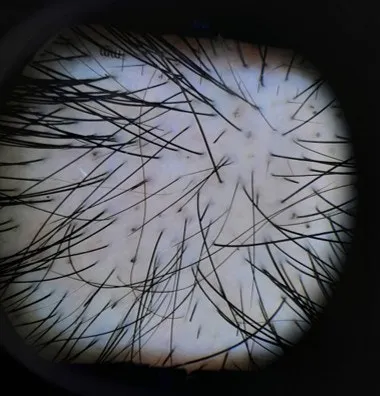
When I carefully ask, “Do you have a habit of pulling out your hair unconsciously?”, many patients then say, quietly, “Yes, actually...” Some did not know exactly whether it was a condition, and some felt embarrassed or wanted to hide it, which I understand. However, accurate diagnosis and honest communication are the start of treatment. You do not need to hide it. I understand how much you have been struggling alone.
Whether the urge can be controlled is the most important thing
Trichotillomania can start in elementary school and last for years, and it can become worse in certain situations, such as exams, work stress, or relationship problems. Some people are not even aware that they are pulling out their own hair. So when considering a hair transplant, the most important factor is how well the urge can be controlled. If necessary, the help of a psychiatrist is also a good option.
Trichotillomania is nothing to be ashamed of or to hide. Early diagnosis and treatment are important, and once recovery is complete, the area can be filled in with a hair transplant, so please do not worry too much.


