
By Dr. Park Sooho · 2025.05.18
Six Months After Forehead Reduction
Last year, I shared a story about forehead reduction for someone worried about a very high, sloped forehead. Since the forehead was very high and sloped, it would be difficult to lower it to a satisfactory level with a hair transplant alone, so we decided to first reduce the height with forehead reduction and then lower it to the desired height with a hair transplant six months later.
Before long, six months had passed, and they came in for a follow-up.
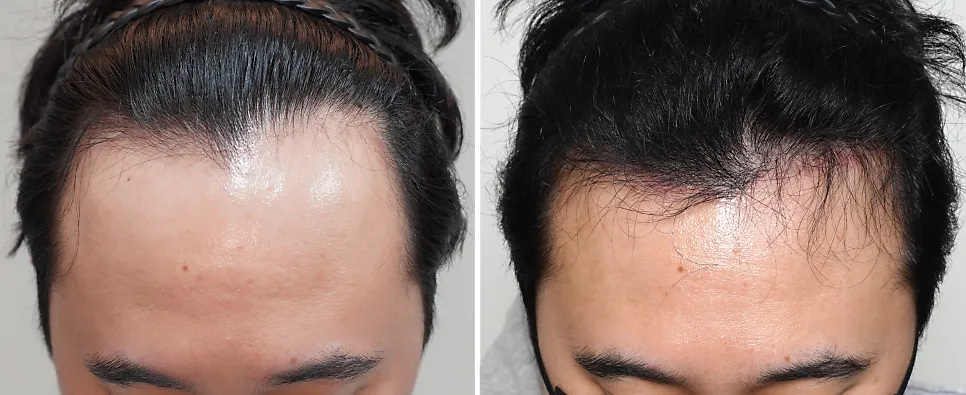
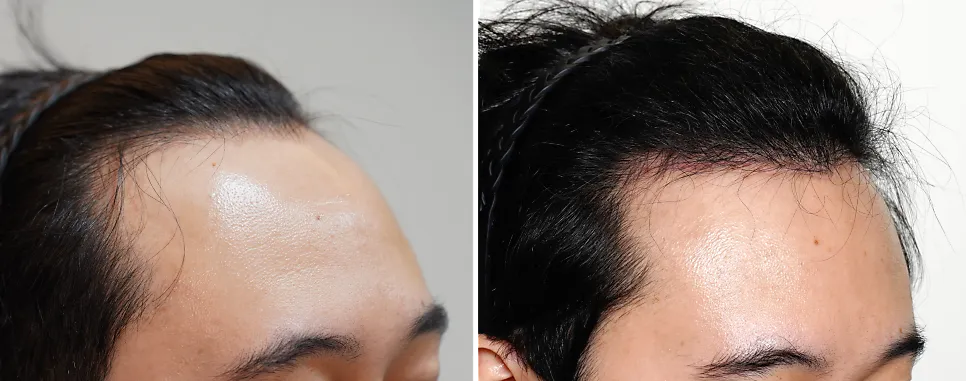
At six months, the scar still had a slight redness, but over time it will become almost unnoticeable. The sensation in the frontal area that had disappeared after forehead reduction had also mostly recovered. Since the sloping forehead was gone, things were already much more comfortable, but they wanted the height lowered a bit more.
Hair Transplant Design to Lower by Another 1 cm
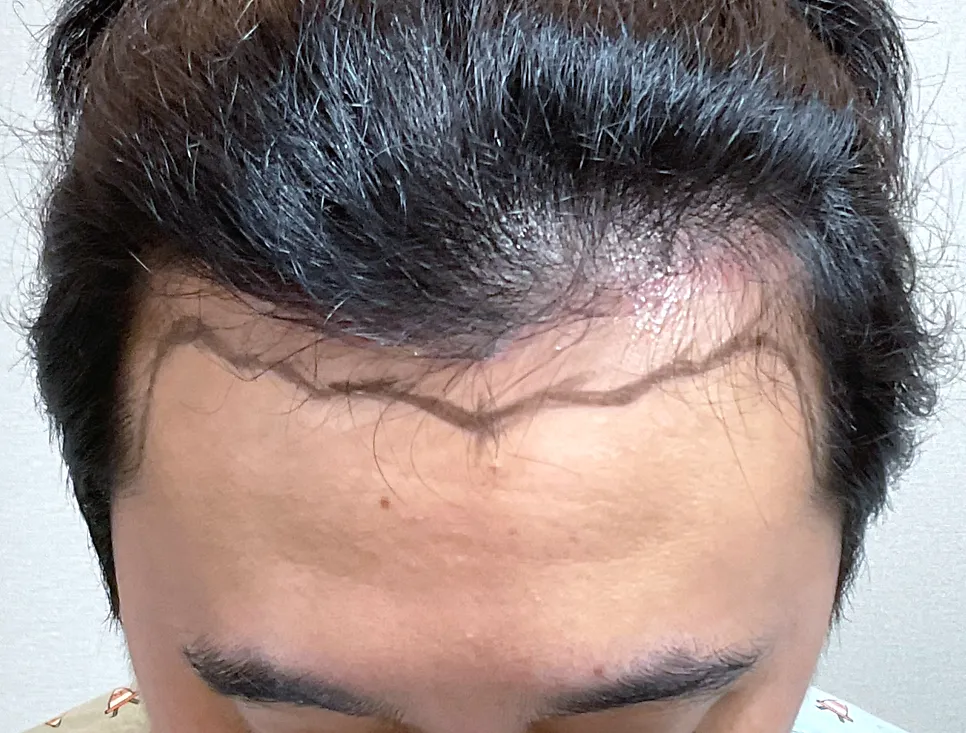
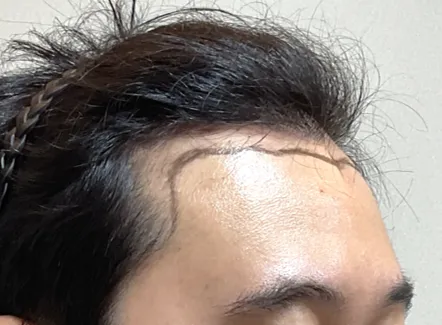
With a design that lowers the center by 1 cm more, fills in the M-shaped area and gently pulls the sides, the expected number of hairs needed was about 3,800. Because the elasticity of the back of the head was not very good, I told them that if the incisional method did not yield enough hair, the shortfall would be harvested with the non-incisional method.
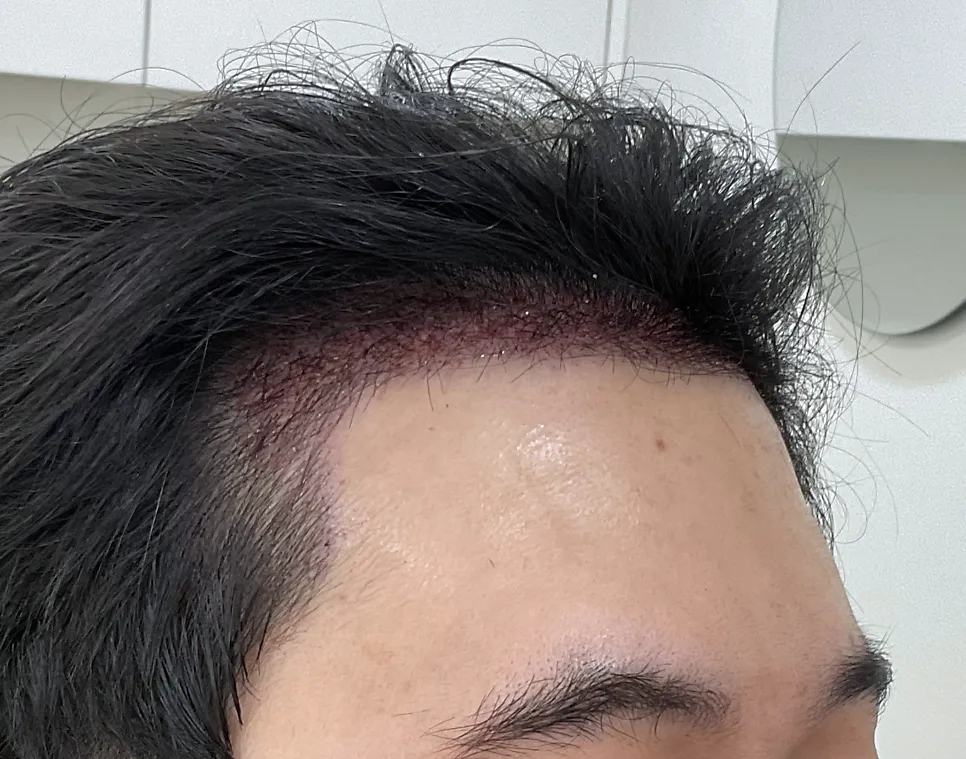
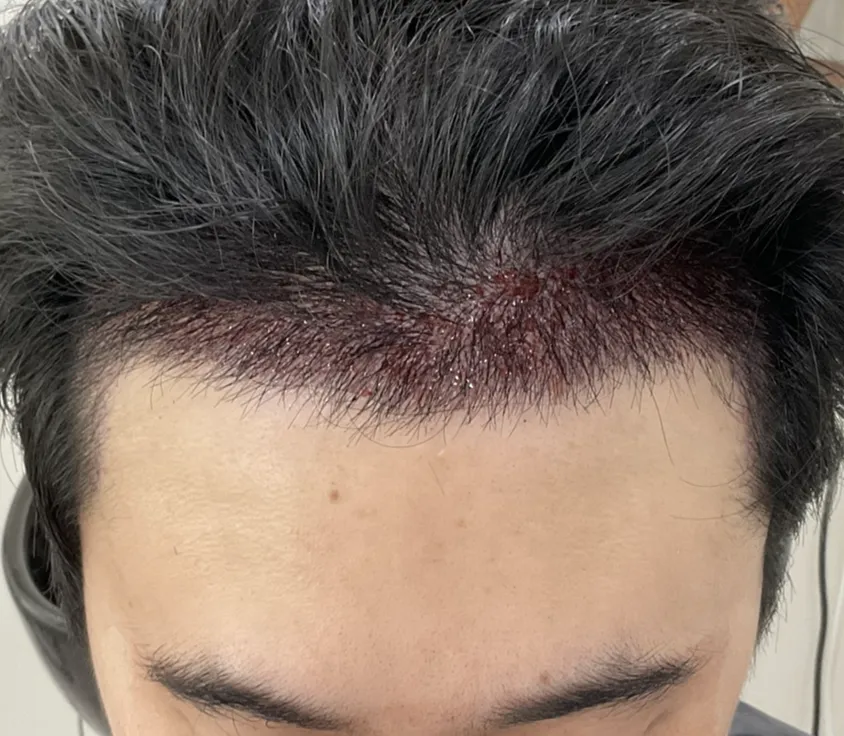
Fortunately, about 3,800 hairs or more were harvested with the incisional method alone, so no additional non-incisional harvesting was needed, and they could be transplanted densely into the planned area.
Week 2 Follow-Up
The photos below were taken when they came in for a follow-up two weeks after surgery.
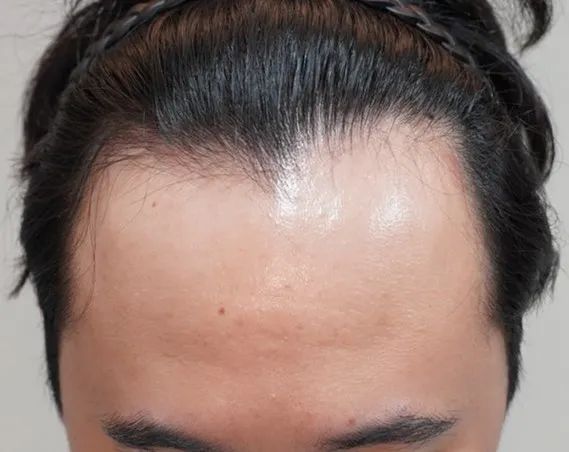
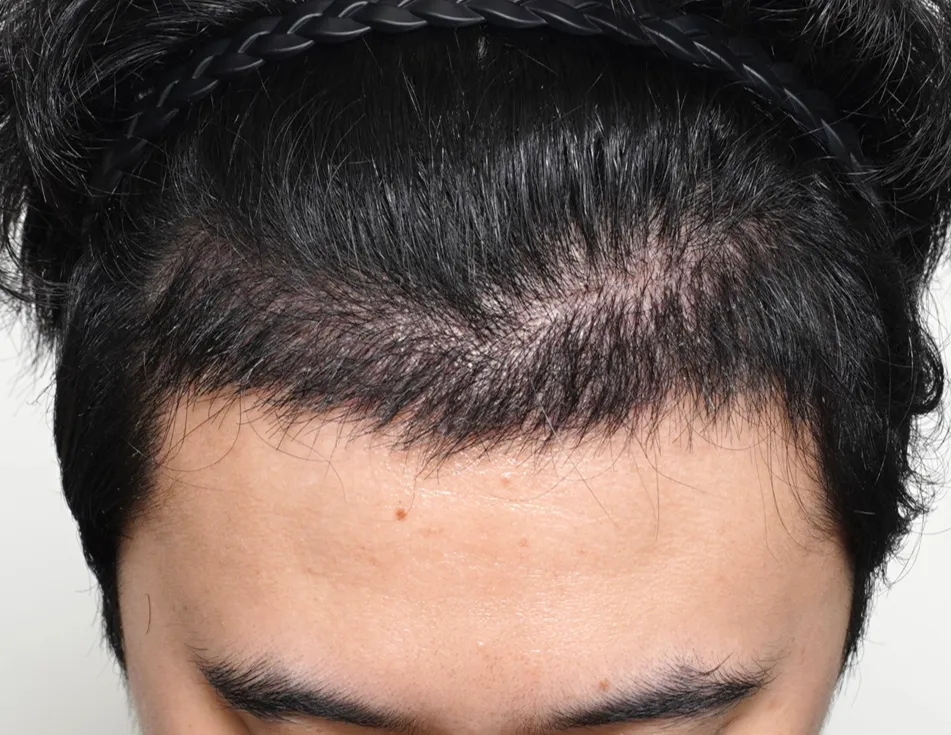
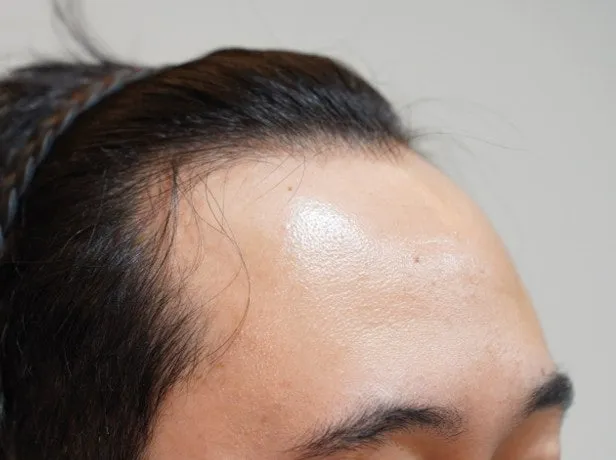
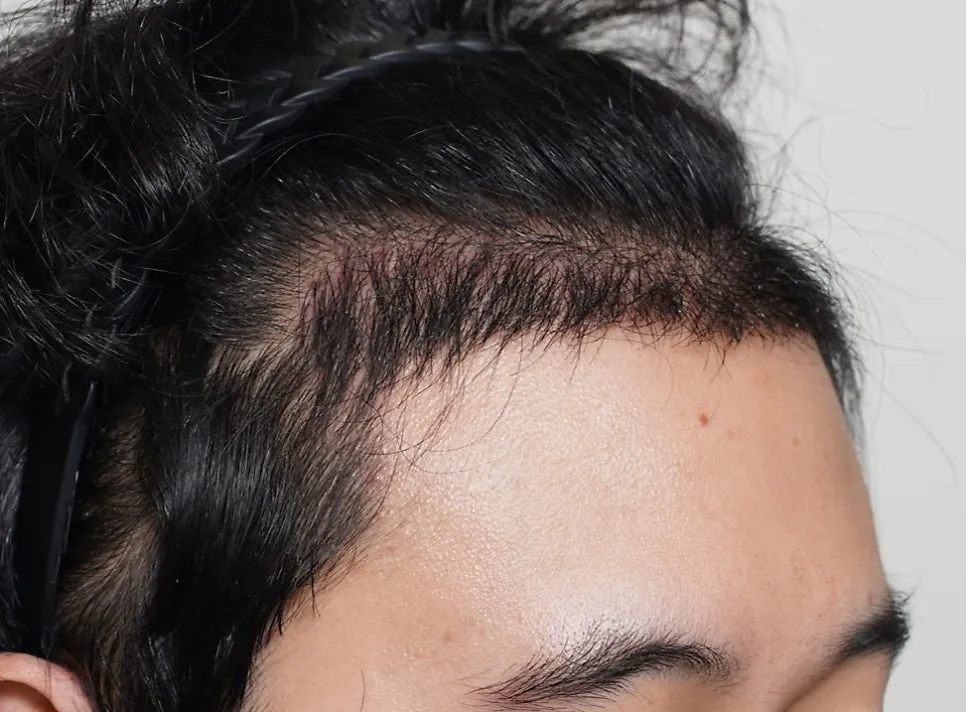
By the second week, hair had already grown quite a bit, giving a much fuller look than right after surgery. The patient was also pleased that the forehead had narrowed to the height they wanted. After another two weeks, the transplanted hair will begin to shed, but it will grow back as it is now three months later, so all that's left is to wait. We look forward to one year from now.
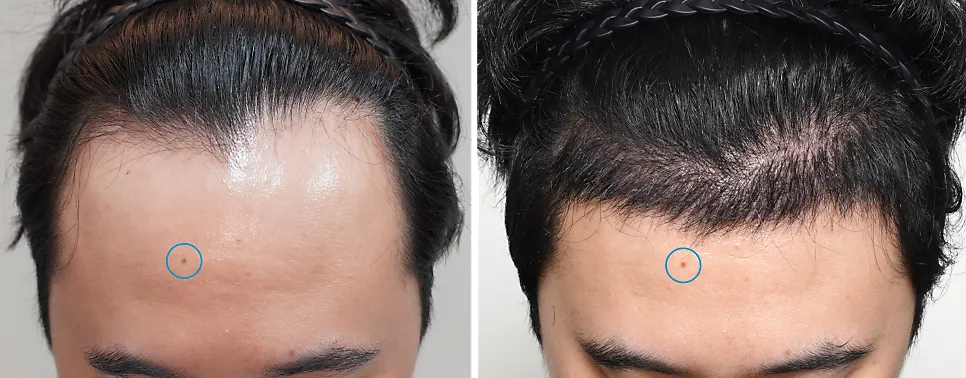
Using the mole on the forehead as a reference point, you can easily compare how far the hairline has come down.
※ After a hair transplant and forehead reduction, side effects such as swelling, inflammation, bruising, pain, sensory changes and infection may occur. All photos are used with the patient's consent.


