
By Dr. Park Sooho · 2025.04.27
Scars Difficult to Resolve With a Hair Transplant
If there is a scar on the scalp, hair will not grow in that area. In most cases, scars can be resolved with a hair transplant, but occasionally there are scars that are difficult to resolve with a hair transplant.
A Scar That Would Not Heal and Kept Oozing
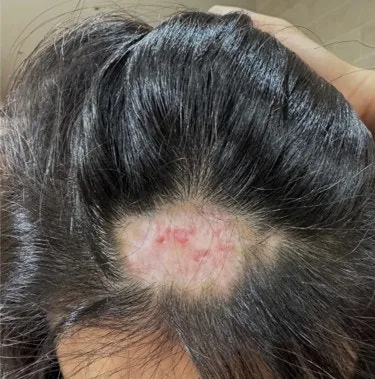
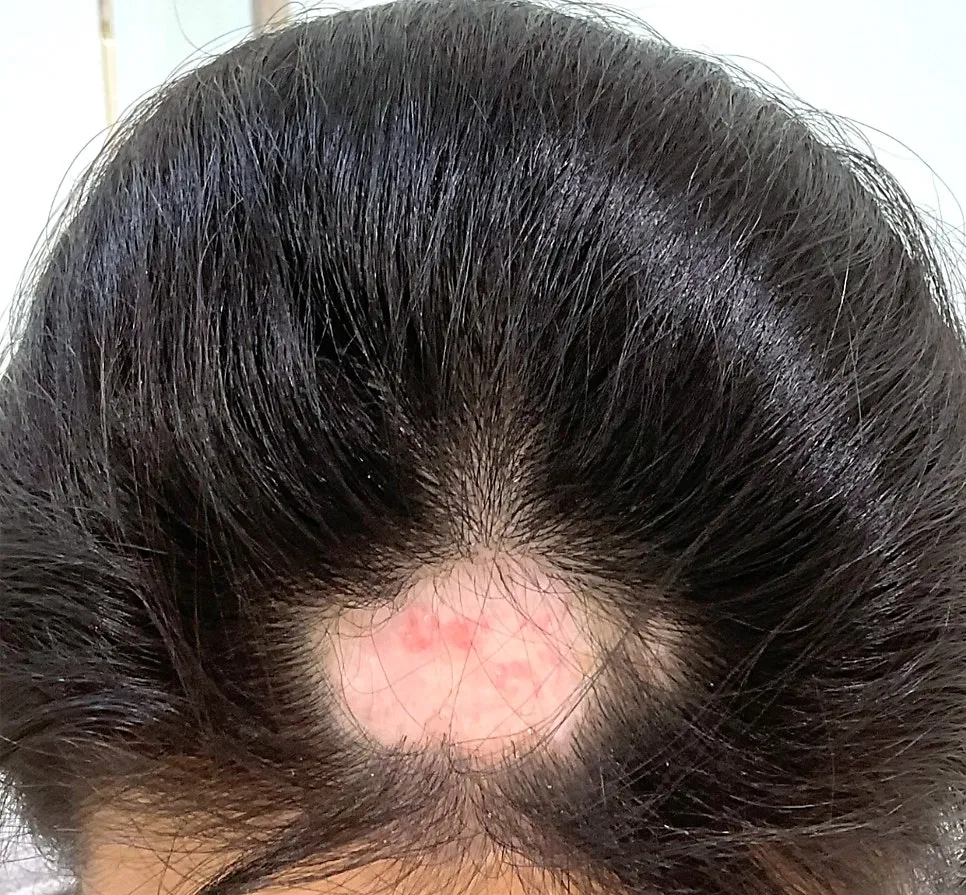
The patient above had the scalp necrotize after a forehead reduction performed at another hospital, leaving a large scar in the frontal area (4 cm long, 3 cm wide). At the time of the visit, 10 months had passed since the necrosis occurred, but the wound had not fully healed and was still oozing.
At that point, there were two constraints on performing a hair transplant. First, the wound had not healed cleanly, so the skin kept breaking open and oozing, and the engraftment rate of the hair transplant could be low because of inflammation in the wound. Second, the scar was located near the part line.
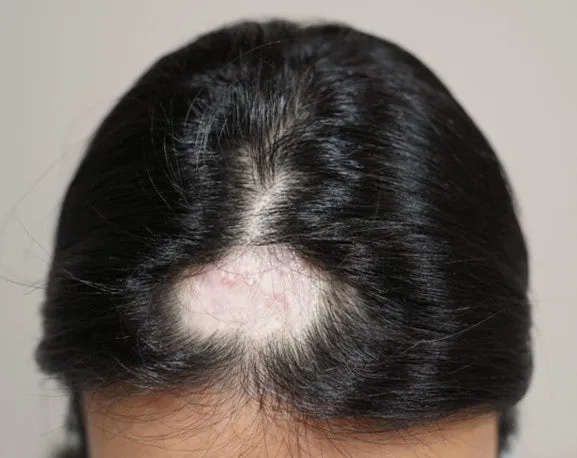
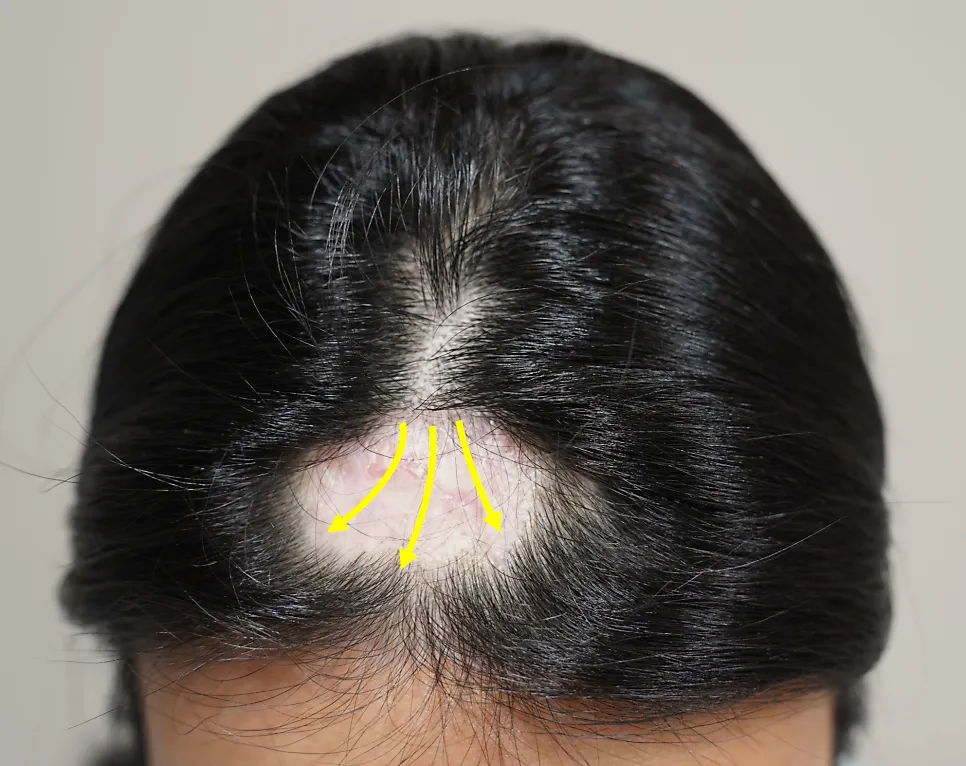
The density that can be achieved with a hair transplant is inevitably lower than normal density, the engraftment rate on a scar is likely lower than when transplanting into normal tissue, and the area along the part looks even thinner because the hair splits apart, as shown by the arrow in the photo on the right.
Why We Decided to Reduce the Scar First
Covering this entire scar with a hair transplant would leave room for disappointment, so I judged that it was better to reduce the scar as much as possible with the forehead reduction method first and then do the hair transplant. Minimizing the amount of hair transplanted can also help overcome the limitations mentioned above.
In fact, beyond the reasons I mentioned above, there is a bigger reason why I suggested removing the scar before the hair transplant. A large wound from a burn or skin necrosis that heals slowly over a long period and repeatedly breaks open and remains problematic has a high likelihood of developing into malignant skin cancer. During my residency, I saw patients lose their lives to skin cancer that developed this way.
So I judged that it was safer to remove tissue that could become a problem.
Reducing the Scar Width by 2.5 cm and Fixing It in Place
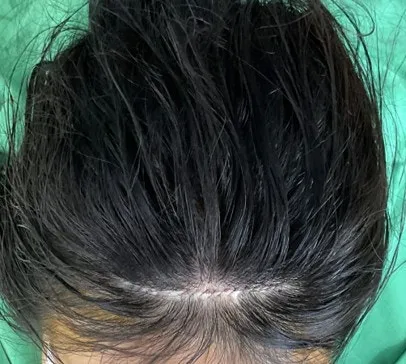
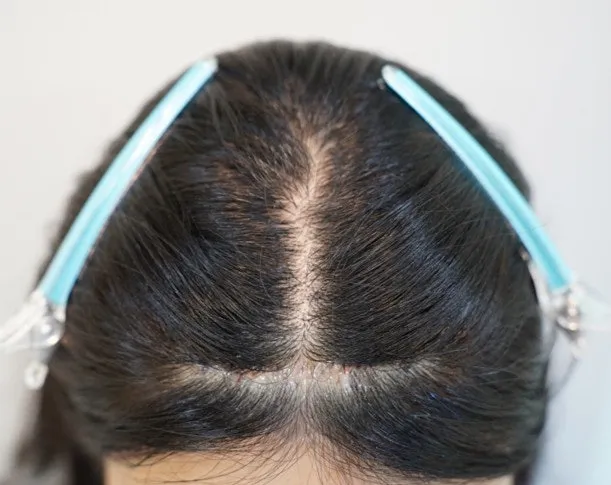
Without placing excessive strain on the scalp's elasticity, we were able to reduce the scar width by about 2.5 cm, and to keep the scar from widening again, we fixed the pulled scalp in place with Endotine. For the scar that will remain as a line, we decided to finish with a hair transplant six months later.
Six Months Later
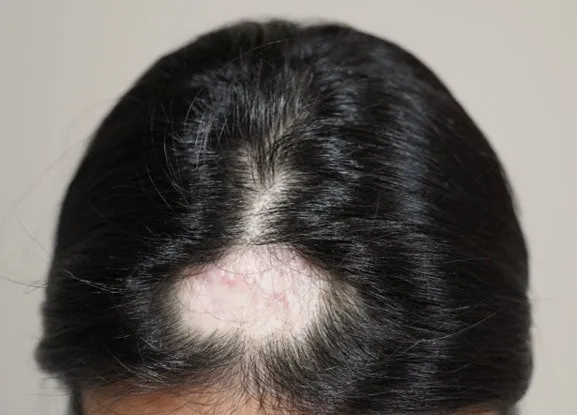
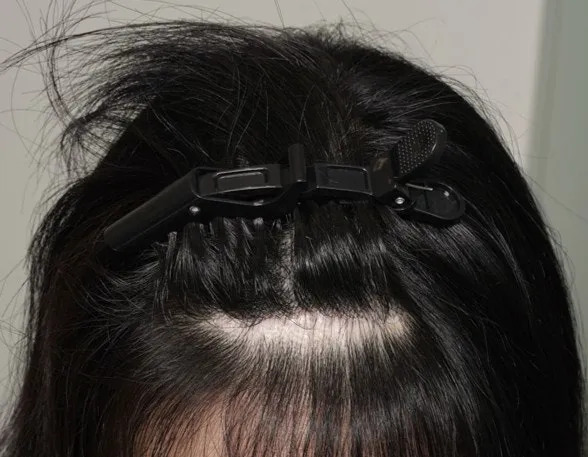
Six months had passed, and they came in for a hair transplant consultation. Fortunately, the scar had not widened again, so when the hair was worn down, the scar was hardly visible. With a hair transplant of about 400-500 hairs, it seemed their condition would improve enough that they would no longer need to worry, even on windy days.
Because we were able to cleanly remove the scar tissue where wounds kept recurring, I now feel reassured.
※ After scar removal surgery, side effects such as bleeding, pain, swelling, inflammation, infection and sensory changes may occur.


