
By Dr. Park Sooho · 2025.02.09
'I should have lowered it a bit more'
Now that BANAL has been open for over a year, more and more patients come in for their final follow-up. They are grateful for the good results, and often add a remark: 'I should have lowered it a bit more.'
We designed conservatively because we were concerned it might look awkward if the forehead was reduced too much at once. But many patients see the fairly natural result and feel a desire to plant a little more.
The first surgery that lowered the height by only about 1 cm
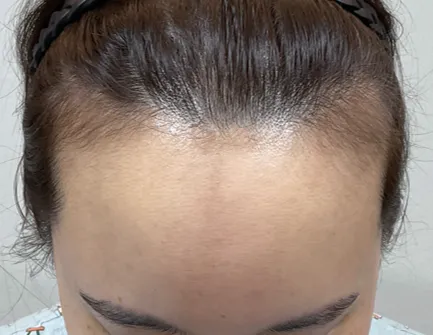
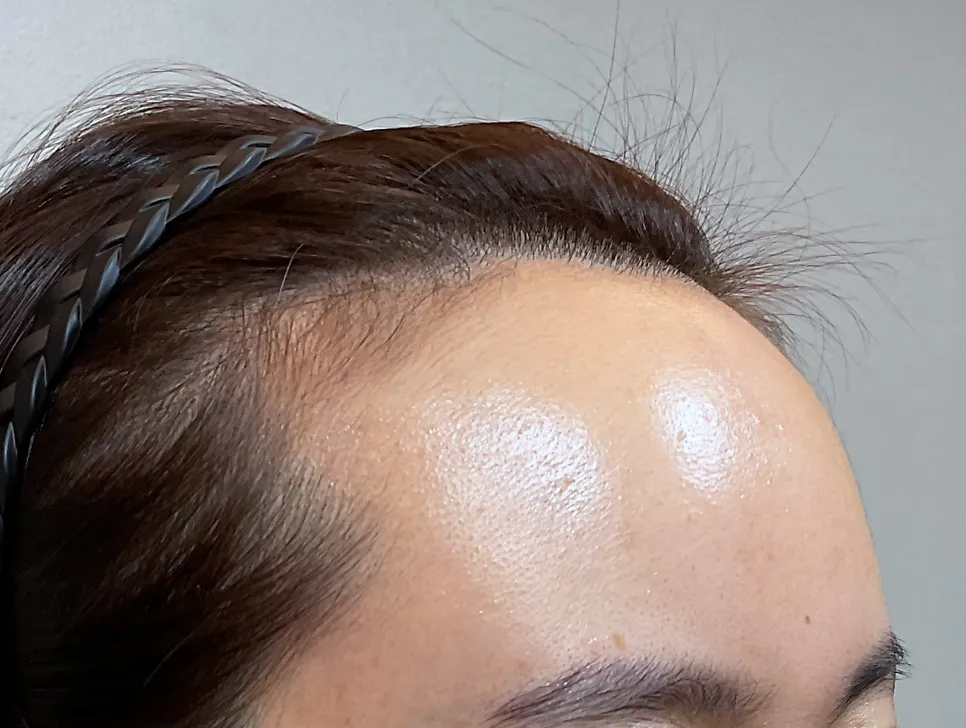
This patient came in for M-shaped hairline correction. However, besides the M-angle, there was also a feeling of a high, flat forehead, so we thought it would be good to first lower the height sufficiently with a forehead reduction, and fill the M-shaped area with a hair transplant later.
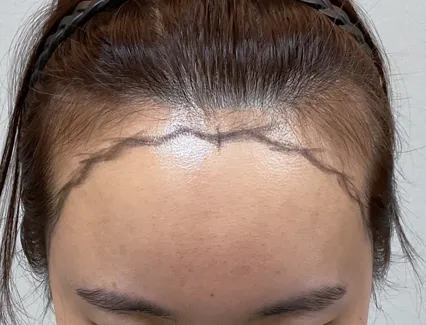
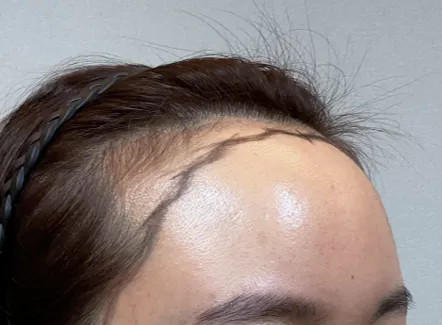
Surprisingly, however, the patient said that if the M-shaped area were filled in, that would be enough, even if the height were only slightly lowered. They said that when they had consulted elsewhere before, they were given a design that barely lowered the height and only filled the M-angle. So for now we decided to lower the height by only about 1 cm and fill in the M-shaped area.
Transplanted 3,800 hairs with the incisional method
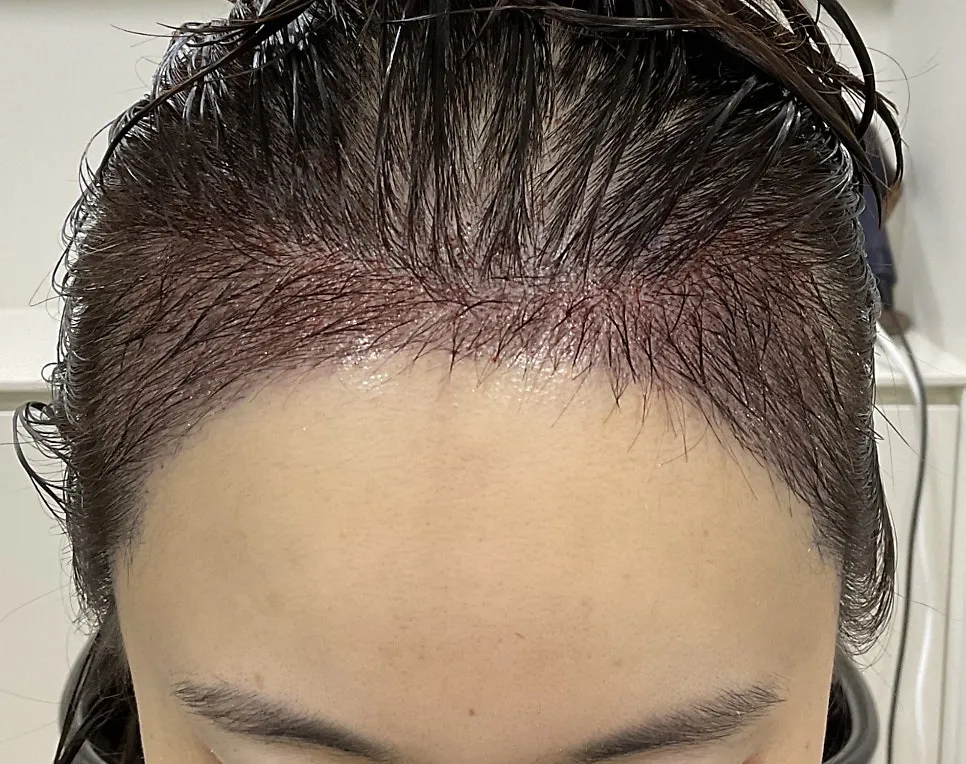
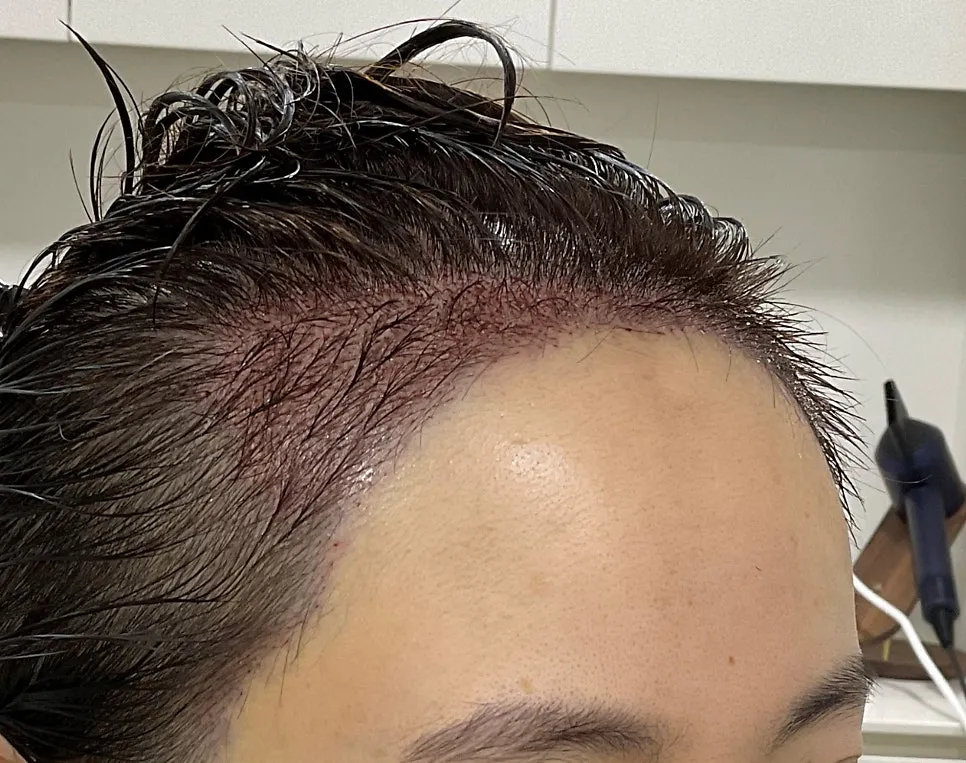
This photo shows the state right after transplanting about 3,800 hairs with the incisional method. Originally this patient wanted the non-incisional method because they were worried about pain. However, when we explained that harvesting a large amount of hair non-incisionally could reduce the volume at the upper back of the head, they said that since their hair is already fine and they were concerned about volume, they would switch to the incisional method.
Day 10 Progress
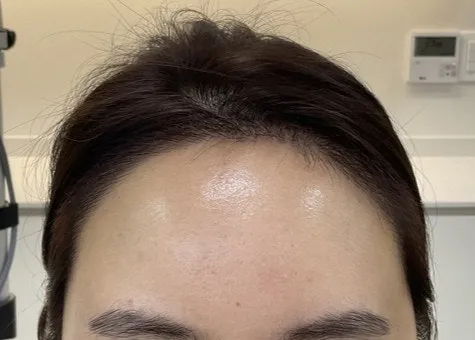
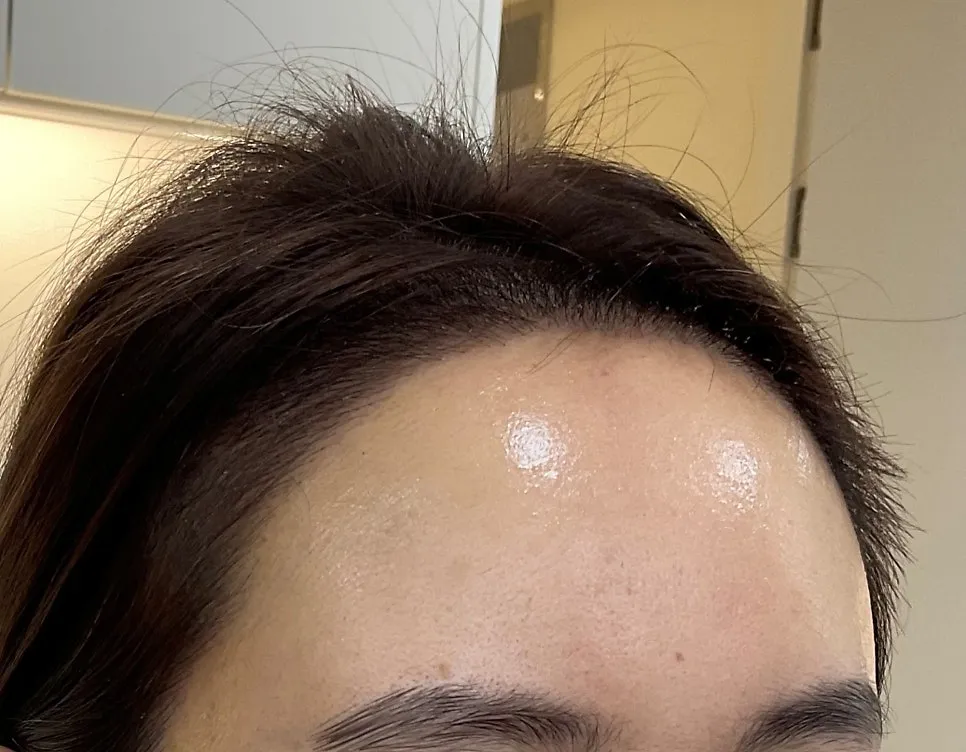
When they came in for the 10-day follow-up, they were already pleased and thanked us, bringing snacks. They took good care of the area, so the transplanted hair looked natural, like the existing stray hairs, and there was no bruising or swelling, so it was seamless.
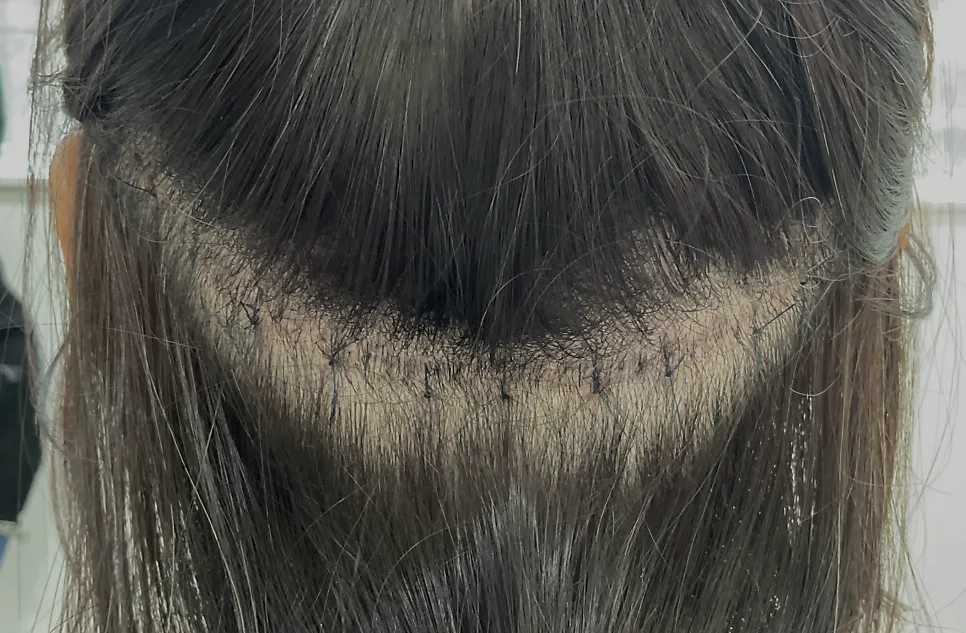
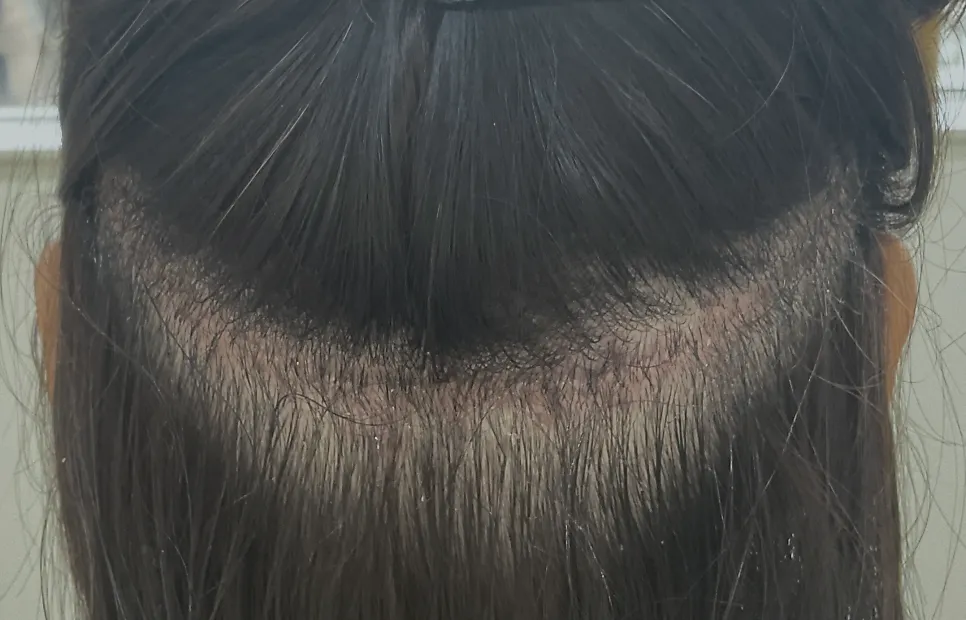
Photos before and after suture removal on the same day (day 10). They had been worried about pain, but they said they were surprised it did not hurt at all. I had recommended the incisional method, and I was also worried they might be in a lot of pain, so I was relieved.
Final follow-up at one year
And before long, one year had passed, and they came in for their final follow-up.
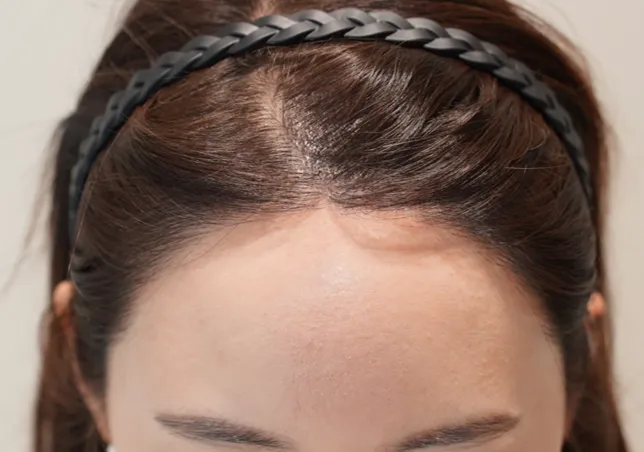
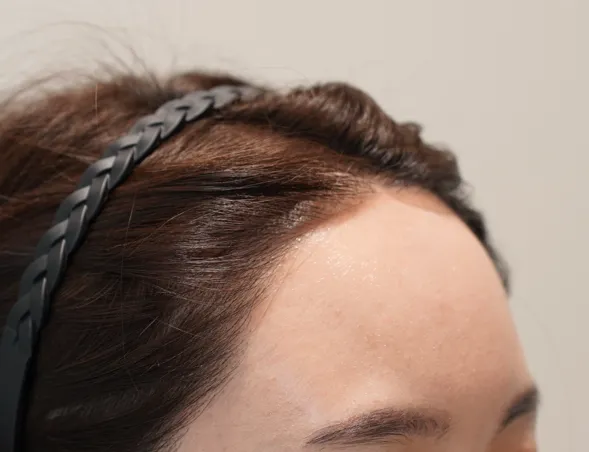
They were very satisfied with the result, but as I mentioned at the beginning, along with that satisfaction they also felt some regret that they could have done a little more.
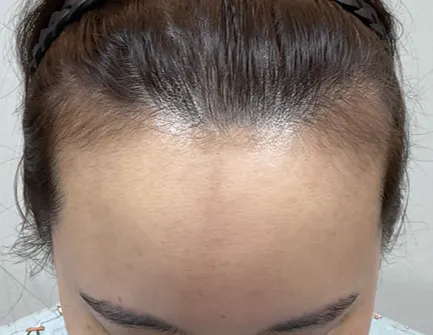
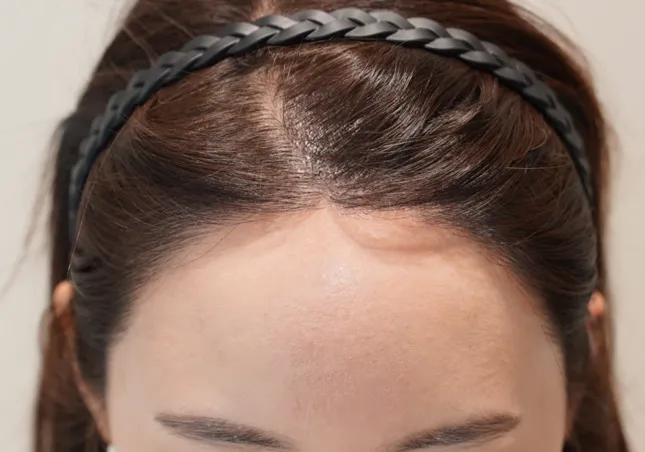
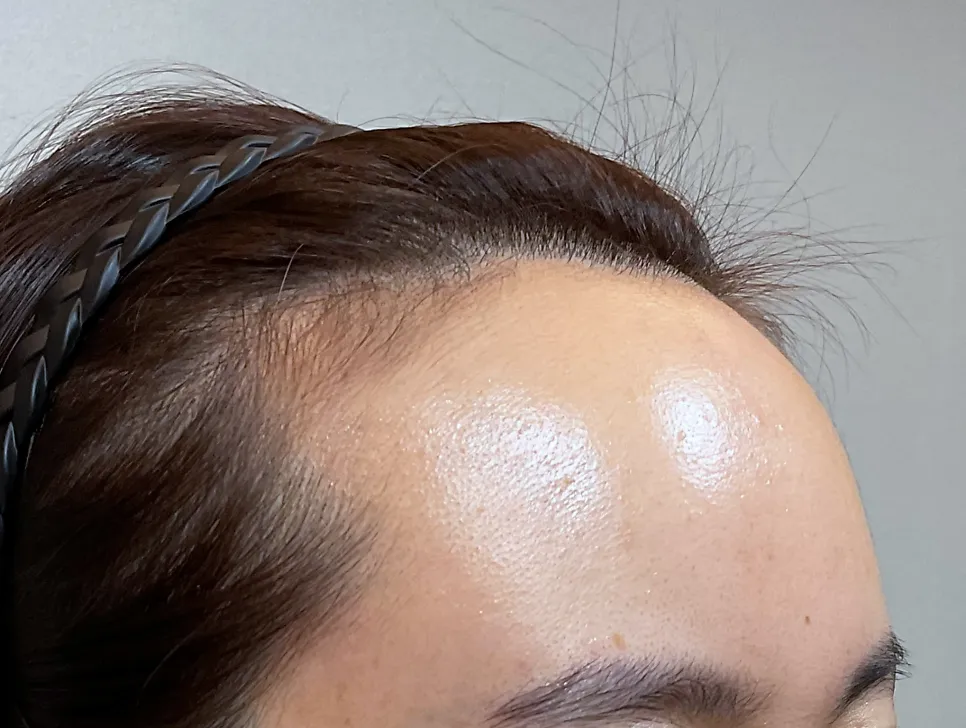
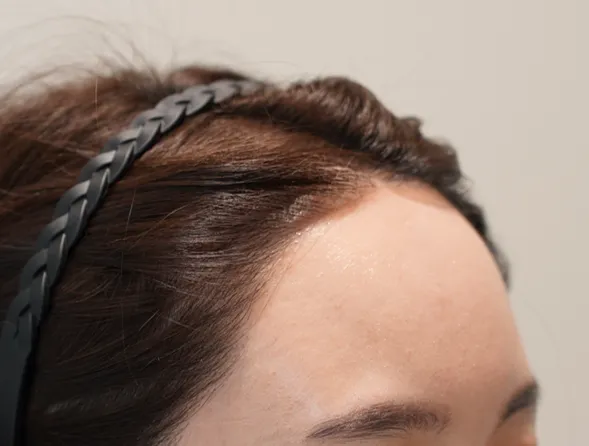
Second-stage surgery design
They were much more comfortable than before, but they still felt the forehead looked wide and asked whether a second-stage surgery was possible. Of course it is possible, but we explained that the more hair you plant, and the further it is lowered from the original hairline, the less natural it may look compared with the current result, and then we made the design.
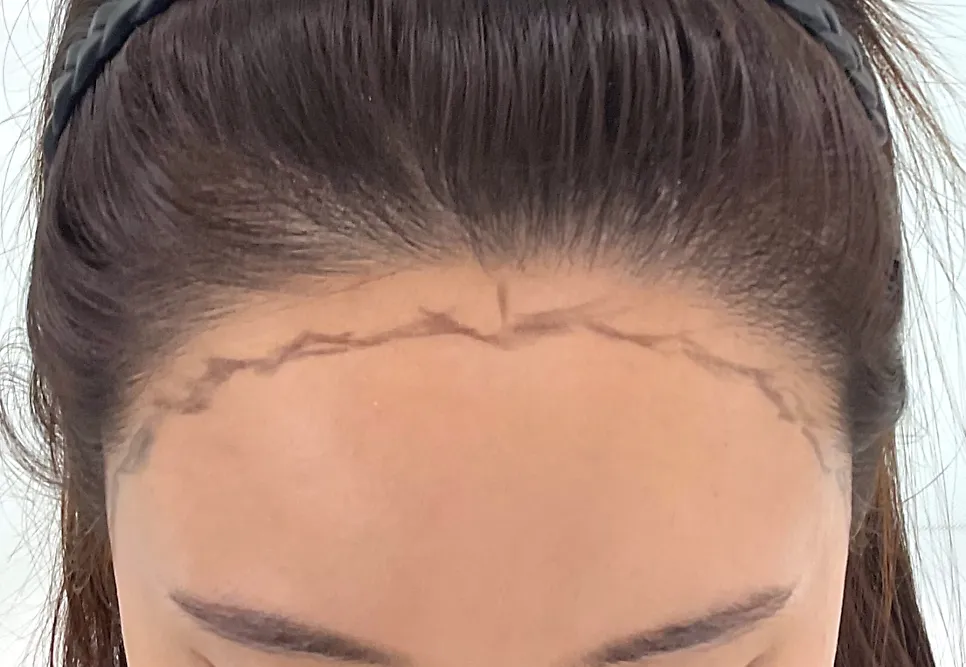
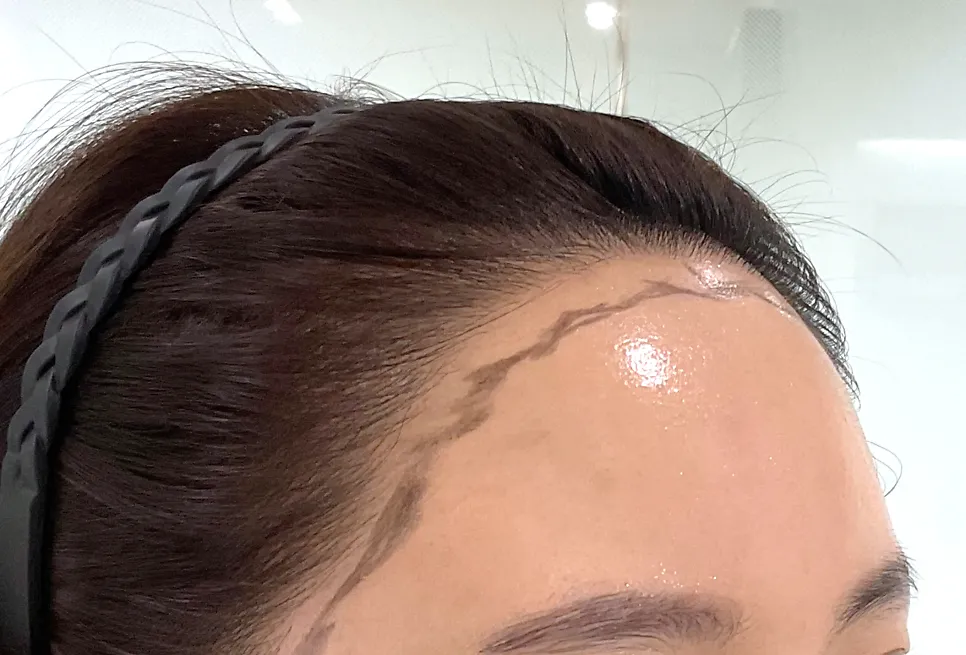
We lowered the height by about 1 cm more, to the point where the forehead begins to slope, and connected the sides naturally to match. We estimated that more than 1,700 hairs would be needed. We explained that even with a second surgery it would not look very awkward, but it may differ from the current naturalness, so we asked them to think it over, and the patient agreed.
Deciding how much to reduce the forehead in the first surgery is very difficult for both the patient and the doctor.
※ After a hair transplant, you may not experience pain, swelling, bruising, or inflammation as this patient did, but side effects such as pain, bleeding, swelling, bruising, inflammation, and infection may also occur.


