
By Dr. Park Sooho · 2025.01.12
The receding-looking reclined forehead
We have been talking about the importance of correcting a reclined forehead for quite some time. In the past, many people described their forehead as "looking receded," but these days, many people say they came because of a reclined forehead first.
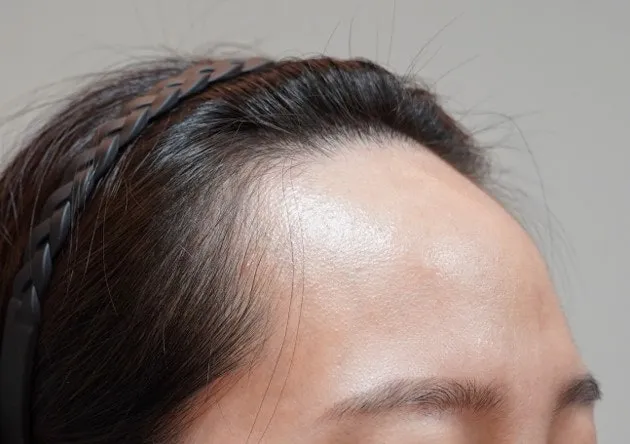
As patients often describe it, a reclined forehead that "looks receded" is different from a simply wide forehead. To remove the receded look, the forehead must be reduced up to the point where it starts to slope back.
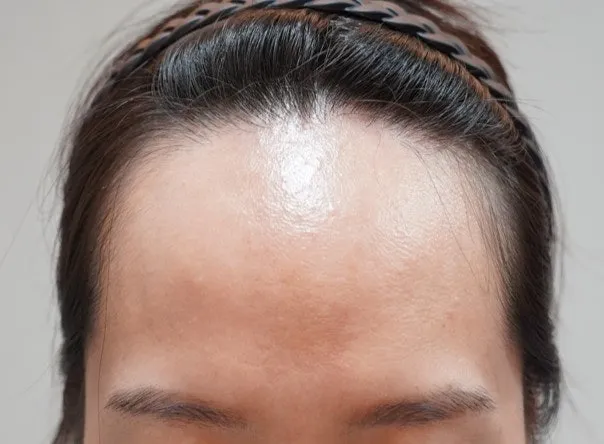
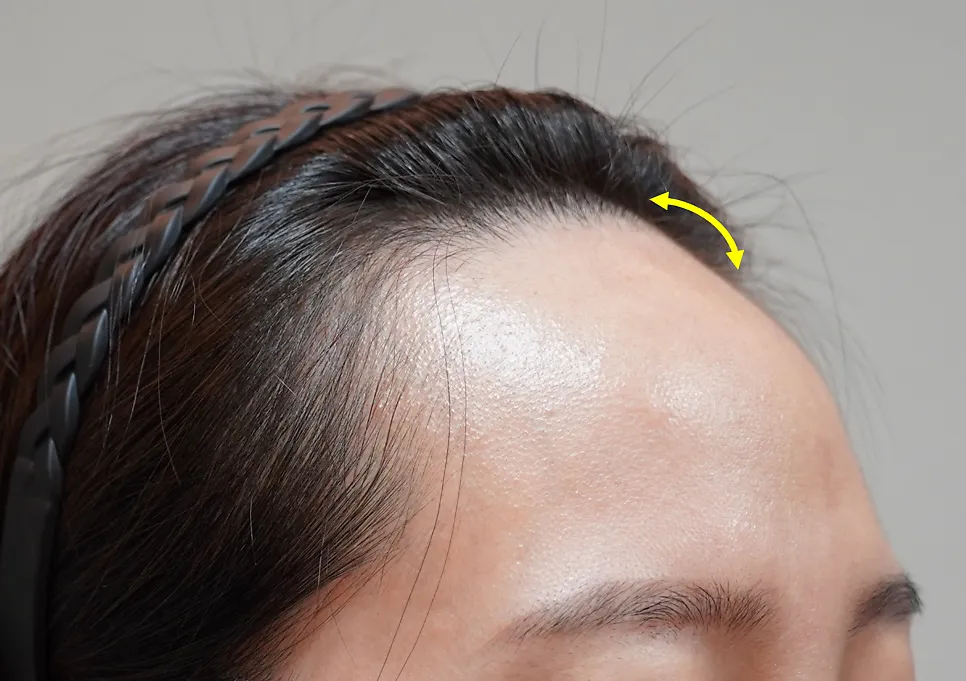
The patient in the photo above has a high forehead, but the reclined forehead also makes the forehead look receded. The area marked with yellow arrows.
Sometimes people say that even after reducing the forehead with a hair transplant, the feeling still remains. In such cases, it is often because the forehead was not lowered enough, up to the point where it begins to slope back.
Up to where the reclined forehead begins
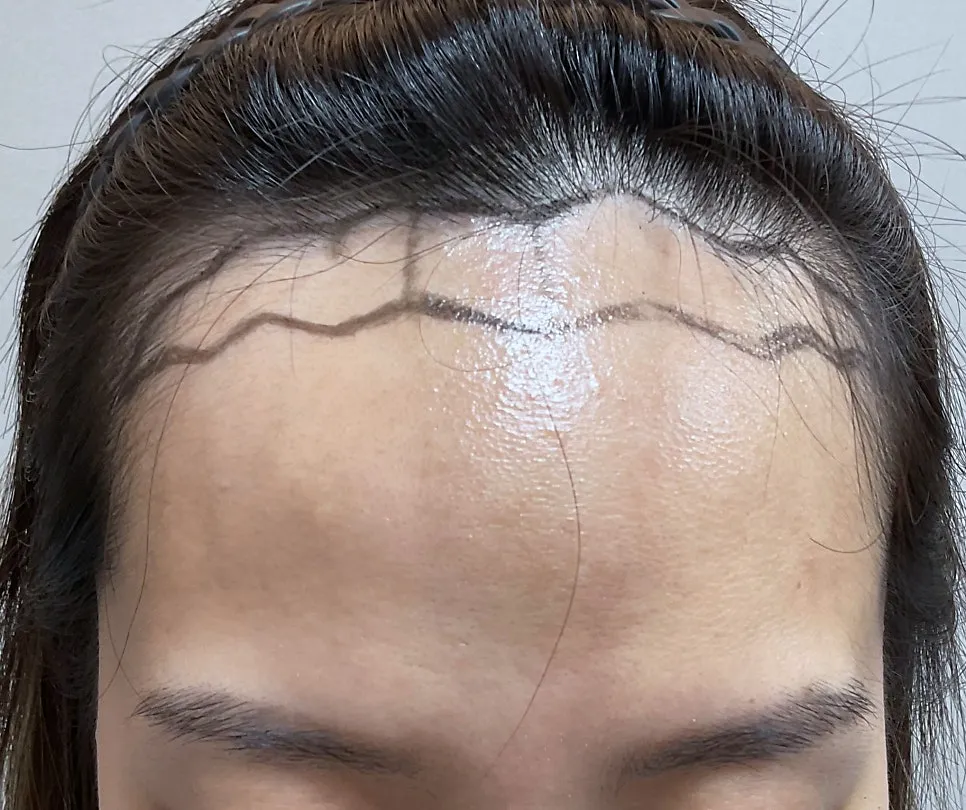
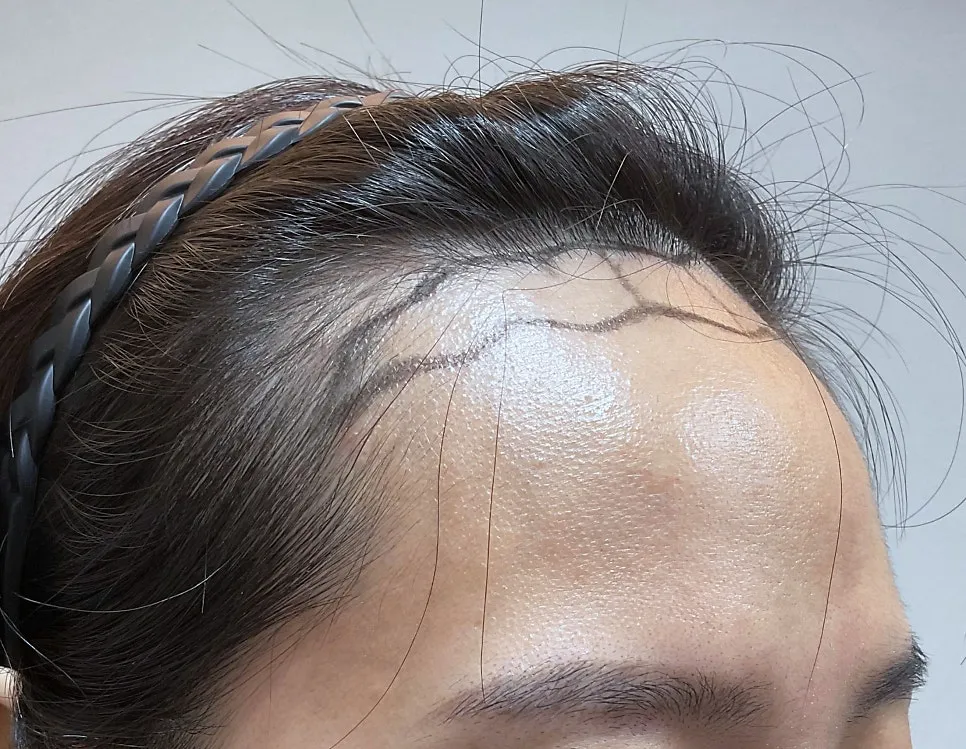
This is a design for reducing the forehead with forehead reduction up to the point where the reclined forehead begins. With a hair transplant, even when the surgery goes well, the density of the transplanted area is often around 70-80% of normal density, so if you reduce this height with a hair transplant alone, the scalp at the parting area is likely to show through.
Forehead reduction brings the hairline down with the existing hair density intact, so there is no worry about density at the parting area. Since it can save more than 2,000 back-of-head hairs, I think it is more suitable for correcting a reclined forehead.
Immediate and dramatic results
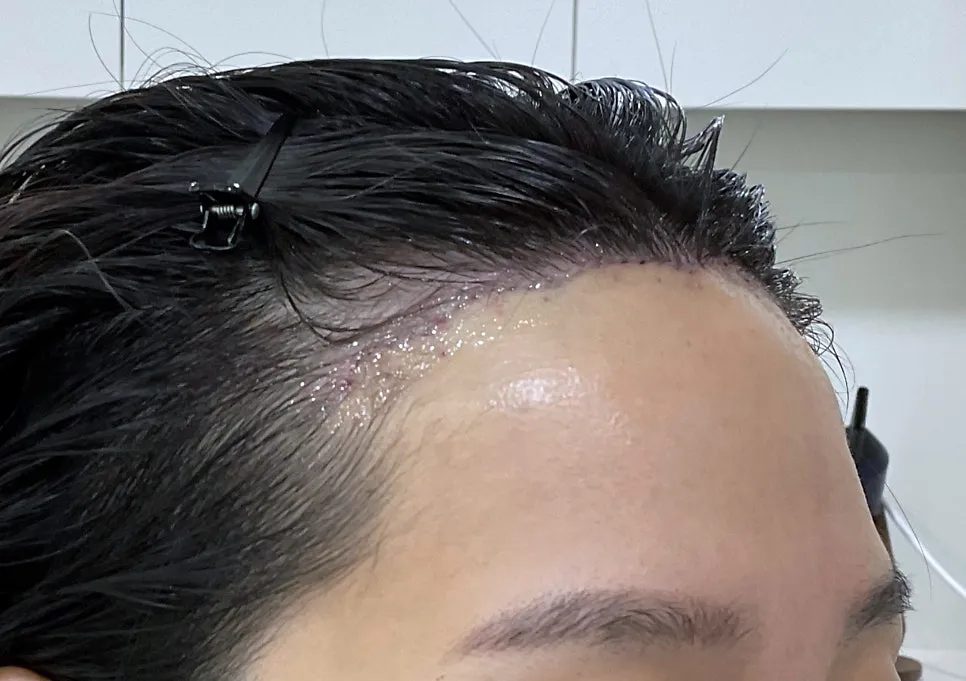
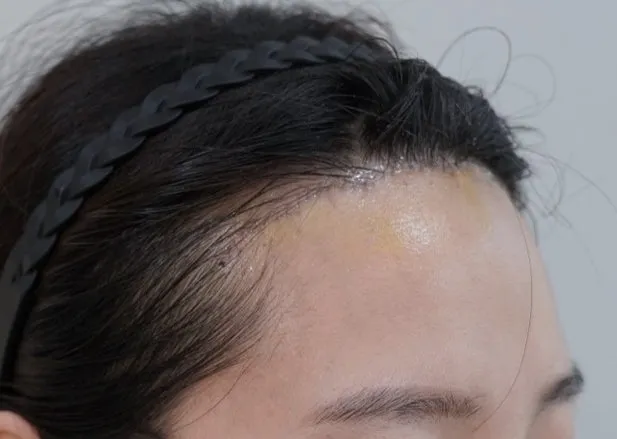
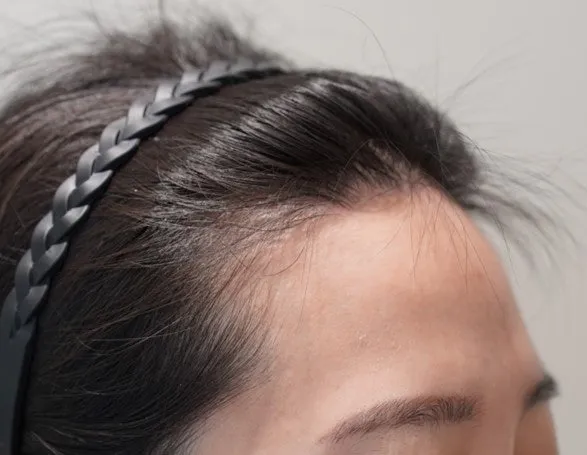
What people who have had forehead reduction like most is the immediate and dramatic result. When they look in the mirror in the operating room after surgery, they are surprised by the completely changed look and are very happy. Before surgery, there was a patient whose bangs reached above the eyebrows and covered their eyes so they could not see the mirror, and who just laughed while holding a mirror.
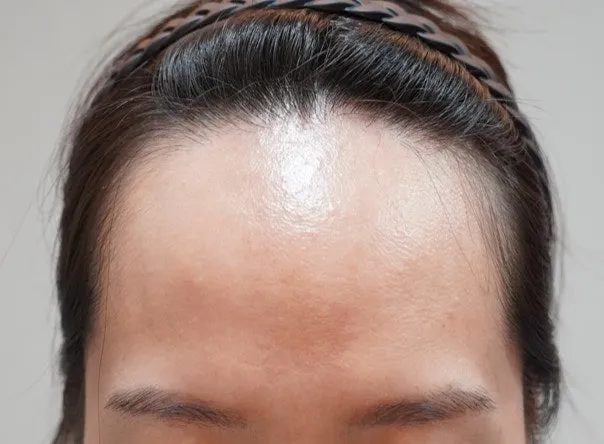
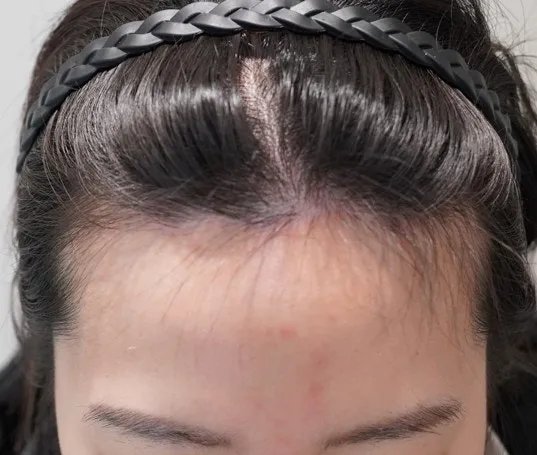
Scars and the surgical method that suits each person
Many people are most worried about scars. About 6 months later the redness mostly disappears, leaving a white thin line. Since that line is also at the hairline boundary, it is hard to see unless you look closely from nearby.
After 1 year, the redness fades further. Though it is not common, if a noticeable scar remains, it can be covered with a hair transplant.
Even among flat foreheads, not all foreheads are the same, so there is a surgical method suited to each person. By considering various factors such as facial proportions, scalp condition, the presence of stray hairs, hair thickness, and hair growth direction, the best method must be found.
※ After forehead reduction surgery, you may experience pain, which usually improves within a week; scalp numbness, which usually returns after about 6 months; swelling or bruising, which usually disappears in about 10 days; a palpable Endotine occasionally, which dissolves and disappears after more than a year; bleeding that is rare, and very unlikely after the first day; hair loss that is rare, and grows back after 3 months; and very rarely infection, though we have not yet seen such a case. Other side effects may also occur.


