
By Dr. Park Sooho · 2024.12.01
The Hair Transplant Dark Phase
If you are interested in hair transplants, you have probably heard of the dark phase. About a month after the transplant, the transplanted hairs fall out in clumps and the transplanted area goes through a period of looking empty. At some point, this period came to be called the hair transplant dark phase.
I tell everyone in advance that these shed hairs grow back after three months, so there is no need to worry. Still, when the dark phase comes for you personally, most people become very worried. Patients who had their hairline lowered significantly or received a large number of grafts tend to worry even more.
A patient who greatly lowered the forehead height with a hair transplant
A patient I introduced on this blog before was also like this: they had greatly lowered their forehead height with a hair transplant.
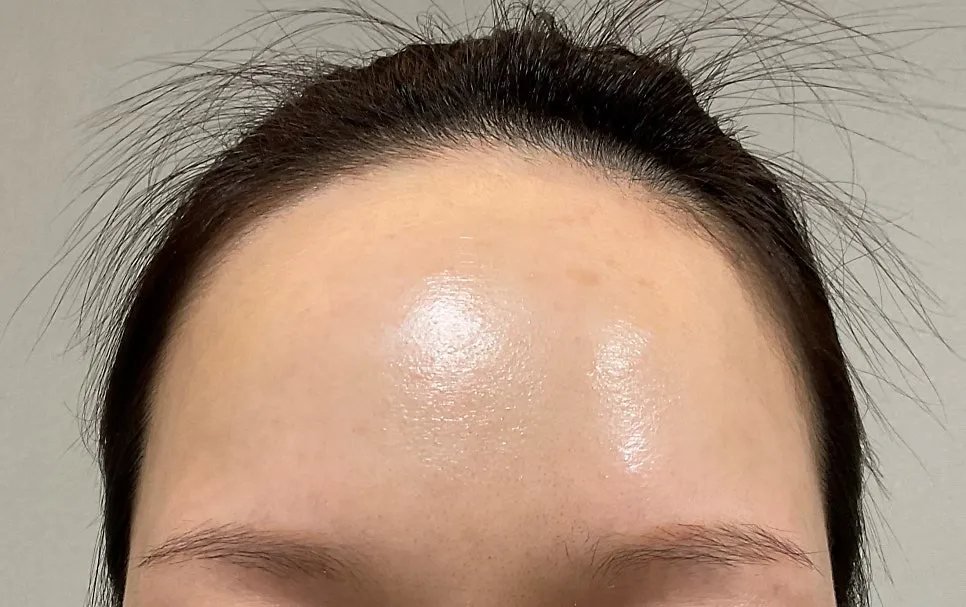
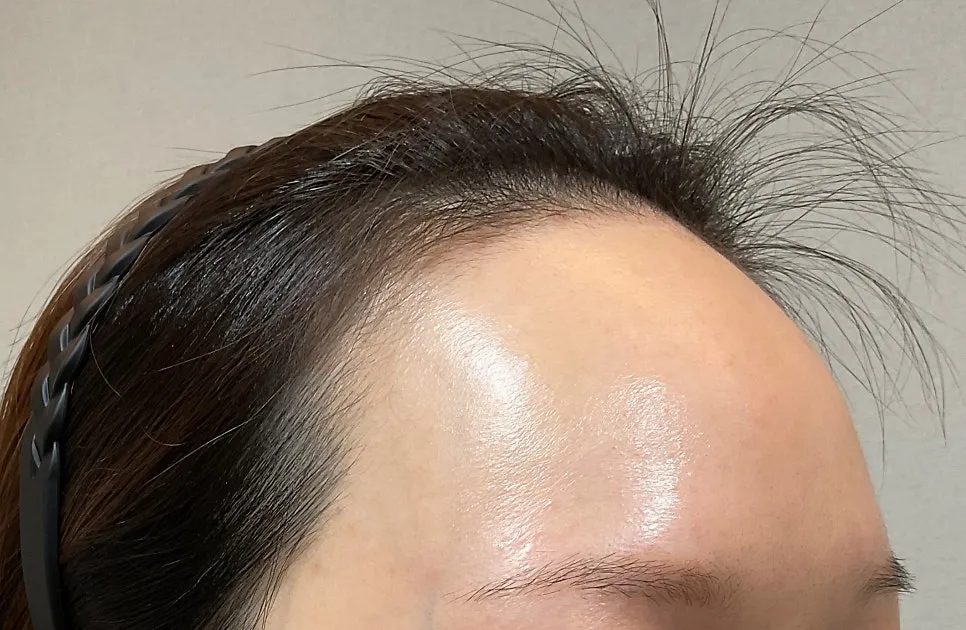
Because the forehead was high, I recommended forehead reduction to effectively remove the look of a reclined forehead. However, because people around them discouraged it, they ended up having a hair transplant instead. (I recommended forehead reduction once more on the day of surgery as well.)
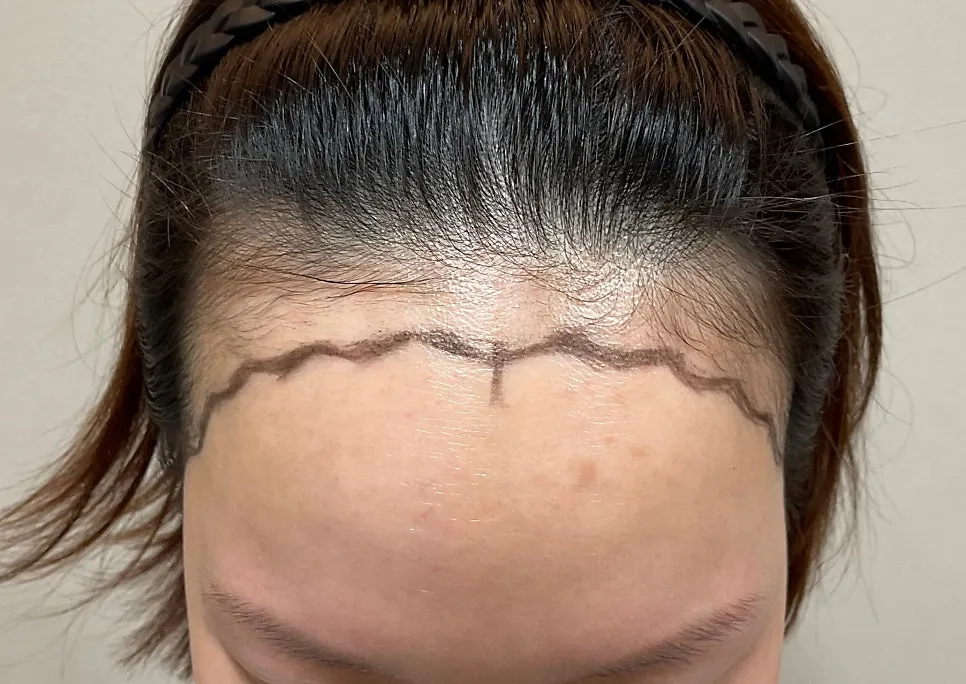
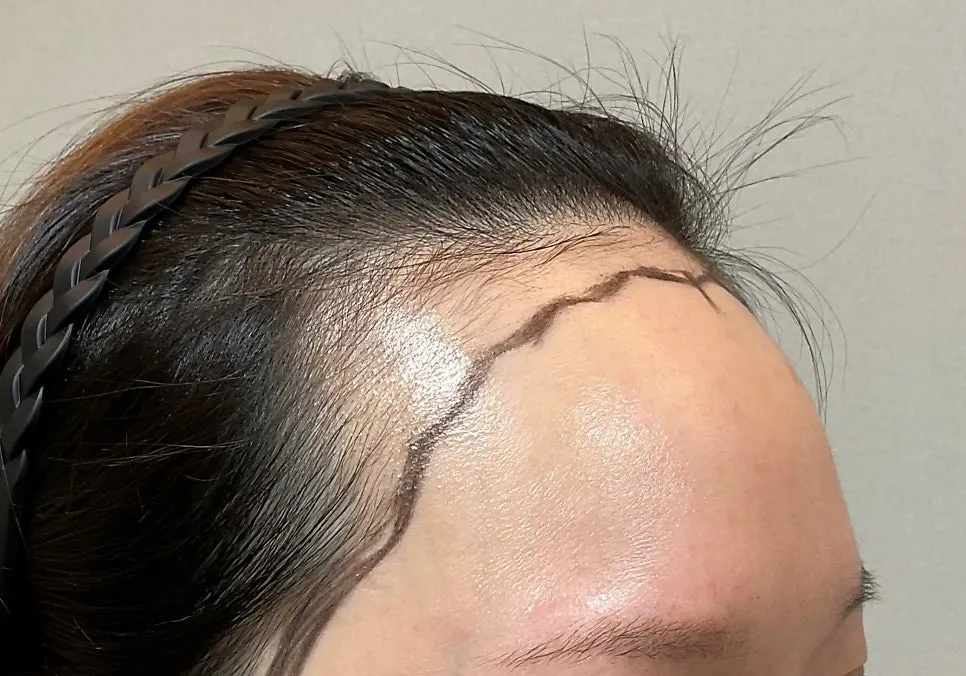
Of course, it is not impossible to lower the forehead height with a hair transplant, so I did my best to transplant in the way they wanted. Fortunately, there was also plenty of hair at the back of the head, so I transplanted more than 4,000 hairs using the non-incisional (FUE) method.
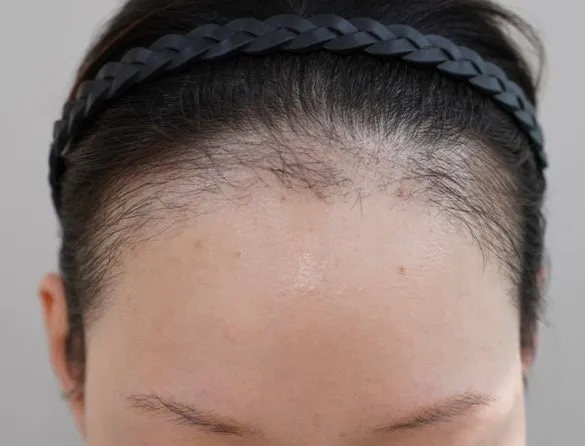
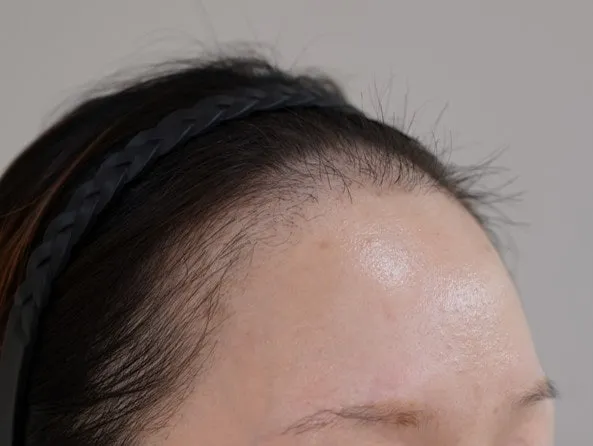
When the dark phase came
After surgery, this patient was extremely satisfied, but without fail the dark phase came, and their firm confidence began turning into worry. While the dark phase was at its peak, they visited the clinic with an anxious heart. I told them not to worry, that if they waited just one more month the transplanted hair would grow in thick, and sent them home reassured.
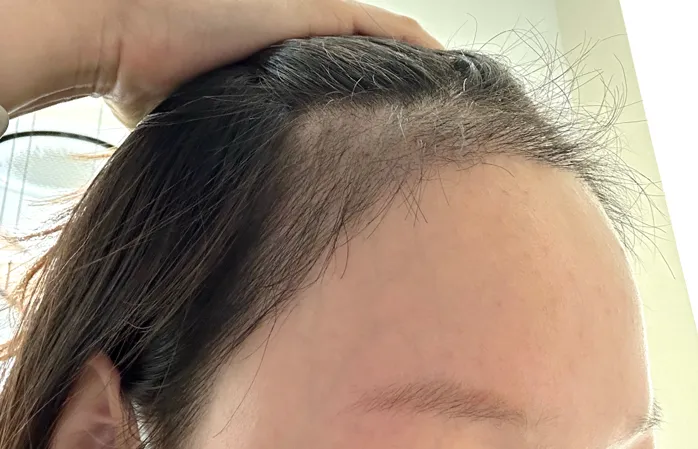
One month later, they sent me a KakaoTalk message. They said that after waiting a full month, the hair had started to grow, and they attached photos. However, they were worried that it still looked a little sparse, so I told them that as the hair grows longer and thicker, it will look better and better.
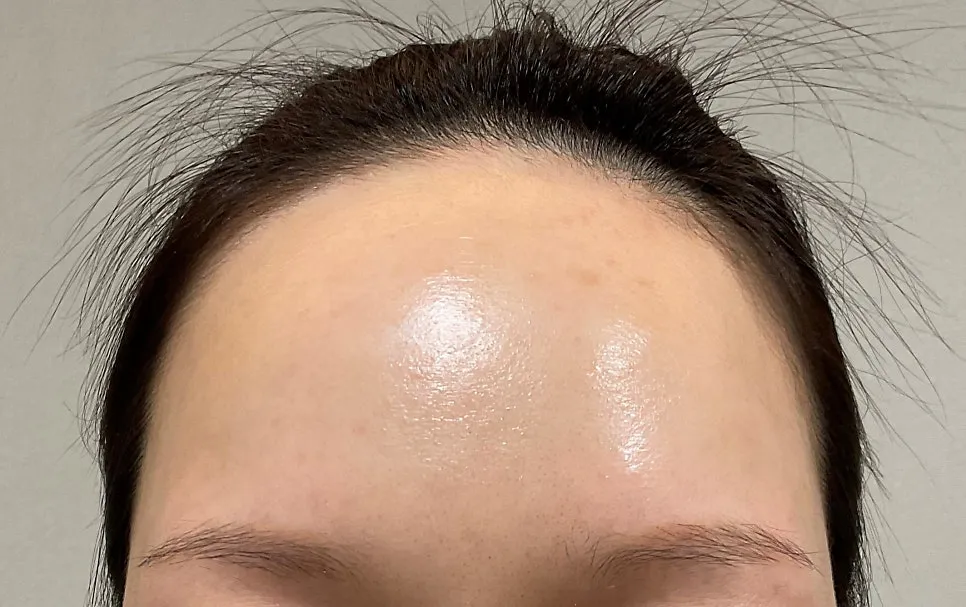
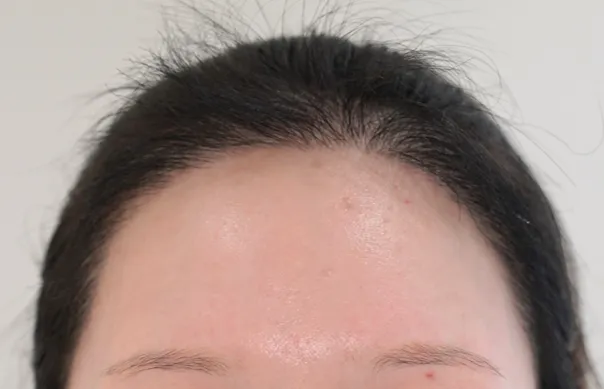
When they visited again last month, the hair had grown quite long. They said life had become much more comfortable, that of all the surgeries they had ever had, this one was the most satisfying, and that even their mother was praising them for making the right decision.
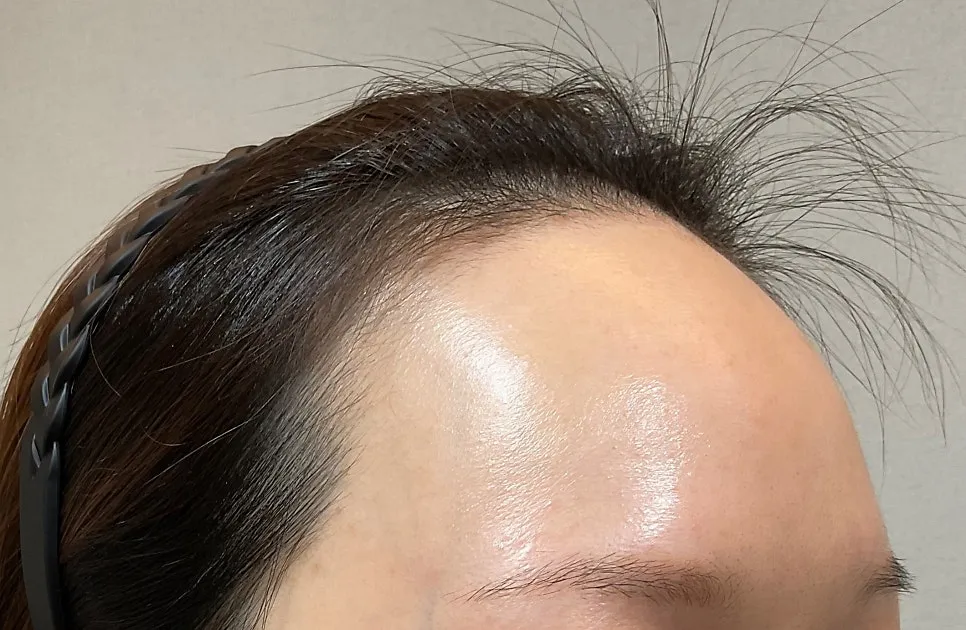
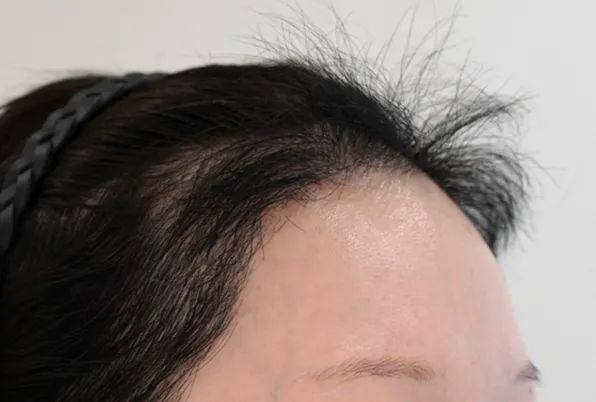
Curliness of the transplanted hair
However, after a hair transplant, the transplanted hair can grow in curls. Because they could not put up with the curliness and cut it off, the hair was rather short for seven months, which was disappointing. Curliness after a hair transplant mostly improves with time, so if it is bothersome, it is best to get a straightening (magic) perm and simply get through the first 1-2 years. Short hair is also harder to manage.
For those who are worried as they enter the dark phase, please just trust the process and wait about three months, and new hair will grow in thickly. Please do not worry.
※ Side effects such as bleeding, pain, swelling, infection, and anxiety during the dark phase may occur after a hair transplant.


