
By Dr. Park Sooho · 2024.11.25
The Wide Forehead and Scar After Forehead Lift
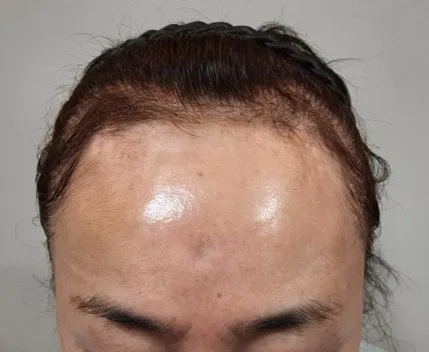
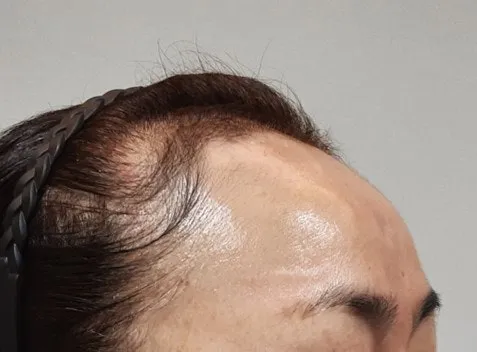
This was one year ago. The younger sister came in for a consultation on behalf of her older sister. Her older sister had a forehead lift, and because the forehead became too wide and the scar had grown larger, she had been wearing a wig and was under a lot of stress. The younger sister asked whether a hair transplant could solve this. Since her older sister lives abroad, the younger sister came in her place, bringing photos. Looking at the photos, I felt we could resolve much of the concern, but I explained that the density at the back of the head and the extent of the scar would need to be checked in person.
The First Surgery to Cover the Scar
Two months later, the younger sister came in with her older sister. The scar area was larger than expected, and apart from the visible scar, extensive scar tissue appeared to be present beneath the skin. In addition, there were scars at the back of the head and the scalp was not very elastic, so we decided to first try filling the scar area with about 3,000 hairs non-incisionally.
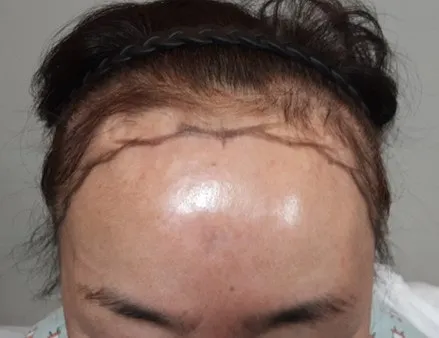
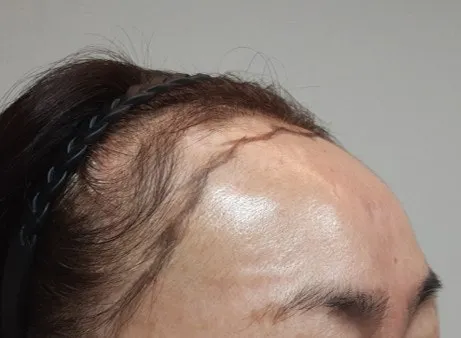
All of the white-looking skin above the design line was scar. The patient wanted to lower the forehead further, but I explained that if the engraftment rate in the scar area were not good, the density might need to be filled in further with a second surgery, so this time we would only cover the scar.
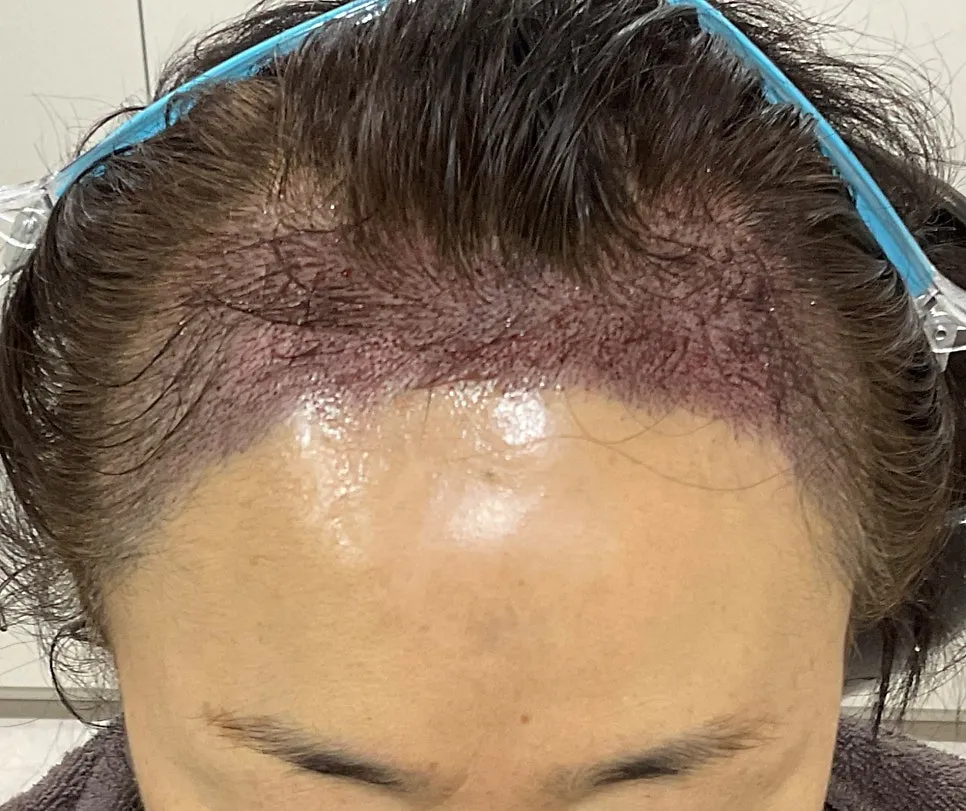
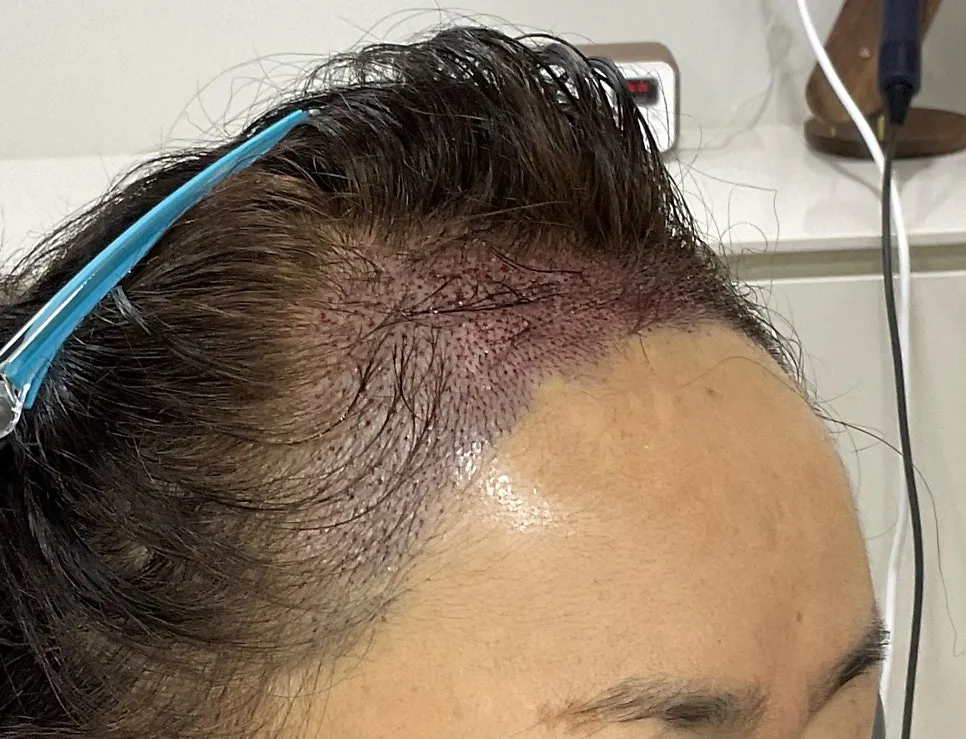
There were many large and small scars at the back of the head as well, which limited options, but we were still able to harvest about 3,700 hairs. We did not deliberately lower the density because of the scars, and planted them at our usual density.
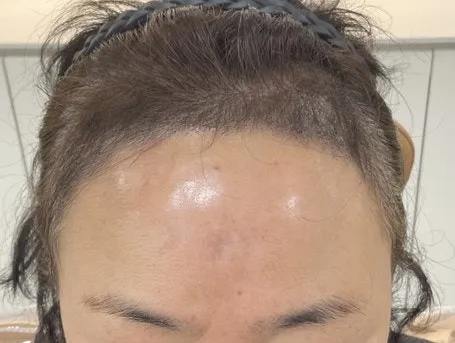
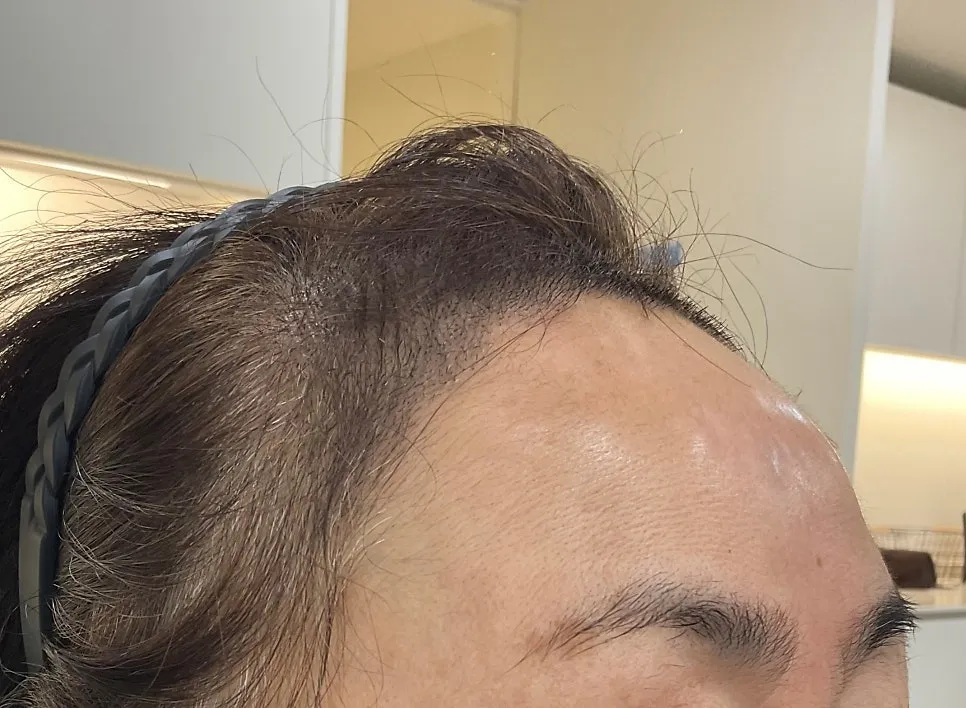
Ten days later, the patient came in and was so happy that they thanked me many times. Although I cautiously said that since the hair was planted in the scar, we would need to keep watching, when I saw the hairs that had been planted short had grown quite a bit in only ten days, I thought they would grow well. The patient said they hoped the year would pass quickly so they could lower the hairline further, down to the spot at the center of the forehead, and then went home.
The Second Surgery, Done Without a Wig
Then, not long ago, a KakaoTalk message arrived. The transplanted hair had grown well, the patient now goes out without a wig, and they said thank you and that they would soon come in for the second surgery. And a little later, they came in.
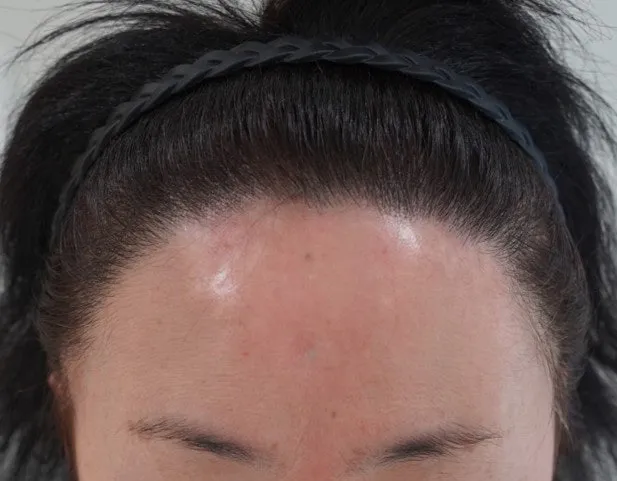
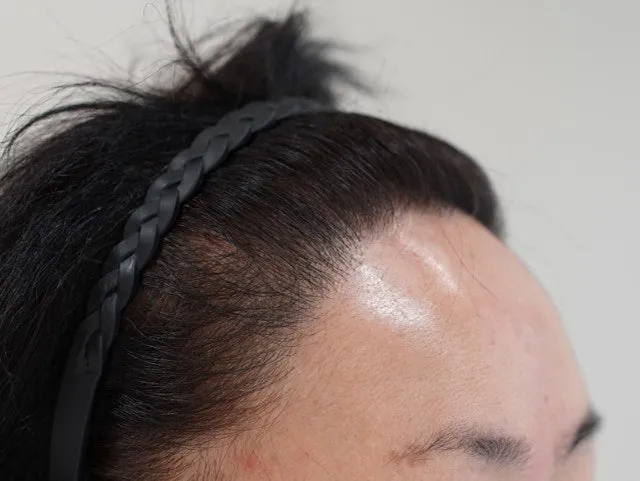
I had expected it to grow well, but since it had been planted in the scar, I was a little worried. Fortunately, engraftment went well in the scar area too, which was a relief.
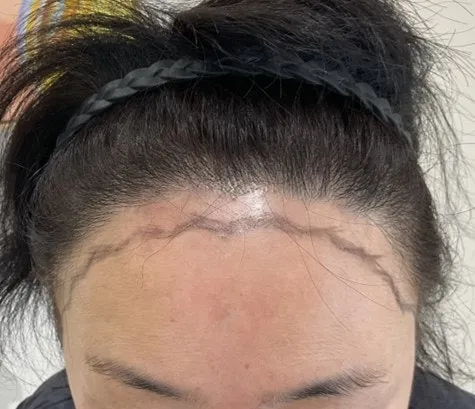
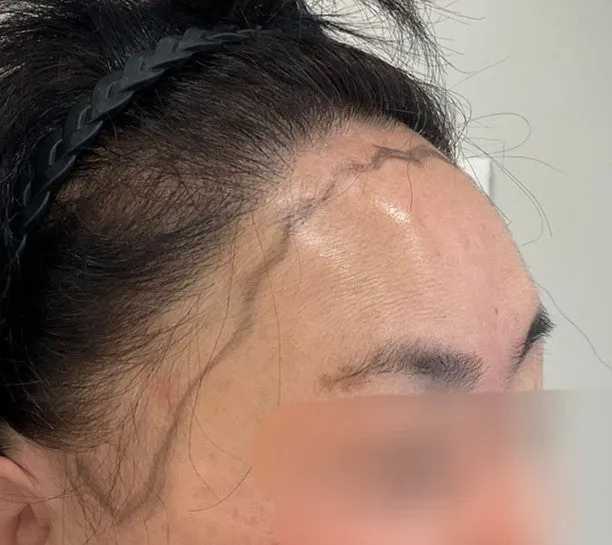
When I checked the density at the back of the head, it seemed we could harvest more than 2,500 hairs non-incisionally this time as well, so while lowering the hairline down to the spot the patient had so wanted, we also set the line for the sides and sideburns.
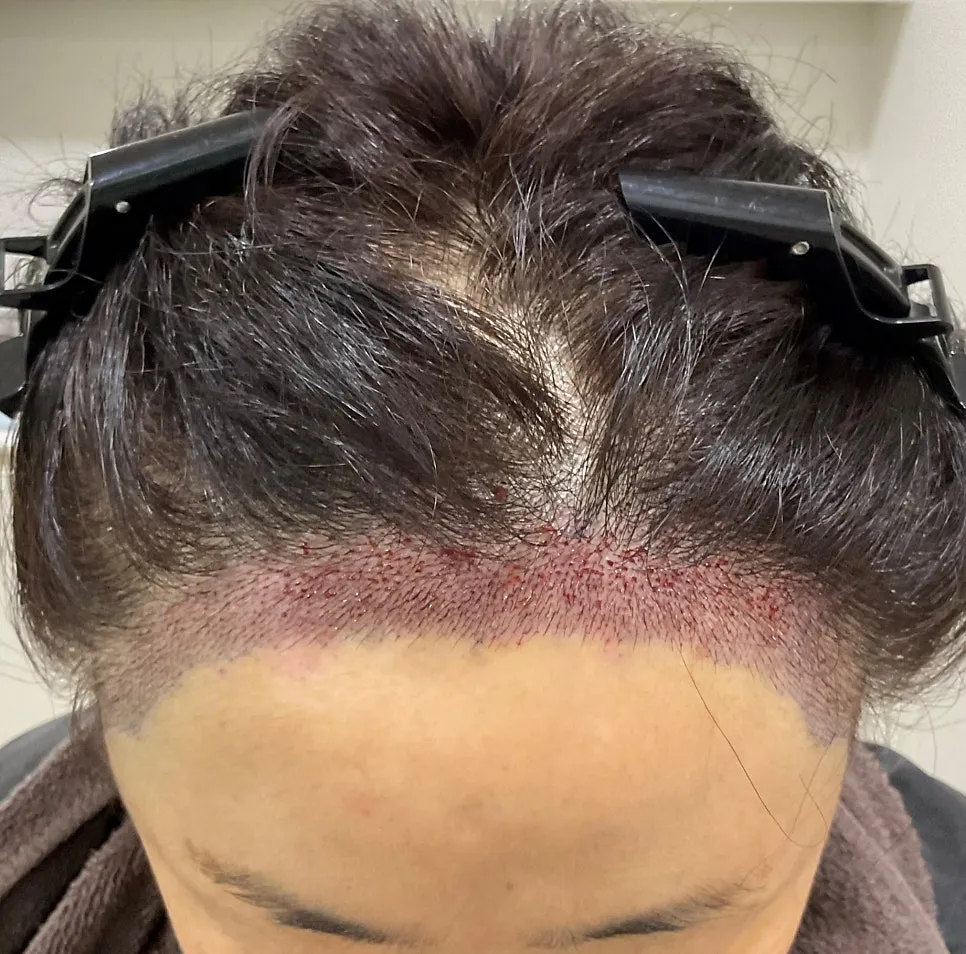
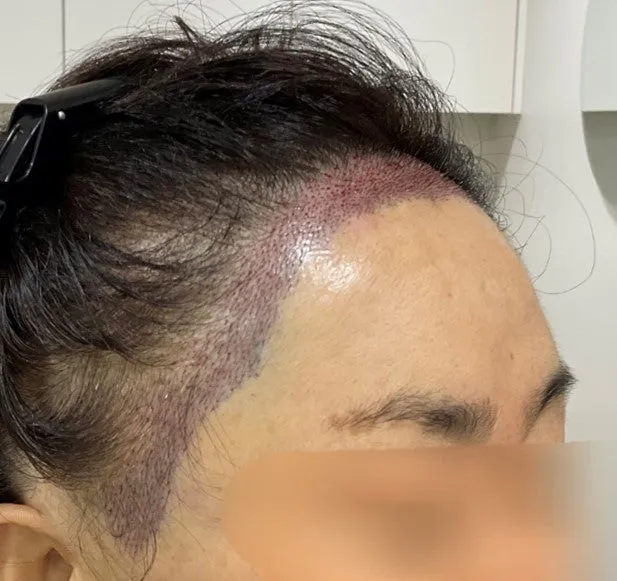
We ended up harvesting slightly more than expected, more than 2,900 hairs, so we planted them along the planned front line and also filled in the areas behind the line that looked a little thin. Watching the patient, full of expectation, say they hoped it would go well this time as well, I also found myself looking forward to how things will look one year from now.
Ten months ago, after the first surgery, the patient told me, "Doctor, you should live a long time," and told me not to drink alcohol. But this time, the patient came in bringing a bottle of alcohol. The patient says that a glass with meals is fine.
Yes. I will have a glass with meals and stay healthy.
※ Side effects such as pain, bleeding, swelling, inflammation and infection may also occur after a hair transplant.


