By Dr. Shin Seungkyu · 2024.10.26
The ISHRS meeting, held every mid-October
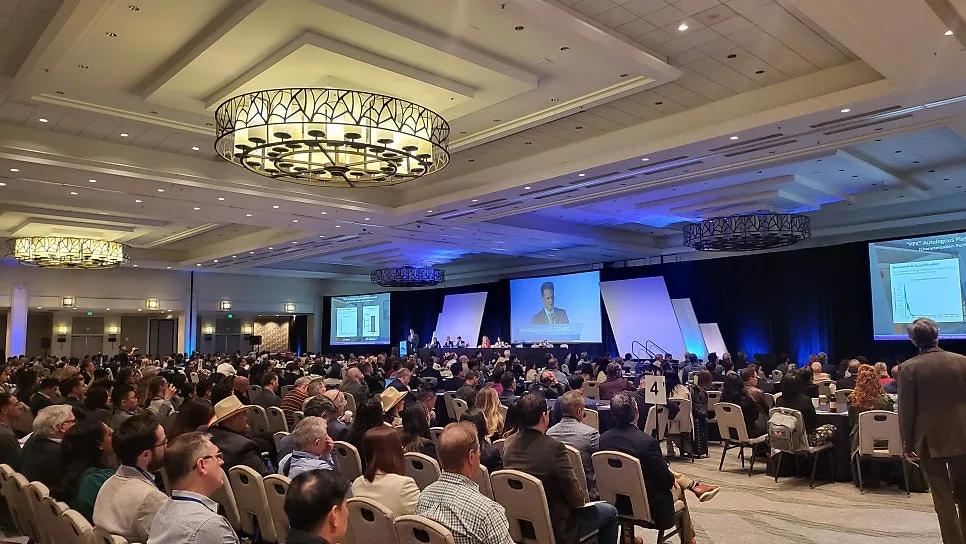
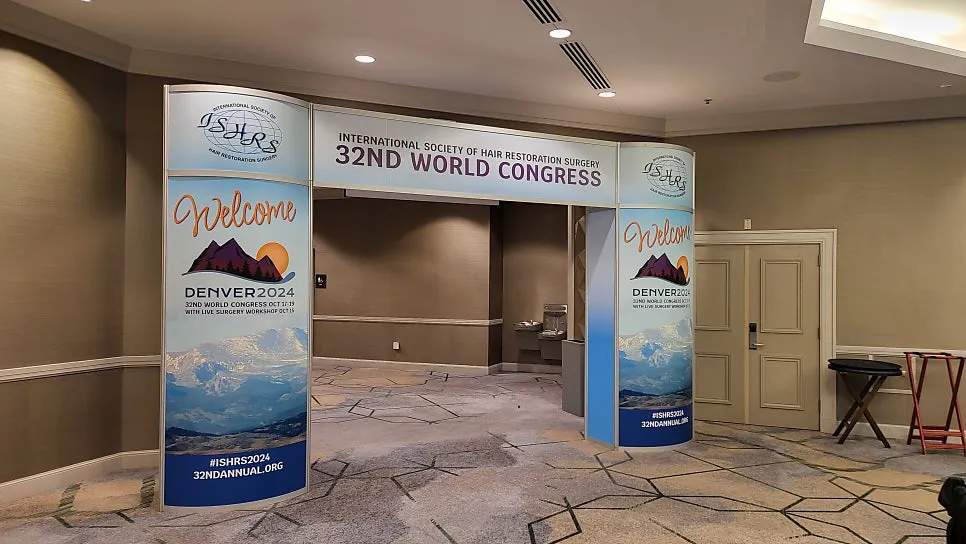
I attended the international hair restoration meeting held in Denver, USA, for three days from October 17 to 19, 2024. ISHRS (International Society of Hair Restoration Surgery) is an international society whose meeting is held every mid-October, where experts from around the world gather to present and discuss the latest knowledge on treatments and surgeries, including hair transplantation.
Poster Presentations on Two Topics
I gave poster presentations on two topics.
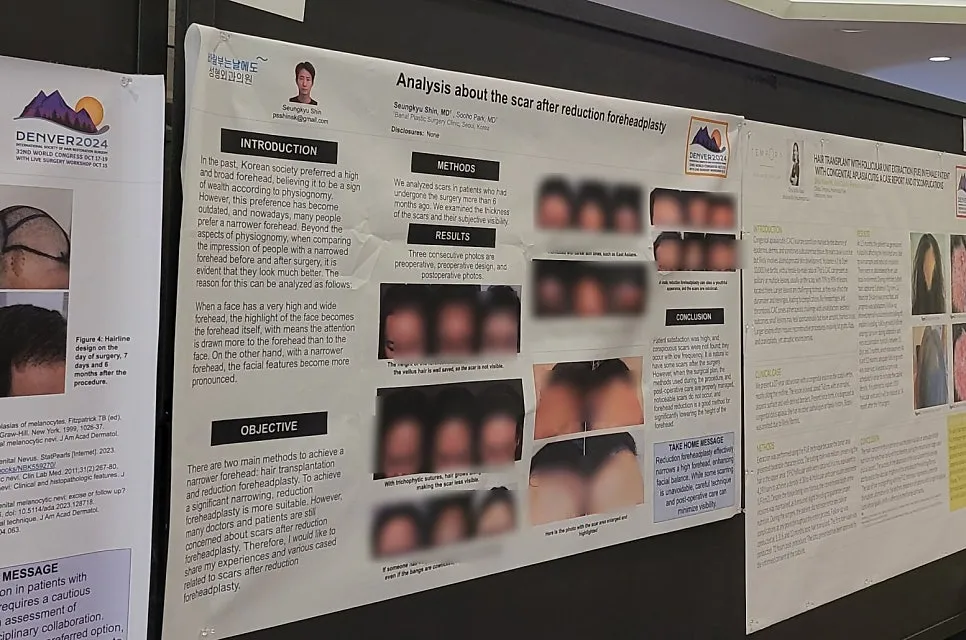
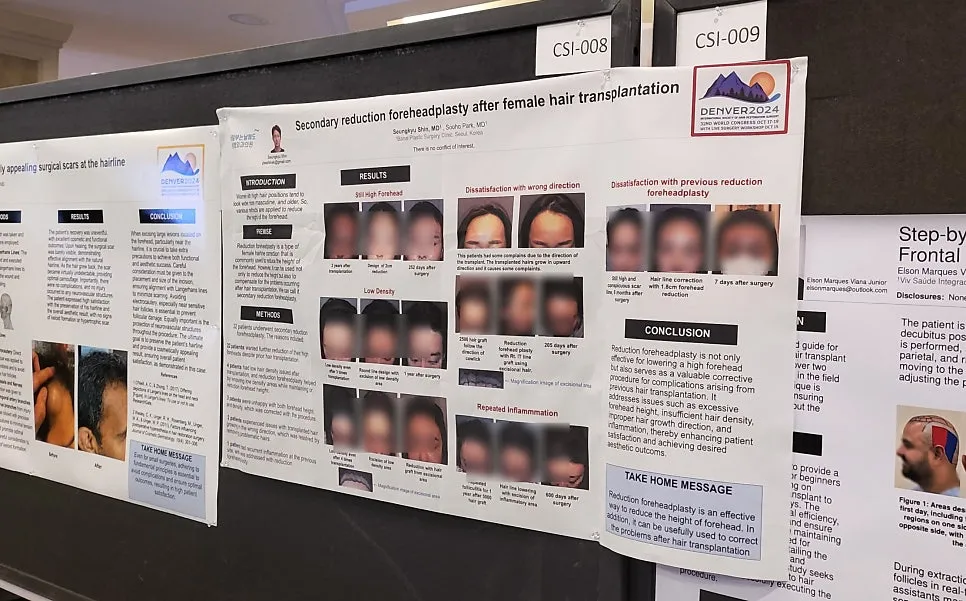
The first was cases where forehead reduction is needed after a hair transplant, and the second was an analysis of scars after forehead reduction. I believed it is better to present something at an overseas meeting rather than just attend to listen, so early this year I submitted two abstracts, both of which were accepted, and I made and submitted posters.
Allogeneic Hair Transplantation Is Still Premature
There was a presentation on allogeneic hair transplantation by an Israeli doctor, and a live patient session where we could see actual patients who had received allogeneic hair transplants. Allogeneic hair transplantation is a method of transplanting other people's hair. It is still very controversial, and research is ongoing. Since its place in medical ethics and its long-term effects are unclear, I felt strongly that it is premature.
Presentations on a Wide Range of Topics
Many studies are being conducted on how psychological factors, diet and gut microbes may affect hair loss, and there were also findings that hair loss symptoms may improve when the factors with negative effects are addressed.
There was also a Japanese doctor who showed great showmanship by transplanting hair onto his own arm and demonstrating it during the presentation. There were many other topics, including a method for designing female hairlines using the golden ratio; the finding that taking hair loss medication not only helps prevent hair loss from progressing but also has a positive effect on transplanted hair; the possibility of treating vitiligo patients with hair transplantation; the finding that very tightly curled hair, as seen in people of African descent, can be harvested non-incisionally; and a doctor presenting simple tips that can be applied during surgery. I listened to and studied a very wide range of content.
An Opportunity to Learn Diverse Perspectives and Approaches
We could see how doctors around the world practice, watch videos of actual surgeries, and learn about research on a variety of topics and emerging areas of interest, which I believe will be of great help to our future practice and research. It was an opportunity to learn diverse perspectives and approaches.