By Dr. Shin Seungkyu · 2024.10.07
Making hair grow out of the forehead reduction scar

Yesterday I gave a lecture on forehead reduction at a continuing education course of the Korean Association of Plastic Surgeons. The main topic was the indications and tips for forehead reduction, but there was also something I had been thinking about and wanted to discuss while preparing a paper. That is making hair grow out of the forehead reduction scar.
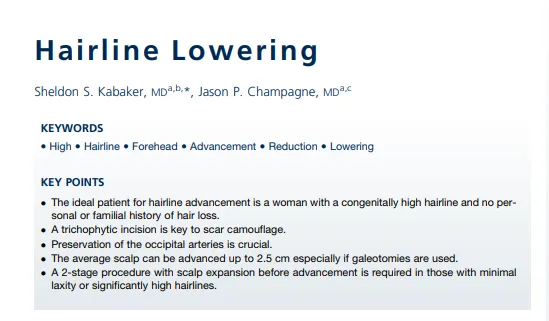
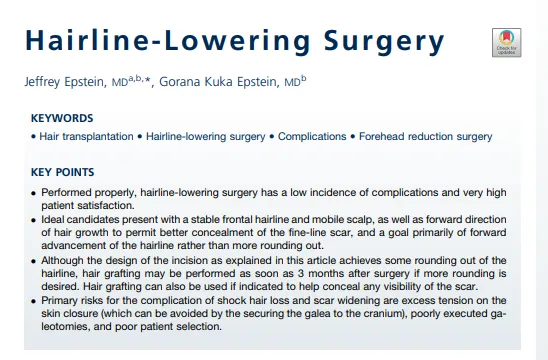
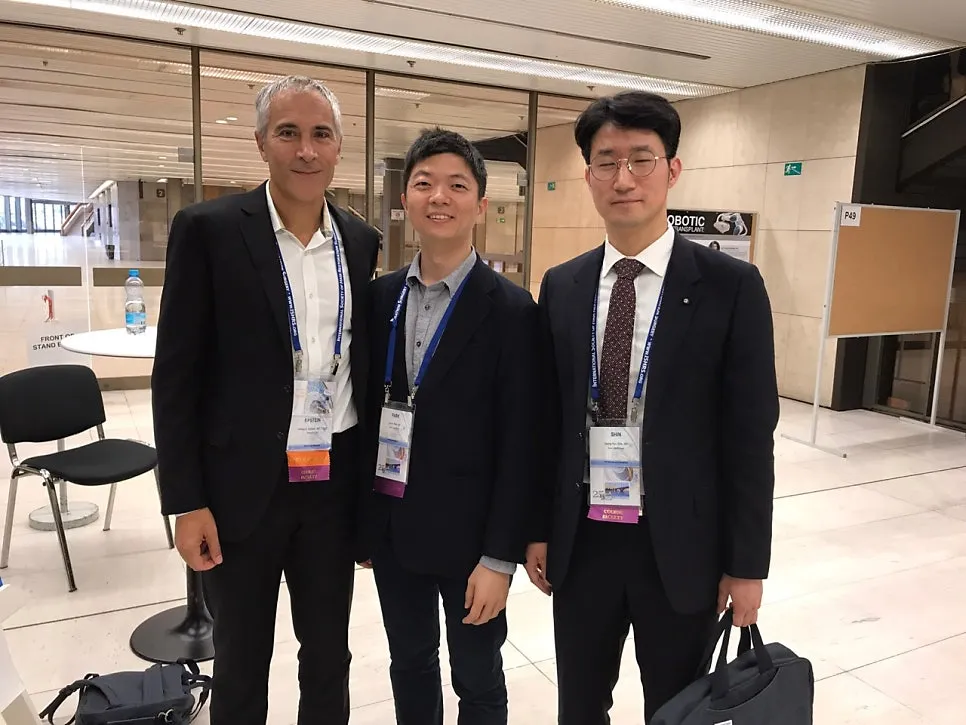
While preparing the presentation, I referred to two papers, written by Dr. Sheldon Kabaker and Dr. Jeffrey Epstein. Dr. Kabaker is an American plastic surgeon and a pioneer who developed and widely promoted the forehead reduction technique. Dr. Epstein can be called his student. While researching the material, I learned that Dr. Kabaker (1939~2023) passed away last year. I met Dr. Epstein at an international conference in the Czech Republic, where we talked at length about forehead reduction and hair transplantation.
Trichophytic closure, which both papers emphasize
Going back to the papers, there is one point that both of them keep emphasizing.
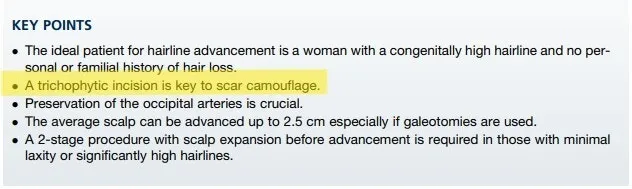
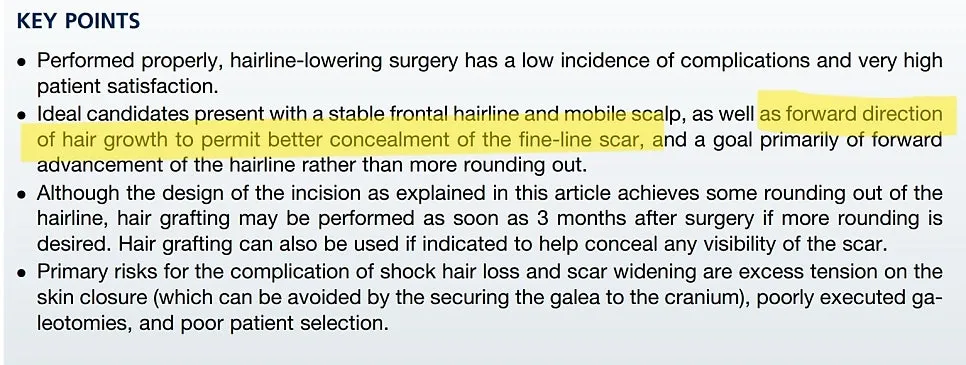
They say that the key point of forehead reduction surgery is to use trichophytic closure so that hair grows out through the scar line.
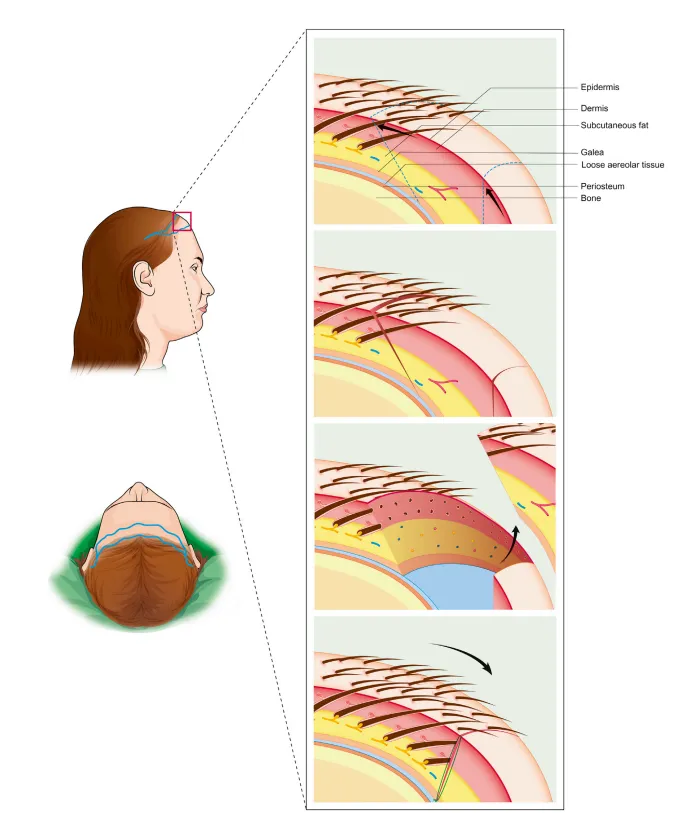
The idea is that if the follicles in the scalp are cut at an angle and covered with the forehead skin beneath, hair grows out from the scalp follicles toward the scar, which can hide the scar. For this to work, the hair must grow forward, and it is said that hair growing backward (cowlick) has limitations for this method.
Cases where baby hairs are preserved
I also think trichophytic closure is a good method, but if you are actually considering it, there are a few things to keep in mind.
I believe that preserving some of the baby hairs at the front during forehead reduction can create a natural hairline. However, follicles of baby hairs cannot grow through the scar with the trichophytic closure method. Hair does not grow out of the scar, but the baby hairs themselves can sufficiently cover the scar.
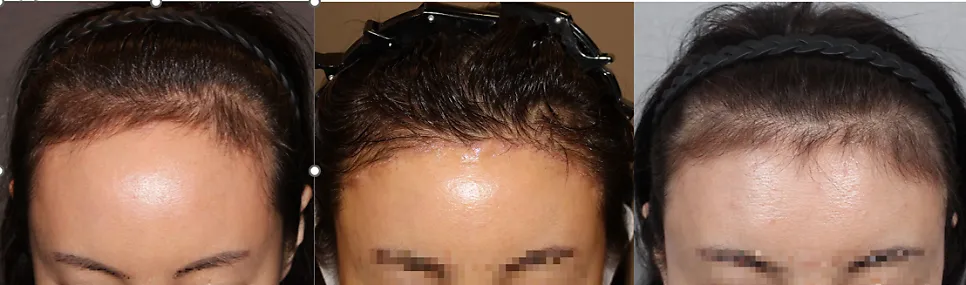
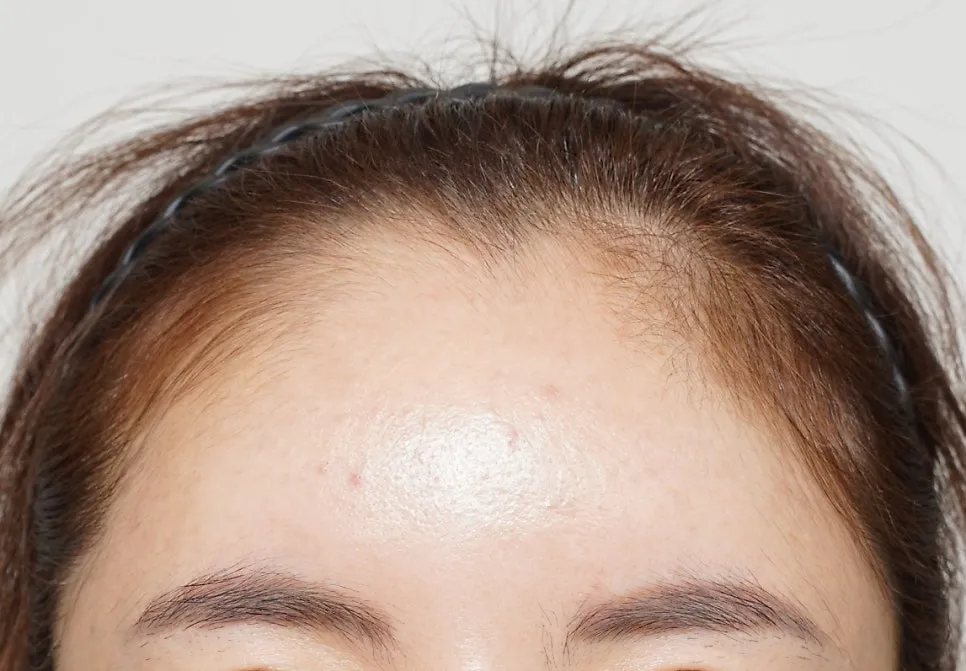
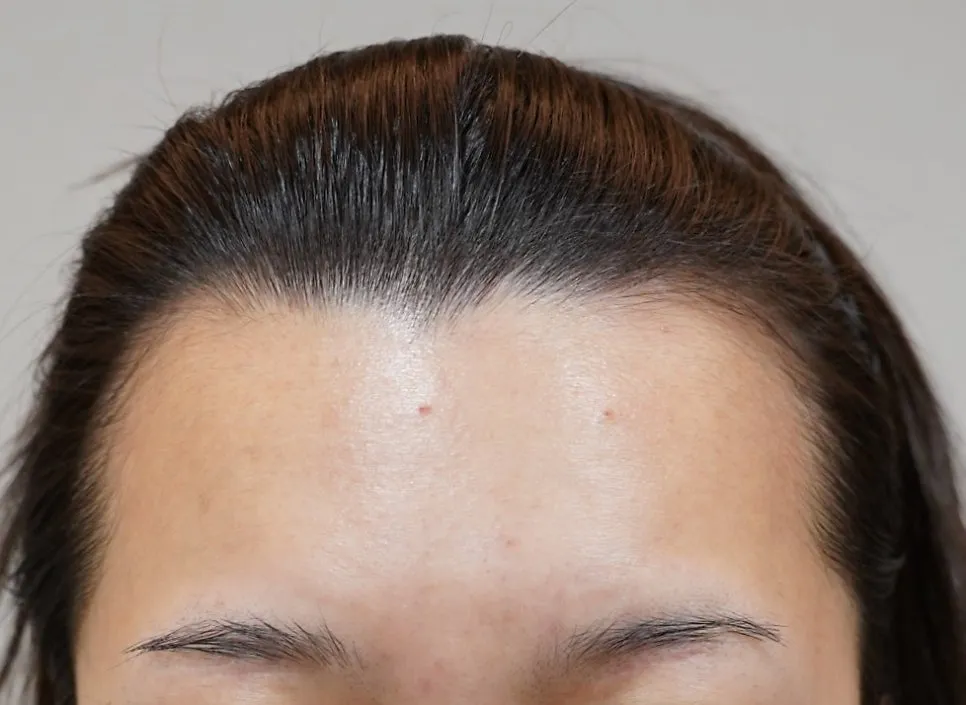
As with the patient above, when there are many baby hairs, preserving them looks natural. The scar also did not remain very noticeable, and the front hair that came down covers it well. I have also written about this patient on the blog, in a post about forehead reduction results that preserved the baby hairs.
https://blog.naver.com/banal_ps/223509348367
Patients who may be candidates for trichophytic closure
So, which patients can be considered for trichophytic closure?
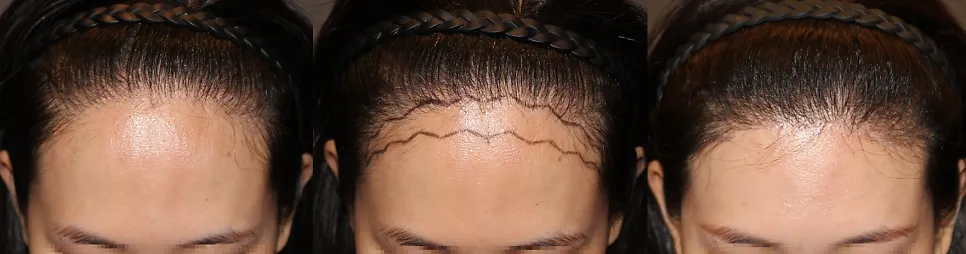
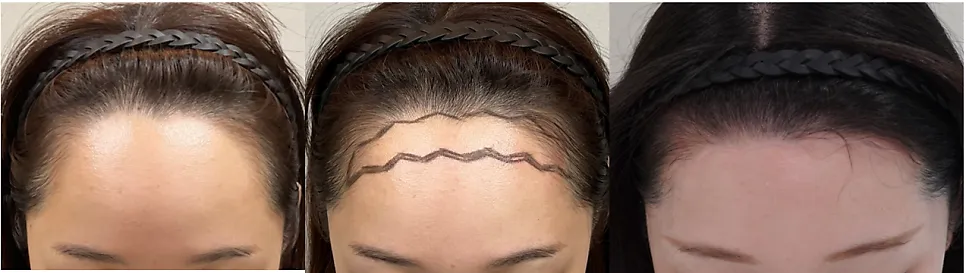
For a patient like the one in the photos above, whose front hairline is filled with long hair and whose density is not very high, applying trichophytic closure can make long hair grow out from the scar, creating a natural look, as shown in the photo on the far right.
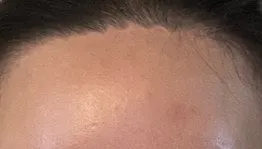
The patient above had a forehead reduction at another clinic and was bothered by the scar. However, the incision was made in an area where the hair was too dense, and there were too many small zigzags, so the scar ended up looking more noticeable, as shown above. For trichophytic closure, it is suitable when the density of the front hair is not very high.
In the case of a cowlick
Then, as the paper describes, should forehead reduction not be done in the case of a cowlick?
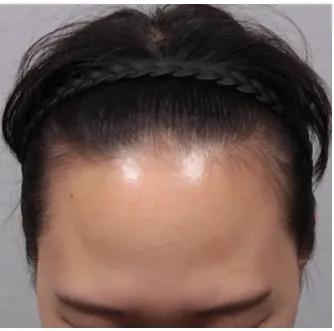
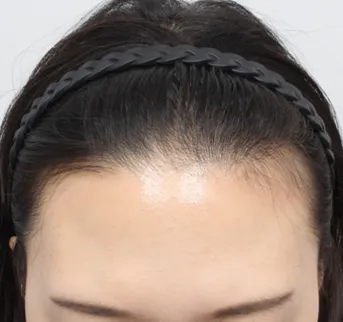
The patient above has a cowlick, where the front hair grows upward, but their forehead was too high, so a forehead reduction was performed. As the results more than six months later on the right show, the scar is often not very noticeable, so even with a cowlick, forehead reduction is not restricted.
However, as the paper describes, the scar can sometimes be slightly visible when there is a cowlick.
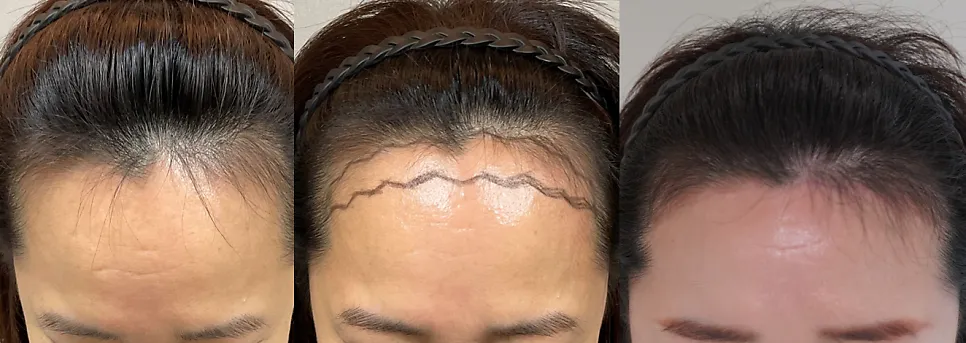
This patient is the daughter who appeared in our earlier mother-and-daughter series on the blog. Even with a cowlick (cow-lick), her forehead was too high, so she had a forehead reduction. She came in for the six-month follow-up shown on the far right. She was very happy that her forehead had come down, but because the front hair grows upward, the scar was slightly visible. Still, since this is the six-month follow-up, it will fade a little more, and we also have hair transplantation, which can be used to cover it with hair. Her mother also had almost no visible scar.
https://blog.naver.com/banal_ps/223424681921
Summary
To summarize, trichophytic closure, which makes hair grow out of the forehead reduction scar, cannot be applied when there are many baby hairs. When the front hair is long and the density is not very high, it can give good results. Also, even with a cowlick, the scar is not very noticeable, and if it is visible at all, it can be covered with a hair transplant.