
By Dr. Park Sooho · 2024.08.11
Two Principles of Forehead Reduction
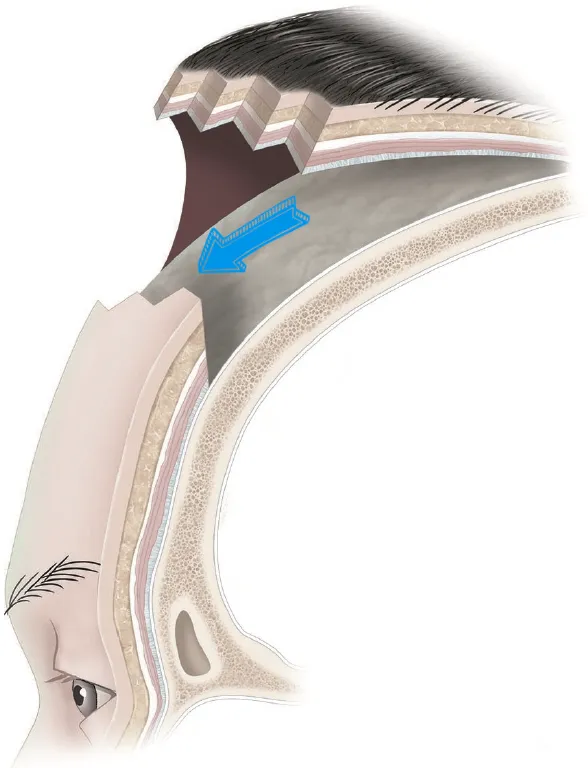
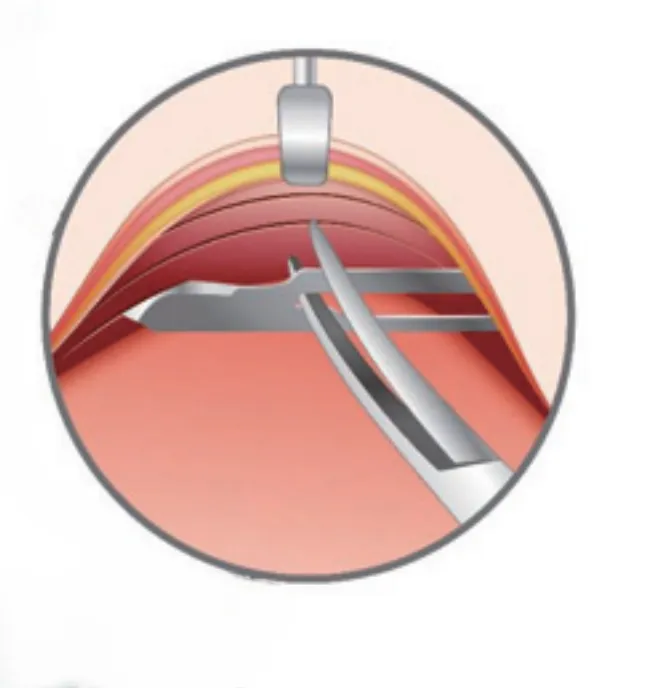
Forehead reduction is surgery that reduces forehead height by pulling the scalp down. Two principles are used to bring the scalp down. The first is dissecting beneath the scalp and moving it forward like a slide, and the second is opening the galea, the tough layer among the scalp layers, so the scalp can stretch (galeotomy).
When There Is a Scar at the Crown
When there is a scar near the crown, dissecting the scalp can be difficult, so the depth and location of the scar must be understood well to plan forehead reduction properly.
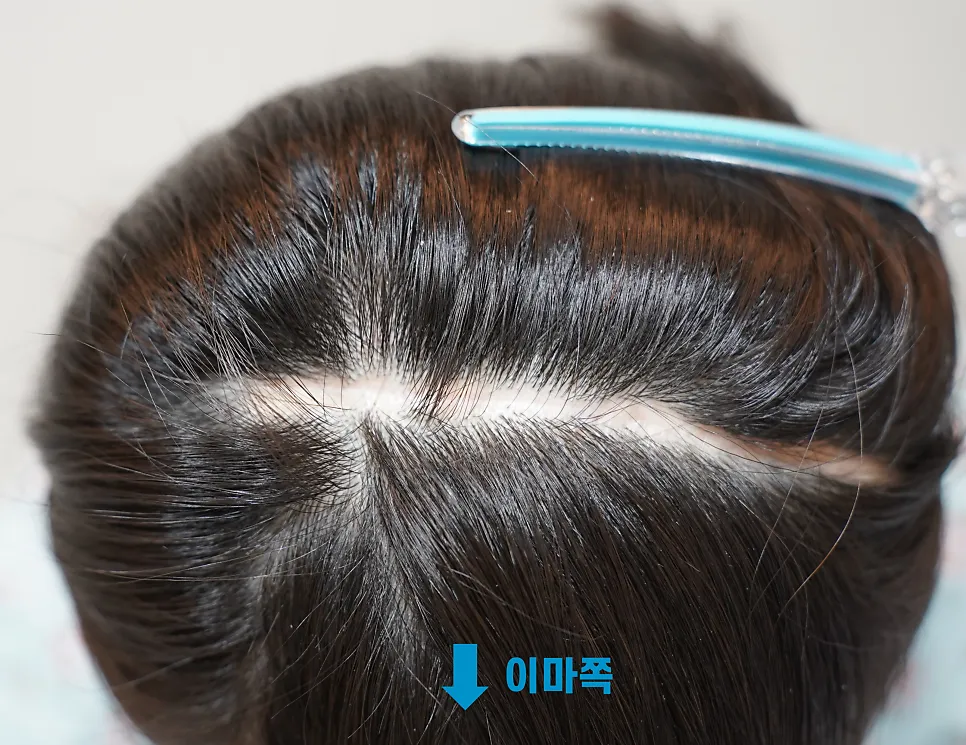
The patient above had a large horizontal incision scar from a previous surgery across the middle of the crown. Since the skull had to be opened, the scar probably extends through all layers of the scalp, and if the periosteum and galea are adhered, dissection becomes difficult.
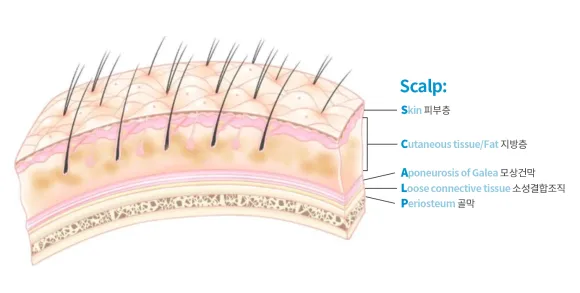
If dissection is not sufficient, the width by which the scalp can be pulled forward also decreases. Fortunately, this patient's scalp was not thin and was soft, so I judged that the scalp itself could stretch well even though dissection was somewhat limited, and decided to proceed with forehead reduction.
Forehead Reduction and Hair Transplant in One Session
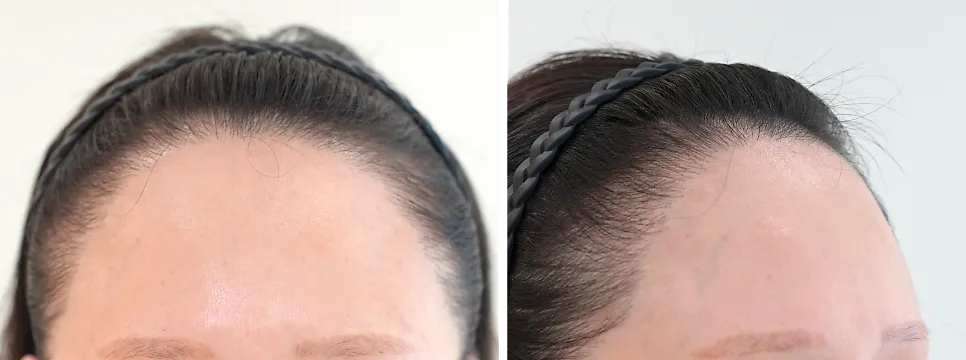
This patient had a hair transplant before, but the forehead was still high and bothered them constantly. The transplanted hair had been placed facing backward, which made styling difficult.
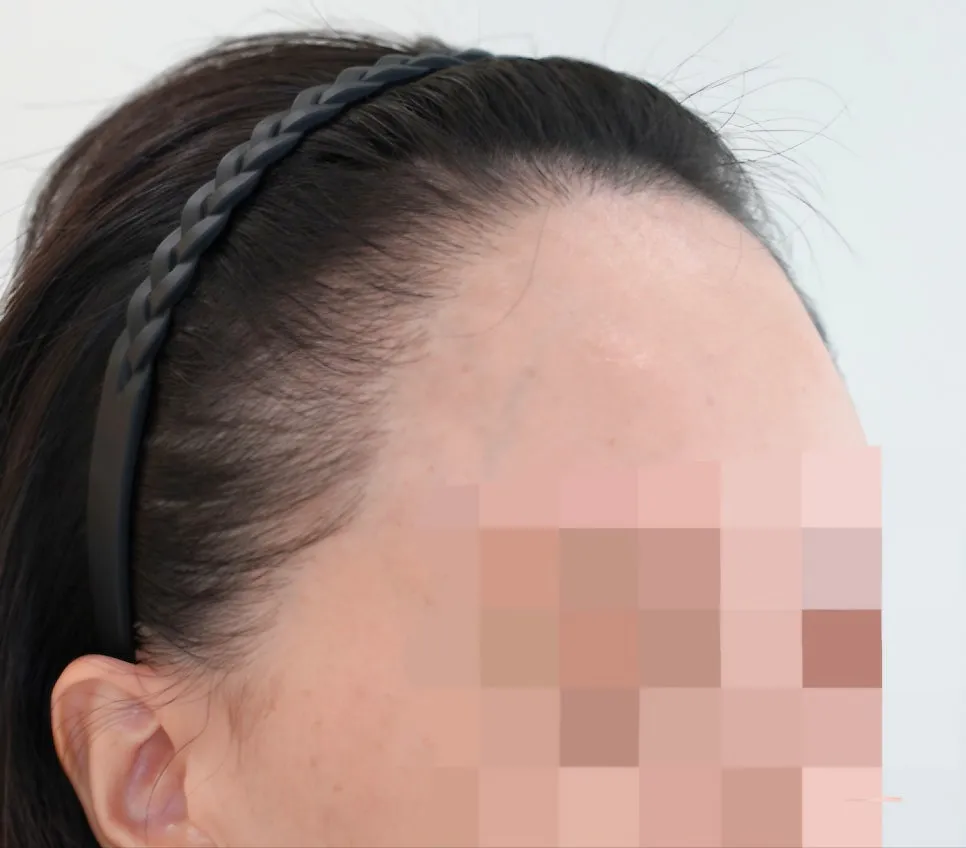
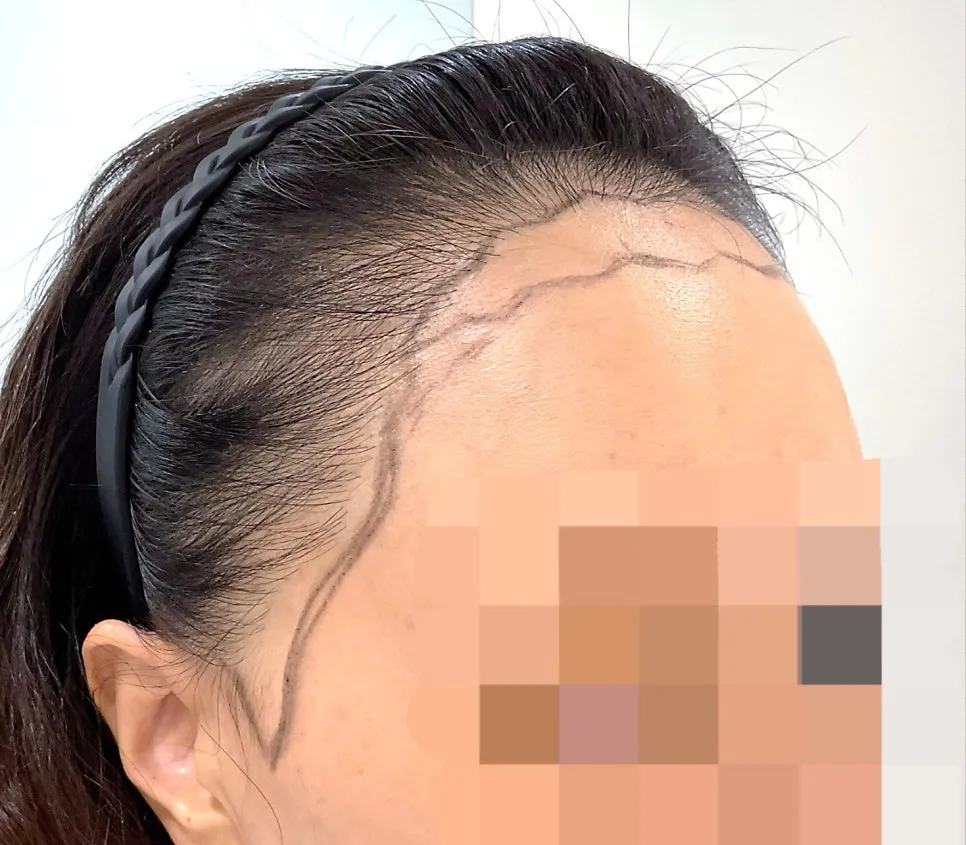
Because there was no sideburn and the temporal area was wide, we decided to lower the forehead height with forehead reduction and create the side and sideburn area with hair transplant (non-incisional, 1,000 hairs). The patient lives far away, so they wanted to have everything done in one session.
One Week After Surgery
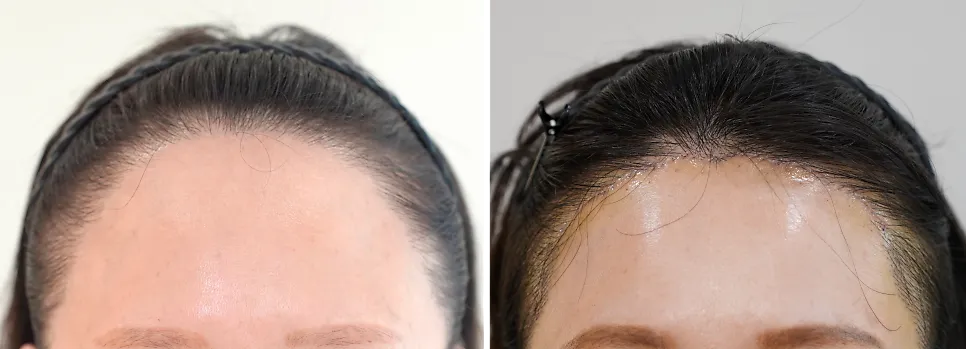
This shows the condition one week after surgery. While removing a small portion of the first hair transplant area that looked less dense, we reduced the overall height by about 2 cm.
As expected, the scar near the crown was deep and the galea and periosteum were adhered, so I could not dissect beyond the back of the scar, but because the scalp had good elasticity, after a few galea incisions the forehead line came down to a satisfactory level.
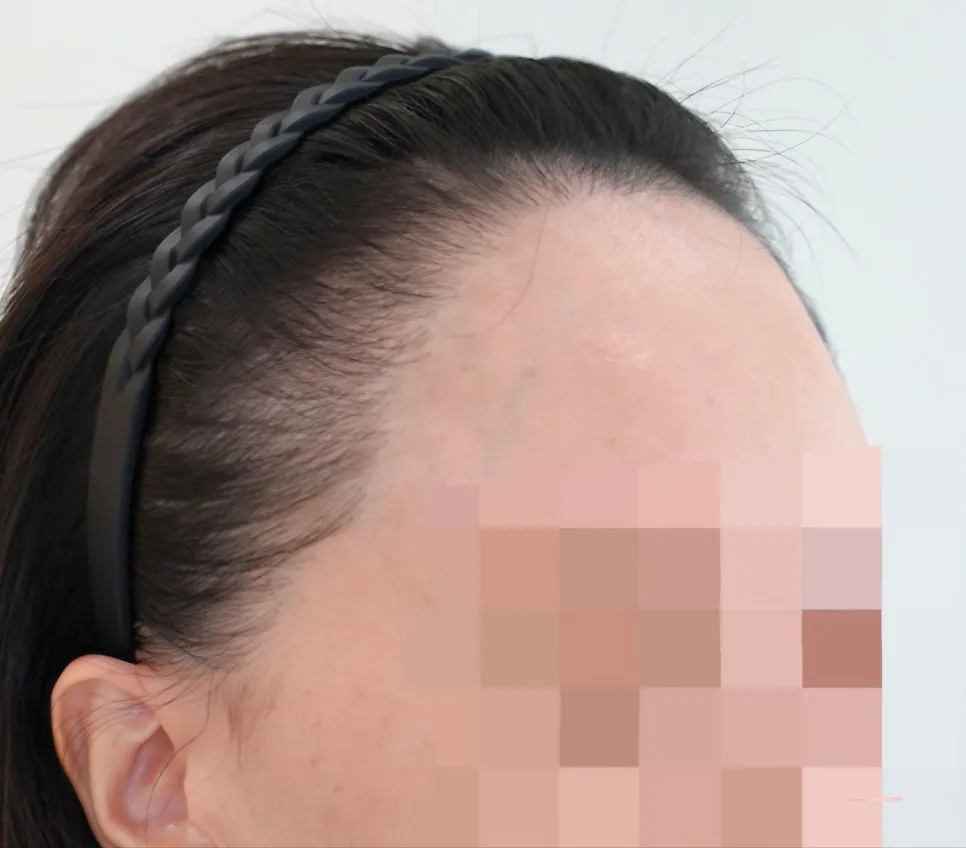
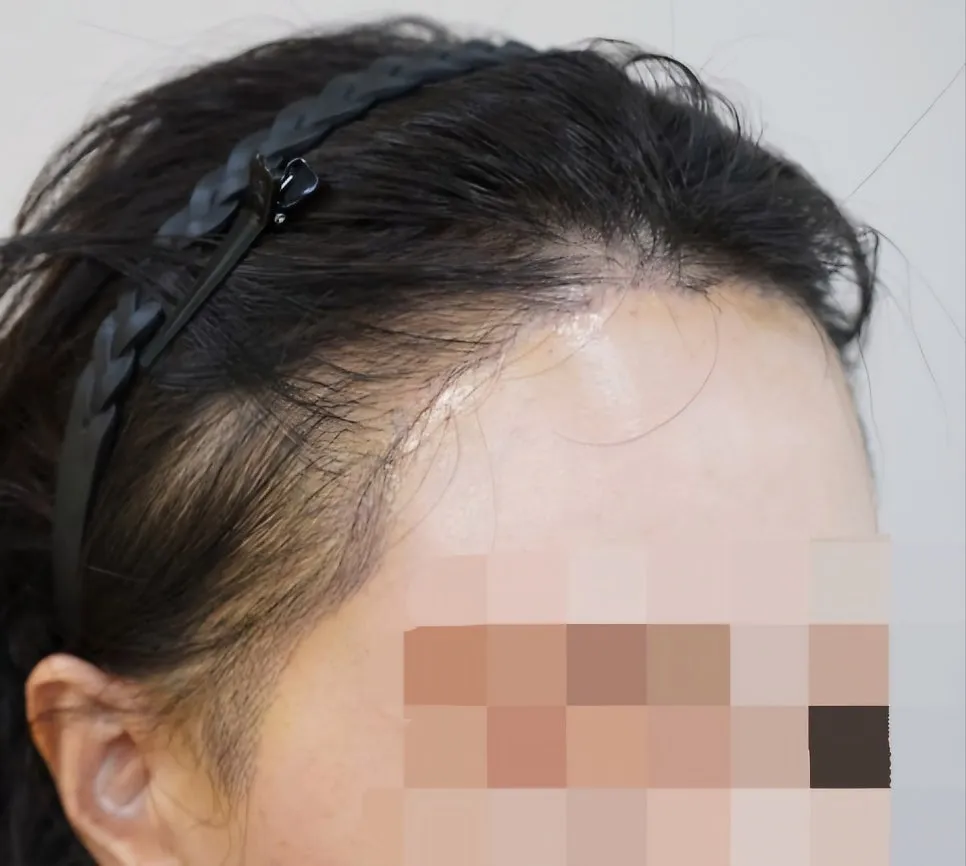
The grafts that formed the temple peak and sideburns also appear to have engrafted well. It would have been good to fill in density in the first hair transplant area too, but since it was a dissected area of the forehead reduction, I did not transplant there to avoid overdoing it. We decided to add more if needed about 6 months later.
If There Is a Scar on the Scalp
If there is a scar on the scalp, forehead reduction has limitations. The depth and location of the scar and the elasticity and thickness of the scalp must be carefully assessed to develop the most suitable plan. For difficult cases, skill matters, but experience matters too.
※ After surgery, side effects such as swelling, bruising, bleeding, pain, and infection may occur, and results may vary from person to person.


