By Dr. Shin Seungkyu · 2024.05.24
Fatigue after taking hair loss medication

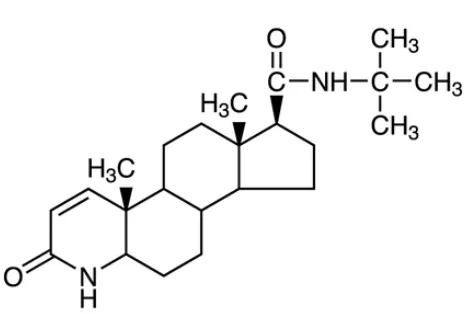
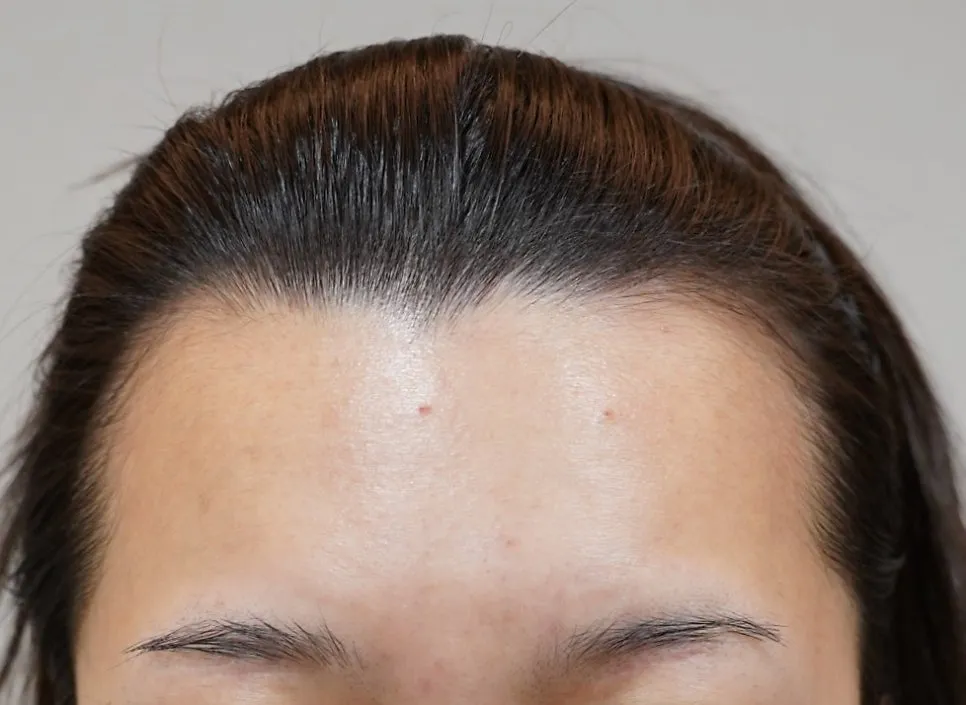
Recently, some patients have complained of fatigue after taking the male-pattern hair loss medications finasteride and dutasteride, so I would like to briefly look at side effects and fatigue related to hair loss medication.
I will leave the background and mechanism of hair loss medication (finasteride, dutasteride) for another time and focus on side effects today. I found three papers on a research database, and I will explain based on their content.
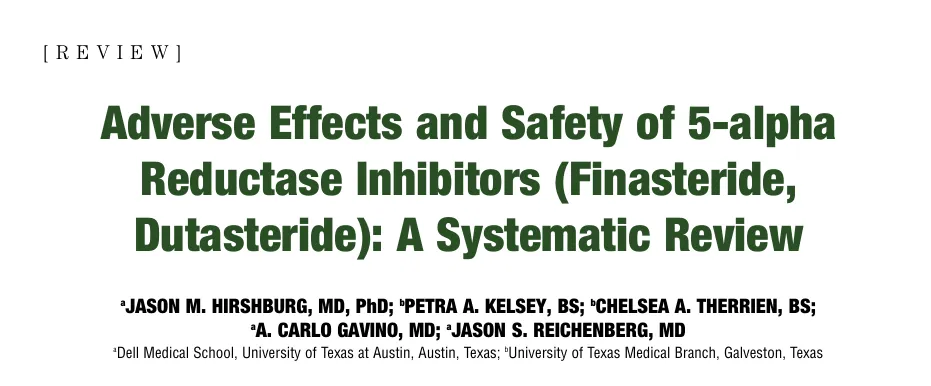
Side effects reportedly include decreased libido, erectile dysfunction, anorgasmia, decreased sperm count, gynecomastia, skin changes, cognitive impairment, fatigue, anxiety, depression, and others.
Psychological symptoms and hypotheses
Today I will look at the fatigue that patients have recently complained about. Several papers say fatigue can occur, but they did not treat it as an important issue. There are quite a few studies on sexual dysfunction, but only some of them addressed these psychological aspects.
Recent reports suggest that psychological symptoms such as depression, fatigue, and anxiety can occur after taking 5-alpha reductase inhibitors. The cause has not been precisely determined (as papers always say, the cause is unknown!), but a few plausible hypotheses are discussed.
One hypothesis is that low male hormone (low testosterone) is related to depression, and that levels of several neurosteroids needed to synthesize 5-alpha reductase (androstanediol, allopregnanolone, tetrahydrocortiso, tetrahydrocorticosterone, tetrahydrodeoxycorticosterone) fall in plasma and cerebrospinal fluid. This also lowers dopamine levels, which may cause psychological symptoms. These symptoms are reversible, so they reportedly go away when the medication is stopped.
Other ways to keep taking the medication
If you stop taking the medication, the symptoms will of course recover, but hair loss will progress again, so I thought about whether there might be another way.
The first is topical finasteride. If systemic side effects are severe, switching to a product applied to the scalp is said to have a similar effect in preventing hair loss. However, applying it is more of a hassle than taking a pill.
The second is to try changing the oral medication. Recently, a patient who complained of fatigue was taking dutasteride, so I suggested switching to finasteride.
The third is to take the medication at bedtime. The medication is taken one tablet a day to keep the blood concentration consistently above a certain level, and since the blood concentration will be highest shortly after taking it, sleeping during that time may also be one approach.
Similar approaches include alternating between different medications, or adjusting how often you take it, such as every other day instead of daily, to find what works best for you. This has not been scientifically verified, but since the dose that suits you may not be exactly one tablet a day, I think it is worth a try.
Long-term use and the nocebo effect
Fortunately, several papers say these psychological and sexual side effects mostly disappear after about one year or more of long-term use. They also point out that the rate of sexual side effects is not very different from the placebo group, and that side effects are sometimes even more common in the placebo group, which they cite as evidence of a nocebo effect.
More and more people are taking hair loss medication. Most see results without major side effects, but some have raised inconveniences, so today I looked at one of them, fatigue.