By Dr. Shin Seungkyu · 2024.04.17
A Somewhat Unfortunate Story
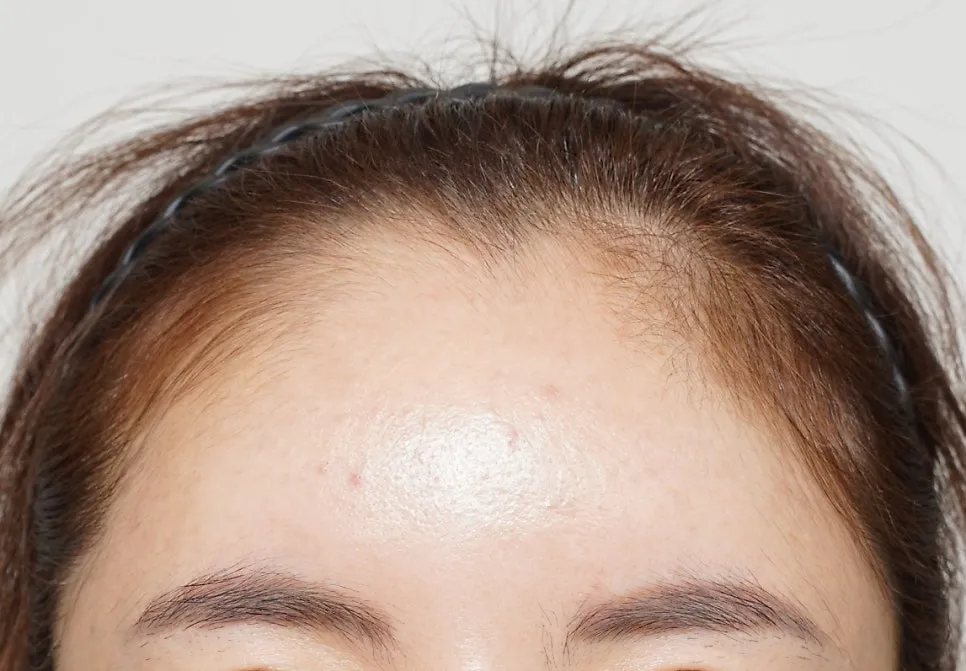
Today I would like to share a somewhat unfortunate story. This patient had about 3,000 hairs transplanted at another clinic using incisional (strip, FUT) hair transplant, but still felt the forehead was wide and the density looked low; they came to see me when I was working at Mojerim Plastic Surgery.
Even after the hair transplant, the wide forehead remained their biggest concern. However, lowering the forehead again with hair transplant has the drawback of thinning the hair at the back of the head too much, so we planned to lower it by about 1.5cm through forehead reduction.
Forehead Reduction and 6-Month Follow-Up
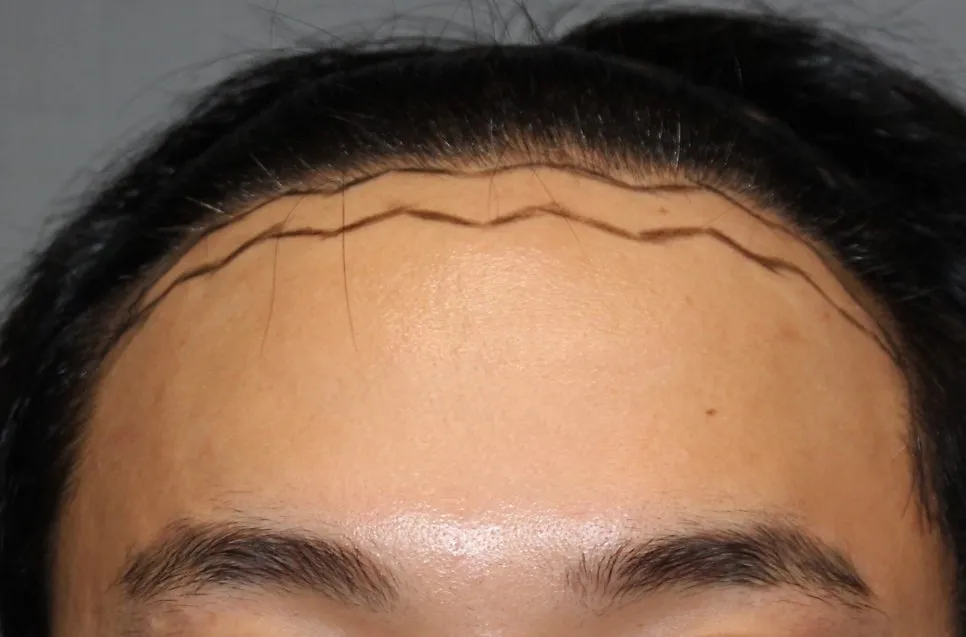
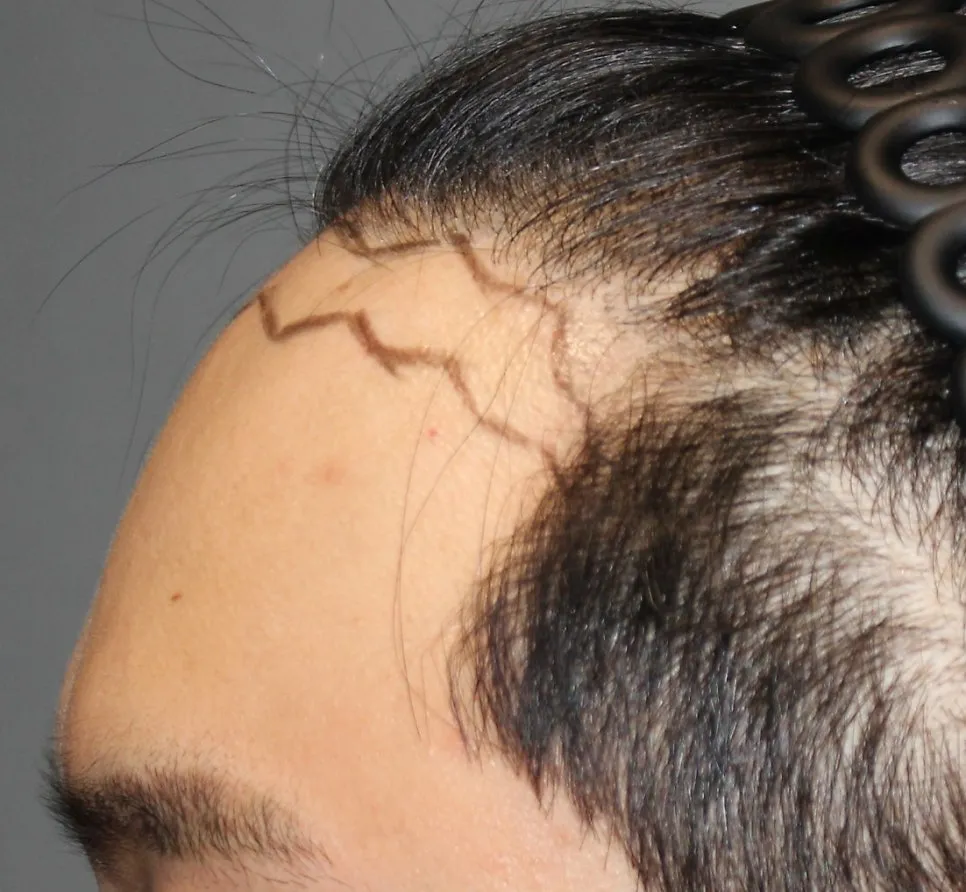
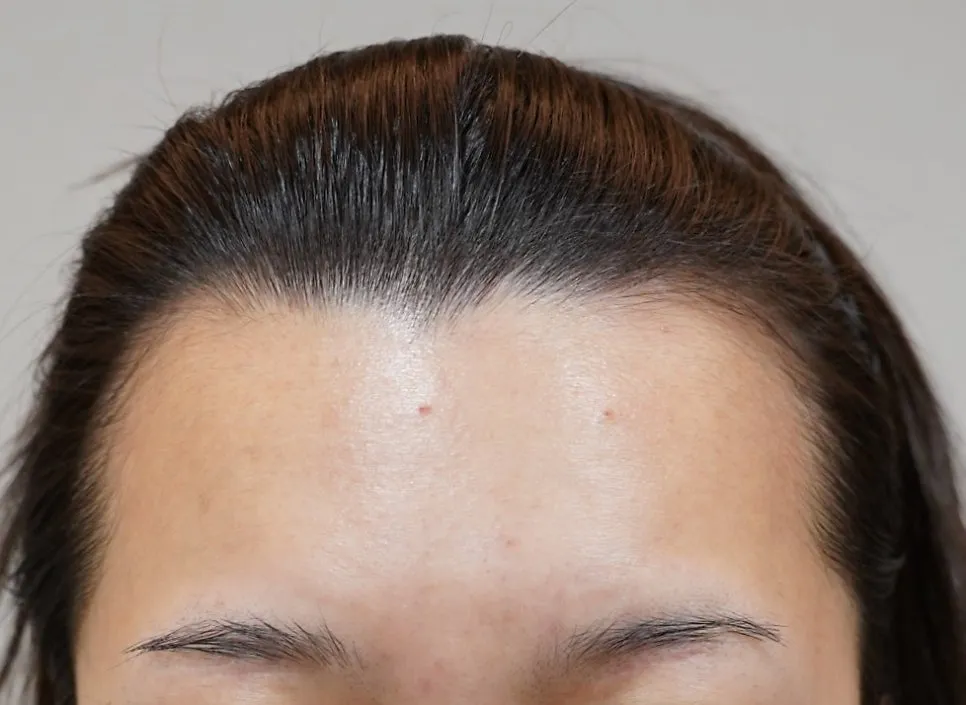
This is the pre-surgery design photo. Because the forehead slopes slightly backward, the effect seen from the side is expected to be greater than the change seen from the front. Forehead reduction was performed at Mojerim Plastic Surgery with this design.
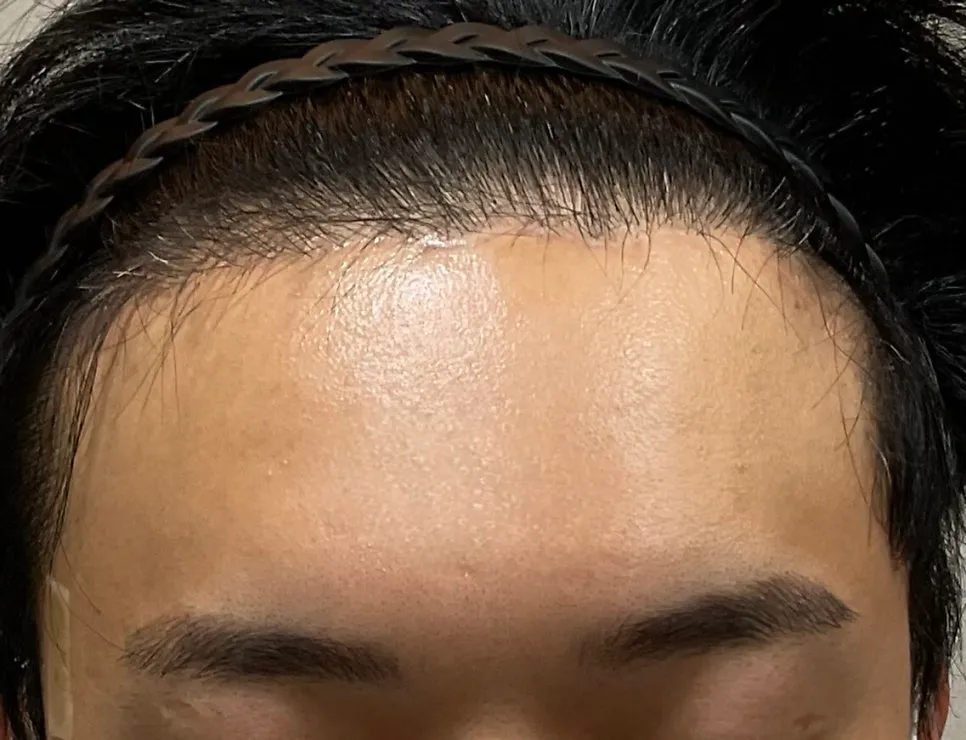
Six months after forehead reduction, the patient came to Banal Plastic Surgery for a follow-up. They were very satisfied with the reduced height, and were reassured when I explained that the scar, which is still slightly visible, will gradually fade. However, the low density in the previous hair transplant area still bothered them, so they wanted additional hair transplant.
Hair Transplant Again, 10 Days After Surgery
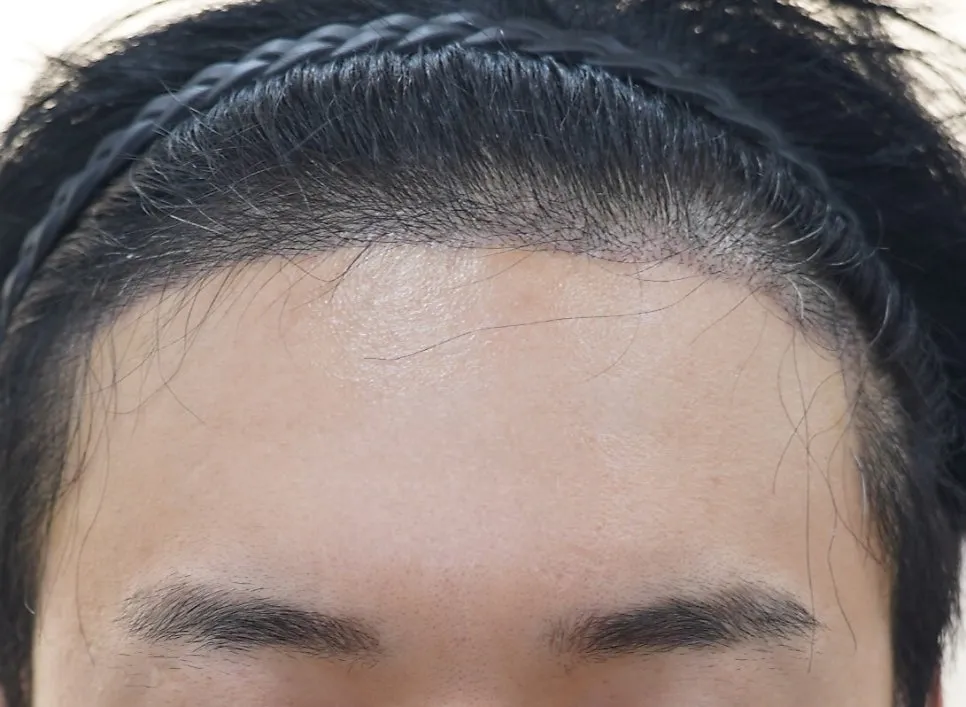
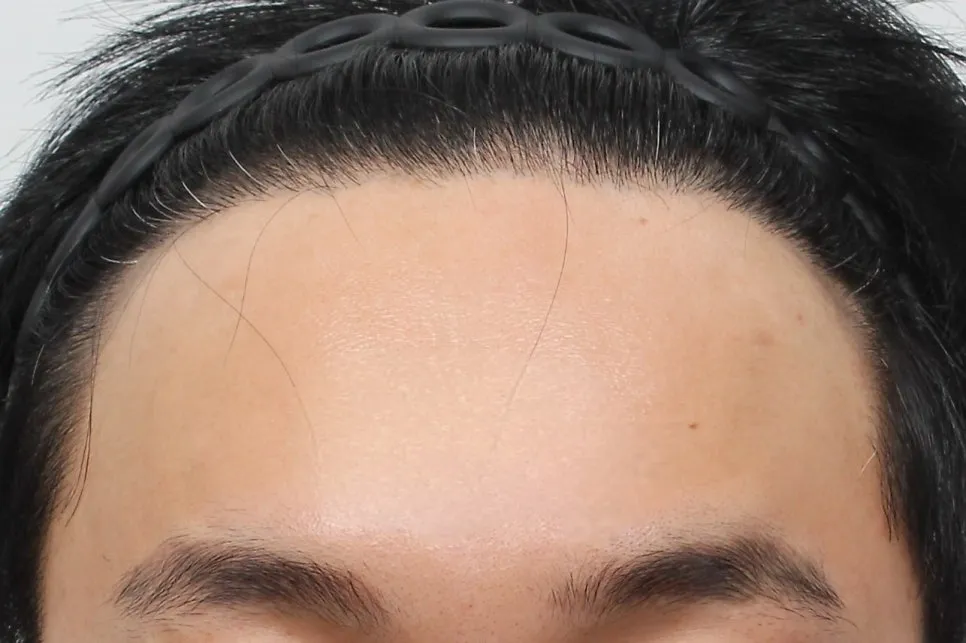
A hair transplant was performed to increase density along the scar line and in the existing transplant area; this is a photo taken 10 days after surgery. The patient was satisfied with the line and density and said they hope it grows just like this. They also said that it might have been better to do forehead reduction first from the beginning.
What to Do First
Of course, there is no single right answer to what should be done first, but if the first step goes wrong, you may have to go through a lot of trouble more than once. When the forehead is high, doing forehead reduction first can save hair at the back of the head, while when there is an M-shape or wide sides, hair transplant alone can achieve good results. I will recommend the line and approach that suit each individual.