By Dr. Shin Seungkyu · 2024.01.30
The Essentials of Hairline Design

When I studied math as a student, I used a well-known textbook called Mathematics Jeongseok, so I titled this "The Standard Guide to Hairline Design." Rather than a true standard, though, I would like to share a few points that I consider important.
Four Reference Points
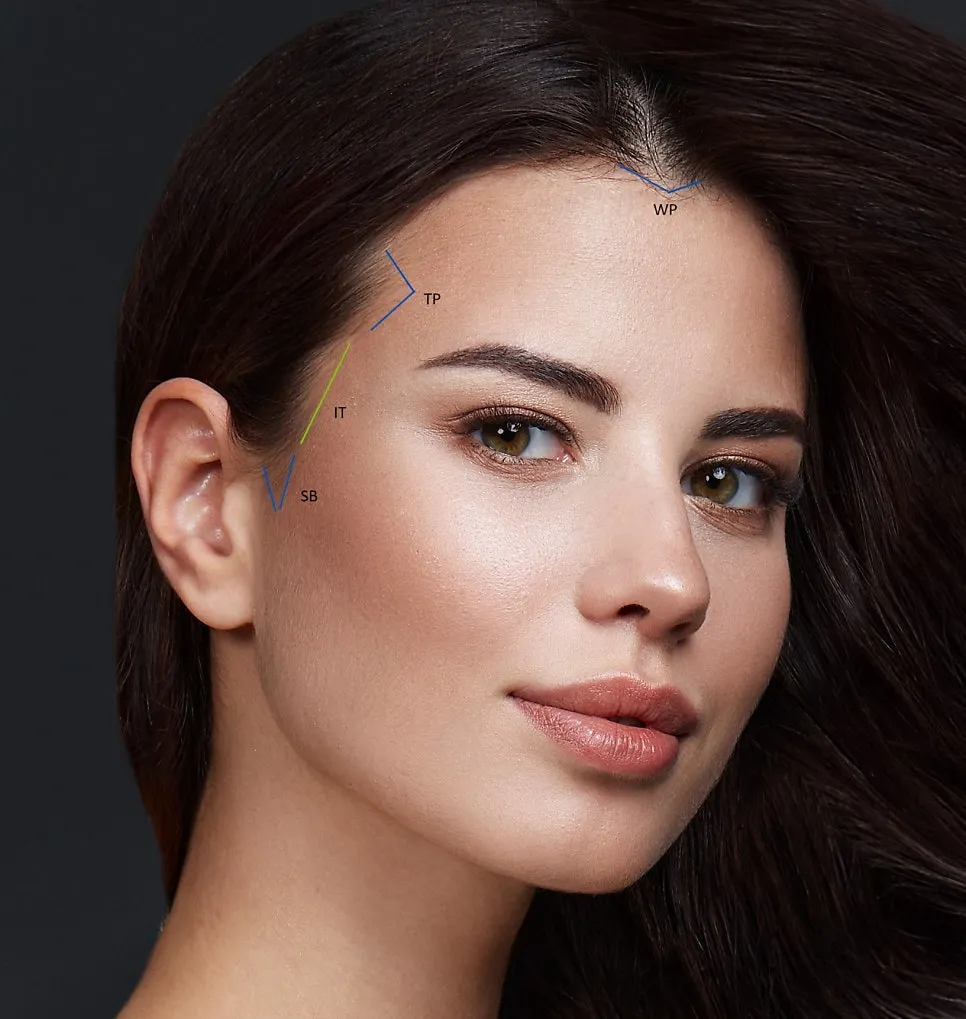
There are four main reference points in hairline design: the WP (widow's peak), which is the curve at the center of the hairline; the TP (temporal peak), which is the curve at the temple on the side; the IT (infratemporal line), which is the side line; and the SB (sideburn). Based on these points, the design is made to suit each face shape.
First, Decide the Height
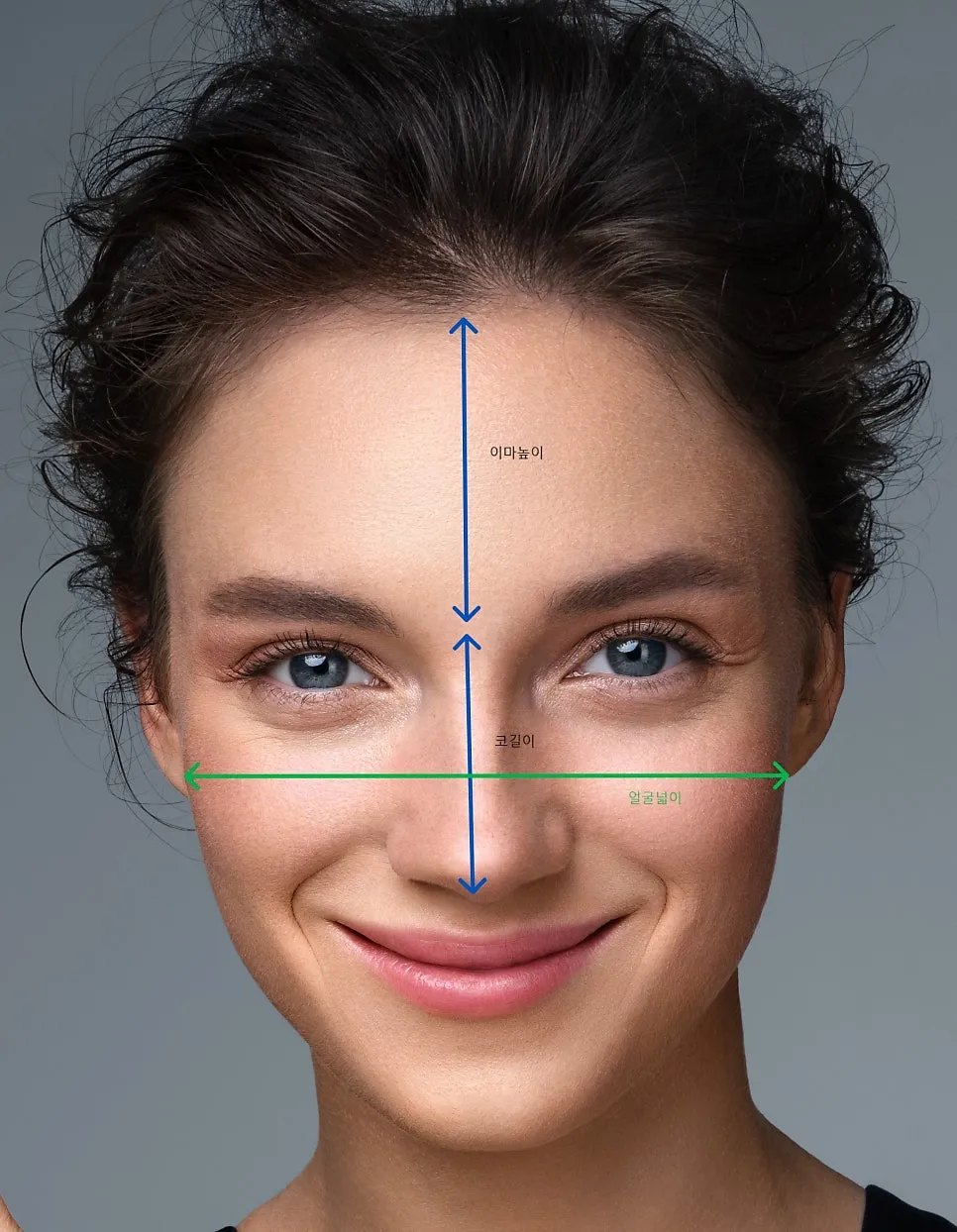
First, the WP, which is the height, needs to be decided. Generally, a forehead-to-nose length ratio of 1:1 is considered appropriate, but depending on face shape, if the face is long, lowering it a little further may suit better, and conversely, if the face is wide, lowering it less than a 1:1 ratio may suit better.
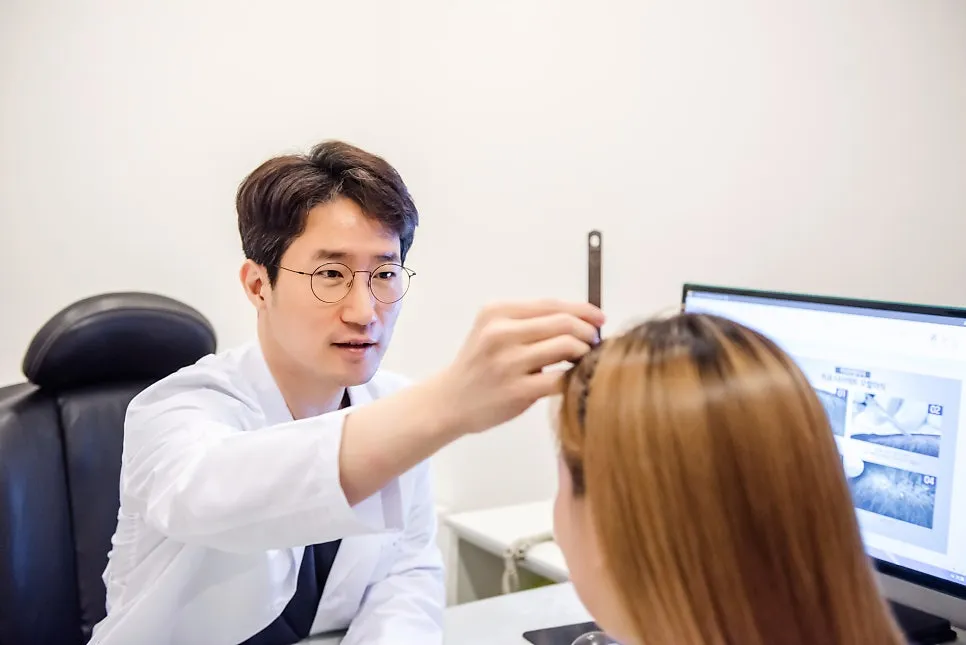
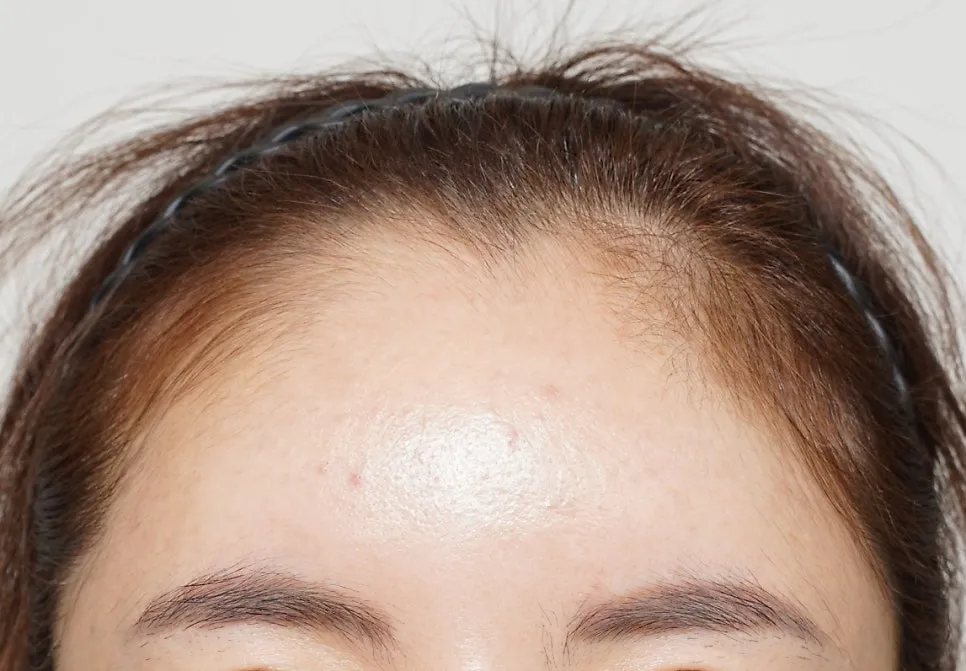
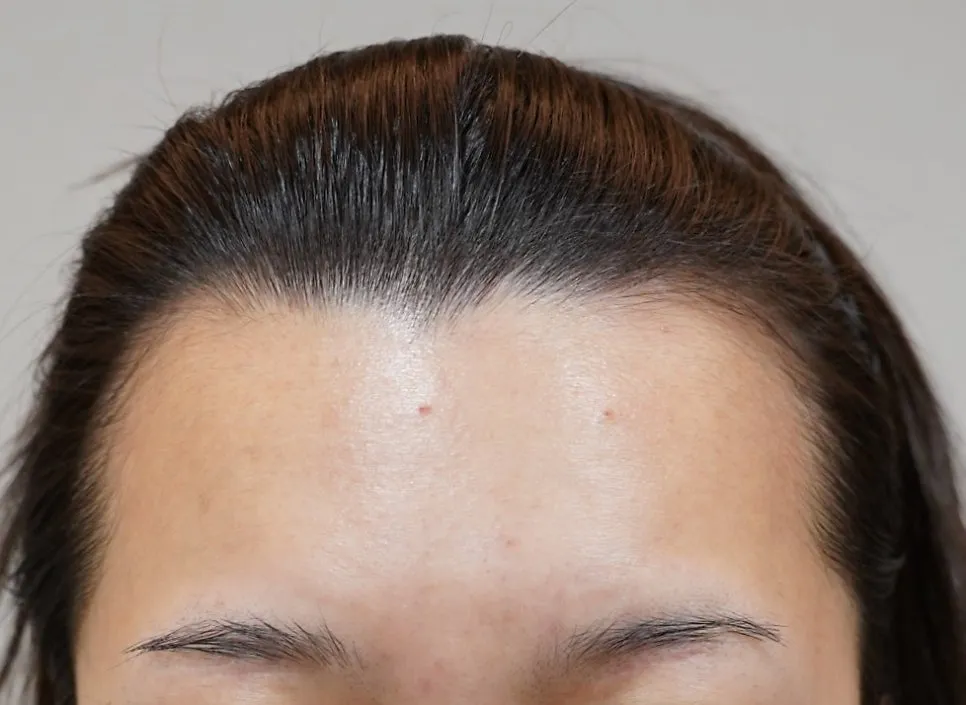
Many people these days prefer a narrow forehead, so even when the design fits the face shape and proportions, many ask us to lower the hairline further. In such cases, we look in the mirror together and lower it only to the extent that the hairline can still look natural and attractive. When the lowering height exceeds 1.5 cm, we sometimes recommend a forehead reduction.
Harmony Between the Center Line and the Side Lines



Celebrities often cited by patients as having attractive hairlines include Suzy, IU, and Jennie. These hairlines are not wide and have many slightly rounded baby hairs, and I also think natural hairlines like these are beautiful.
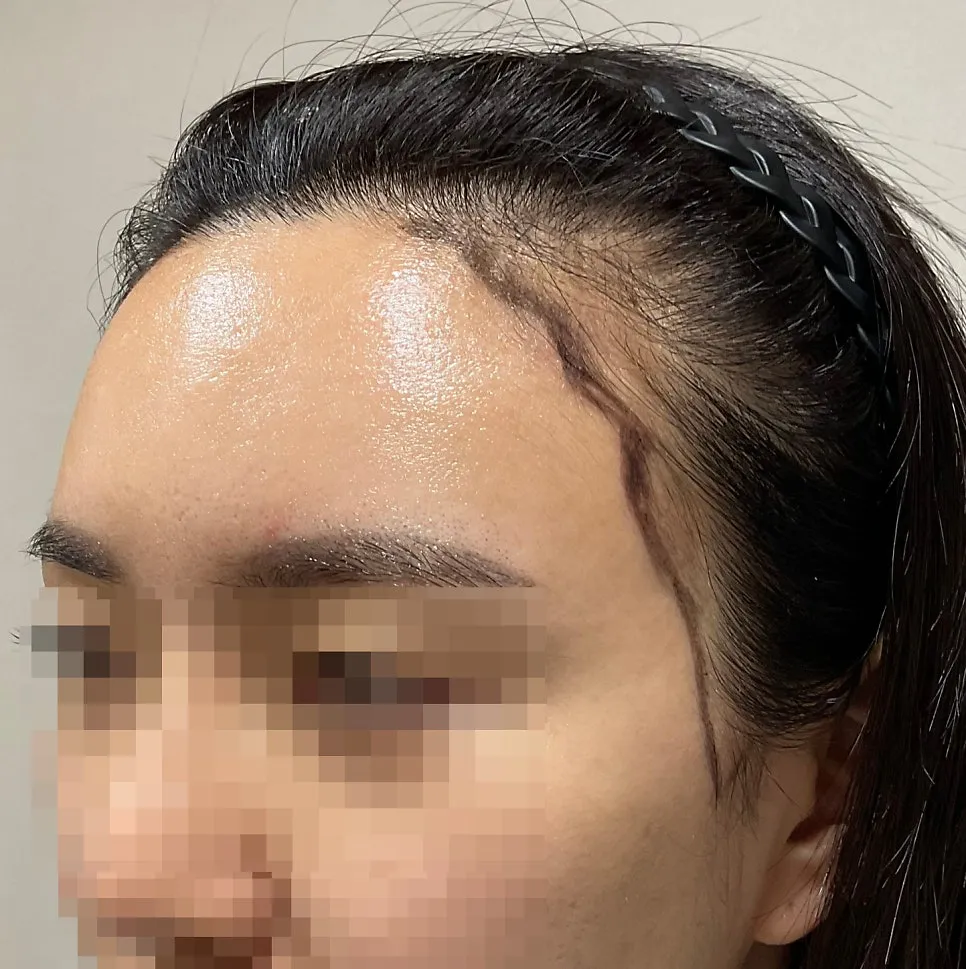
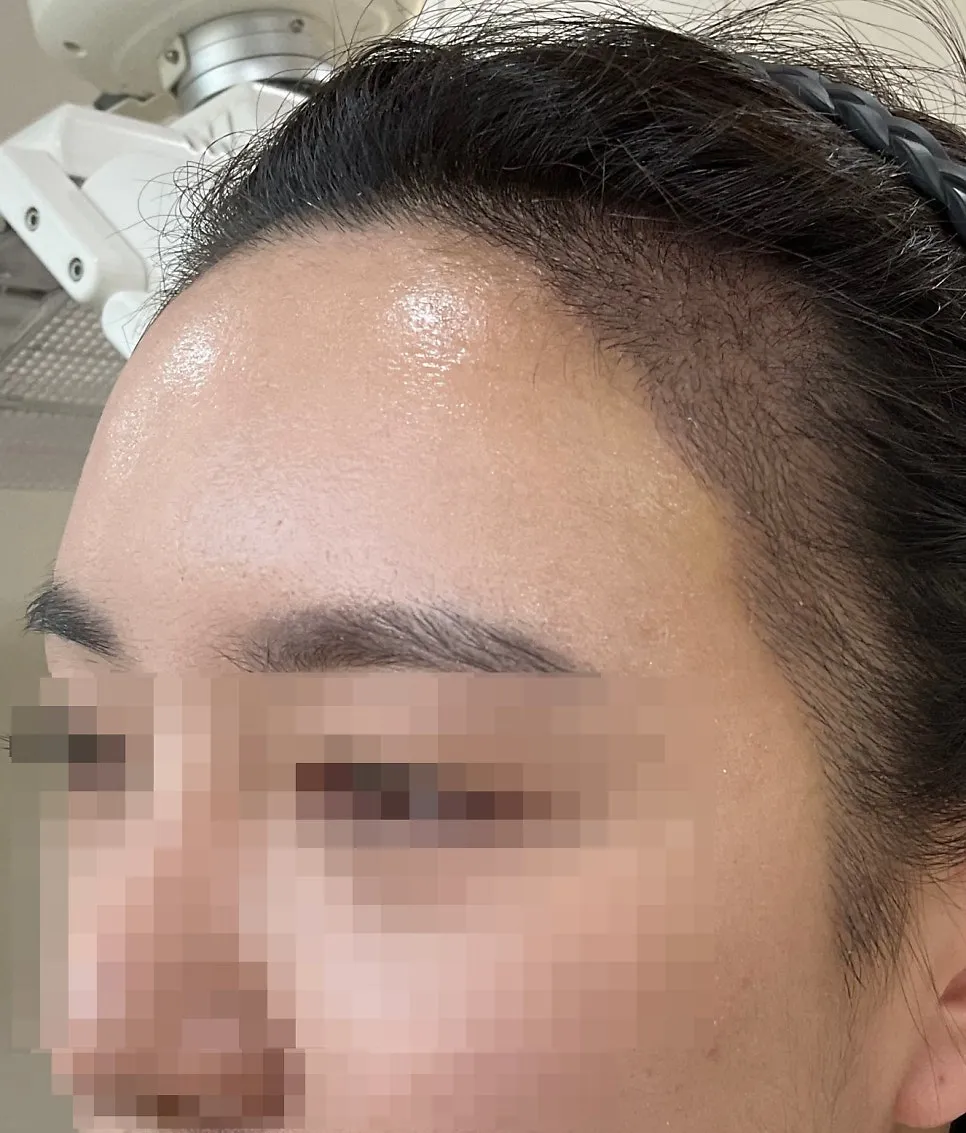
To design a natural hairline like this, it is important to maintain a good balance between the height of the center line and the side hairline. In other words, we set the height to suit the face shape and create side lines that harmonize with the center line.
Communicating While Drawing
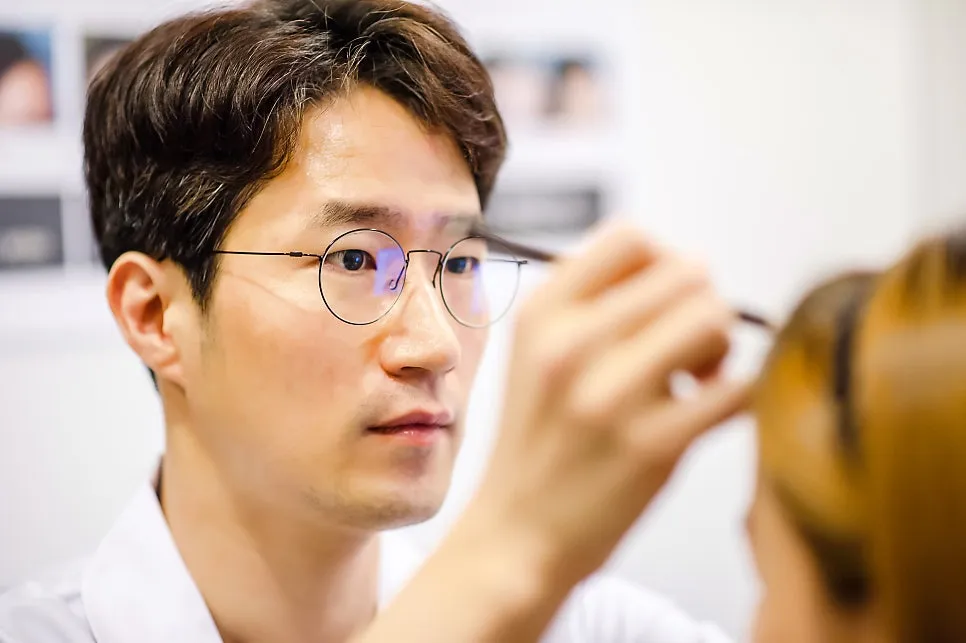
The surgeon's experience and sense of aesthetics matter in design, but I believe the most important part is the process of communicating while drawing and creating the design that the patient is most satisfied with.
When we check the result about one year after hairline hair transplant surgery, a touch-up may be needed if some areas look thin due to low density or the front line looks unnatural. Hairline hair transplant surgery does not usually cause major side effects, but like any surgery, bleeding, pain, and inflammation may occur early on, and folliculitis and temporary hair loss may occur at the surgical site. These symptoms generally improve over time.
There is no special formula for achieving a natural hairline. However, I believe that if the design is one that both the surgeon and the patient are satisfied with, and hair of appropriate thickness is transplanted at a natural density following that design, a satisfying hairline can be created. I don't have any particular hair transplant story that stands out in my mind, but I feel grateful to patients who come in for follow-up visits and say the surgery looks well done and that they like it.
When the Height Needs to Be Lowered Significantly: Forehead Reduction Surgery
Put simply, forehead reduction surgery is recommended when the height needs to be lowered significantly. If a high forehead is lowered only with a hair transplant, density may look thinner at the area where the hair direction changes at the center, and a large number of grafts would be needed. So for a high forehead without an M-shaped angle, lowering the height with a forehead reduction may be better.
Forehead reduction does not lower the forehead by transplanting hair. Instead, it removes the amount of forehead height that needs to be lowered and pulls the scalp forward to correct the hairline.
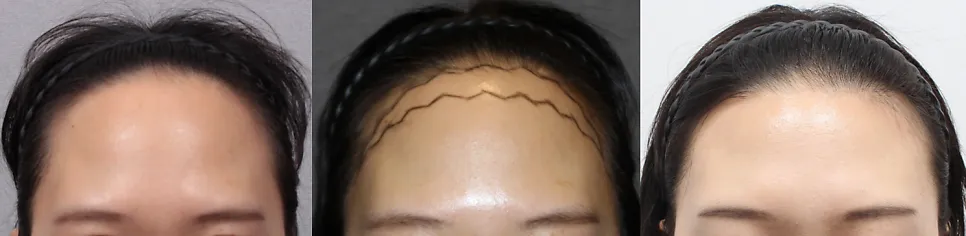
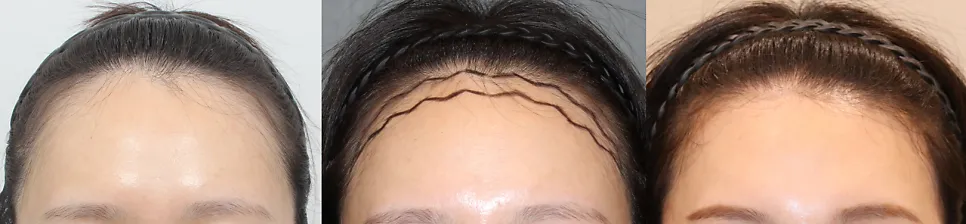
Many people considering forehead reduction are concerned about the scar left after surgery. About 6 months to 1 year after surgery, it often remains as little more than a white line that is hard to notice. In some cases, if the scar remains noticeable to some degree, it can be well covered with a hair transplant.