By Dr. Shin Seungkyu · 2024.01.25
What is frontal fibrosing alopecia?
Frontal fibrosing alopecia (FFA) is a primary lymphocytic cicatricial alopecia in which the hairline gradually recedes backward in the frontotemporal area, accompanied by loss of eyebrows. It mainly affects postmenopausal women, and it is a condition that has been recognized relatively recently.
According to recent reports, its incidence is rising worldwide, but the environmental triggers and the guidelines for diagnosis and treatment are limited. Among the published papers, there is one that systematically reviews FFA, so I would like to share it with you.
Epidemiology
It mainly occurs in postmenopausal Caucasian women, though it is also found in premenopausal women and in men. Since it occurs frequently in women who have undergone hysterectomy or hormone (estrogen/progesterone) therapy, one can infer that hormones may play a role.
Pathological Factors (Etiology and Pathogenesis)
The pathological cause of FFA is not certain, but several factors are involved.
Autoimmunization: Histological examination shows lymphocytic infiltration and fibrosis around the hair follicles, and as a result of inflammation, the sebaceous glands disappear and the follicles are destroyed and turn into fibrotic scar tissue.
Genetic background: At least four genes at 2p22.2, 6p21.1, 8q24.22, and 15q2.1 are associated with FFA.
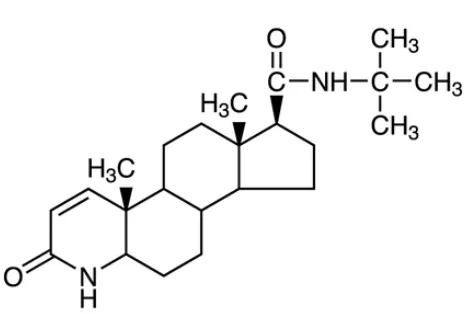
Hormonal factor: Estrogen is involved in the hair cycle and promotes the transition from catagen to telogen. A lack of estrogen alters control of the hair cycle, which creates a risk of FFA. This mechanism is also the theoretical basis for taking 5α reductase inhibitors (finasteride-class drugs). Conversely, high hormone exposure, such as during pregnancy, breastfeeding, and hormone therapy, is also associated with FFA. Interestingly, it is reported that FFA is less common in those who have taken oral contraceptives.
Environmental factors: Since FFA has been increasing commonly worldwide over the past 15 years, it is thought that environmental factors may also be involved. Sunscreen use, hair dyeing, shampoo, smoking habits, and dieting may be environmental factors. It is said that sunscreen can enter the hair follicles and disrupt the follicular immune response, causing autoimmunity.
Clinical Image
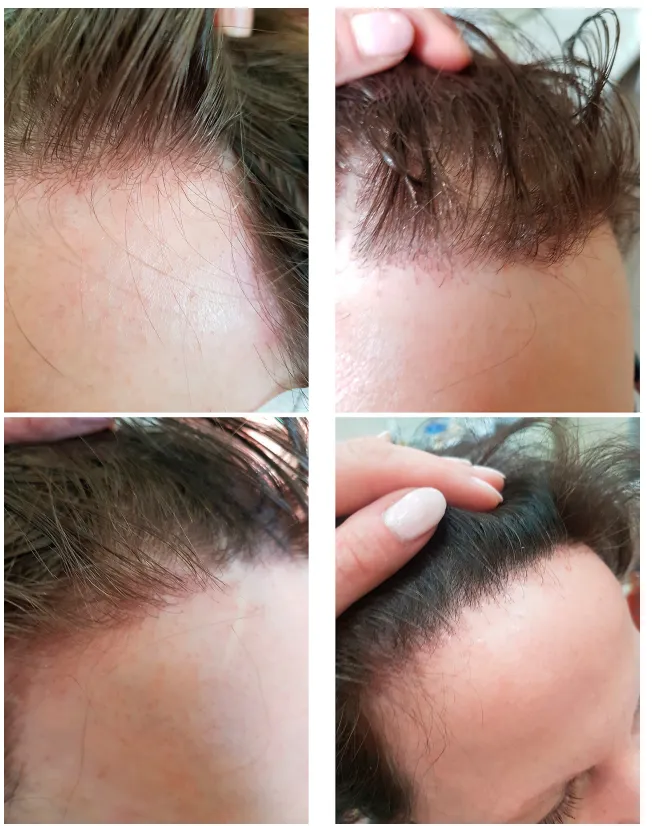
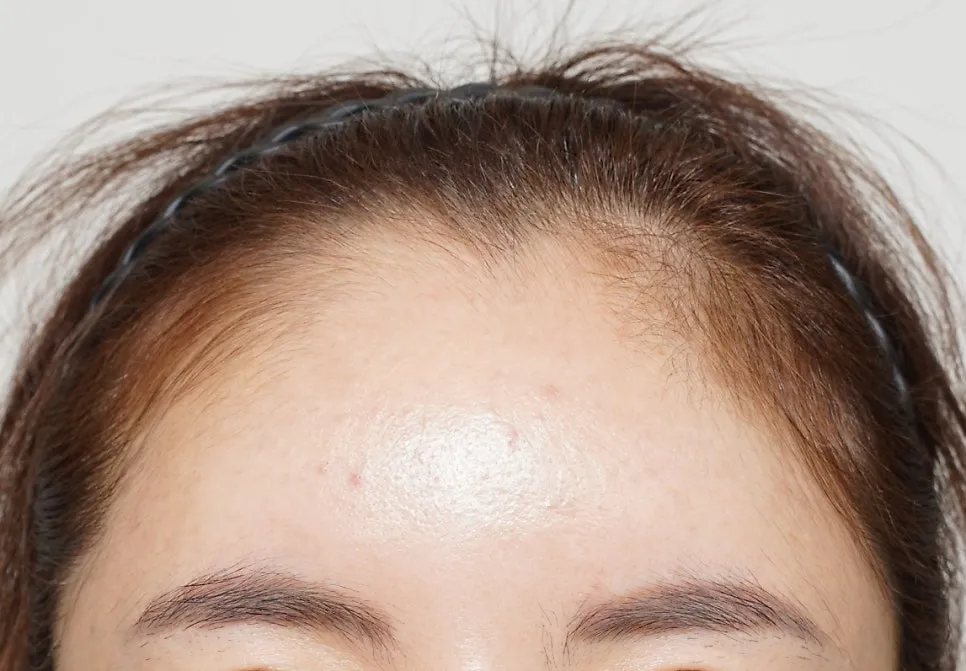
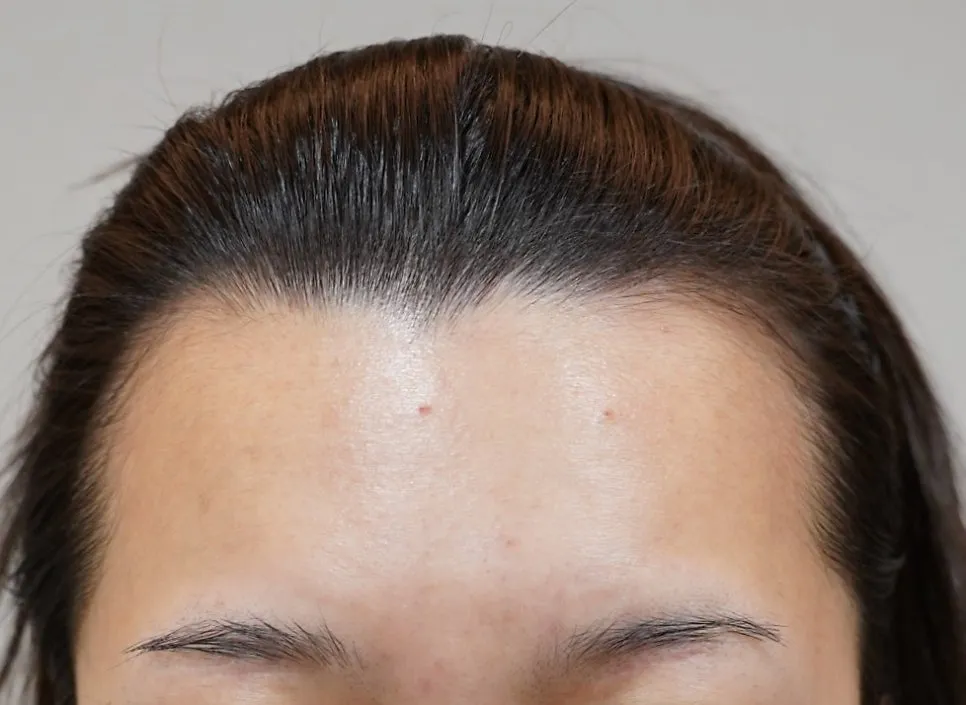
The hairline recedes backward, forming a band-like shape, and perifollicular erythema is observed. In the frontal fibrosing area, the follicular openings also disappear. Also, the presence of one or a few hairs left in the original area before the hairline receded (lonely hair sign) helps with diagnosis.
Eyebrow loss occurs in 64-95% of FFA patients, relatively early in the disease. Baby hairs also disappear, and the area appears as small red dots.
It can also occur together with conditions such as hyperlipidemia, hypertension, osteoporosis, hypothyroidism, depression, atopy, seborrheic dermatitis, and androgenetic alopecia.
Diagnostic Methods
Clinical features include the 10 signs of FFA. Due to hairline recession, the hairline is high, and skin color appears paler compared with normal skin. By using the forehead muscles to make wrinkles, the boundary between the frontal wrinkles and the scalp can be identified.
Both eyebrows are lost, frontal veins are easily visible, and baby hairs disappear. One or a few hairs (lonely hair) remain at the original hairline.
An unusually shaped hairline (pseudo fringe sign), papules on the face (small bumps), and small black-brown spots on the face (lichen planus pigmentosus) also appear.
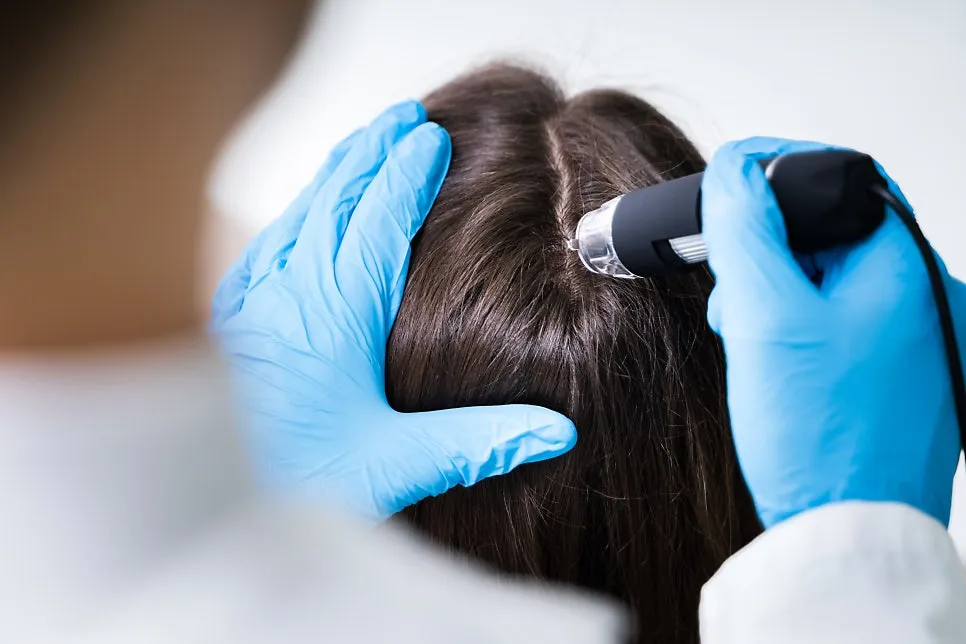
Trichoscopy
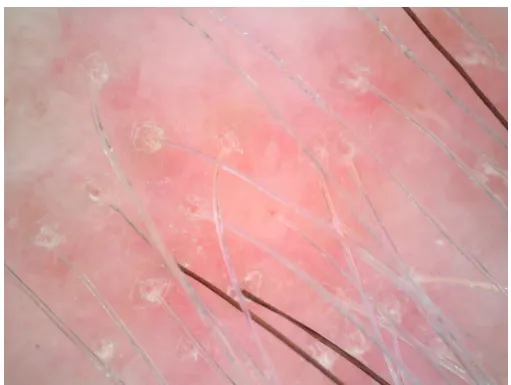
Perifollicular scale, loss of follicular openings, perifollicular redness, and white scarred areas are observed.
Biopsy
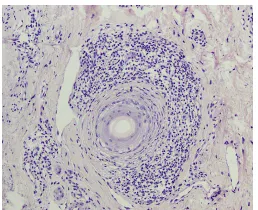
Microscopic examination shows various features, including lymphocytic infiltration around the hair follicles.
Treatment
Treatment options include topical steroid ointment, topical calcineurin inhibitors, intralesional steroid (triamcinolone) injection, topical minoxidil, 5α reductase inhibitors (finasteride class), hydroxychloroquine (antimalarial), doxycycline (antibiotic), retinoids, immunosuppressive therapy, and hair transplant.
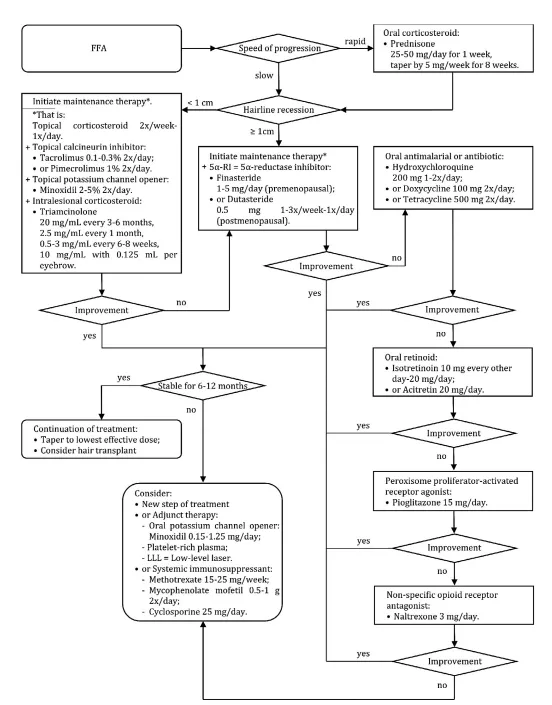
A wide forehead does not necessarily require a hair transplant or forehead reduction. When the forehead is wide due to this condition, it is more important to halt disease progression and stabilize it with the treatment algorithm above.
Frontal fibrosing alopecia can be easily recognized from its clinical features alone, so if it is found early and appropriate treatment is received, its progression can be halted. It is therefore good to know about it in advance.