By Dr. Shin Seungkyu · 2024.01.15
Reluctance toward forehead reduction

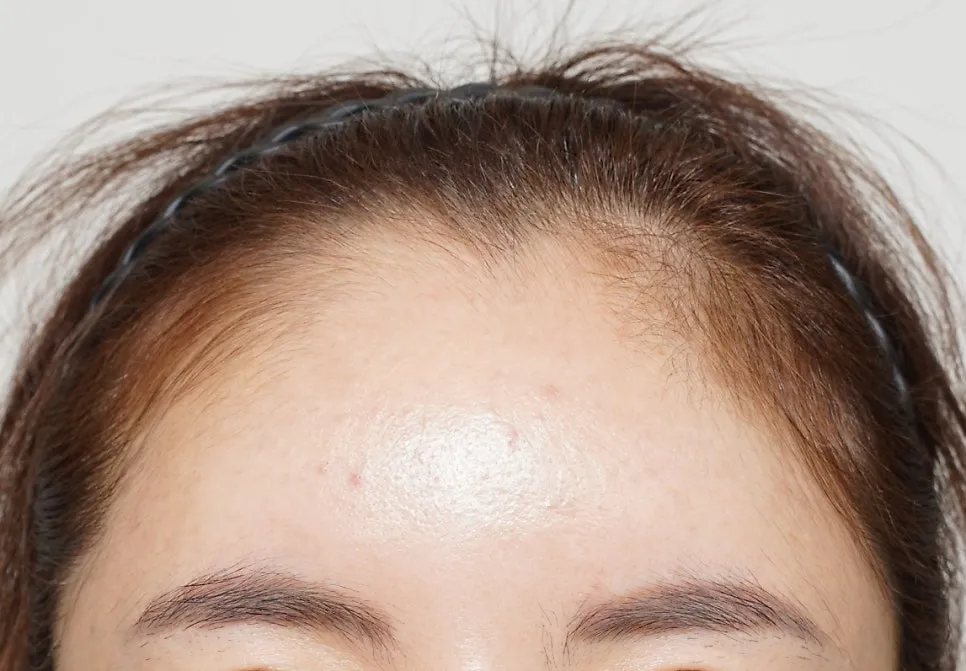
When presenting on forehead reduction at academic conferences or talking with many patients, I sense a certain amount of reluctance toward forehead reduction. Doctors who perform hair transplants have probably seen many patients who had forehead reduction or an incisional forehead lift at other clinics. Most of those patients often want a hair transplant to cover the scar left on the forehead after surgery, and seeing many such cases may lead to reluctance toward forehead reduction.
Patients seem to think of hair transplant as surgery that improves hair loss, and forehead reduction as cosmetic surgery that narrows the forehead regardless of hair loss, and they often worry a lot about the scar left on the forehead.
Satisfaction and advantages of forehead reduction
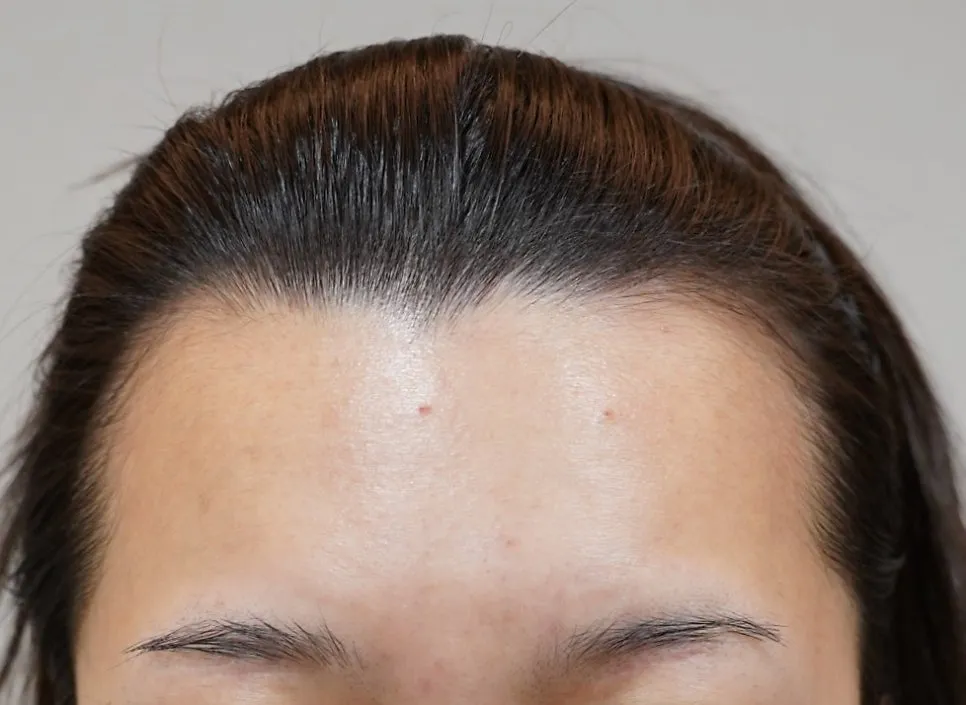
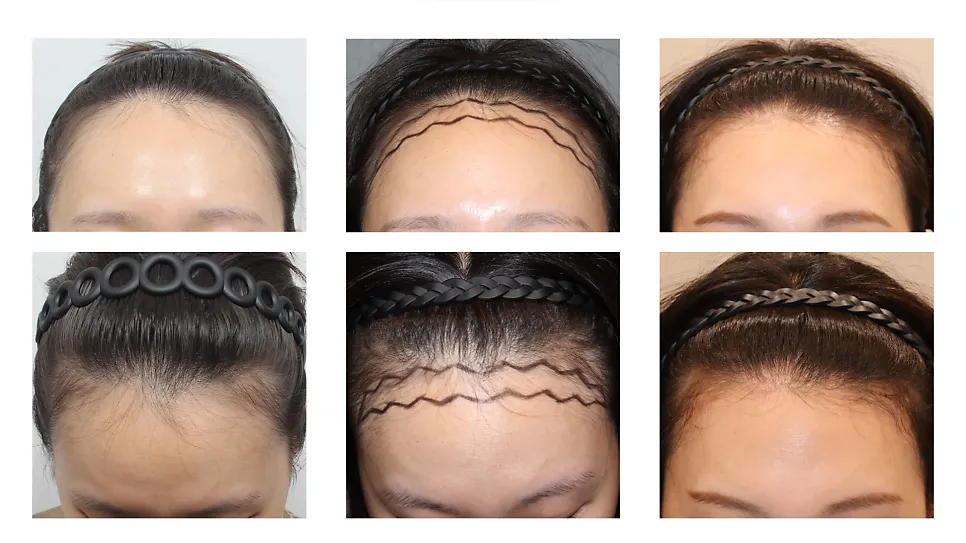
Unlike what many doctors worry about, I think patient satisfaction after forehead reduction surgery is actually quite high. Many people who lived with a high forehead as a source of insecurity are delighted to see how much lower their forehead looks right after surgery. The stitched area is generally clean right after surgery, and seeing patients shampoo right away, tidy their hair, and leave the clinic happily makes me happy too.
Of course, hair transplant is also a very good way to lower the height of the forehead or narrow a wide forehead, and patients are quite satisfied with the hairline created by the transplant after surgery. However, forehead reduction has the advantage of not using follicles from the back of the head. While performing hair transplants, I often think about how much worry patients carried before coming to the clinic, and how hard it must have been to watch their hair fall out. Because every single hair is so precious, I find myself recommending methods that preserve the back of the head as much as possible.
When forehead reduction is not recommended, and scars
However, forehead reduction cannot be applied in every case. Because forehead reduction mainly lowers the height of the center of the forehead, hair transplant is more effective for filling in what is commonly known as an M-shaped forehead. And if the scalp is too stiff or too thin, forehead reduction surgery is limited or carries a higher chance of postoperative side effects, so I do not recommend it.
Scars are also a concern for many people. As our bodies heal after a wound, a scar cannot be avoided. However, with good care from surgery through the post-operative period, a noticeably visible scar does not seem to form. In my experience, scars fade over time to the point where they are hard to notice unless you consciously look for them. And if a scar does bother you, hair transplant can cover that area quite well. Hair transplant over scars is not difficult, and graft survival is not bad either.
Two ways to reduce a wide forehead
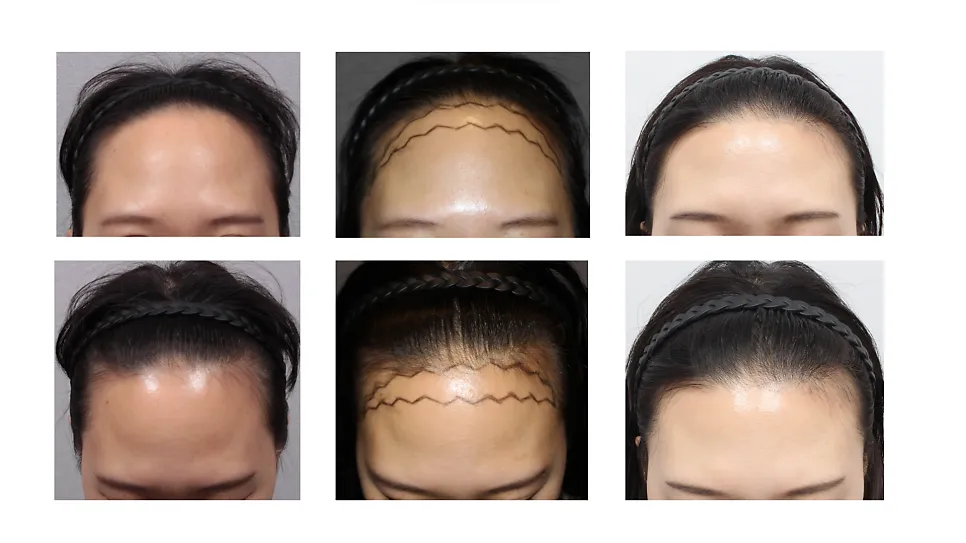
Hair transplant is sometimes done to fill areas that are empty from hair loss, and sometimes done to narrow a wide forehead even without hair loss. As ways to reduce a wide forehead, both hair transplant and forehead reduction are good surgical options. I think it is best to choose the appropriate method for each situation, considering various factors such as hairline shape, scalp elasticity, occipital density, and patient preference.