By Dr. Shin Seungkyu · 2024.01.10
The story of a patient on their third hair transplant

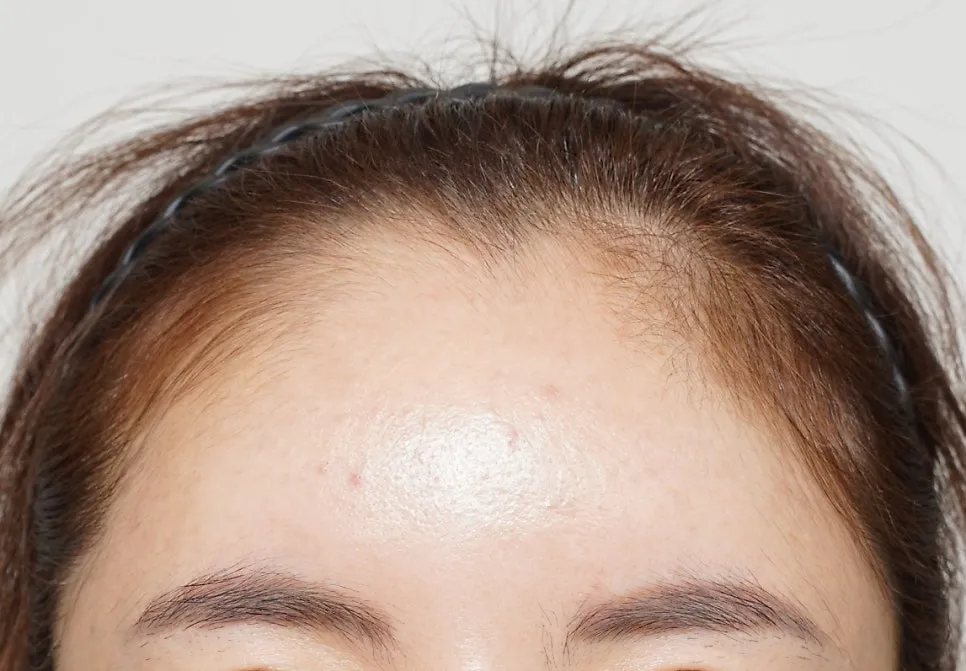
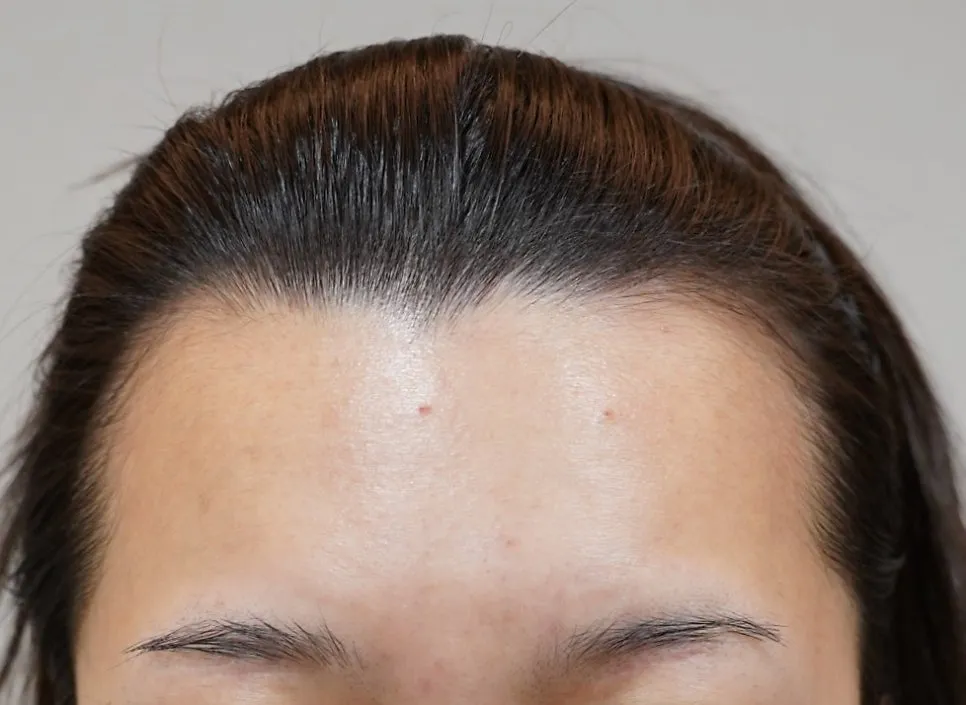
This time I would like to share the story of a patient on their third hair transplant. A wide forehead was a source of insecurity, so ten years ago they had an incisional hair transplant at another clinic, and three years ago they also had a non-incisional hair transplant.
However, the wide forehead was still a concern, and they wanted to lower the height further with hair transplant rather than forehead reduction.
A narrower forehead that suits the face shape
People often think a beautiful forehead requires the right proportion of forehead height to nose length, but I believe some people may prefer a narrower forehead, and a narrower forehead may suit them better.
So rather than matching an absolute 1:1 ratio, I think it is best to work step by step, looking in the mirror, to shape a design that suits the face, combining what the patient wants with the design I recommend.
Fortunately, even after two hair transplants the occipital density was still good, so another non-incisional harvest was possible. If the occipital hair density had been low due to the previous surgeries, I probably would have recommended forehead reduction.
Height 5.3 cm, 3-shaped center line
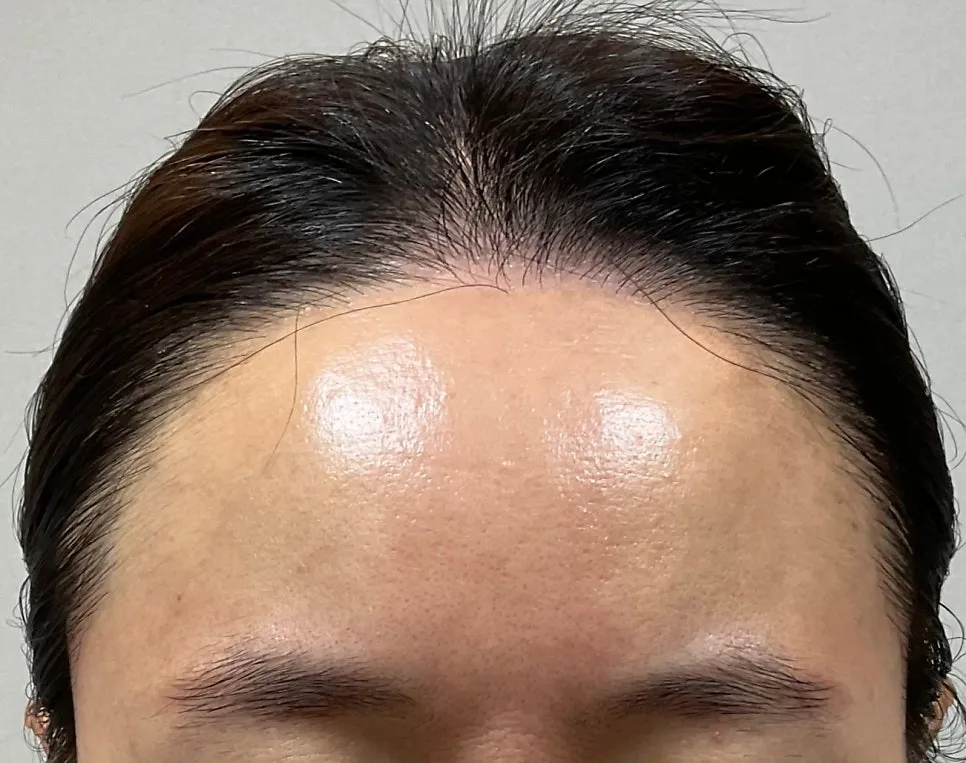
Even after two hair transplants, they still felt their forehead was wide and wanted a narrower one.
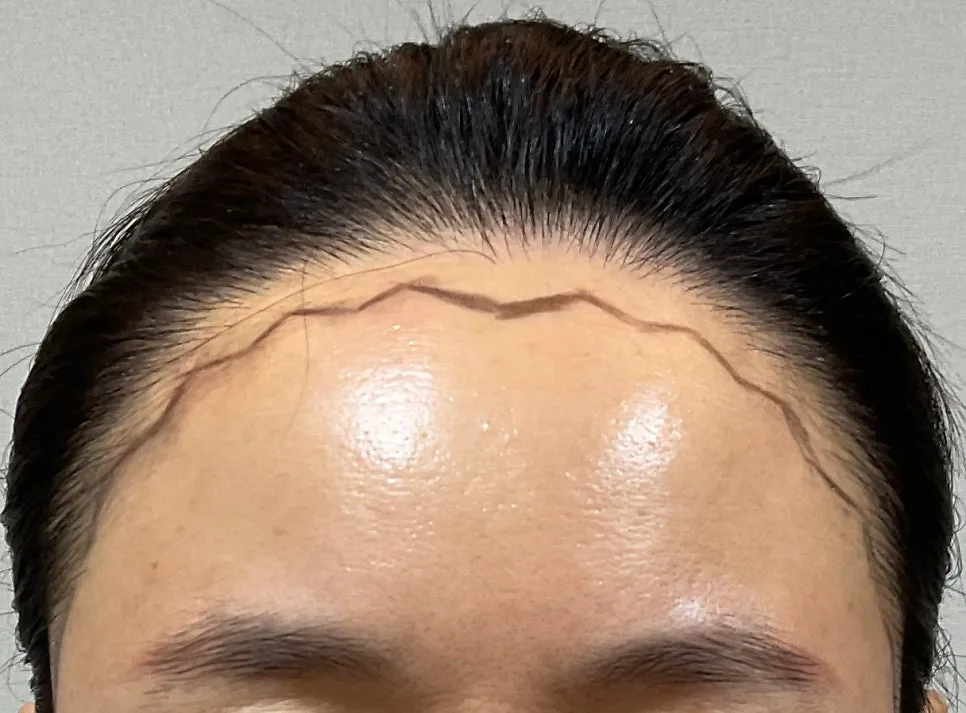
They wanted to lower the height to about 5.3 cm and emphasize the 3-shaped line in the center.
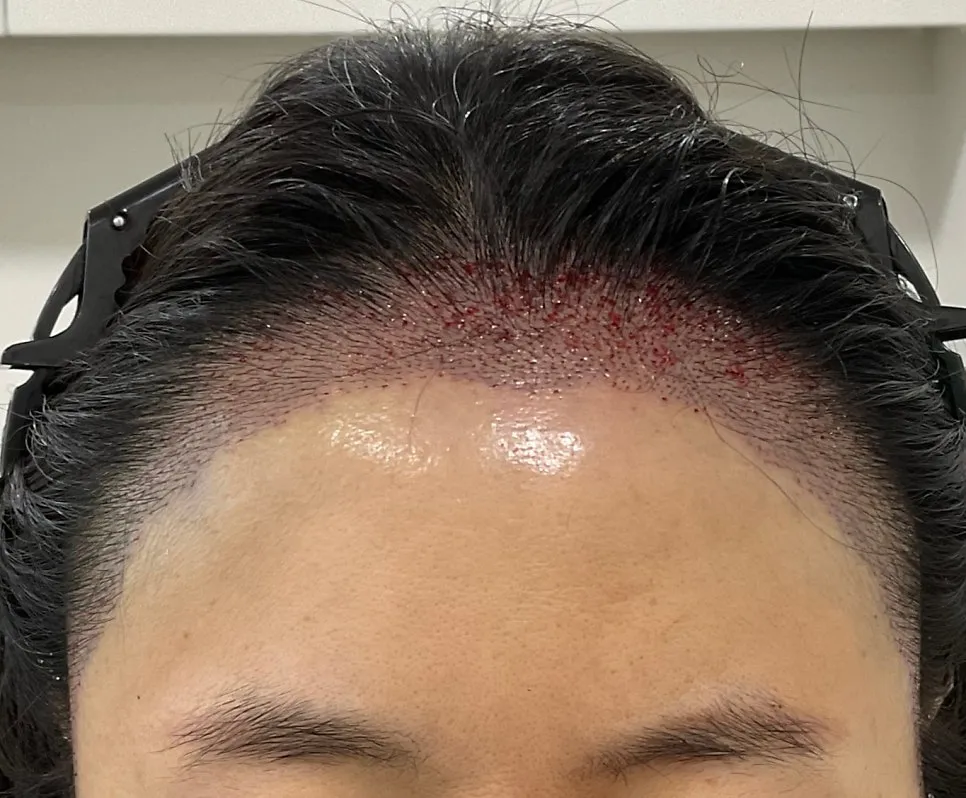
We harvested roughly 2,000 hairs using the non-incisional method and transplanted them, and also filled in the density of the previous hair transplant area considerably. We also successfully created the 3-shaped center line they wanted.
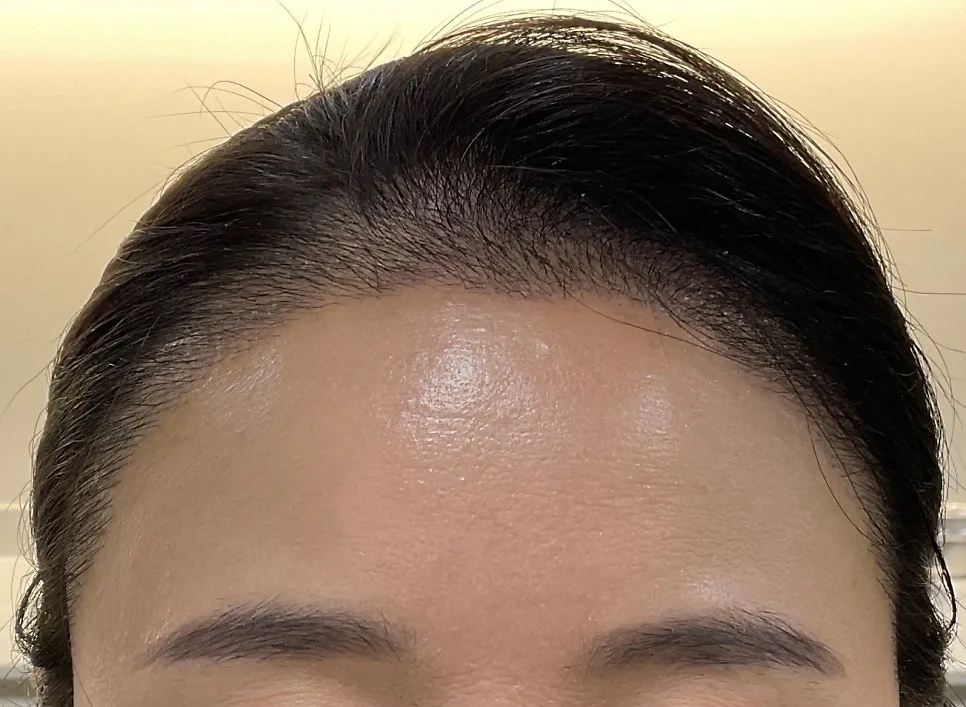
This photo was taken when they visited on the tenth day after surgery. The transplanted hairs have grown quite a bit by then. They were satisfied with the narrower forehead.
Taking the occipital density into account too
No matter how narrow a forehead a patient wants, we cannot create an unnatural one, but by adjusting the design together with the patient, we can create a narrow forehead that suits their face shape. I also want the occipital density to look as full as possible after the hair transplant. In this patient's case, the density was well maintained despite the two previous incisional and non-incisional surgeries, so we performed a non-incisional harvest. If the occipital density had been low, I probably would have recommended incisional harvesting or forehead reduction.
We will recommend the most suitable method while aligning with what the patient wants.
※ Side effects such as swelling, bleeding, and inflammation may occur after hair transplant surgery.