
By Dr. Park Sooho · 2024.01.07
Three methods, divided by the extent of shaving
For non-incisional harvesting, hair must be cut short, and the method is divided into a few types depending on how much is shaved.
Clinics call them by different names, but the three methods are mainly: full shave (or two-block cut), strip shaving (shaving one line at a time as needed), and no-cut (cutting only the hair to be harvested).
You probably already know about full shave or two-block cut without my explaining. It is a method of shaving the entire back of the head to a length of 1 to 2 mm before harvesting, so it cannot be covered except by wearing a hat.
Strip shaving: line cut and micro-cut
At our clinic, strip shaving is called line cut or micro-cut. A line cut shaves a strip 0.5 cm to 1 cm wide, and a micro-cut shaves a strip 1 to 2 mm wide.
Depending on hair length, a line cut may not be visible, while even a micro-cut may sometimes show.
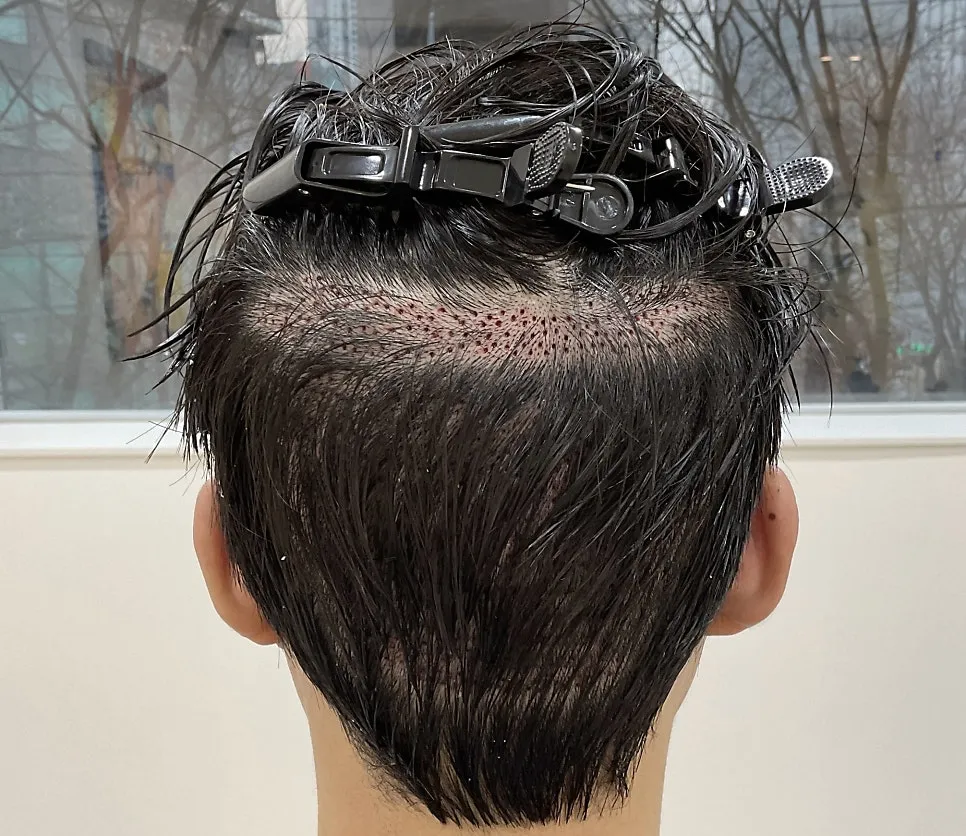
The photo above shows a line cut. Since the hair is still wet right after we washed it following surgery, it looks more noticeable at first, but once it is dried and lowered, it is hardly visible even at this length.
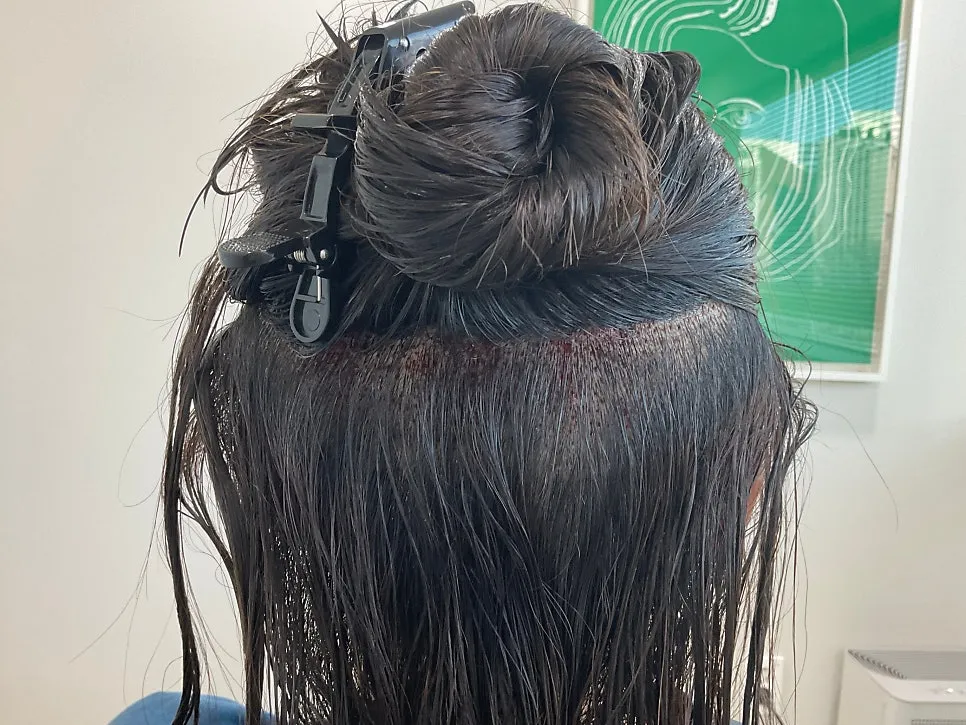
The photo above is a micro-cut. Since one line is shaved and the next is skipped, it is less noticeable than a line cut. It also requires much more taping.
No-cut: cutting only the hair to be harvested
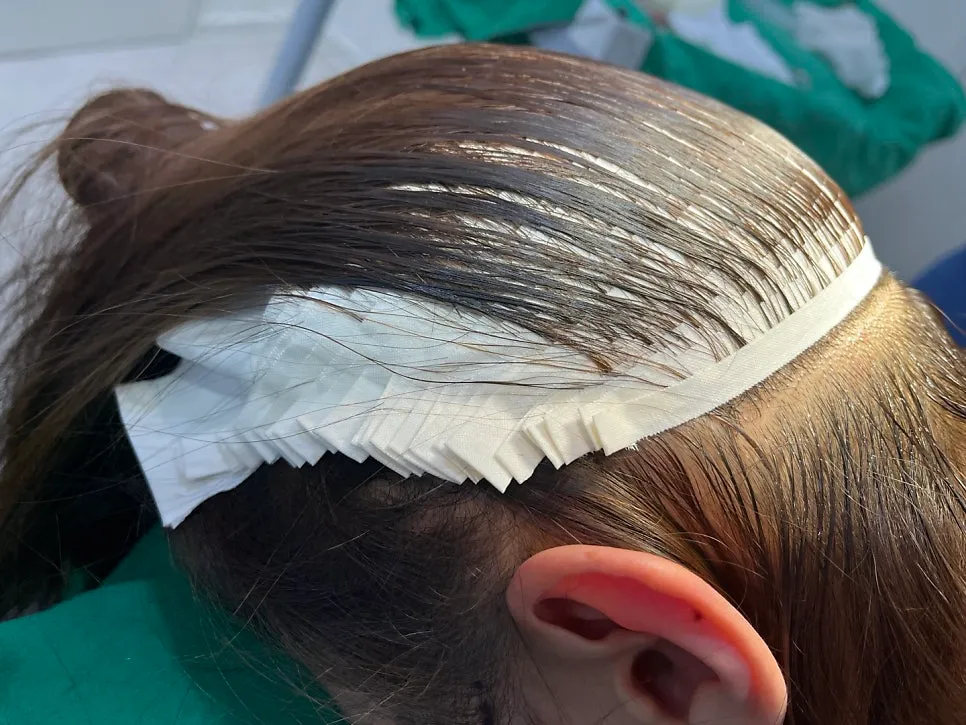
No-cut is the method with the least shaving and the least visible mark after surgery. Because only the hair to be harvested is cut, even people with short hair show almost no visible difference. However, since the surgery takes longer, the cost is also higher.
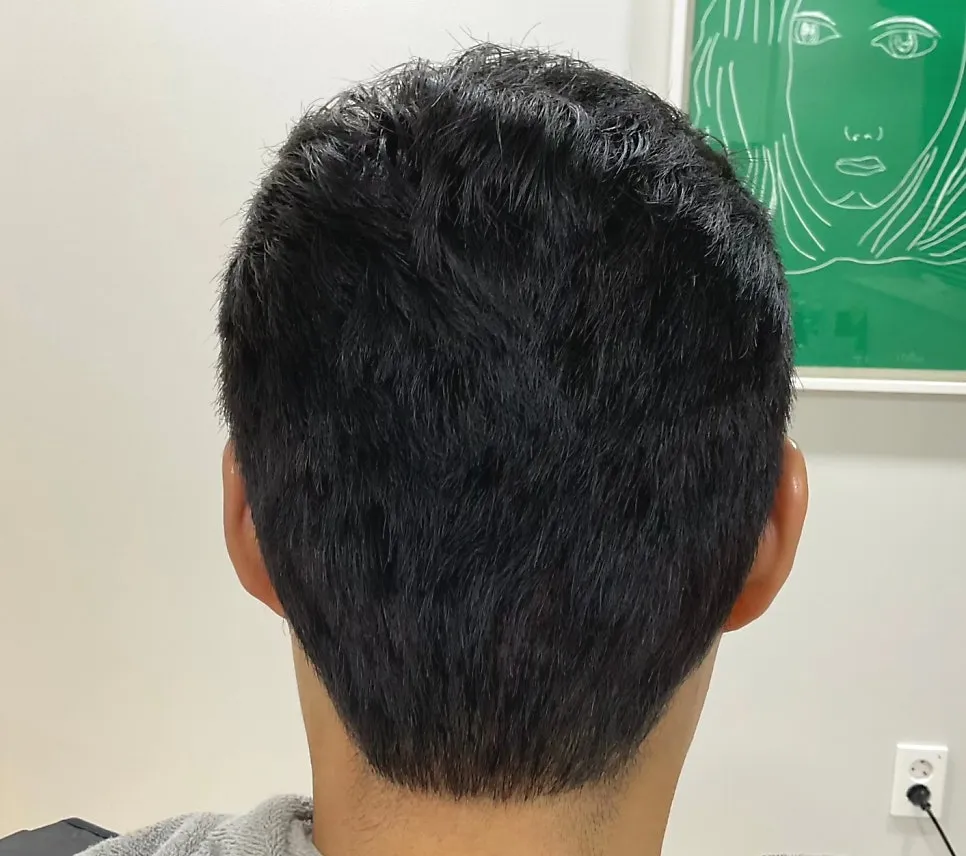
The photo above was taken after a no-cut non-incisional surgery, once the hair was washed and dried. This patient had quite short hair, but there is almost no visible mark.
There is no need to insist on no-cut
Of course, no-cut may seem like the better option. But when you consider surgery time and cost, there is no need to insist on no-cut. As long as the hair is not too short, even micro-cut is nearly invisible. The photo below shows a man with not-so-long hair right after a micro-cut surgery.
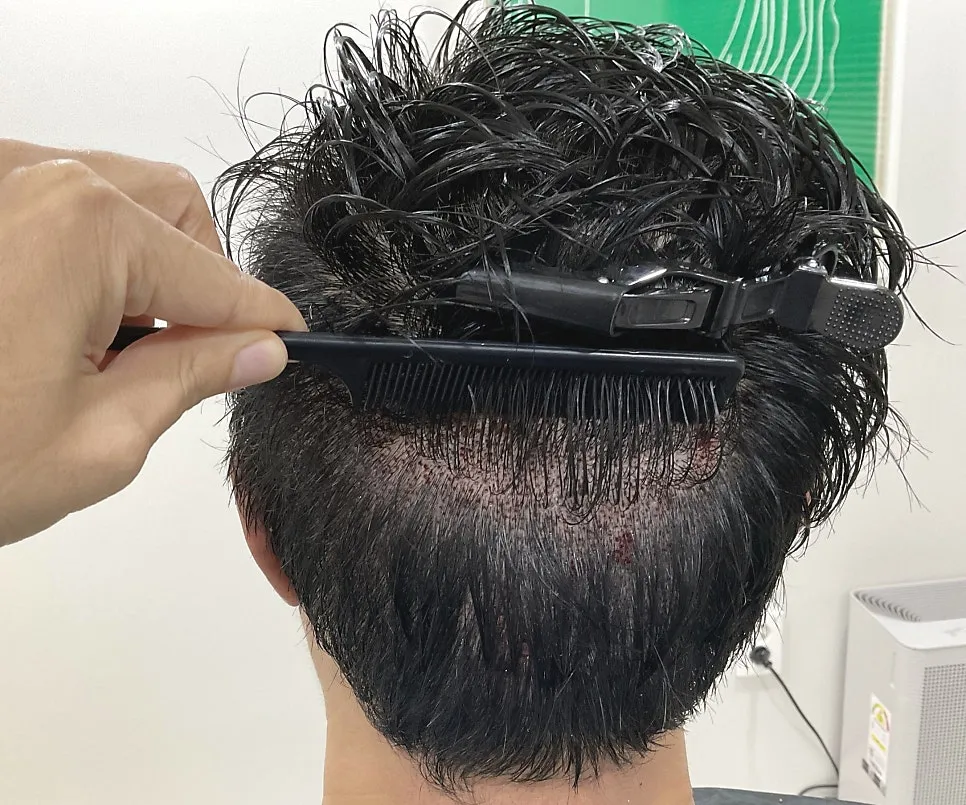
It should be hardly visible at most lengths. However, when doing strip shaving such as line cut or micro-cut, the harvesting intervals above and below and on both sides must be well maintained so that a line-shaped scar does not remain.
I have seen quite a few people who had twenty rows harvested with micro-cut or no-cut and came in with line-shaped scars like those from twenty incisions. If too many grafts are harvested too densely in one row to shorten surgery time, the small dots connect and form a line-shaped scar.
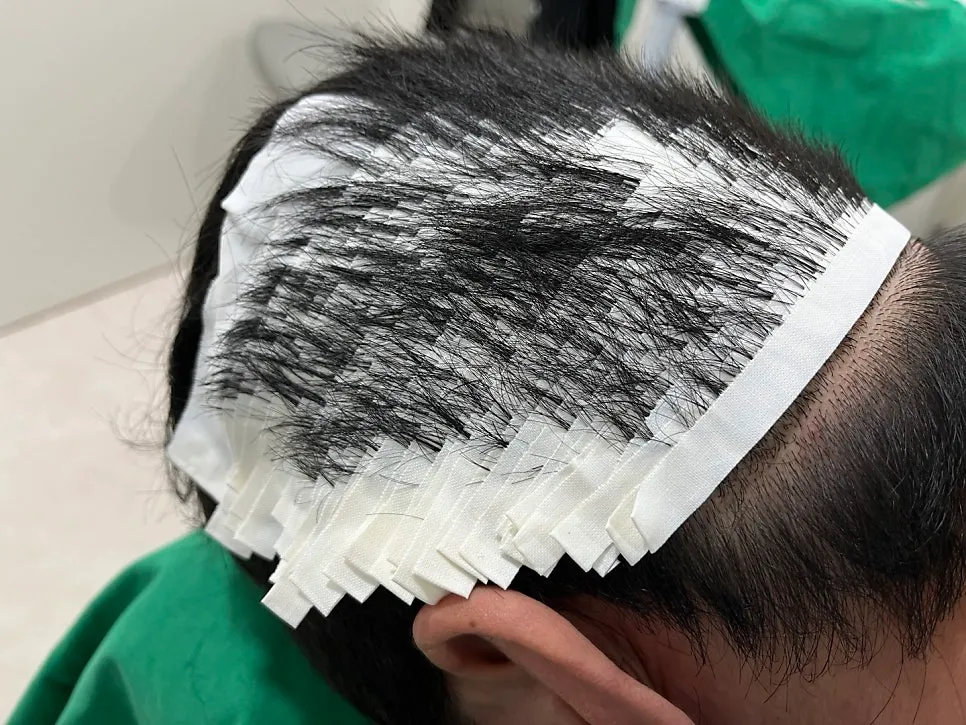
If you have decided on non-incisional surgery, you need to choose a shaving method. The most expensive method is not always the best; the suitable method may differ depending on hair length, hair density, and the number of hairs to be transplanted.
I hope you find the most reasonable and suitable method.
※ Side effects such as pain, bleeding, and swelling may occur after hair transplant surgery.


