By Dr. Shin Seungkyu · 2024.01.03
Recovery period for the occipital wound after non-incisional harvesting
One thing patients often wonder about is the recovery period for the occipital wound after non-incisional harvesting. Since many people ask how long after surgery recovery takes, I will explain by showing the non-incisional harvest site day by day.

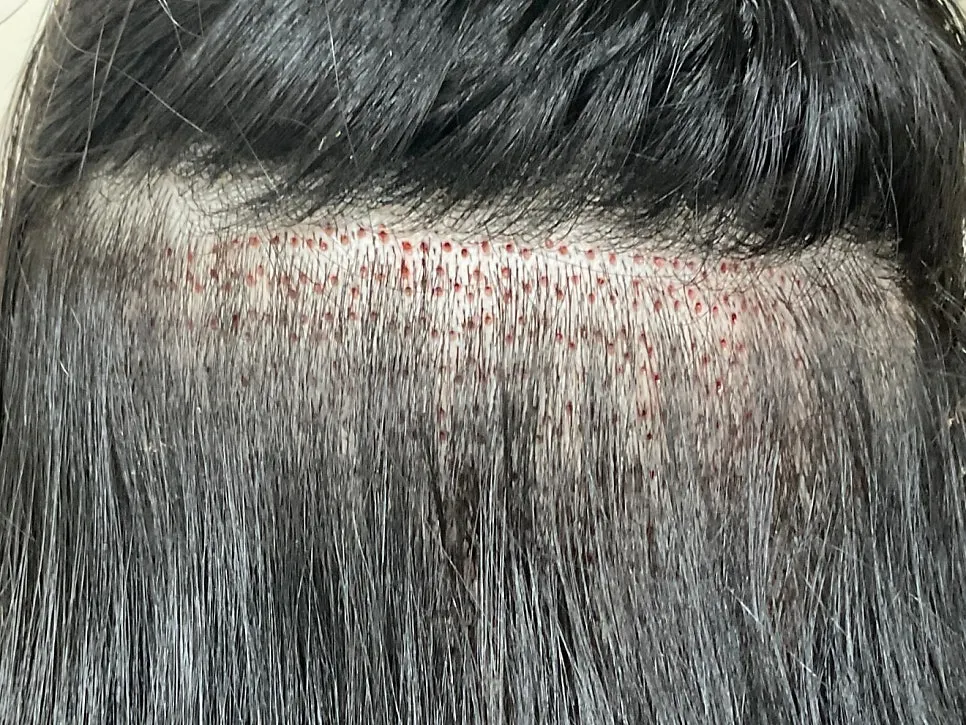
The photo above was taken right after surgery following non-incisional harvesting. The harvest marks are still visible as they are. However, you can shampoo, and once you lower hair that has been pulled up, the marks are not visible.
Day 1 and Day 3 after surgery
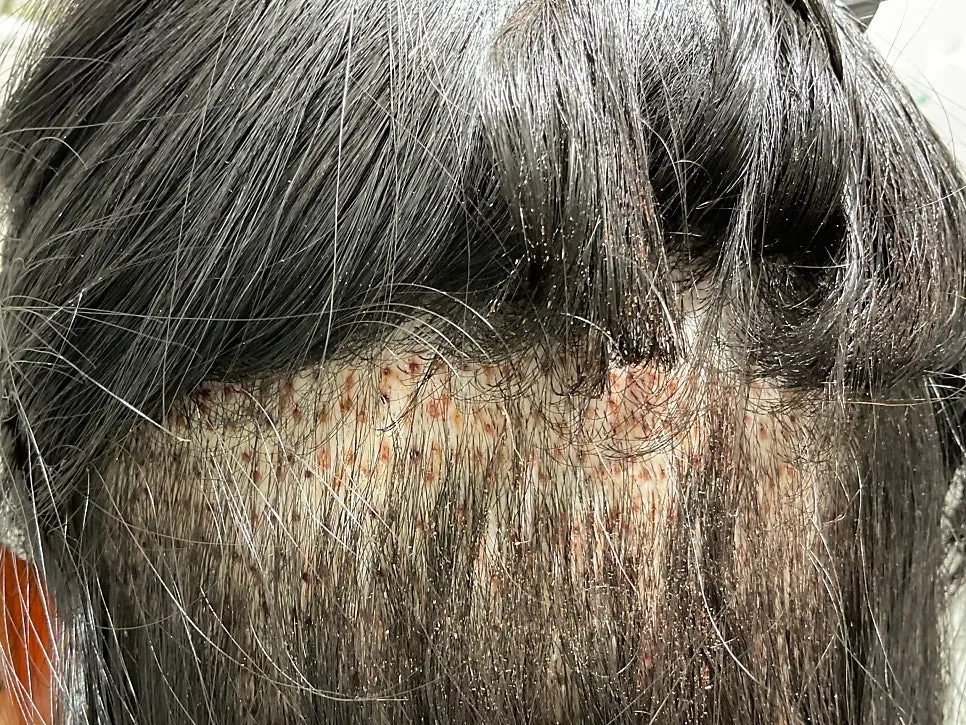
This is the appearance on day 1 after surgery, when the wound has already healed considerably. I usually explain that, if there is no major strain, partial daily activities are possible from day 1 after surgery. Some people go back to work the day after surgery, and simple walking exercise is also possible.
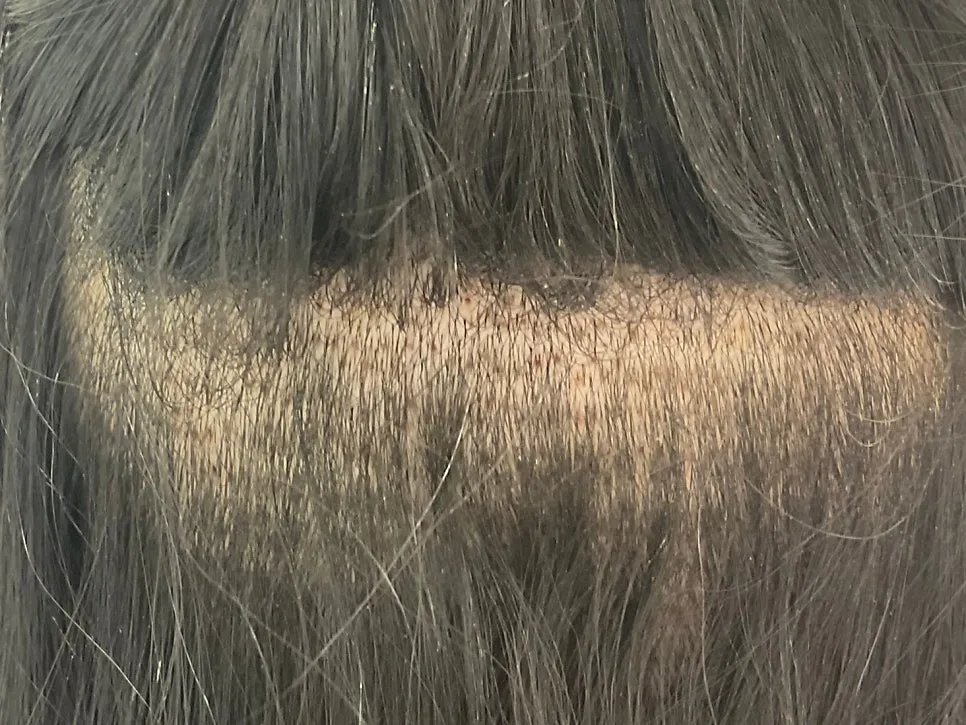
This is the appearance on day 3 after surgery, when the wound has mostly healed. By this time, the wound has disappeared not only in the transplanted area but also in the occipital area. It may be a little itchy, and if it is hard to bear, taking medication to relieve the itching can help.
7 days after surgery
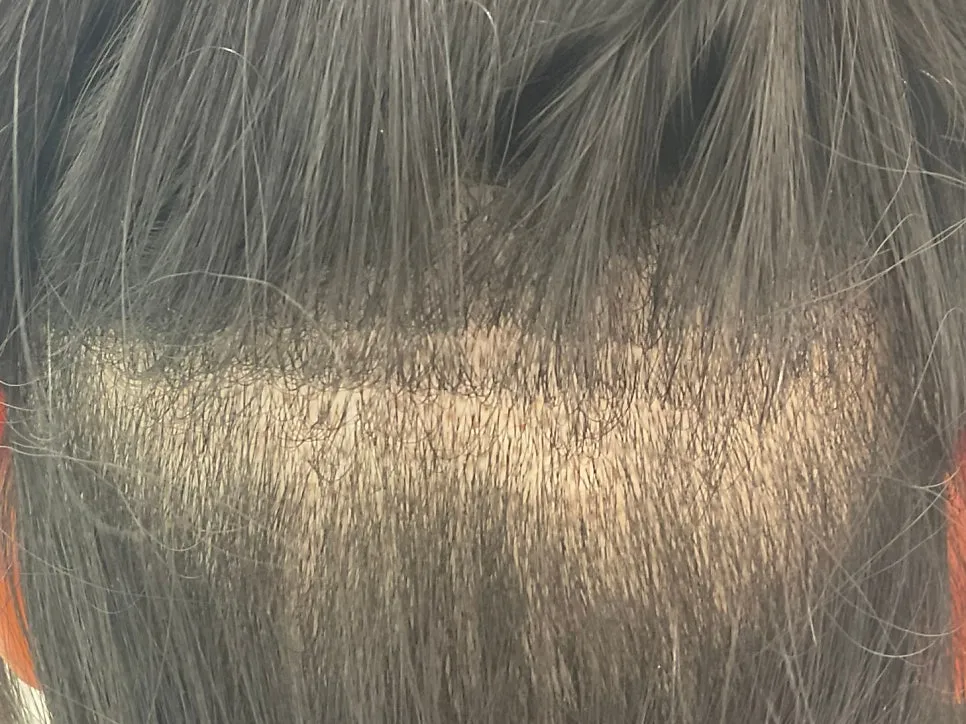
By 7 days after surgery, the wound has completely healed, and the hair around the shaved area has grown quite a bit, so the scar is hardly visible. At this point, you do not need to worry about the occipital area. From this point on, light exercise such as jogging is also possible.
Advantage of non-incisional harvesting: quick recovery period
The occipital wound from non-incisional harvesting fully heals in as little as 3 days or as long as about 7 days, so it requires a relatively short recovery period. Compared with wounds on other parts of the body, the occipital area is rich in blood vessels and tends to heal quickly. That is why the advantage of non-incisional harvesting is its quick recovery period. I hope this helps you choose a surgical method.