By Dr. Shin Seungkyu · 2023.12.12
Observing Surgery by a Japanese Doctor
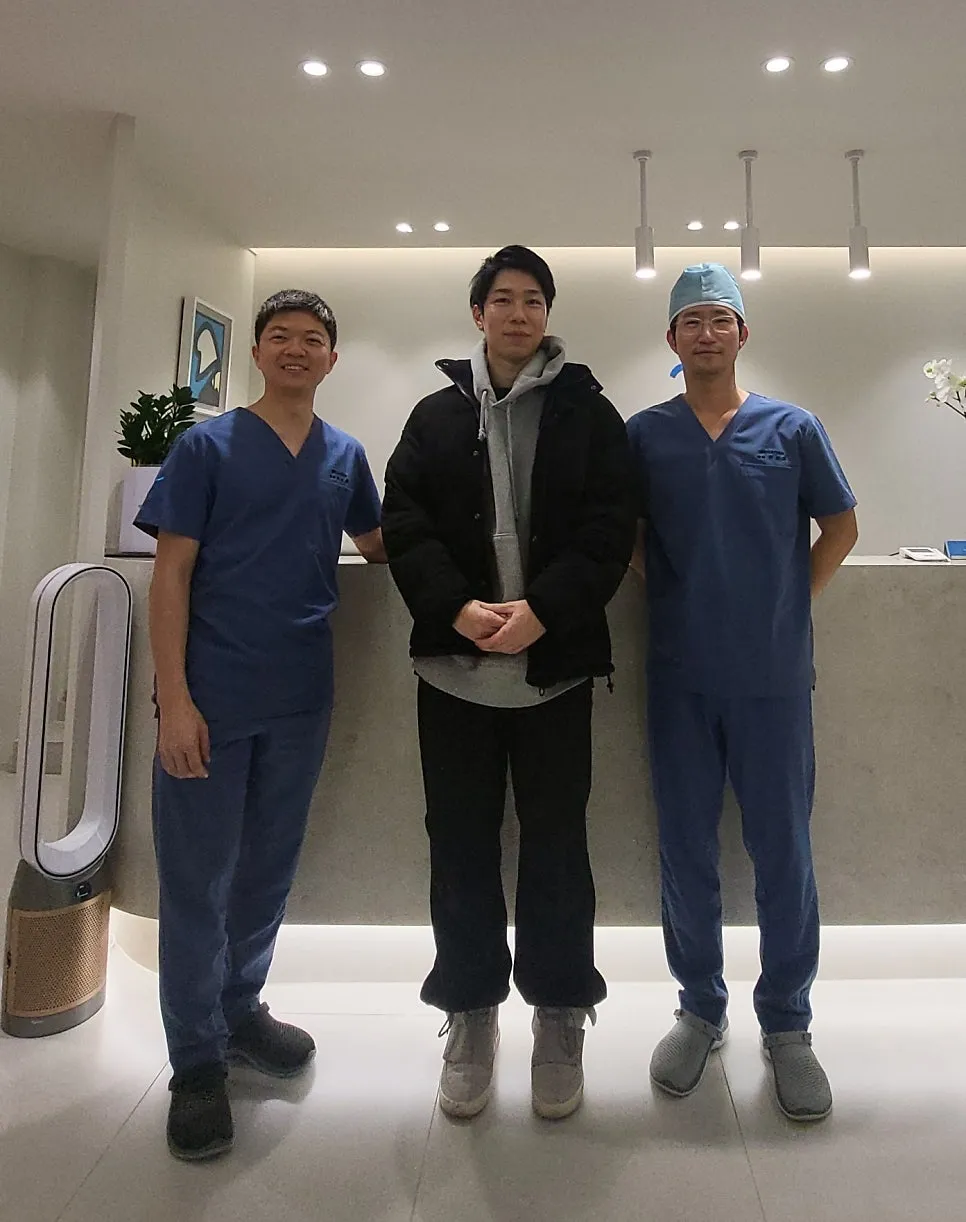
The title sounds grand, but the content may actually be small. Recently a Japanese doctor who performs hair transplants came to our clinic and observed surgery. We talked about our surgical methods and the differences between them during that time, so I would like to share some of it.
Sensei, the Japanese doctor, was introduced by Dr. Seo, who worked with me at Brown Plastic Surgery, where I once worked. Dr. Seo is a Korean plastic surgery specialist who moved to Japan, passed the Japanese medical licensing exam, and now runs a plastic surgery practice in Ginza, Tokyo. If you are interested in the Japanese medical licensing exam, please let me know.
Sensei also runs a hair transplant clinic in Ginza, Tokyo, and mainly performs surgery with the inserter slit method. Since he was curious about the implanter method I use and wanted to learn it, he came to our clinic.
Inserter Slit Method
The inserter method was introduced in a 2018 journal of an international hair transplant society. I will explain it by citing that paper.
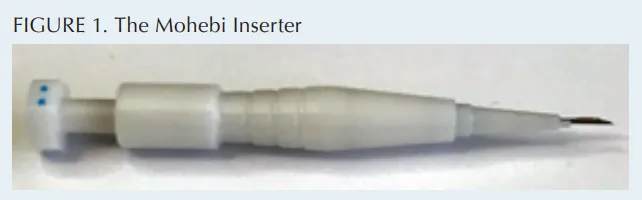
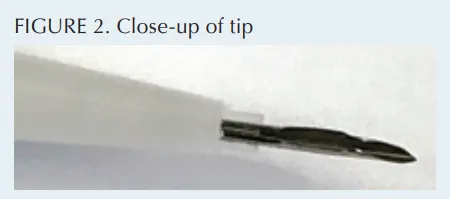
This is a method that uses an implanter with a hole at the tip.
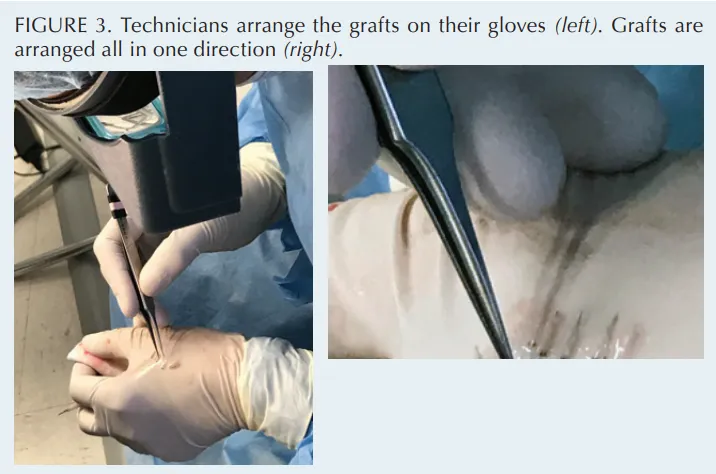
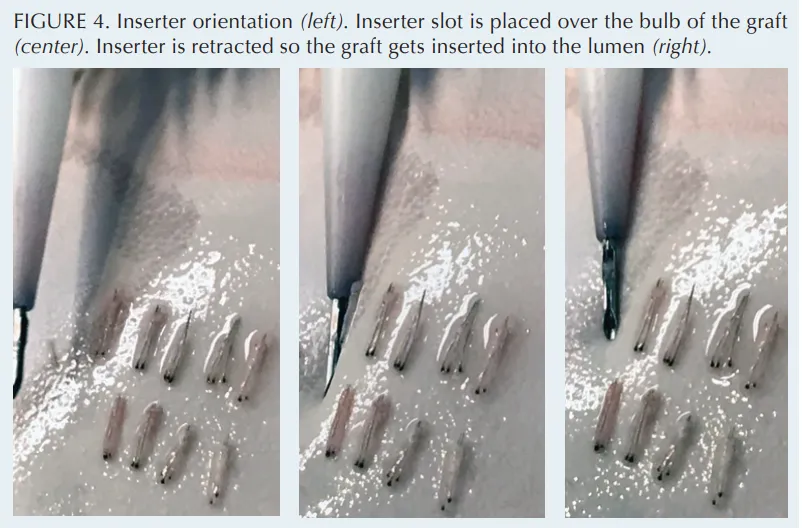
After aligning the harvested follicles on the operator's surgical gloves (figure3), the follicles are inserted into the inserter like this (figure4). (This process seems to take some time.)
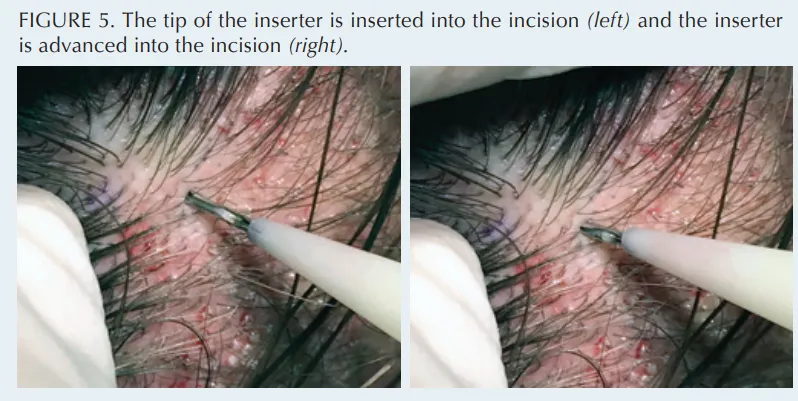
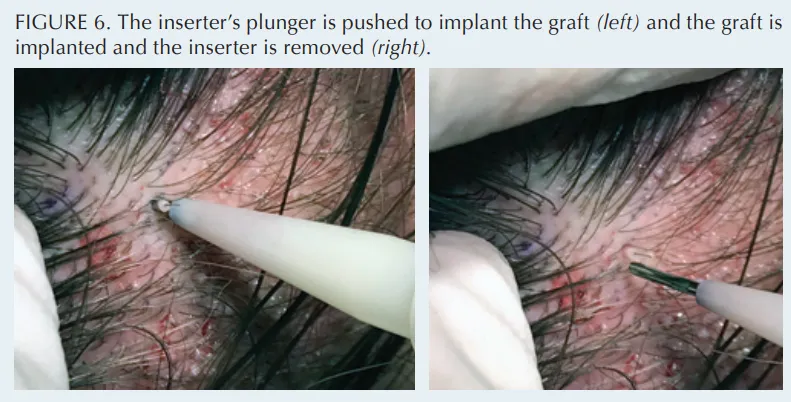
Using the inserter with the follicles loaded, the hair is implanted into the pre-made slits as shown in figure5 and figure6. It seems to be a combination of the slit method and the implanter method.
Difference Between Harvesting and Follicle Separation
The surgery patient was also Japanese, and the surgery proceeded after getting permission for the doctor to observe throughout.
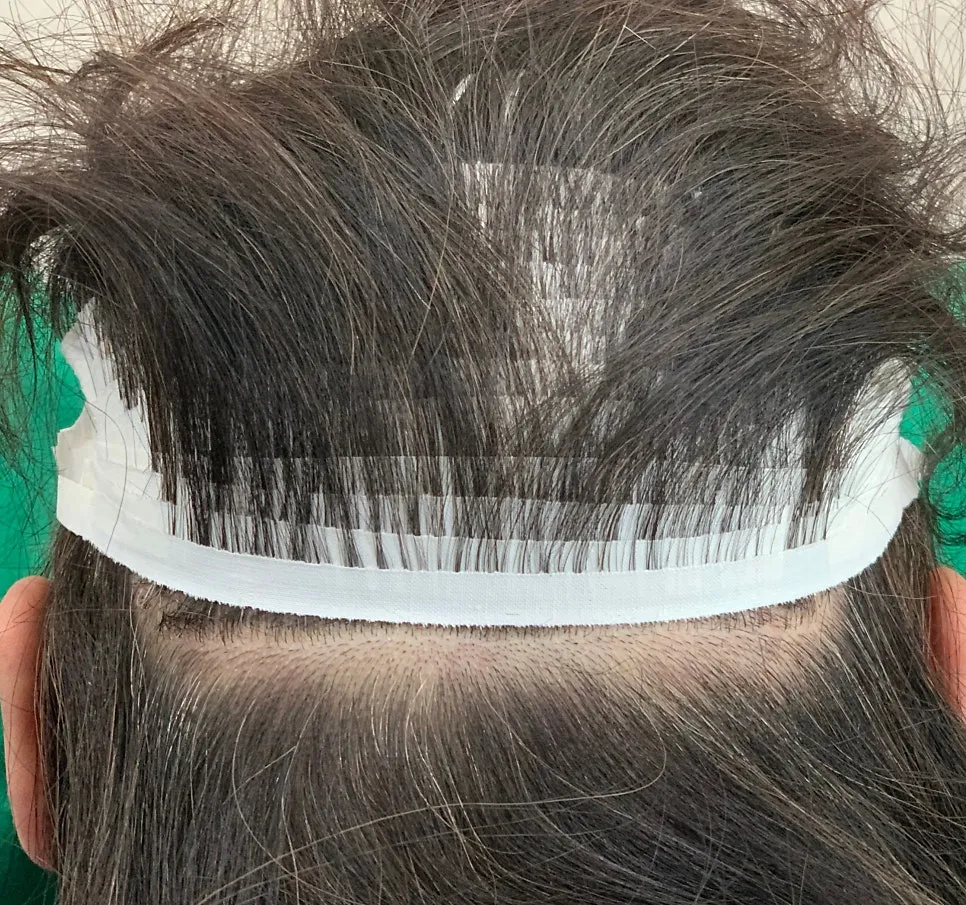
The harvest was done with the non-incision method. I shaved a few rows and taped a few rows before harvesting, while Sensei said he does not tape and simply cuts the hairs to be harvested with scissors before harvesting. It seemed to be what is commonly called no-cut (a method that does not shave).
We separate the harvested follicles before implanting them, but Sensei implants them as they were harvested, using the slit method, and he showed us a video of his own surgery. Follicle separation refers to the process of trimming the dermis and epidermis of the harvested follicles.
Let me explain follicle separation in non-incision harvesting.
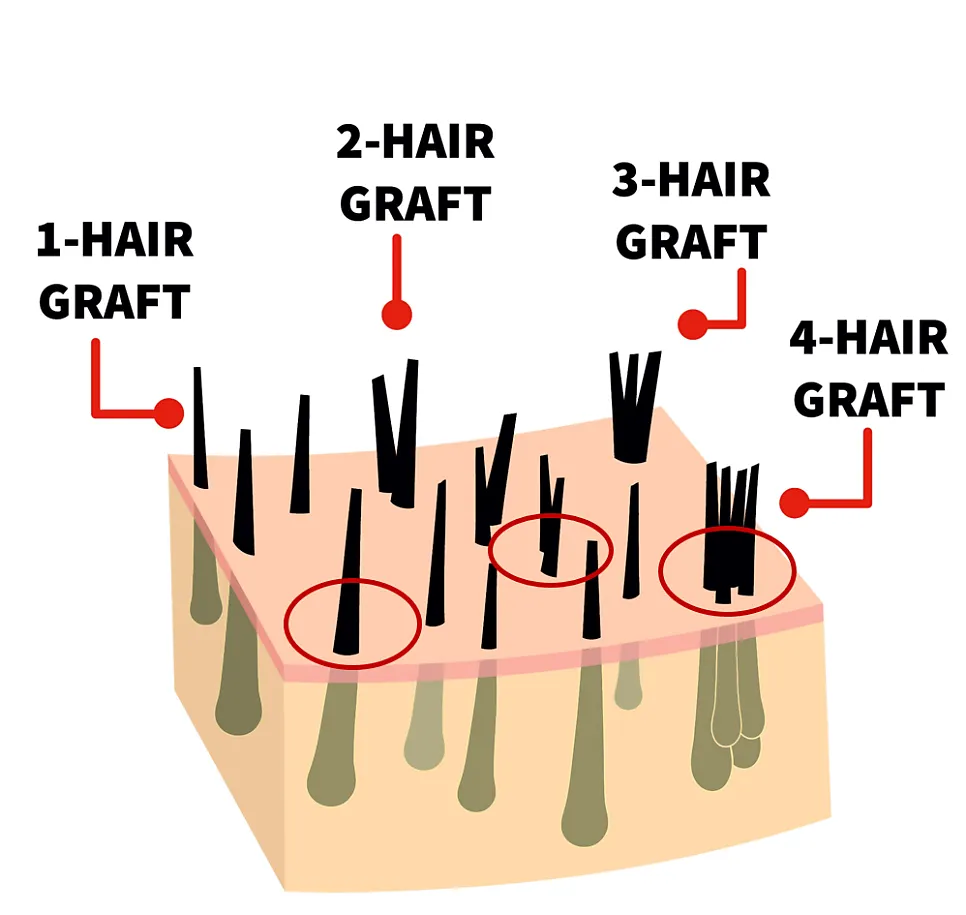
Harvesting is done by punching with a non-incision tip, shown as the small red circle.
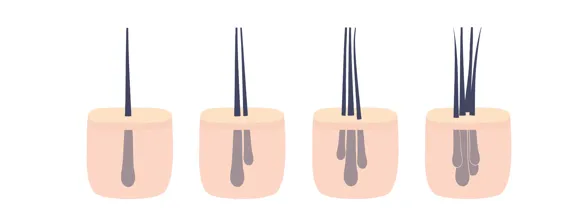
The harvested follicles include the epidermis, dermis and surrounding soft tissue, and trimming these is called follicle separation.
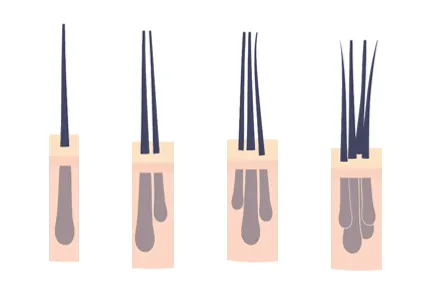
It is trimmed as in the illustration above. In fact, this work is much more delicate than this schematic, and it comes out clean.
(Caution: frog-egg photo below!)
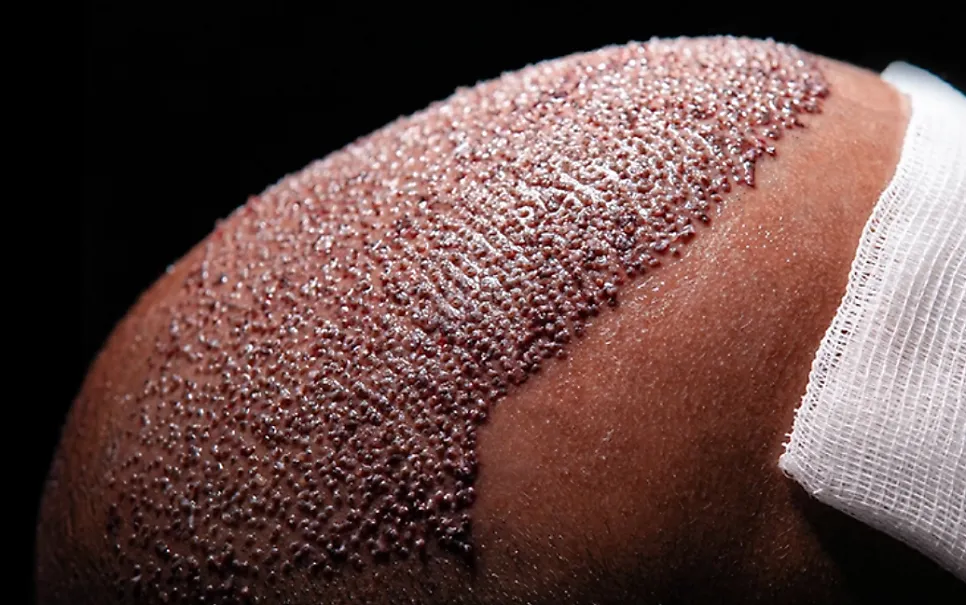
Surgery Time and Washing After Surgery
After the surgery finished in about 2 hours, Sensei said that if he did the same hair count himself, it would take about 5 hours. I think the no-cut harvesting method takes time, and making slits and implanting with an inserter also takes a bit longer than with an implanter. So he said large-volume hair transplants are difficult.
Right after surgery, when we went to wash their hair, they said 'Eh!!' and said they wash their hair the next day. Then after finishing the shampoo, they asked when the bandage would be applied, and when I said it isn't, they again said 'Eh!!' and worried that patients would touch the area with their hands. I actually thought that wrapping a bandage would affect the transplanted hair because of the volume of gauze and bandage. When they cautiously asked how much it costs and I answered, they said 'Eh!!' again and said it is about twice as expensive in Japan.
The patient seemed to find it quite impressive that they could go home looking exactly as they came in, after surgery, a shampoo and a blow-dry.
What is taken for granted may not be so obvious
I had always thought it was natural to go home like this after surgery, but seeing it from a different perspective made me realize it is not natural at all. I will also ask about other doctors' surgeries and post-operative care and learn with a humble attitude. I will keep in mind that my own way may not be the best, and work hard in my studies with humility.