
By Dr. Park Sooho · 2023.12.03
Those Curious About Daily Life After Hair Transplant
Many people ask whether daily life is possible after a hair transplant. They ask whether the surgery is noticeable, whether they can go to work the next day, when they can start washing their hair, how much swelling or bruising there will be, and so on.
So today, looking at how an incision hairline hair transplant looks right after surgery, I will show you what it looks like after surgery.
Case of Lowering the Forehead While Correcting the M-Shaped Area
This is a case of correcting the M-shaped area while lowering the forehead height.
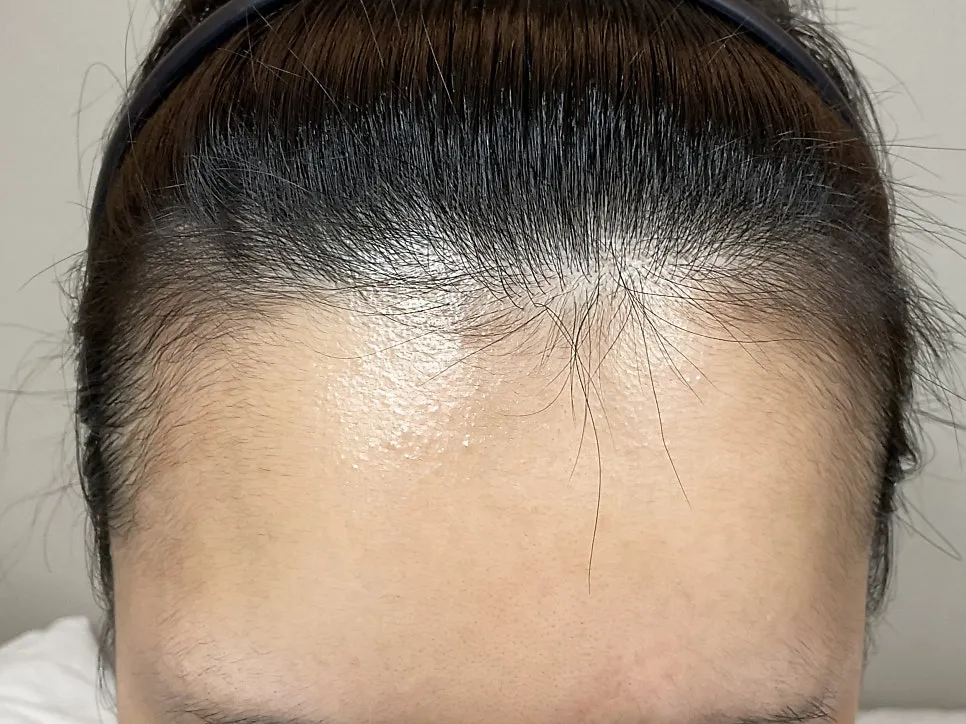
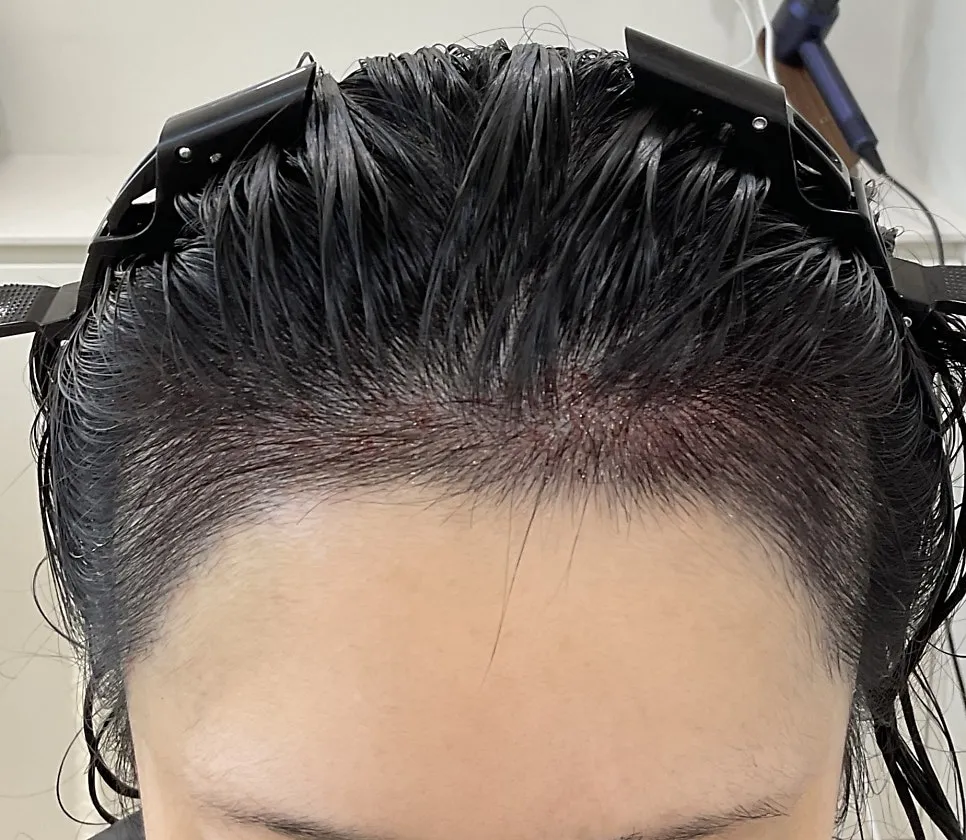
Right after surgery there is some redness, but if you spray saline well, the redness disappears quickly. If you lower your hair slightly, the surgical area is well covered.
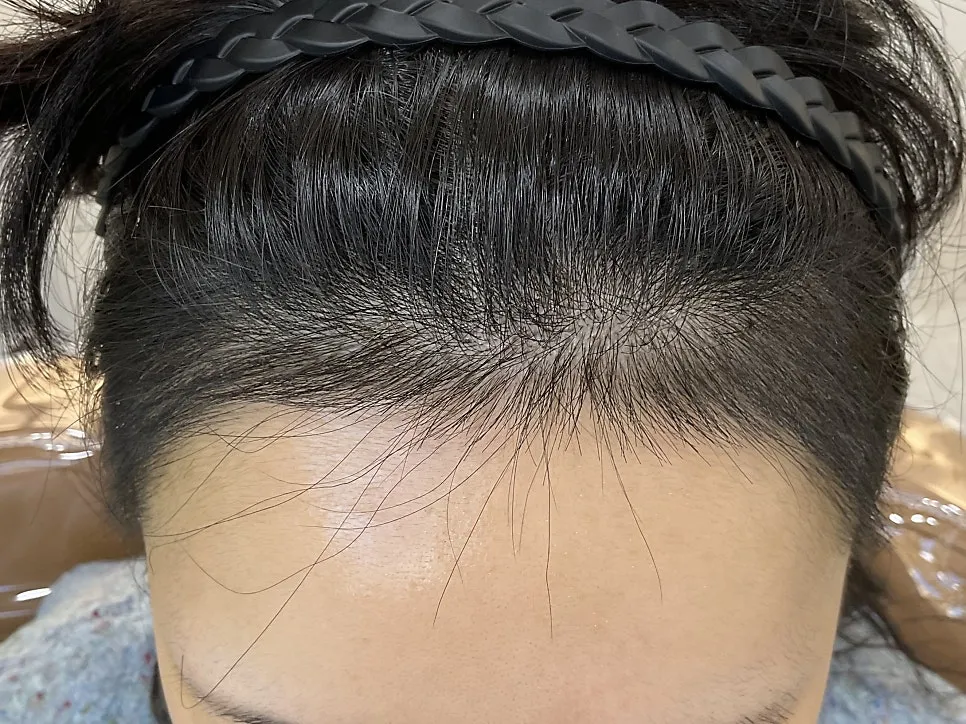
This is how the patient looked when they came in 10 days after surgery to have the sutures removed from the back of the head. With the incision method, the hair can be left a bit longer, so the transplanted hairs look like natural flyaway hairs. So as long as you spray well and no scabs form, there is almost no sign of surgery. Some people actually prefer this look, since it resembles their own natural flyaway hair.
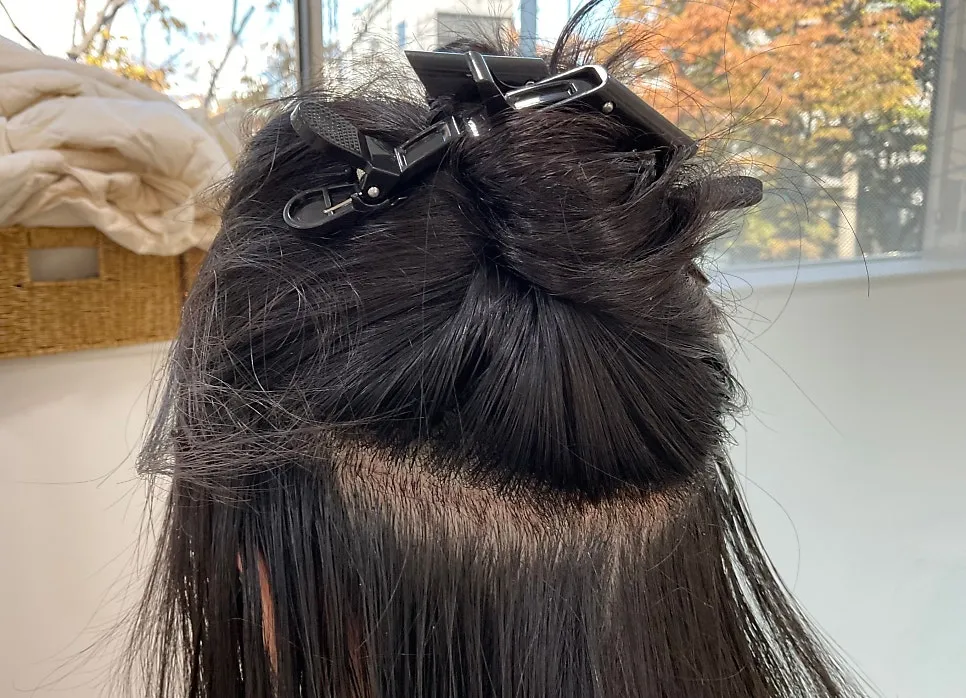
This is how it looked after the sutures were removed 10 days after surgery. Compared with the non-incision method, the area shaved is smaller, so the back of the head also does not show signs of surgery easily. On average, a throbbing pain that starts a few hours after tying the hair tightly is said to last about 2 to 3 days. When the sutures are removed, it feels like the hair is being pulled a little.
Case of Correcting the Sides Extensively
Next, let's look at a case where the sides were corrected extensively.
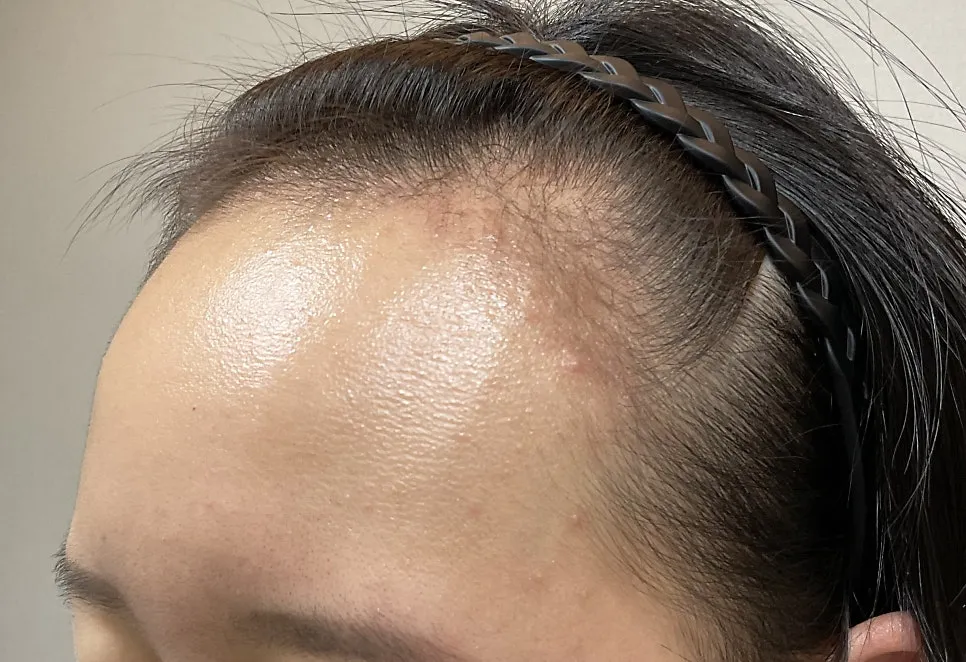
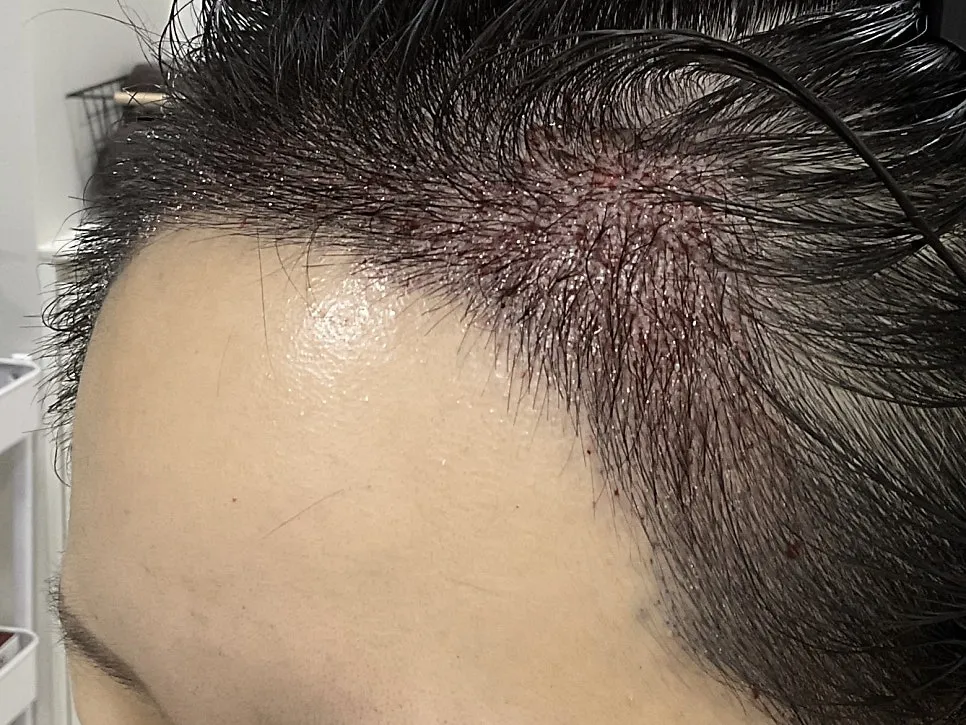
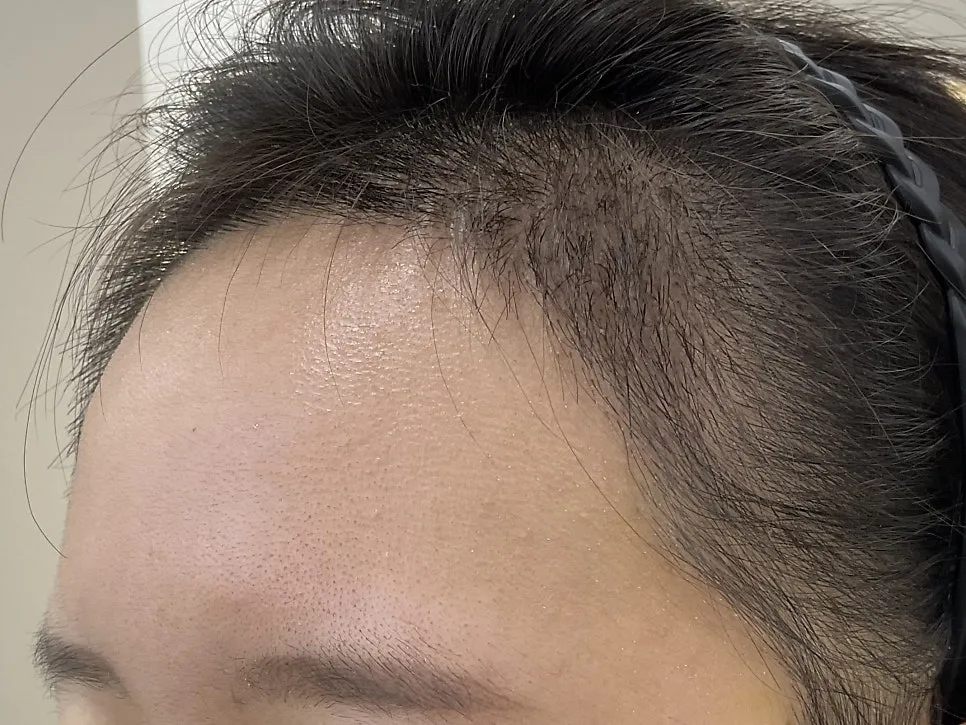
Right after surgery there is some redness, but if you spray saline well, from the next day the redness disappears, and it looks like flyaway hairs, as shown in the photo below.
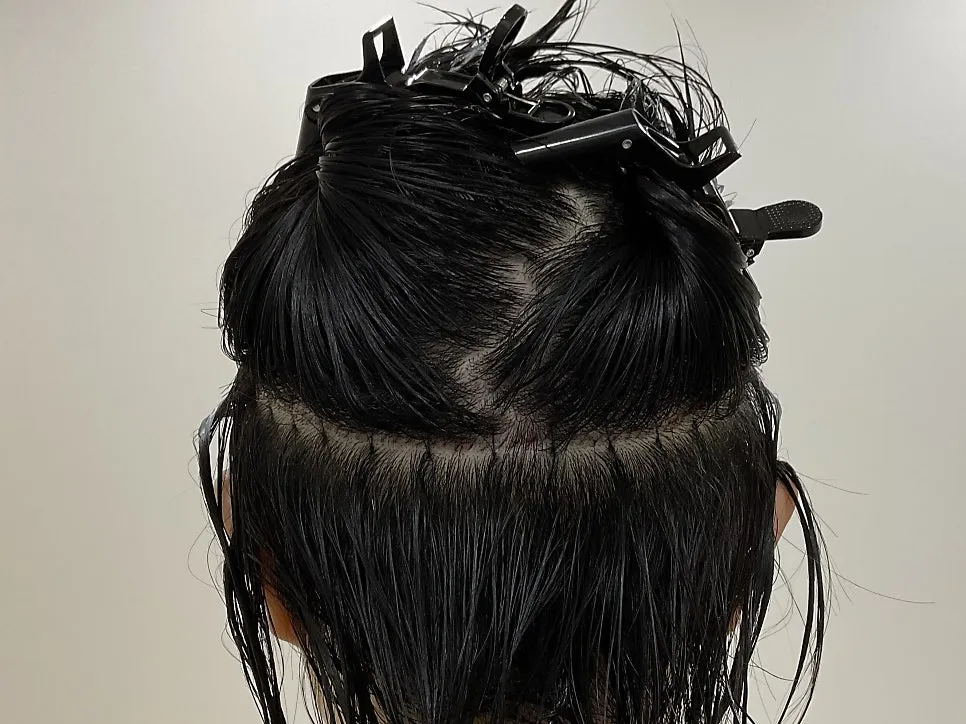
This is the back-of-head photo taken right after a shampoo following surgery. Many people ask whether you can't wash your hair after an incision, but whether incision or non-incision, we wash your hair on the day of surgery, show you how to wash it, and from the next day you can wash it at home every day.
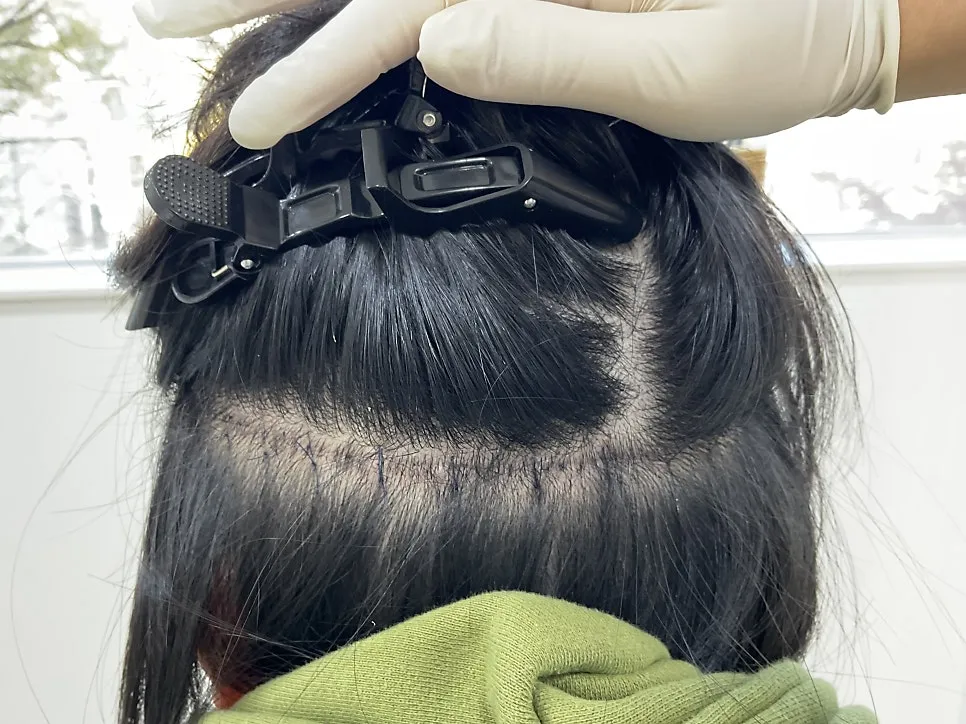
This photo was taken at the patient's visit for suture removal on day 10. Most of the scars remain as thin lines, so even hair salon stylists barely notice them. And even if a scar becomes somewhat wider and noticeable, it can easily be resolved with a hair transplant into the scar. You also don't need to worry much about the incision scar.
Case of Bruising Around the Hairline
After surgery, bruising may appear around the hairline. Let me show you one last such case.
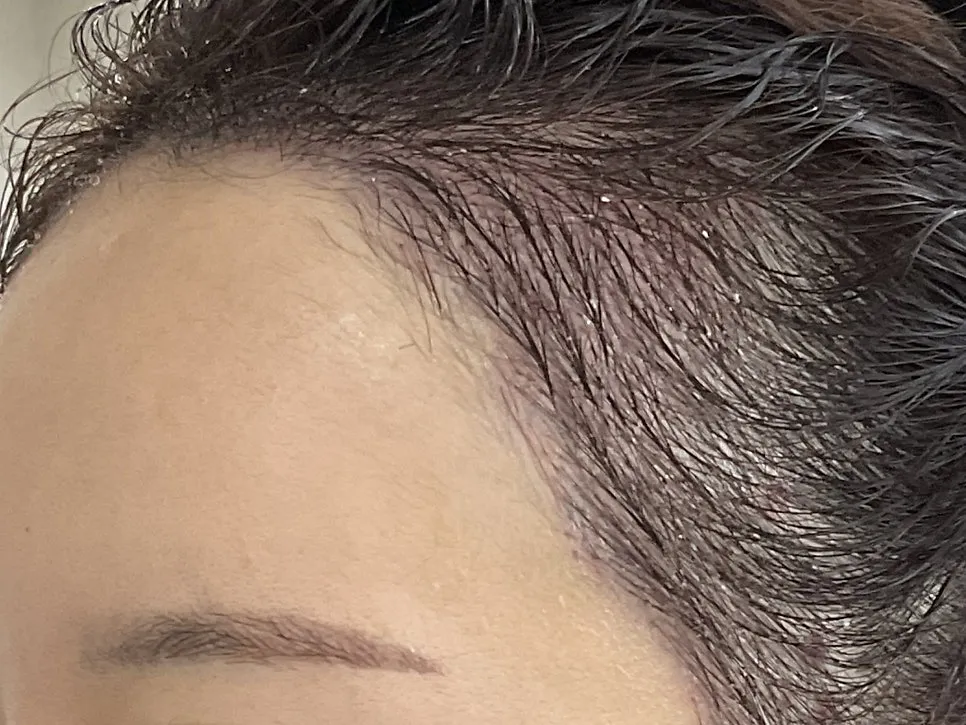
This was a patient where hair was mainly transplanted to the M-shaped areas and the sides.
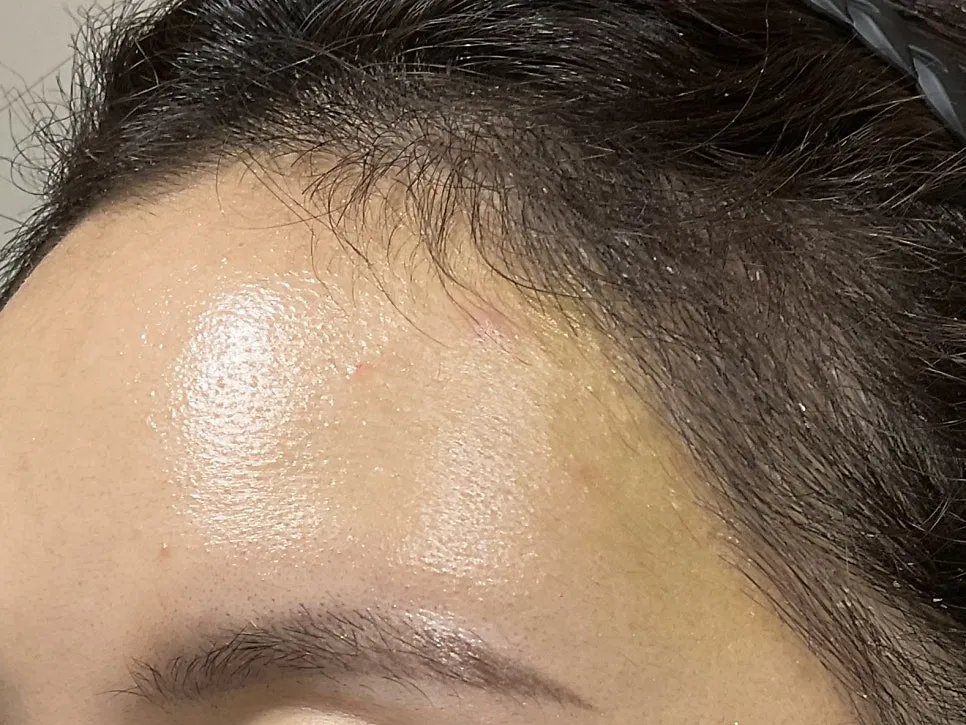
When they came in to have the sutures removed, there was yellow bruising around the hairline. Even with bruising like this, it is very rare for it to extend down to the area around the eyes, and swelling usually appears briefly around the forehead and hairline and then disappears soon.
However, very rarely, swelling and bruising may extend down to the area around the eyes. From my experience, it happens about once every 2 to 3 years, roughly 1 in 1,000 patients, or close to that.
Advantages of the Incision Method
Incision and non-incision each have their own pros and cons. As you saw above, the incision method allows longer hair grafts than the non-incision method, so it can create a flyaway look right after surgery. Because less of the back of the head is shaved, the surgery is also less noticeable at the back of the head.
There are many other pros and cons of incision and non-incision, and I will organize them another time.
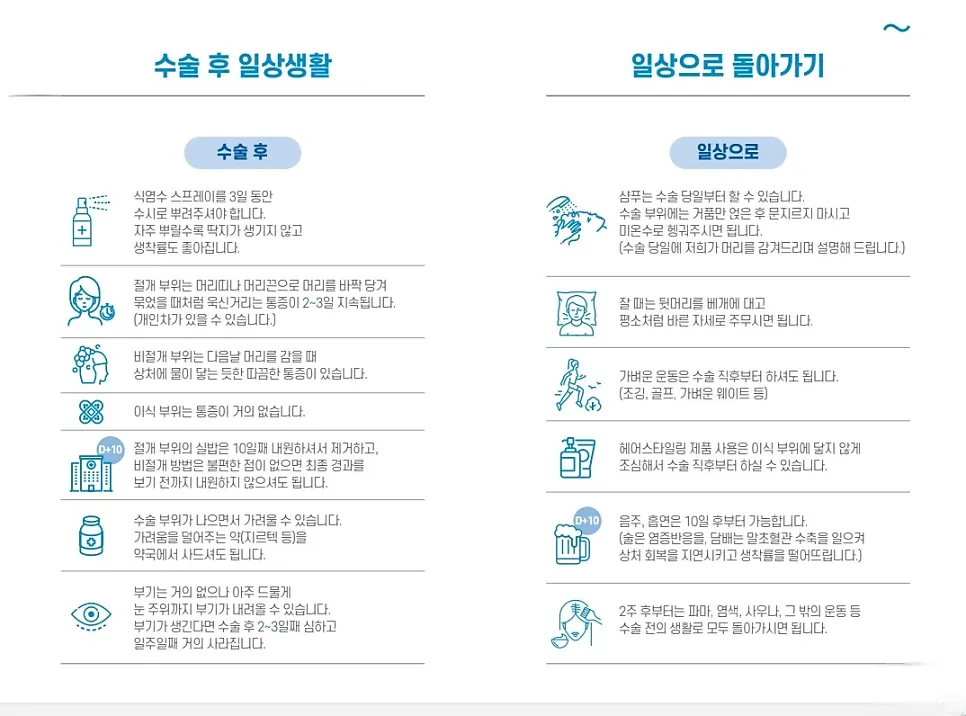
※ Side effects such as swelling, bleeding and infection may occur after hair transplant surgery, and results may differ from person to person.


