By Dr. Shin Seungkyu · 2023.11.21
Is Endotine No Longer Used These Days?
When I consult patients about forehead reduction these days, many say, 'I heard they don't use Endotine these days.' They may have heard this during a consultation at another clinic, or seen it circulating on the internet.
Forehead reduction surgery pulls the scalp from the back forward and fixes it in place, and there are two main fixation methods: Endotine and suture fixation. Many people talk as if suture fixation has become the mainstream, which makes me concerned, so I want to explain the fixation methods in more detail.
Endotine with Better Fixation Strength
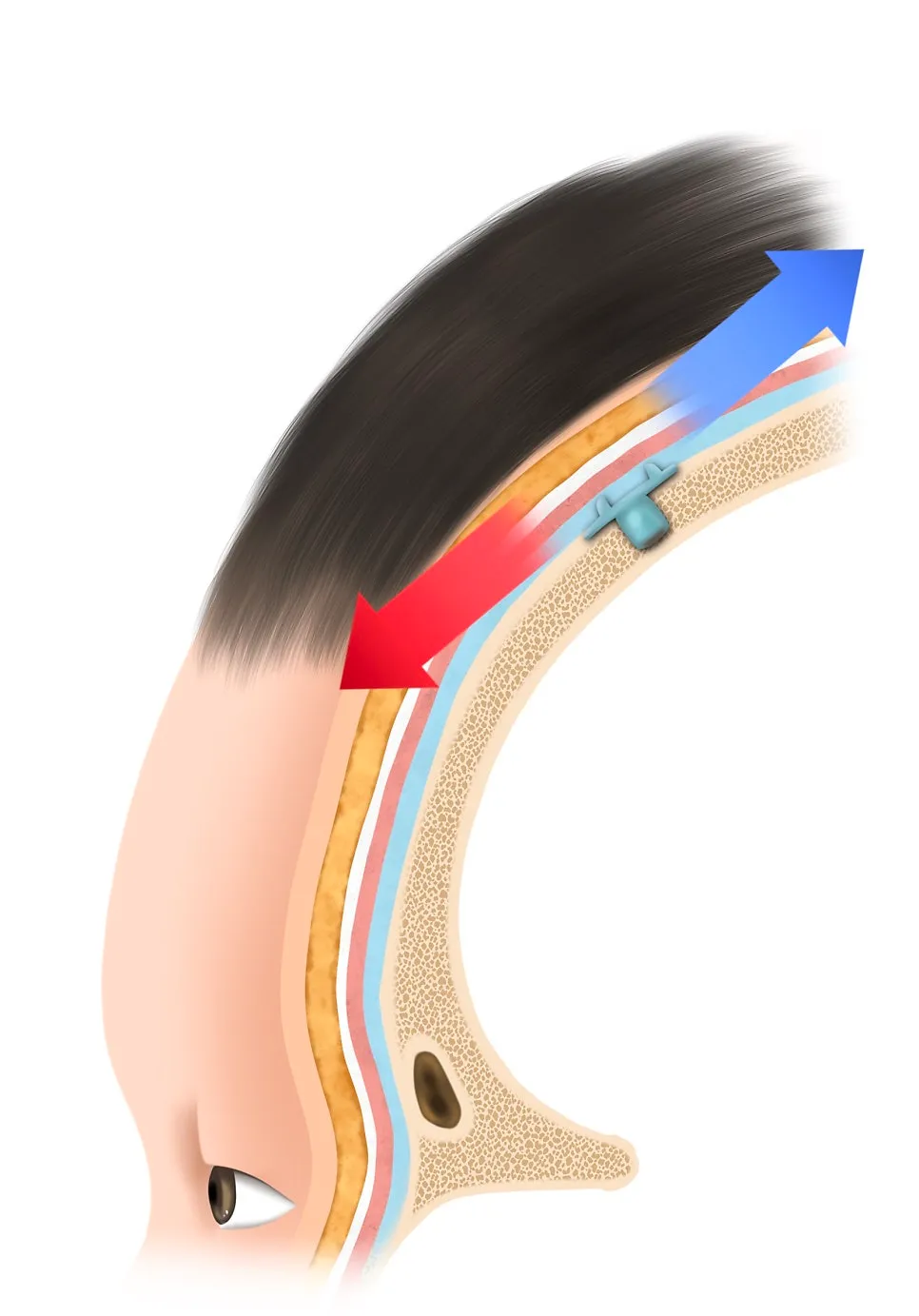
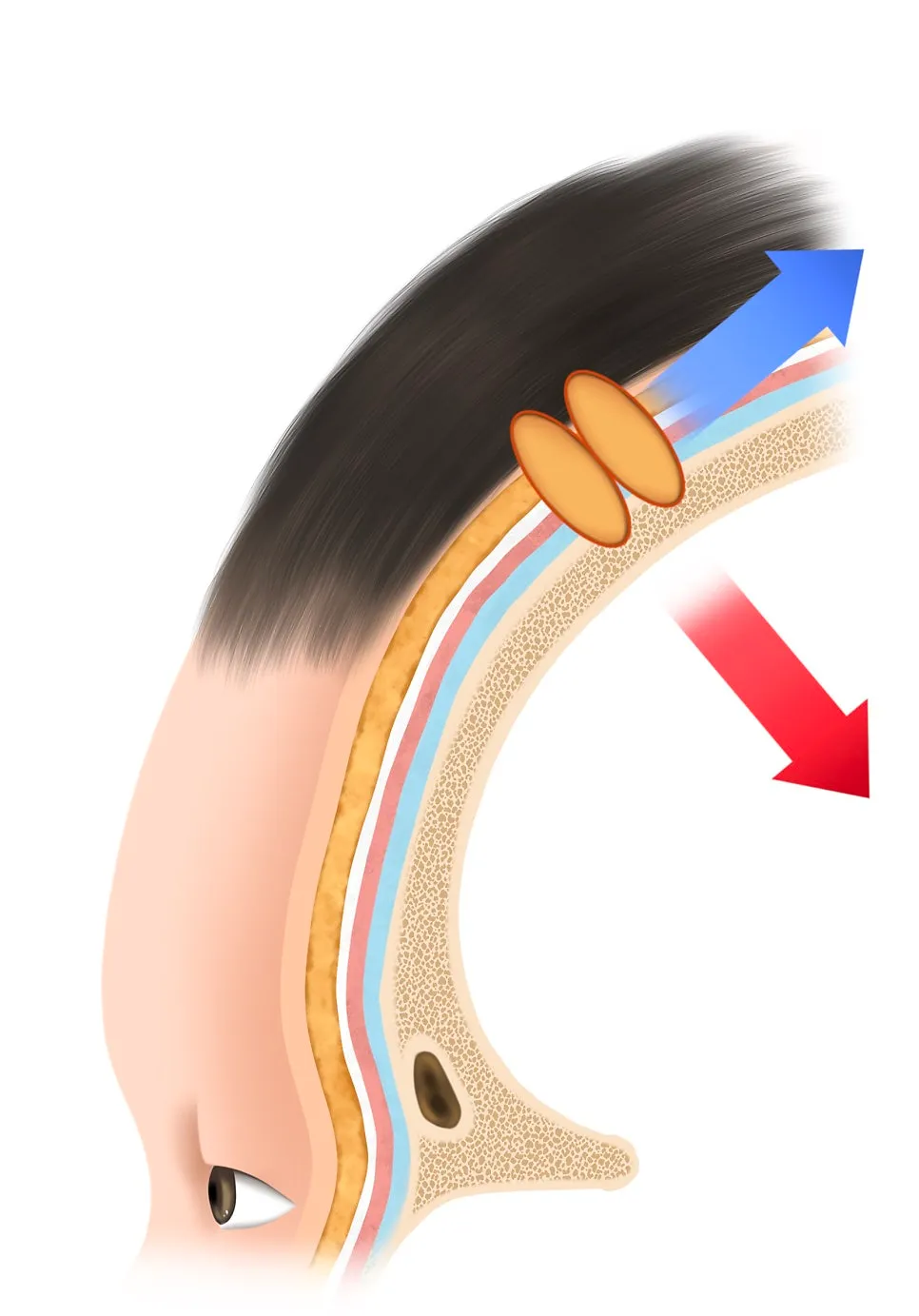
First of all, Endotine has better fixation strength. The fixation needs to be strong so that the tension of the scalp pulled from behind is reduced and it does not return to its original position. Suture fixation is weaker, so the scalp may slide back, and the scar may stretch and become noticeably visible. Quite a few patients come to us for a hair transplant to cover a visible scar after forehead reduction at another clinic, and in most of those cases, the fixation was done with sutures.
I believe the scalp pulled from behind and hooked onto Endotine is held more strongly, because the force vectors point in exactly opposite directions according to the law of action and reaction. Suture fixation pulls the scalp downward to keep it from moving back. It should not be hard to judge which gives better fixation.
Ingredients of Endotine and Absorbable Thread
Also, Endotine and absorbable thread do not differ much in their ingredients. Both are materials that dissolve and disappear inside the body, and the time it takes to dissolve differs depending on the ingredients. Endotine starts to dissolve from 6 months and is fully dissolved and absorbed within 1 year, while absorbable thread completely dissolves and disappears in about 3 to 6 months depending on its ingredients. During the process of wound healing in the body, tensile strength recovers to about 50% of normal in about 6 weeks and up to about 80% after 3 months. I think suture fixation does not keep enough holding strength until the tissue fully regains its tensile strength.
Side Effects That Can Occur With Either Method
Side effects can occur with both methods. Because Endotine protrudes, it may be palpable when the scalp is thin (it cannot be confirmed with the naked eye), and pain or alopecia areata can occur in that area. Suture fixation ties tissue together and pulls it downward, so scalp depression can occur, and pain or alopecia areata can likewise occur. Since my time at Mojerim Plastic Surgery I have consistently used Endotine, but in practice there have been very few actual cases of the pain, alopecia areata or foreign-body sensation mentioned above.
Endotine as Described in Papers
There is a section in a paper on forehead reduction that describes Endotine, so I would like to share it.
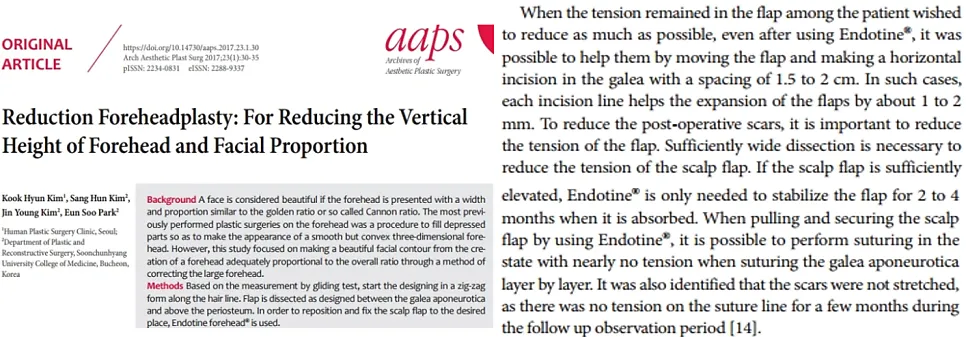
This paper on forehead reduction also states that using Endotine helps keep tension off the suture site, and that over several months of observation, no stretching of the scar was seen.
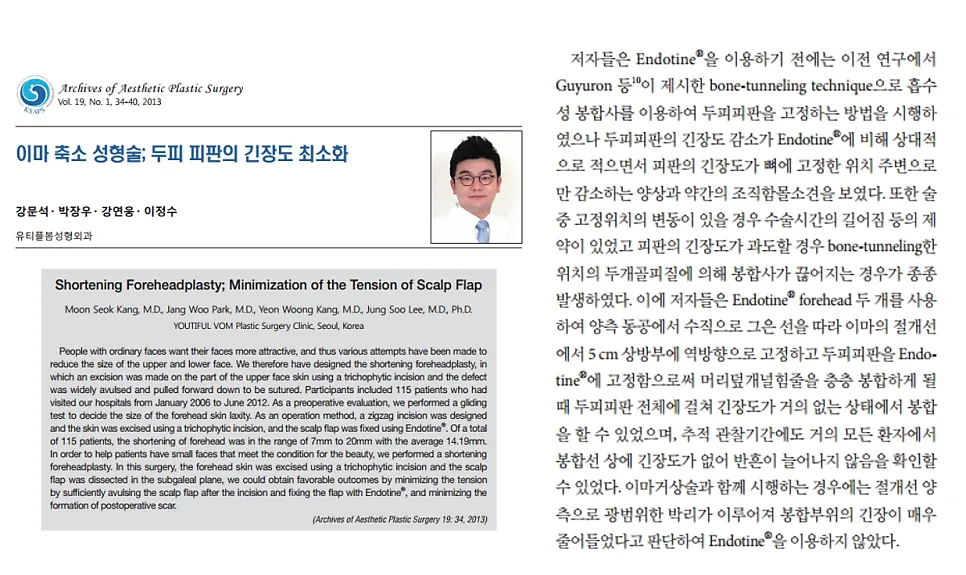
The authors of another paper said that when suture fixation was used, the reduction in tension of the scalp flap was smaller than with Endotine fixation. Tension decreased only around the sutured spots, slight tissue depression was observed, and when the tension of the flap was excessive, the thread sometimes broke. After switching the fixation to Endotine, they sutured with almost no tension across the whole scalp flap, and during follow-up they confirmed that almost all patients had no tension along the suture line, so the scar did not stretch.
The Downside of Endotine Is Cost
The downside of Endotine is its cost: KRW 500,000 (KRW 250,000 each), which is 100 times more expensive than thread at KRW 5,000. Some say doctors who can't perform suture fixation because it is difficult use Endotine, but neither suture fixation nor Endotine fixation is a difficult method. I also think that, whether easy or difficult, it should be done with the method that more surely brings good results.