By Dr. Park Sooho · 2025.08.10
A Plan to Get the Most Out of Limited Hair
For people with severe hair loss, it is difficult to completely fill the hair-loss area with a hair transplant, because the hair that can be harvested from the occipital area is insufficient for the area that needs transplanting. A plan that achieves the greatest possible effect with limited hair must be carefully made.
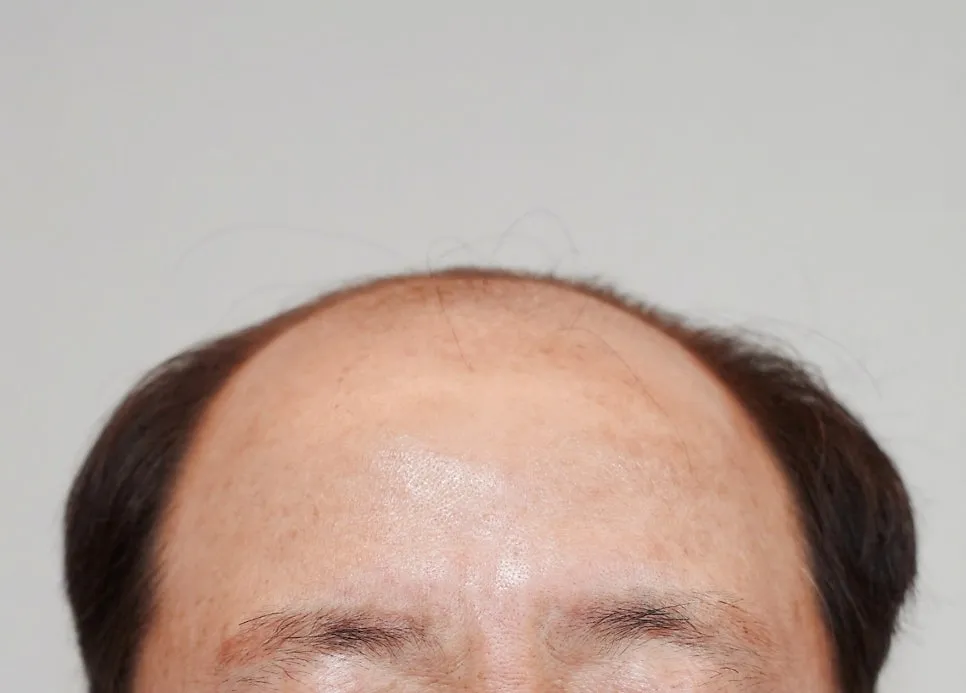
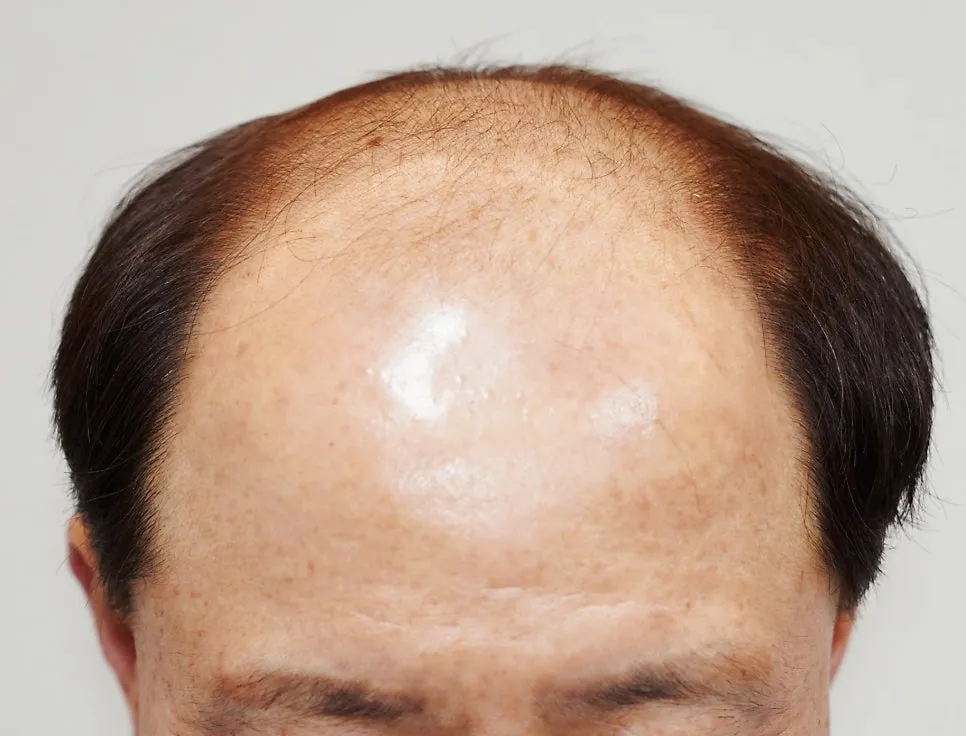
The patient above had severe hair loss and had been living with a wig. At the recommendation of their niece or nephew, they came in for a hair transplant consultation. Hair loss had progressed to the back of the crown, so the area where healthy hair could be harvested from the occipital area was not large. It was decided to harvest as much as possible with the incisional method from the middle part of the back of the head, where the sturdiest hair remains most, and to harvest with the non-incisional method above and below the incision line for transplantation.
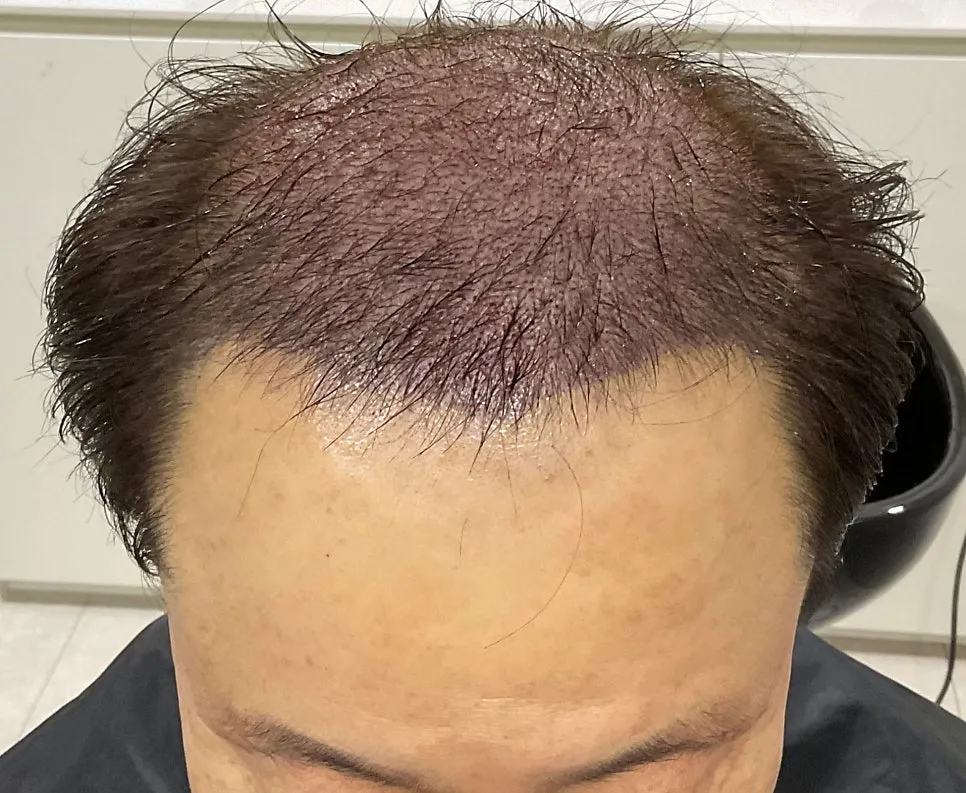
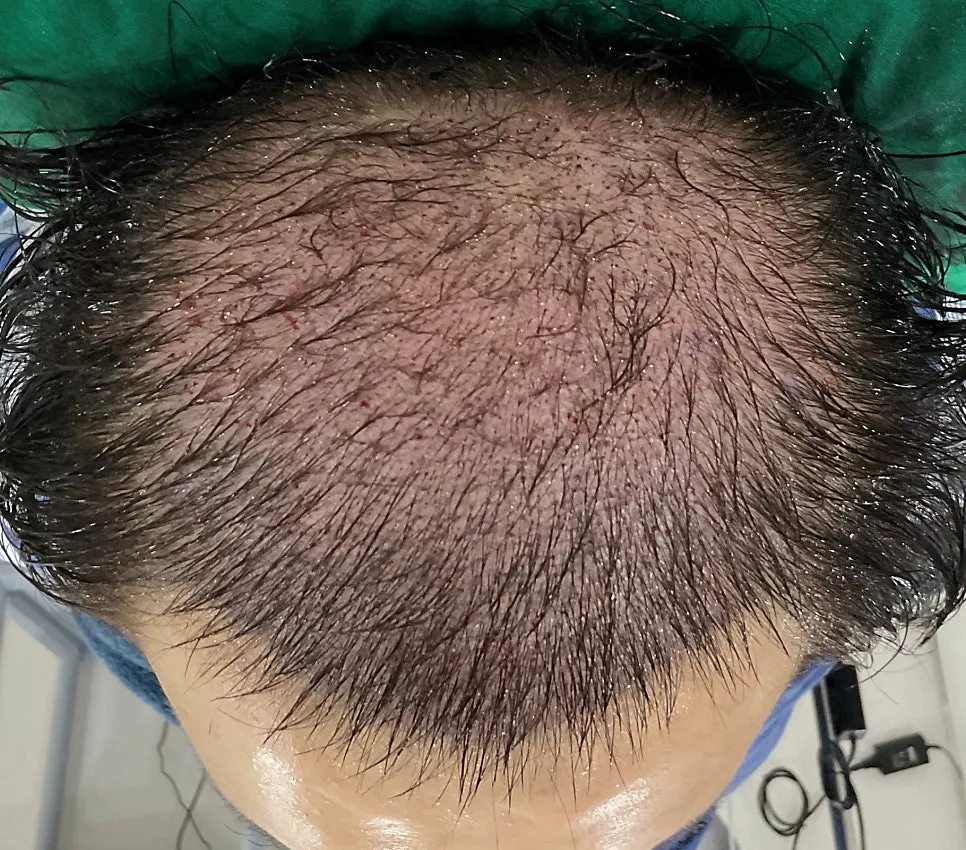
Incisional 5,000 Hairs, Non-Incisional 2,000 Hairs, and Back Gradation
About 5,000 hairs were harvested using the incisional method and about 2,000 hairs using the non-incisional method. Although 7,000 hairs is not a small amount, it is difficult to plant densely all the way to the crown, so we transplanted the hairline area, which matters most for facial impression, with considerable density, and gradually reduced density toward the back. (Because it is a gradation that fades toward the back, we call it “back gradation.”)
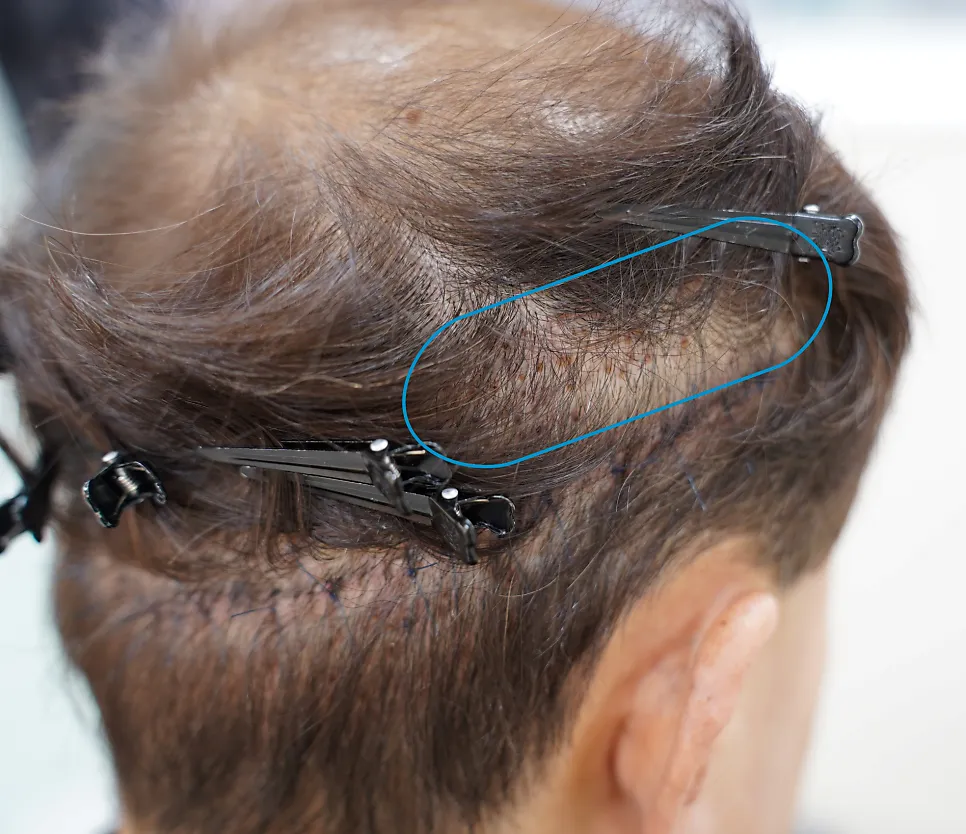
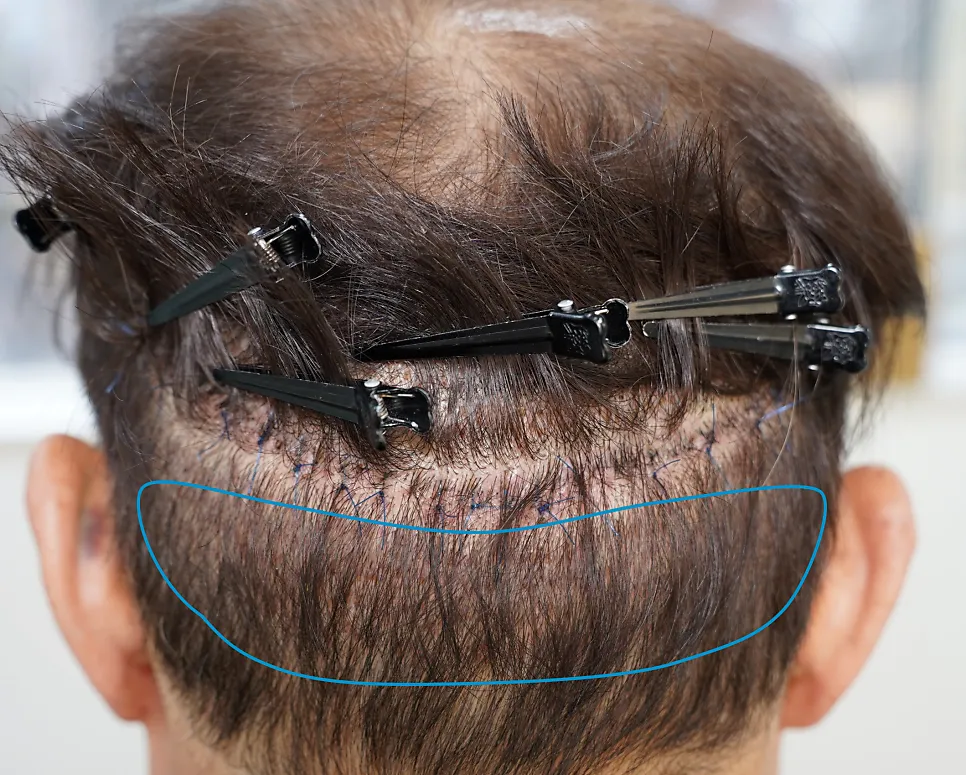
The photo above was taken on day 11, when the patient came in to have the incision stitches removed. The red dots above and below the incision are the marks left by non-incisional (FUE) harvesting (inside the blue lines).
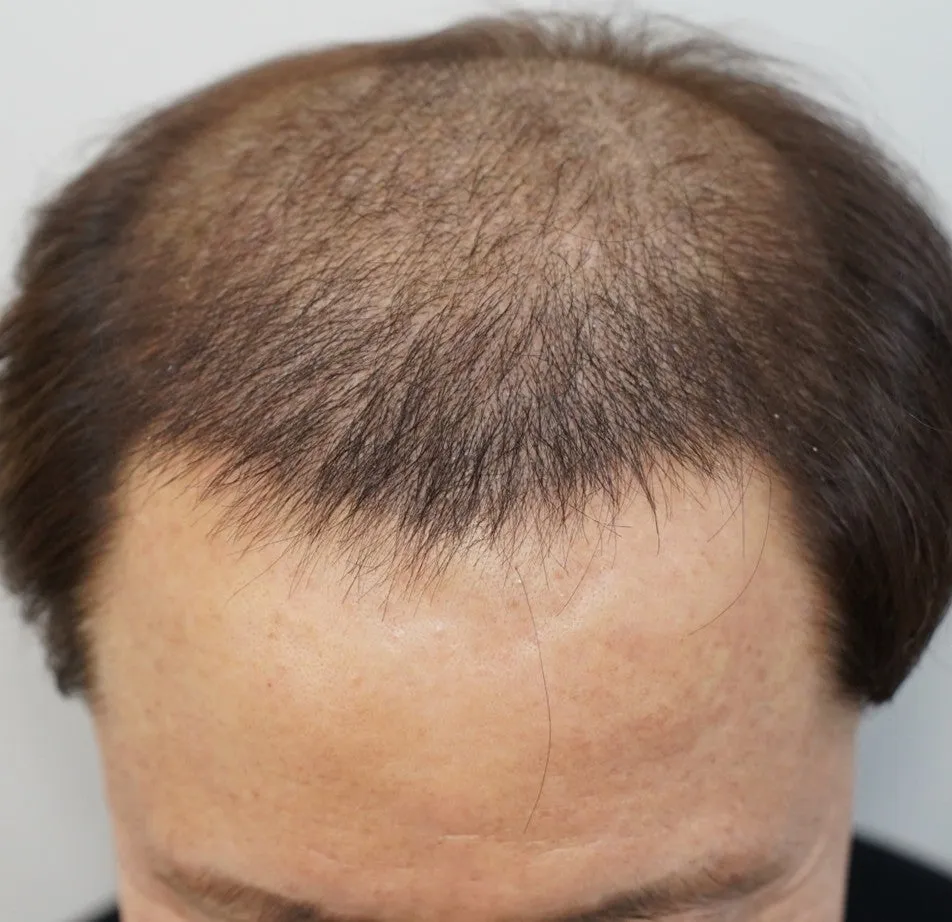
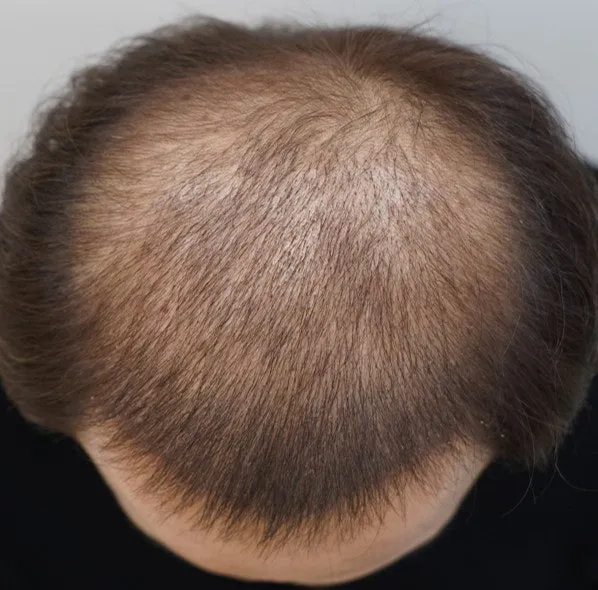
The Dark Period No One Can Avoid
The density at the crown may be a little lacking, but the crown tends to respond well to medication, and as the remaining fine hairs thicken and fill the gaps between the transplanted hairs, they can make up for some of the lacking density. When the photo above was taken, the patient was happy looking in the mirror, but this patient also could not avoid the dark period of hair transplant. The photo below was taken at the 2-month mark, when the patient came in for a hair loss medication prescription.
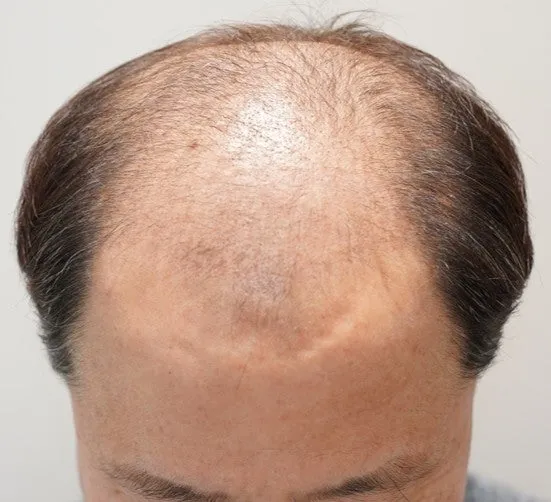
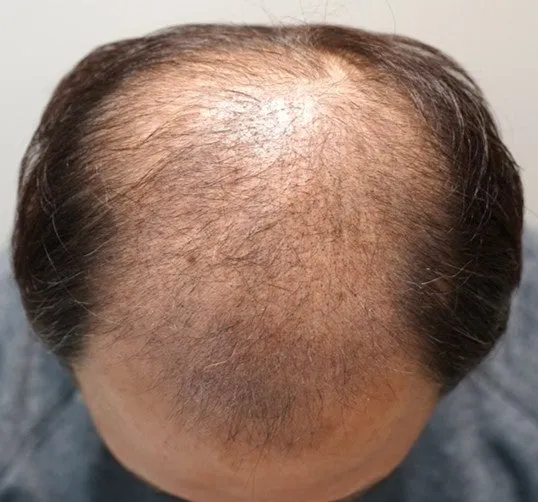
The transplanted hair had almost all fallen out, so the patient was very worried about whether it would really grow back, but by showing photos from after surgery, we reassured them that it would grow back this way. At 8 months, the patient came in to pick up a prescription. As they walked through the clinic door with a broad smile on their face, we could already tell how the result had turned out.
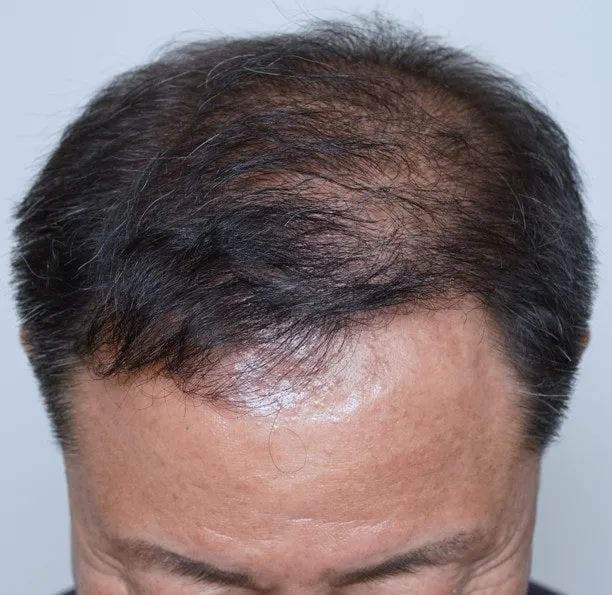
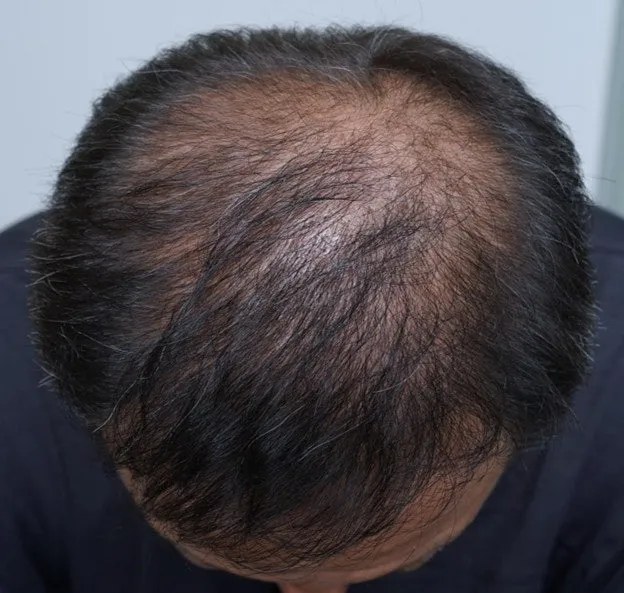
8-Month Progress and Plan for a Second Surgery
The hairline has formed and the overall impression has changed a lot, and with a successful gradation, the crown is also blending in well without looking unnatural. Since it has only been 8 months, it is still too early to call this the final result, and the density at the crown will continue to improve. Based on the current condition of the back of the head, a second surgery of around 2,000 hairs also looks possible, so I told the patient that after one year we could fill in the areas that still look sparse.
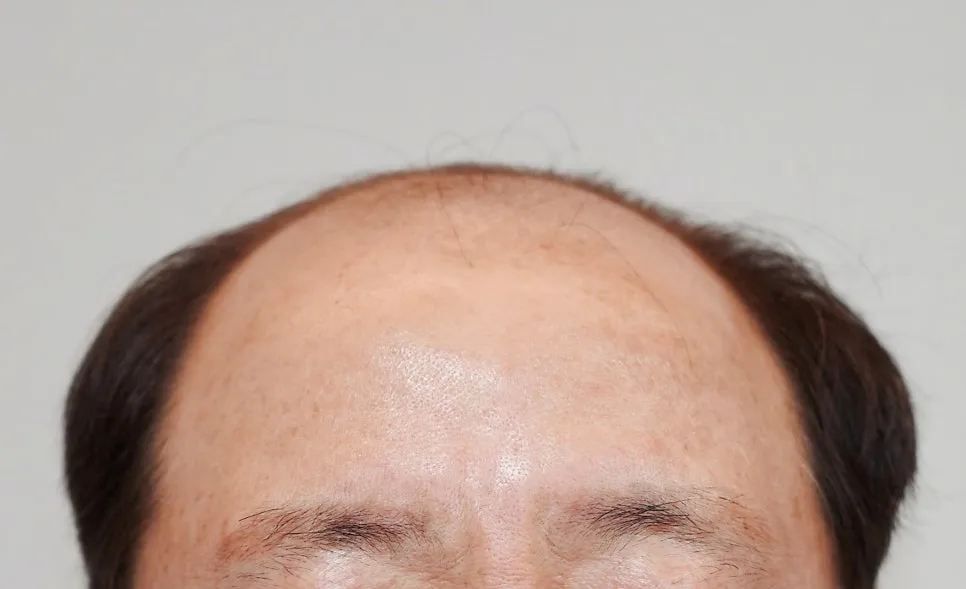
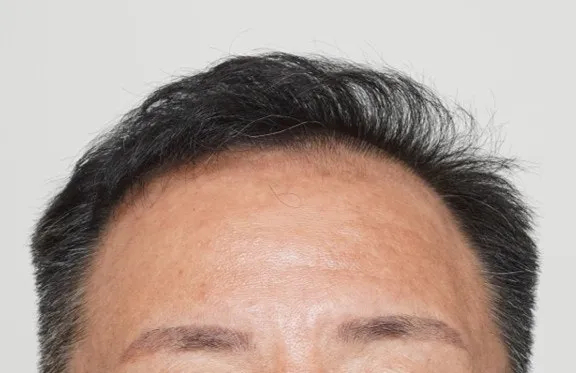
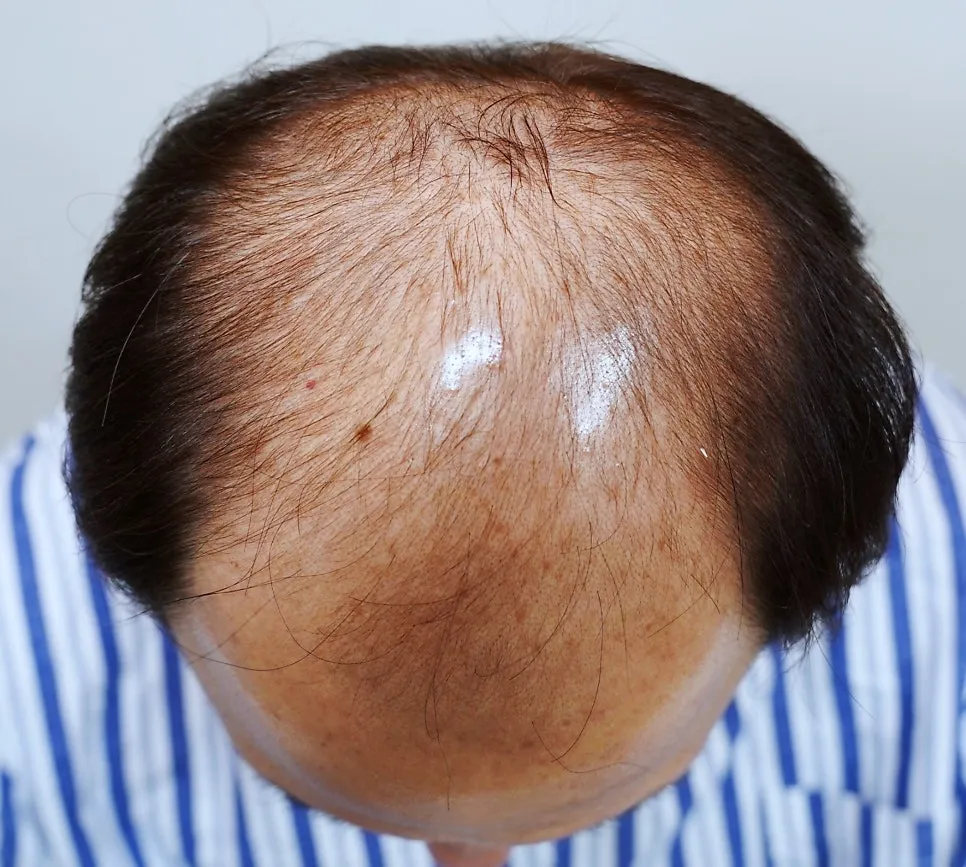
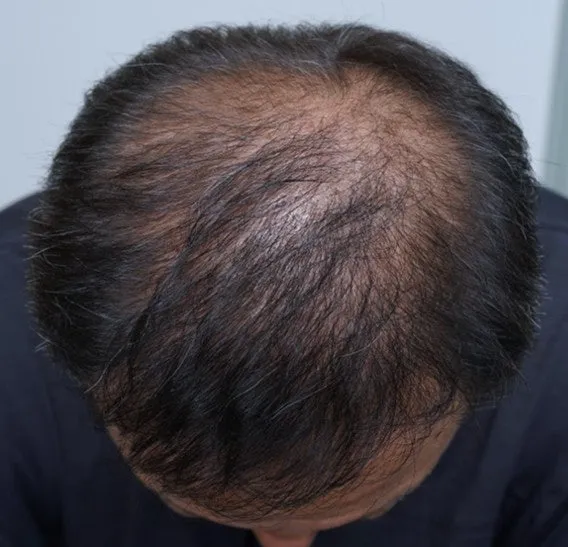
Even with severe hair loss, good results can be achieved by carefully planning the surgery, including the incision and non-incision methods, the area to be transplanted, and the density layout, so that the limited hair is used efficiently. Combining it with hair loss treatment can produce an even greater effect. It is a shame that many people give up on treatment, saying hair loss has already progressed too far. Please don't give up; let's find a way together.
※ Side effects such as pain, swelling, bleeding, and inflammation may occur after hair transplant surgery. ※ All photos on this blog are used with the patient's consent.