By Dr. Park Sooho · 2025.04.06
Crown Hair Loss Responds Well to Medication
Many people who come in worried about crown hair loss think of a hair transplant right away. Since the crown looks empty, they assume planting hair in the empty area is the answer, but in fact, many cases of crown hair loss do not need a hair transplant.
This is because crown hair loss responds well to medication. This is especially true in the early stages of hair loss.
Even with a hair transplant, medication is essential to prevent further progression, and if medication works well, a hair transplant may not be needed, so it is naturally right to start with medication before surgery.
Generally, the effect of medication is observed for about a year, and if the effect is insufficient, a hair transplant can then be considered.
Crown Still Bothering After Two Years of Hair Loss Medication
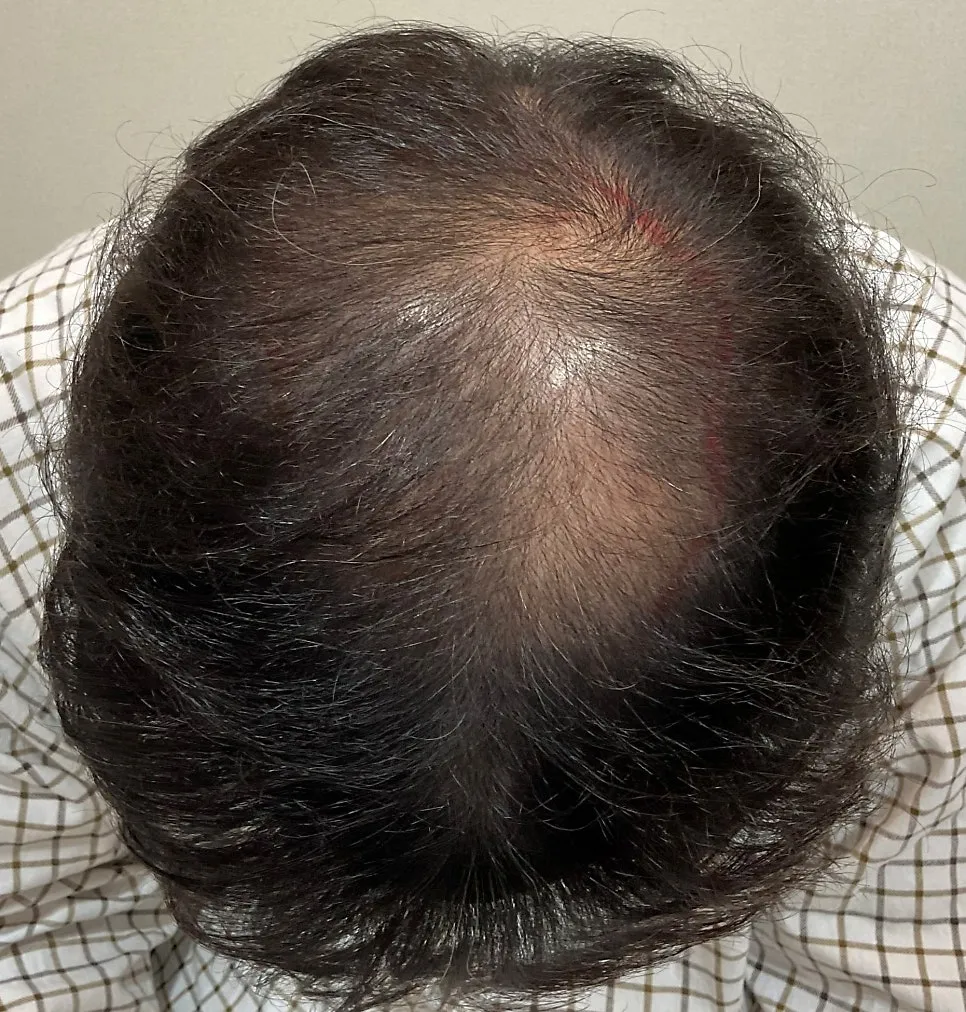
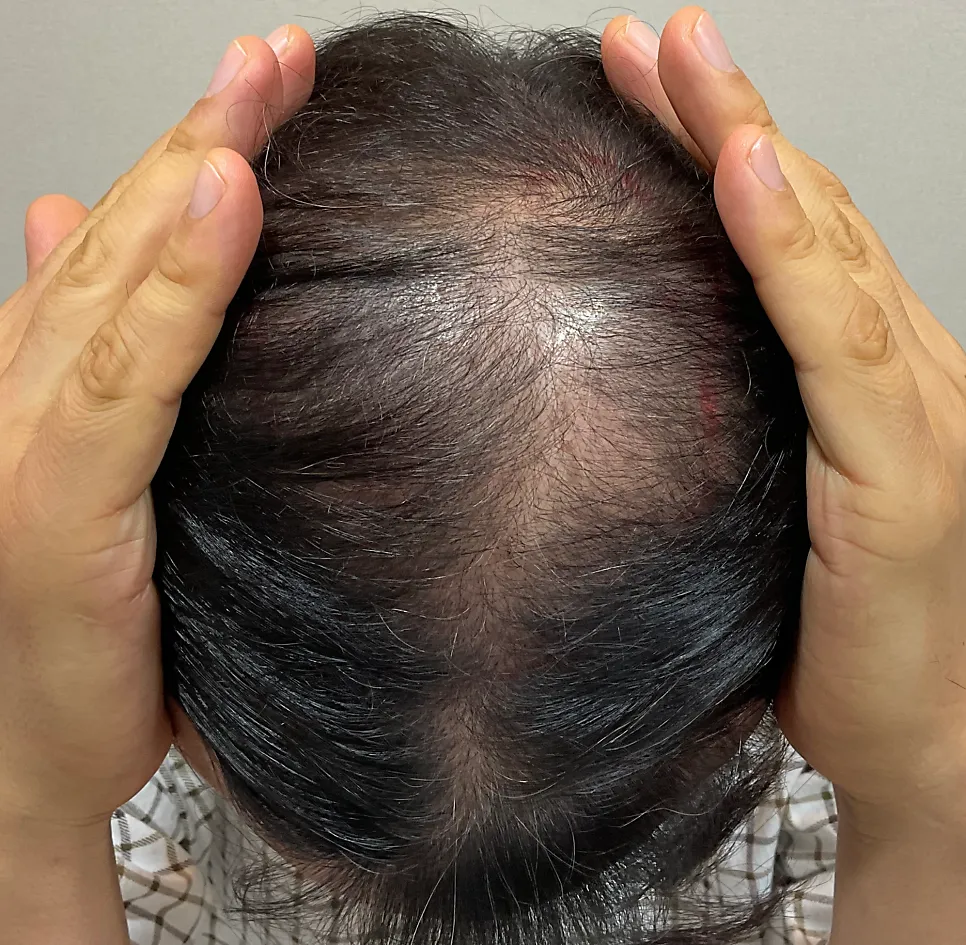
The patient above came in after taking hair loss medication for about two years. The crown improved considerably after taking the medication, and others told them it was good enough and that they should not have surgery, but they still felt the thinning crown bothered them and wanted to fill it in more with a hair transplant.
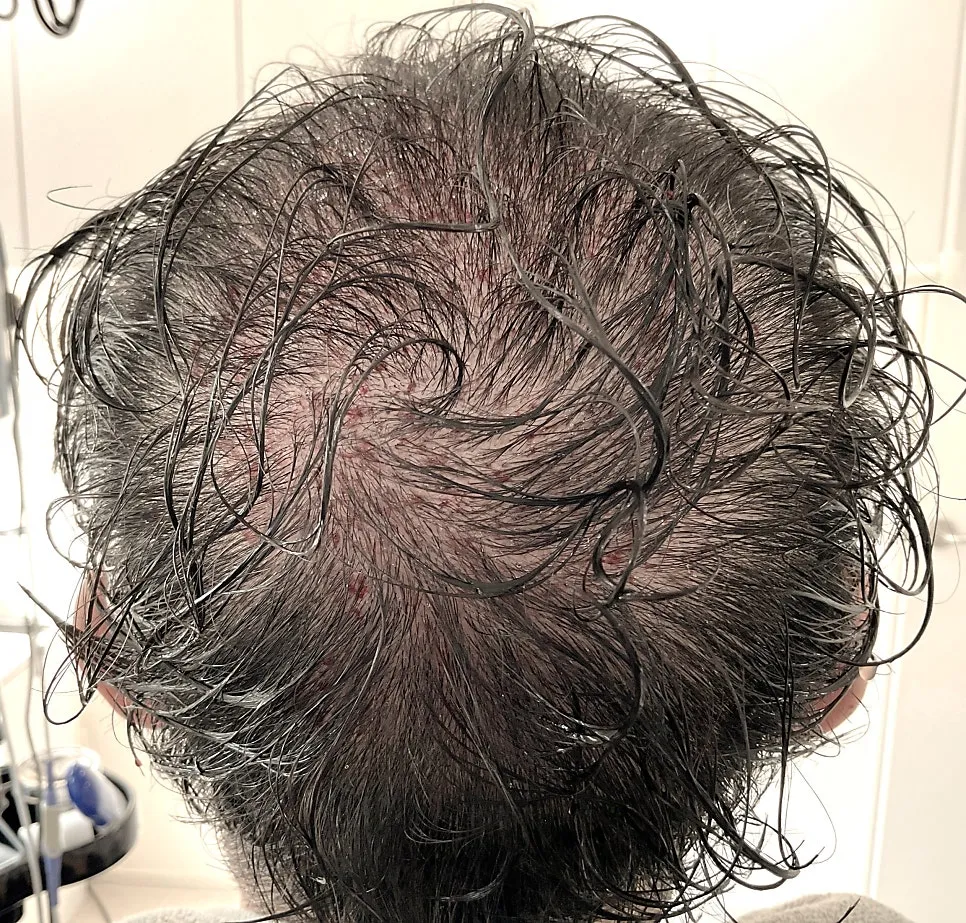
Rather than adding minoxidil or other medications to the finasteride-based hair loss medication they were already taking, or receiving injection treatments, they wanted to keep taking only finasteride and have a hair transplant.
Hair loss had progressed up to the upper part of the back of the head, so to obtain as many healthy follicles as possible from areas where hair loss had not progressed, I judged that the incisional method was better. Fortunately, the occipital area had good elasticity, so about 5,500 hairs could be transplanted across the entire crown.
Day 11 Progress
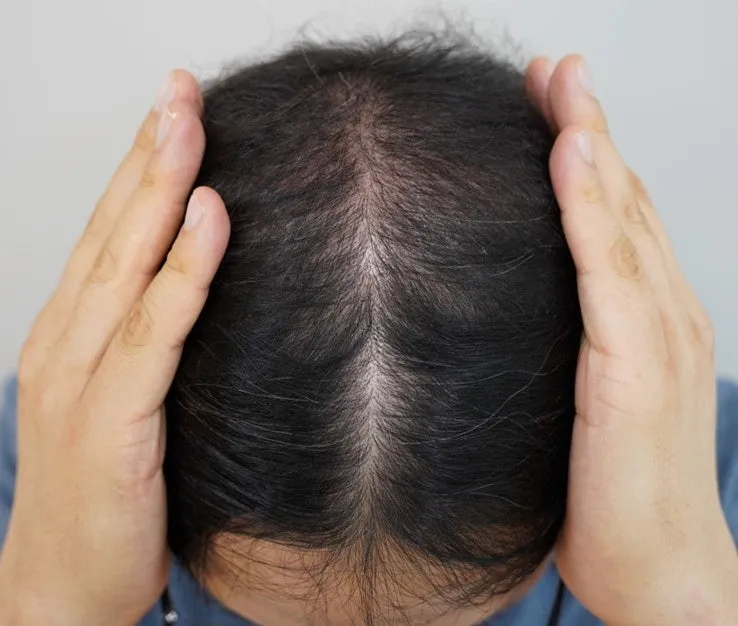
This is a photo from Day 11, after the transplanted follicles had engrafted. The hair is still short, so it is still difficult to create a full part, but the scalp showing through has been greatly reduced because of the hairs planted in the empty areas.
8 Months After Surgery
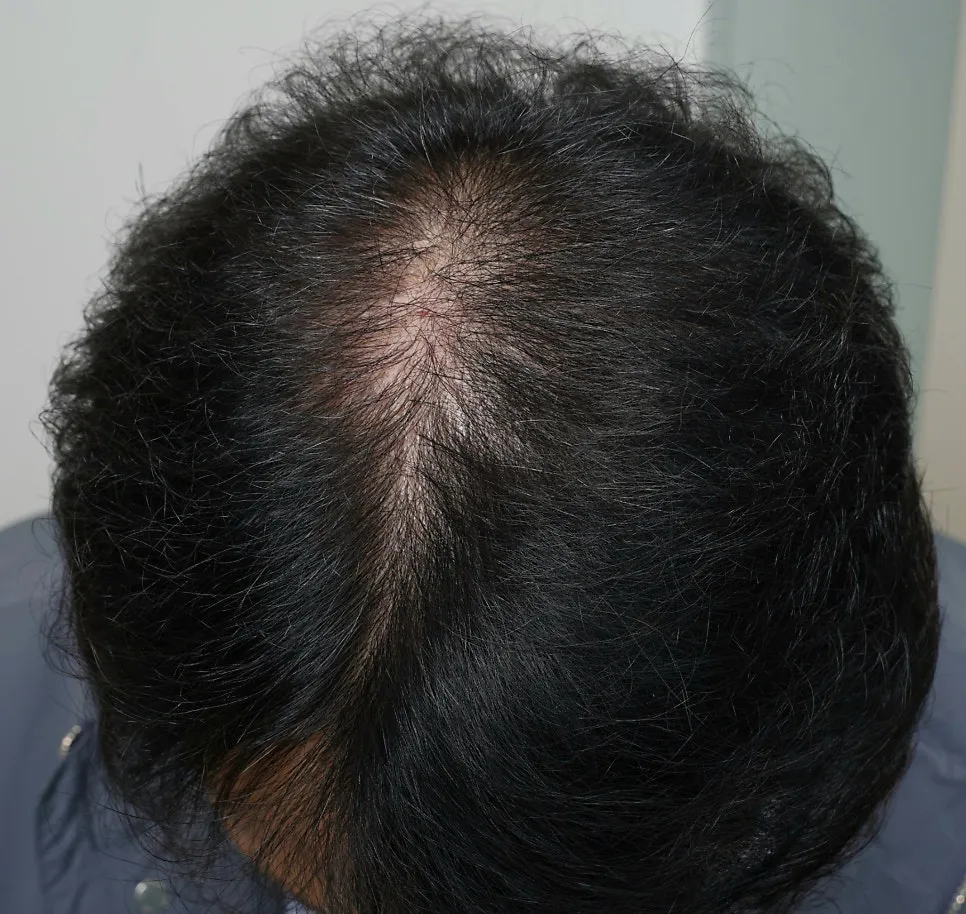
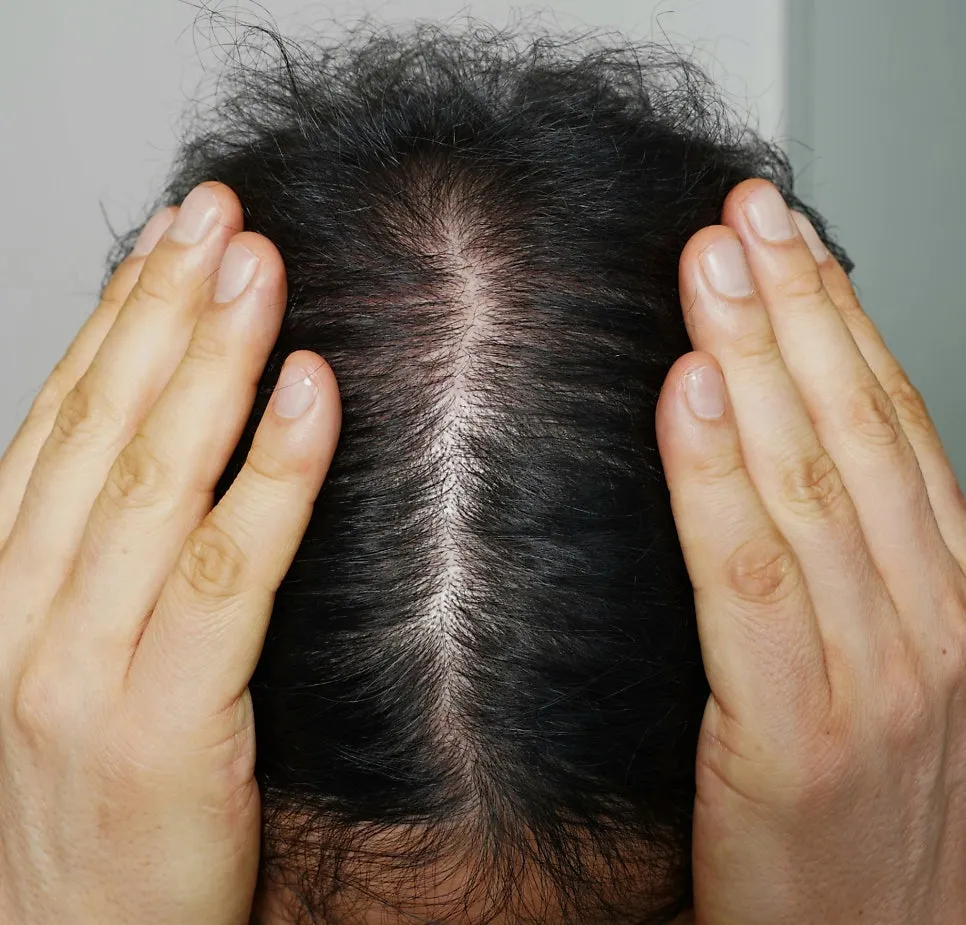
About eight months after the hair transplant, when they came in to get a hair loss medication prescription, they already looked much better, but they asked whether a second surgery would be okay to get more fullness. I told them that since the hair transplant results keep steadily improving from one year to one and a half years after surgery, their hair would become even fuller than it is now.
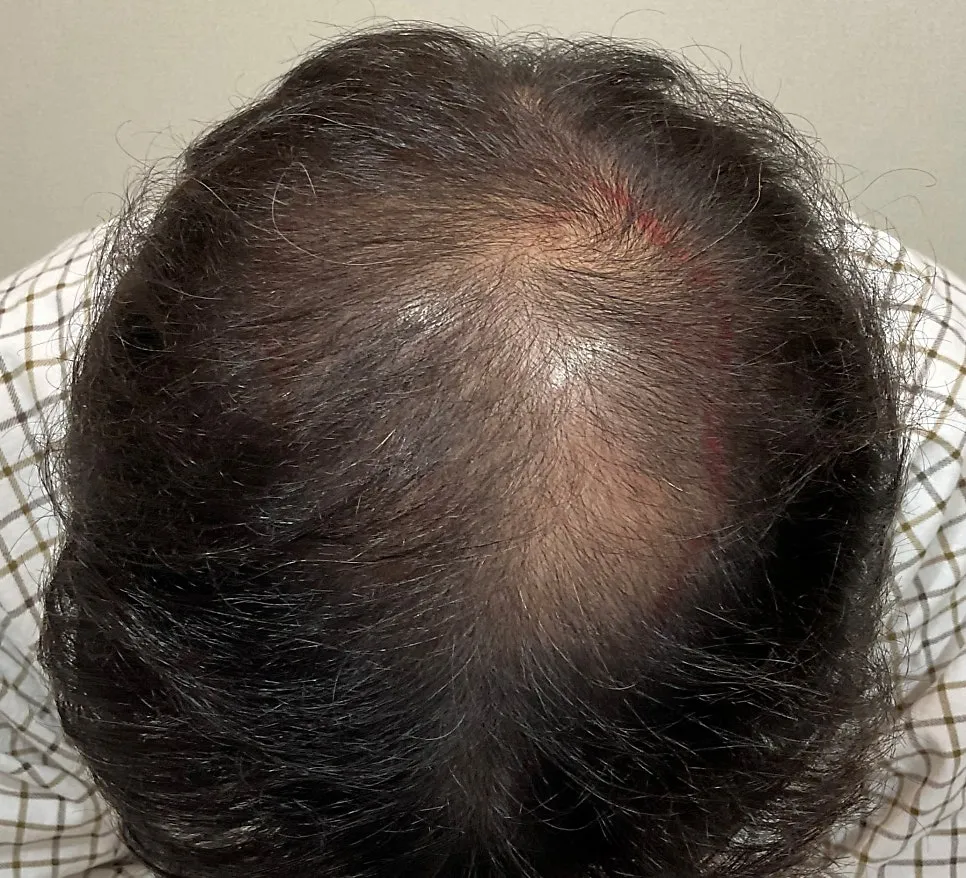
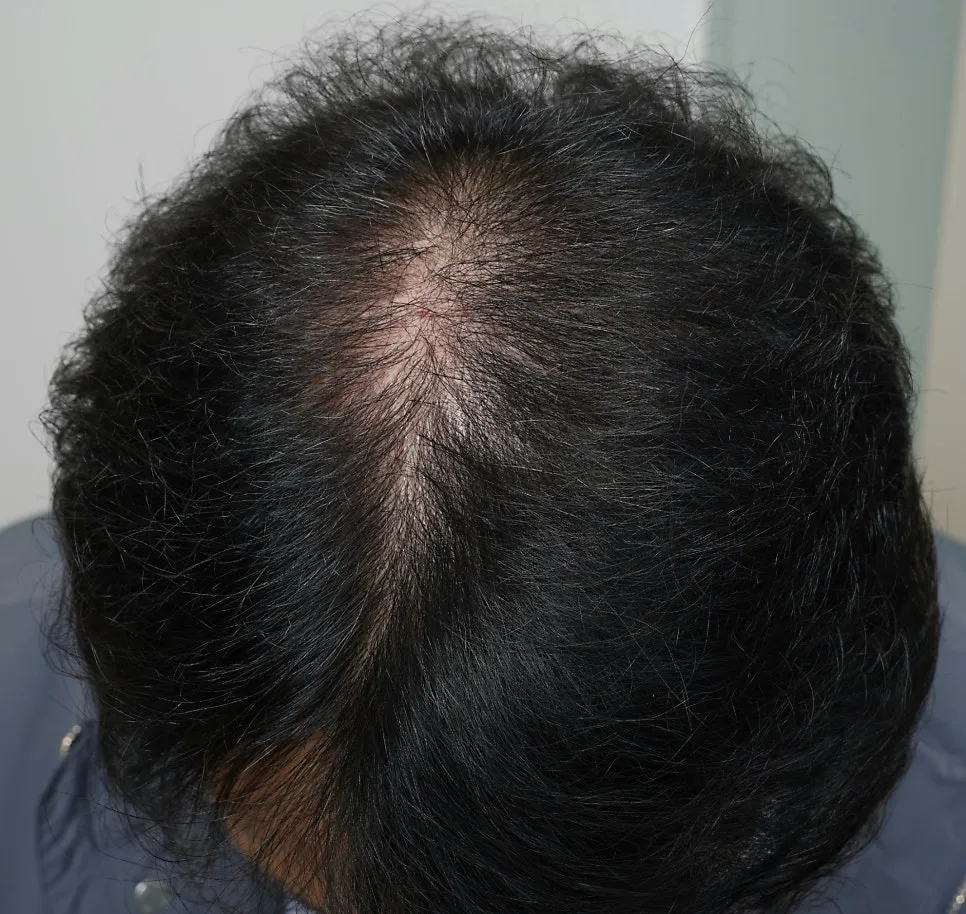
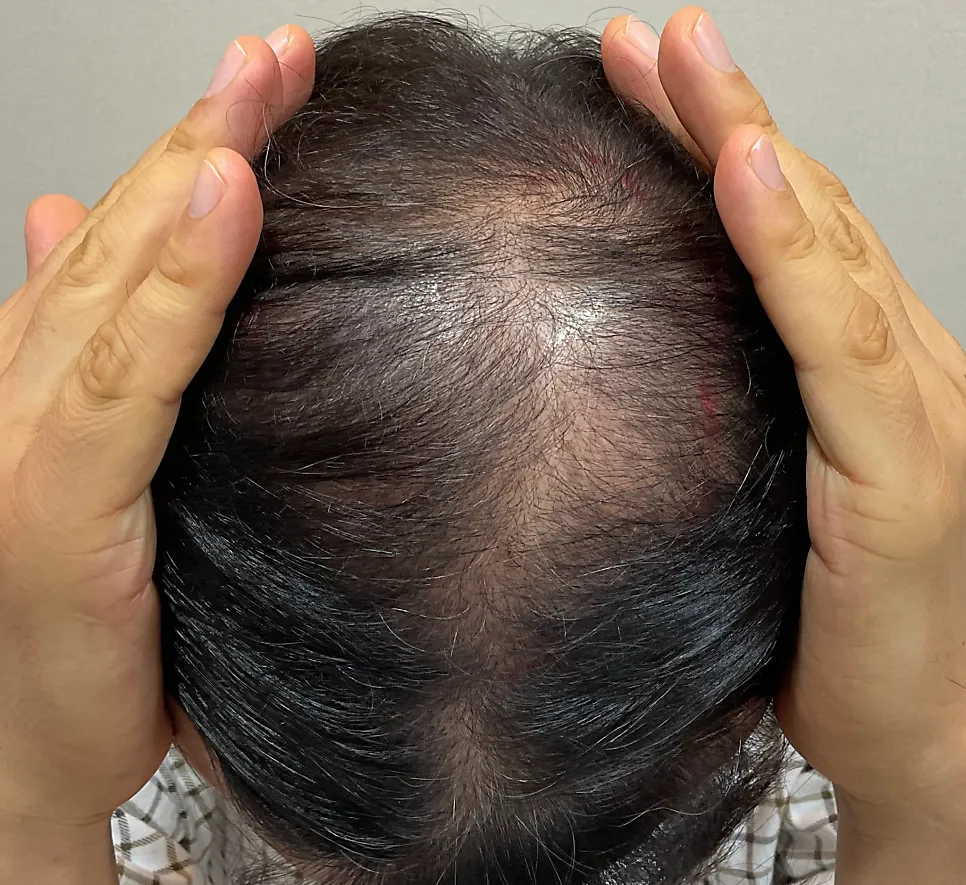
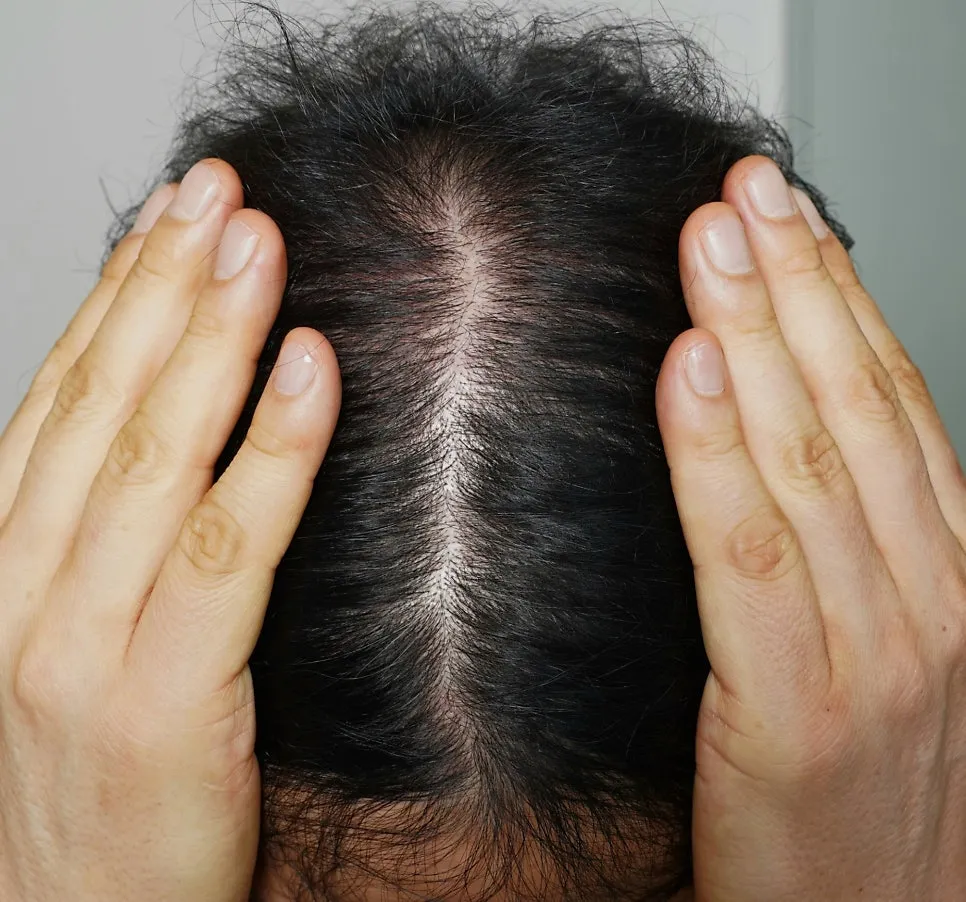
Before surgery, the crown hair was short and thin, so the scalp showed through a lot, but after the thick, sturdy hairs from the back of the head settled in, scalp visibility and volume improved considerably.
Don't Forget Hair Loss Medication After Surgery
I told them that as long as they keep taking their hair loss medication as they are now and maintain it well, things will be fine. Even if you take hair loss medication, you cannot stop hair loss 100%, but you can slow down its progression by a great deal. Don't let the surgical results make you complacent; please be sure to keep taking your hair loss medication.
※ Side effects such as pain, swelling, bleeding and inflammation may occur after a hair transplant. The patient above had no particular side effects other than finding it difficult to sleep lying in a correct position after surgery.