By Dr. Shin Seungkyu · 2025.03.19
Concerns of people who have already had a hair transplant
When consulting many people, quite a few have already had a hair transplant, and a considerable number are dissatisfied with the result. There are various reasons: the density looks too thin, they do not like the design, they want to lower the height further, and so on.
A patient had a non-incisional hair transplant at another clinic three years ago. The density had also dropped, and they wanted to lower the height further, so we will explain how we corrected that area.
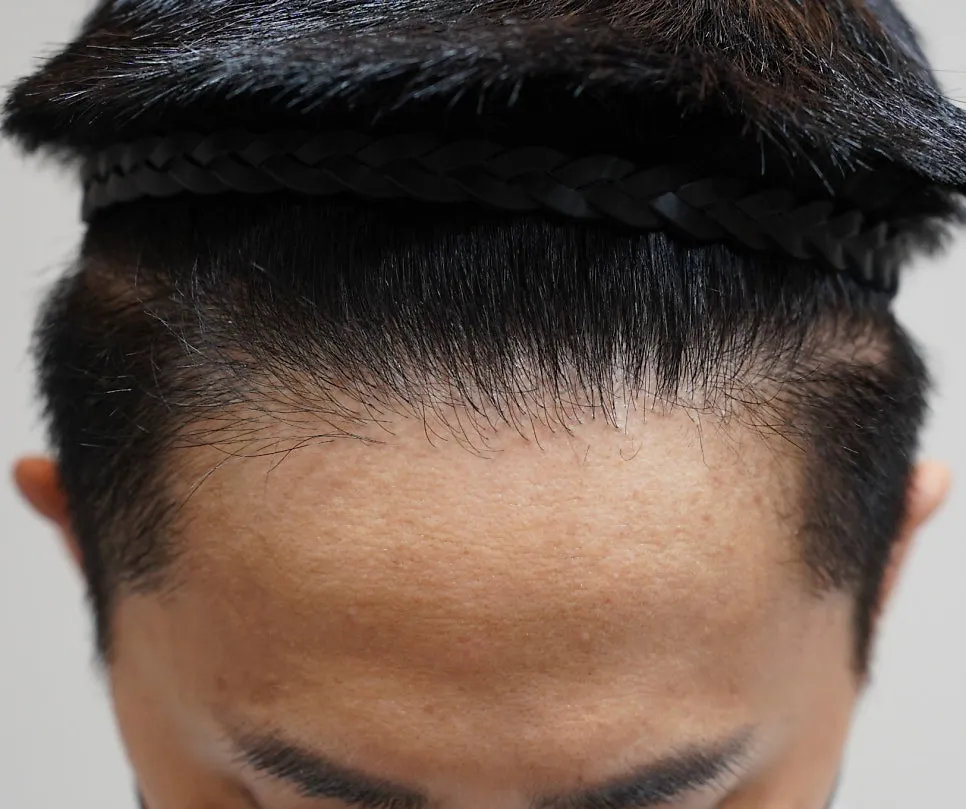
If you look at the photo with the head slightly bowed, you can see that the density of the transplanted hair at the front is quite low. Not only is this low density bothersome, but they also wanted to lower the forehead height further.
When the density at the back of the head is a concern
A common approach would be to harvest more hair from the back of the head and lower the height slightly while filling in the density. But this patient was also very concerned about the density at the back of the head.
They asked, "Could you harvest all the hair on the nape that I don't like to look at?" So we explained again how non-incisional harvesting works. Non-incisional harvesting punches each follicle individually with a very small circular tip, and generally, when one follicle is harvested, 3 to 5 follicles around it must be left, so harvesting all of them would cause too much damage to the skin. Also, the nape shows a lot of scarring after harvesting, so we explained that it cannot be harvested.
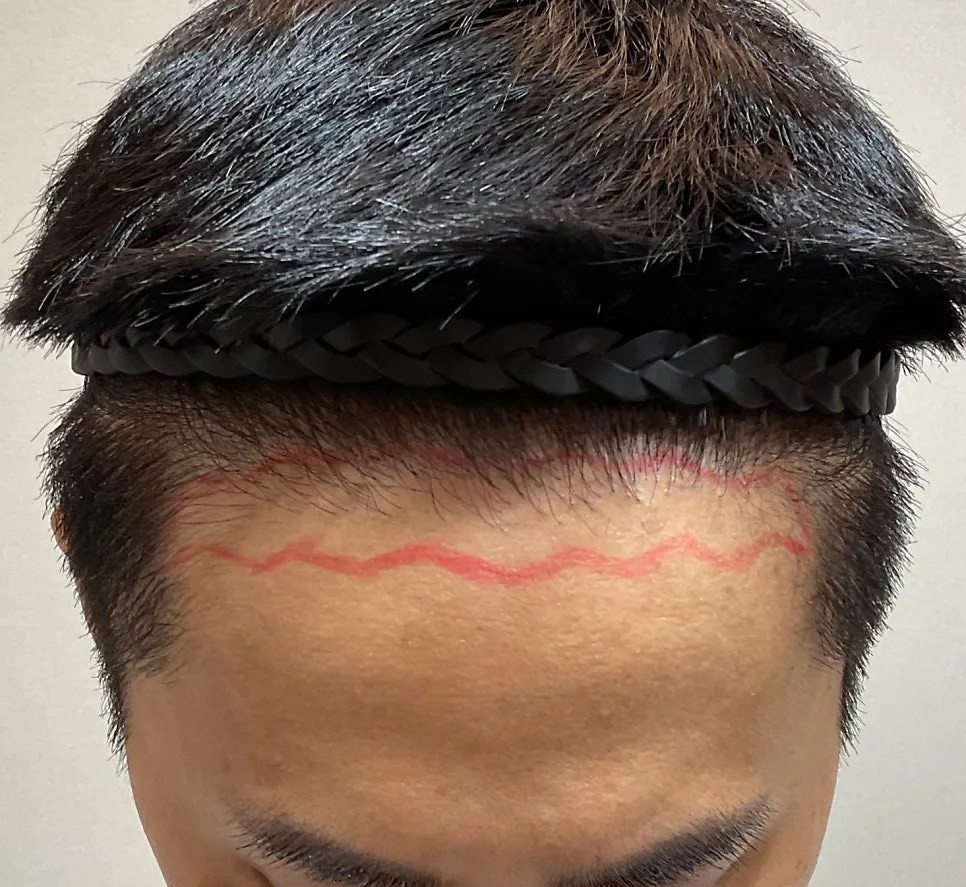
Forehead reduction that does not require additional harvesting
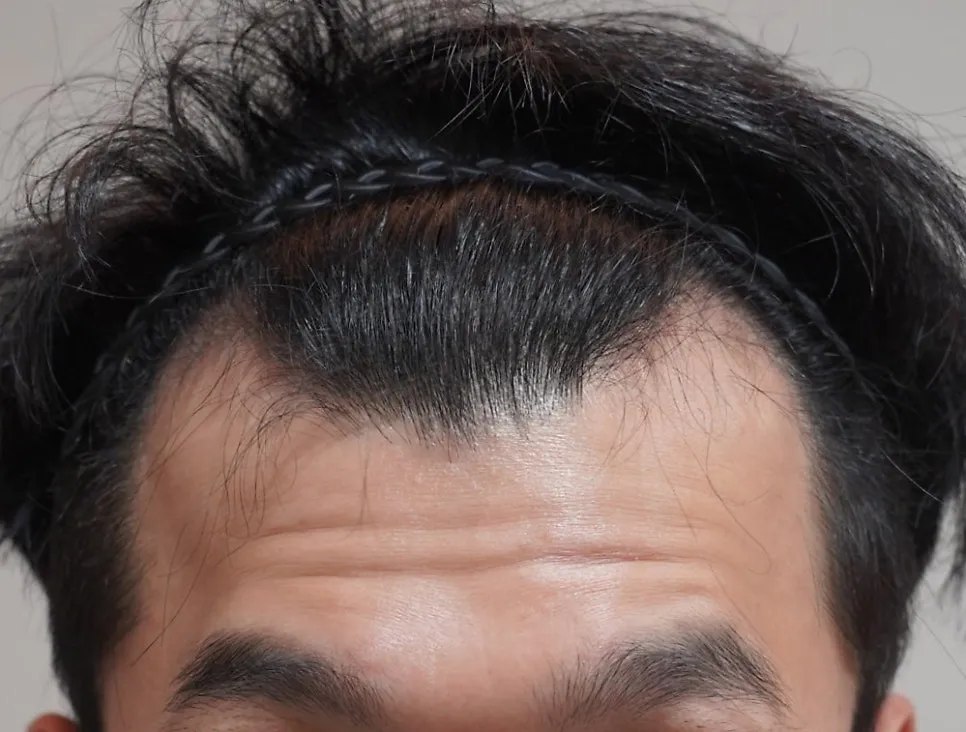
Because they were very concerned about the density at the back of the head, we recommended a forehead reduction that does not require additional harvesting. Since they were also very reluctant to lose the previously transplanted hair, we designed it as shown in the photo above so that the forehead reduction includes part of the area with low density from the earlier transplant, and we decided to re-plant those hairs at the back.
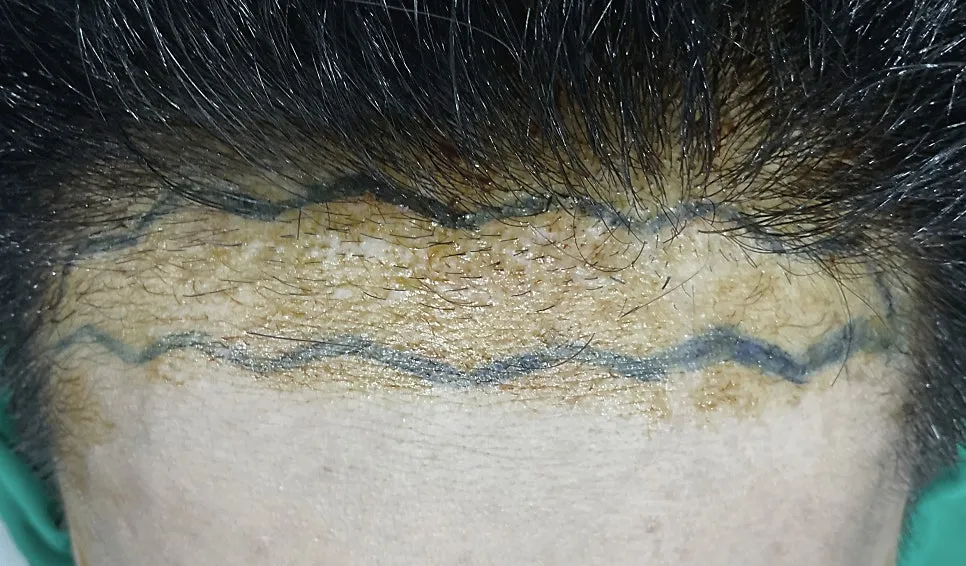
When the low-density area is cut short and looked at, the density looks much lower than when the hair is long. At that level of density, the problem seems to be the transplant density itself rather than the engraftment rate. We removed that area well, lowered the scalp behind it and closed it, and carefully planted each of the valuable hairs one by one at the back.
Before Surgery vs. Suture Removal Day
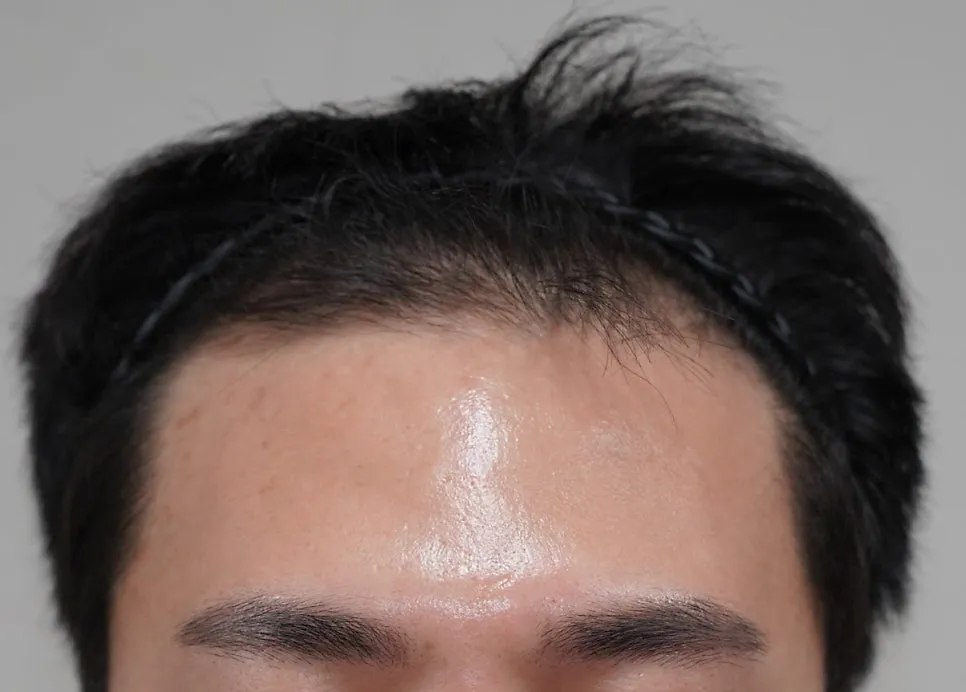
Let's compare the photos from before surgery and from the suture removal day.
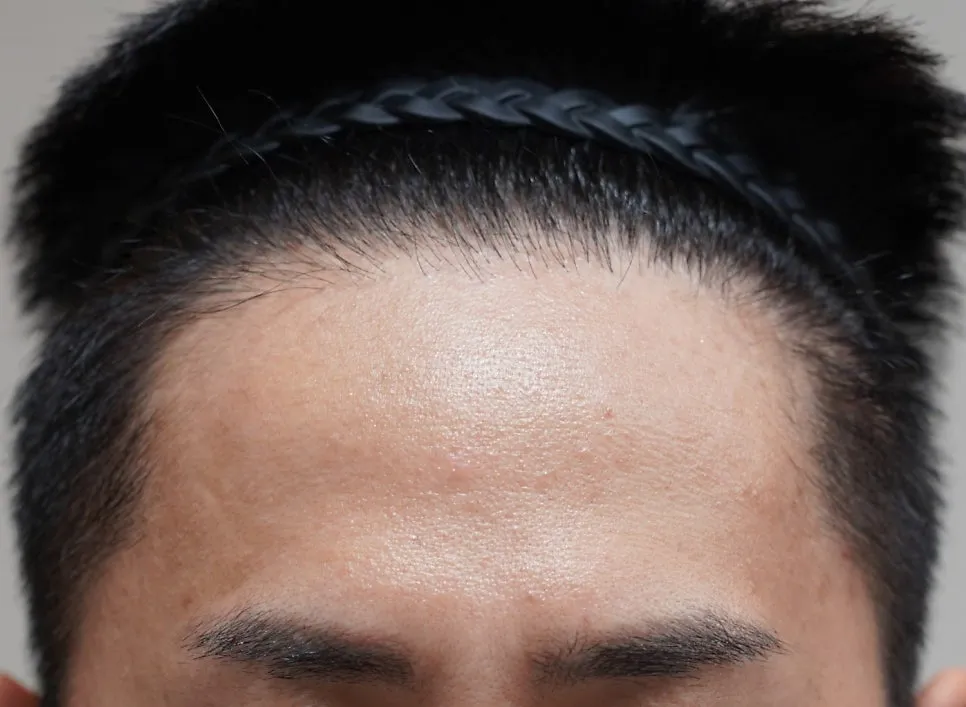
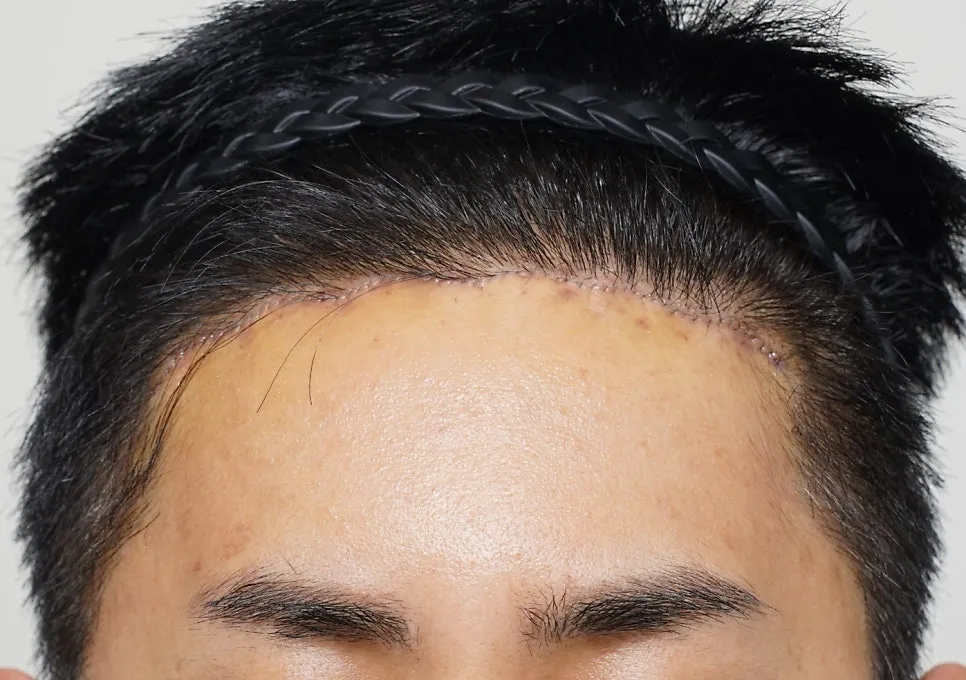
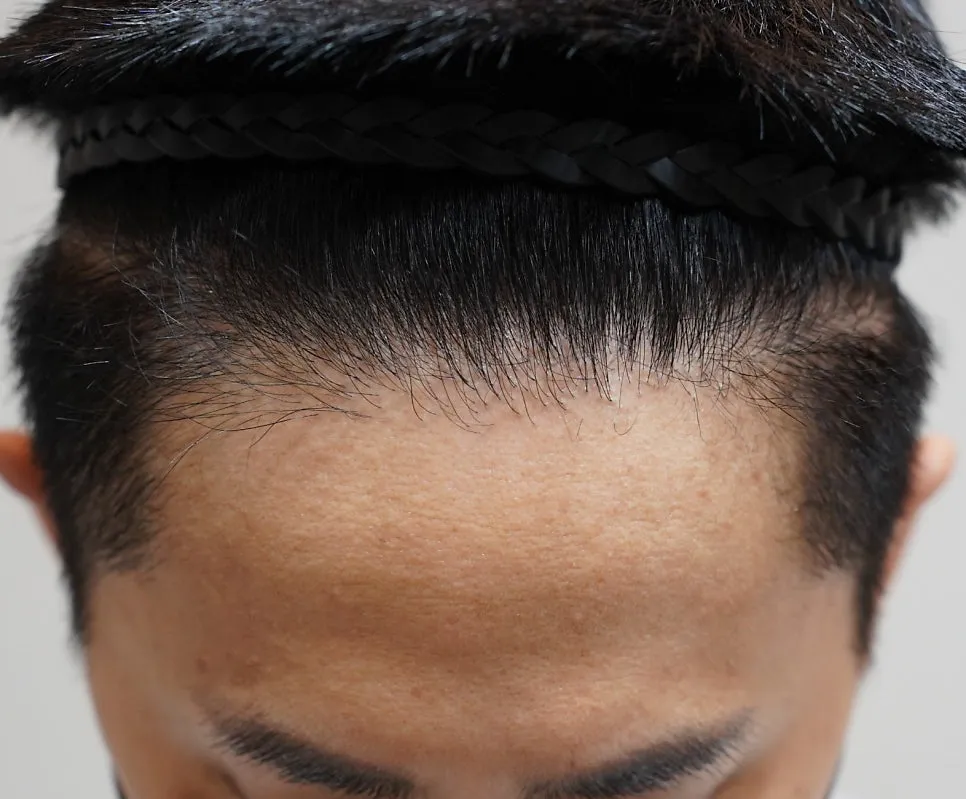
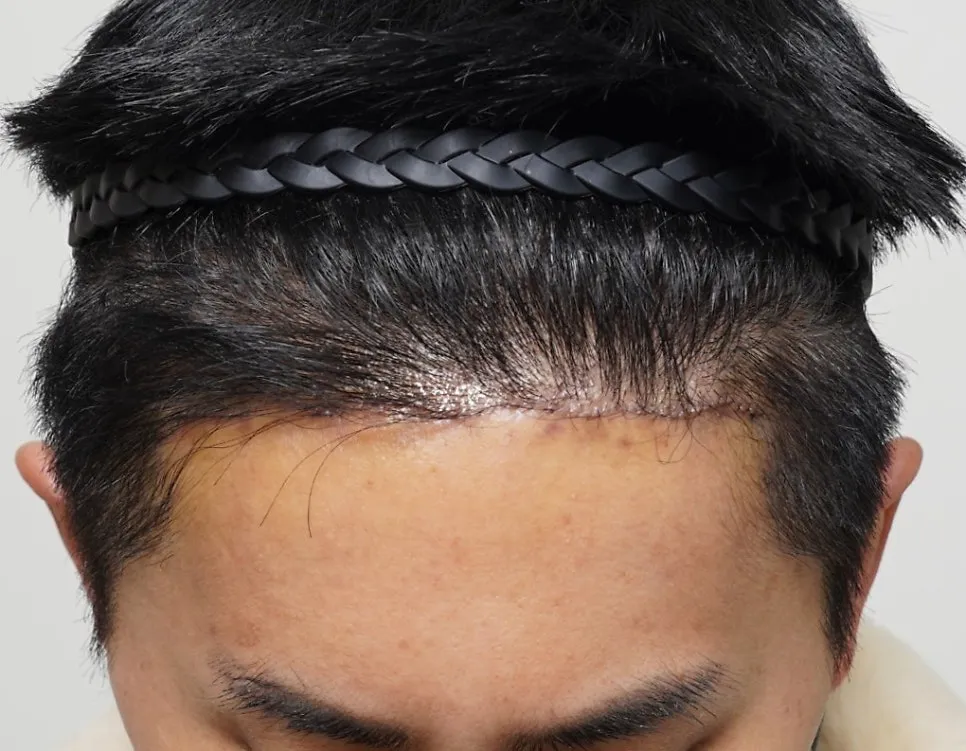
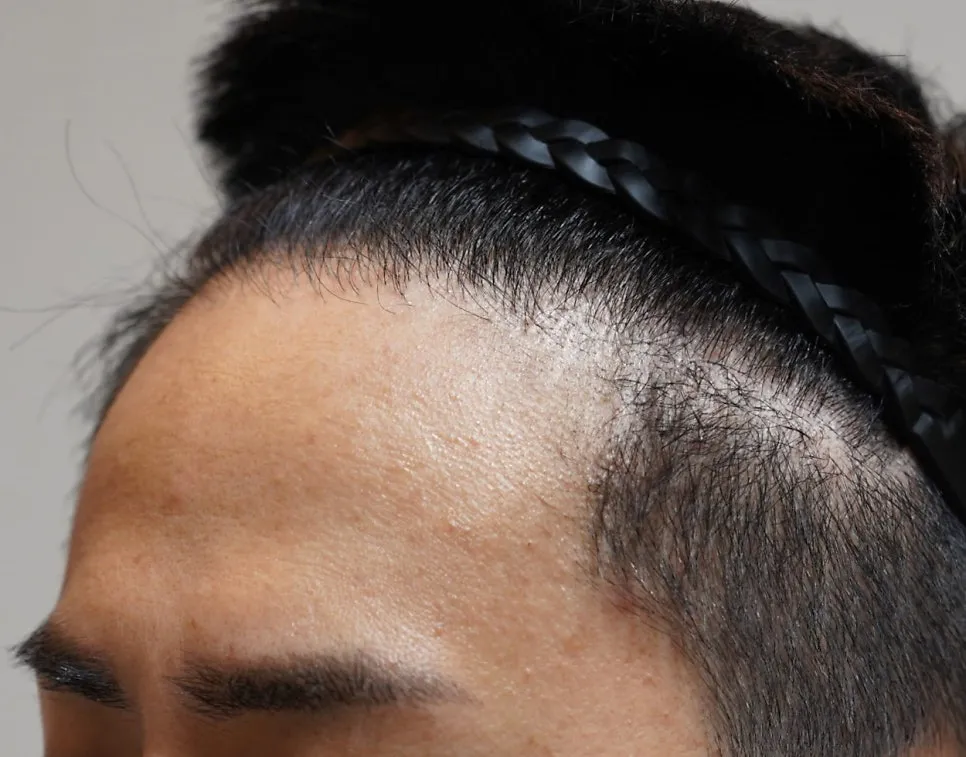
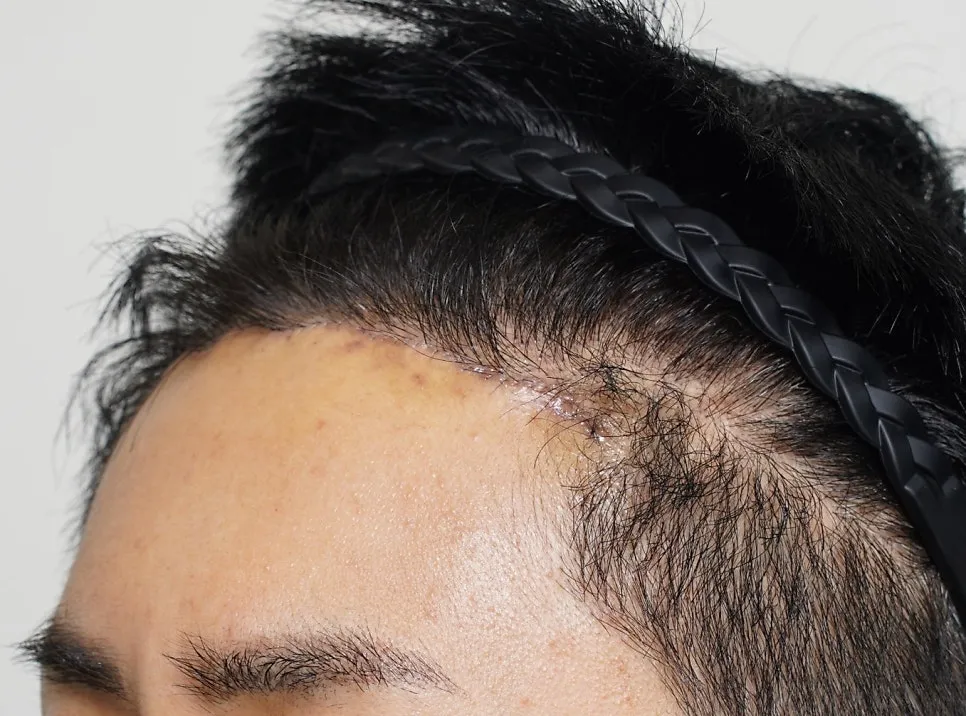
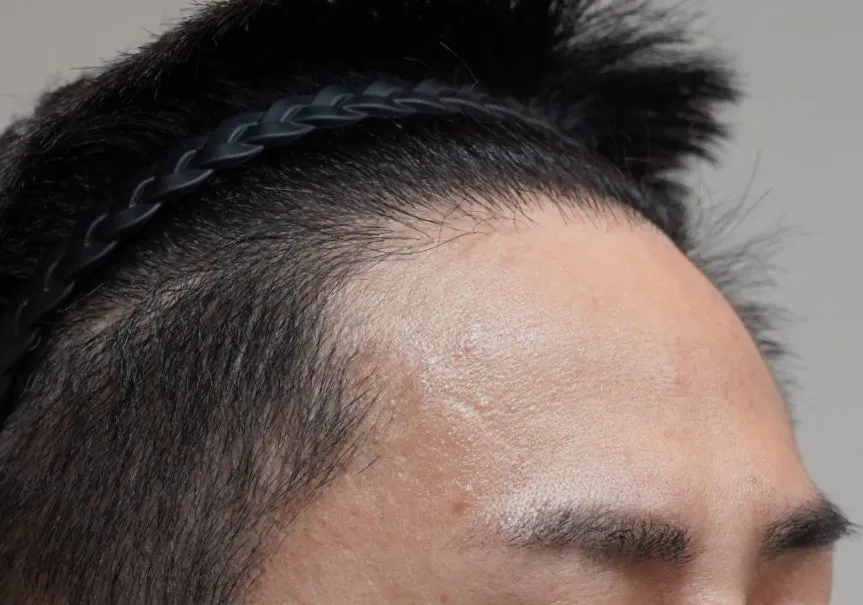
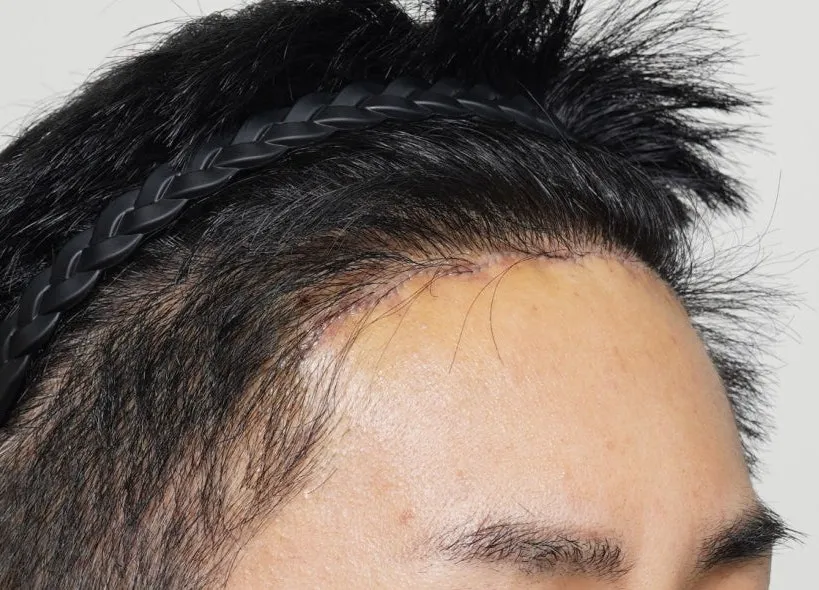
The height was clearly lowered and the density improved, so the patient was very satisfied. This patient also takes hair loss medication steadily to prevent hair loss, so they value each and every hair, and they were pleased that the back of the head did not have to be used to lower the height and improve the density. We reassured them that not much scarring would remain and the forehead would not widen again, so please don't worry.
A case similar to this patient was already introduced in a previous blog post, so you may want to take a look again. https://blog.naver.com/banal_ps/223696557268
Planning the surgery well from the start
In fact, such cases are not rare. Planning the surgery well from the beginning seems important, and creating dense, natural results with a hair transplant using an appropriate design also seems important. We will keep thinking and studying how to achieve good results with appropriate methods, working together with patients on the concerns they have.
※ Side effects such as bleeding, pain, swelling, and infection may occur after surgery.