By Dr. Park Sooho · 2025.03.16
Using incisional and non-incisional methods together
When the area to be transplanted is wide and more hairs are needed, incisional and non-incisional methods are sometimes used together to harvest as many hairs as possible at once. This is mainly the case for men with severe hair loss, but sometimes women with a wide forehead also need quite a large number of hairs.
A wide forehead remaining after forehead reduction
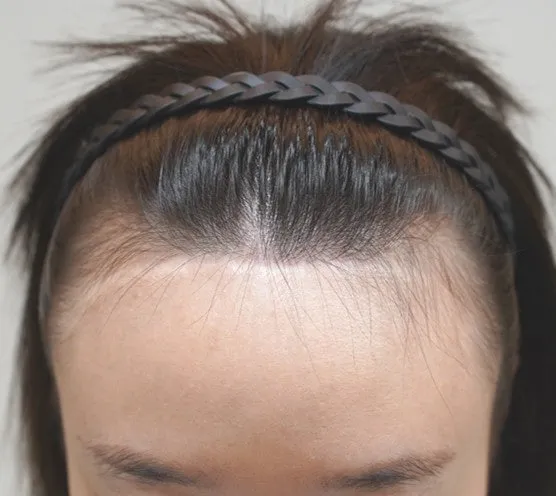
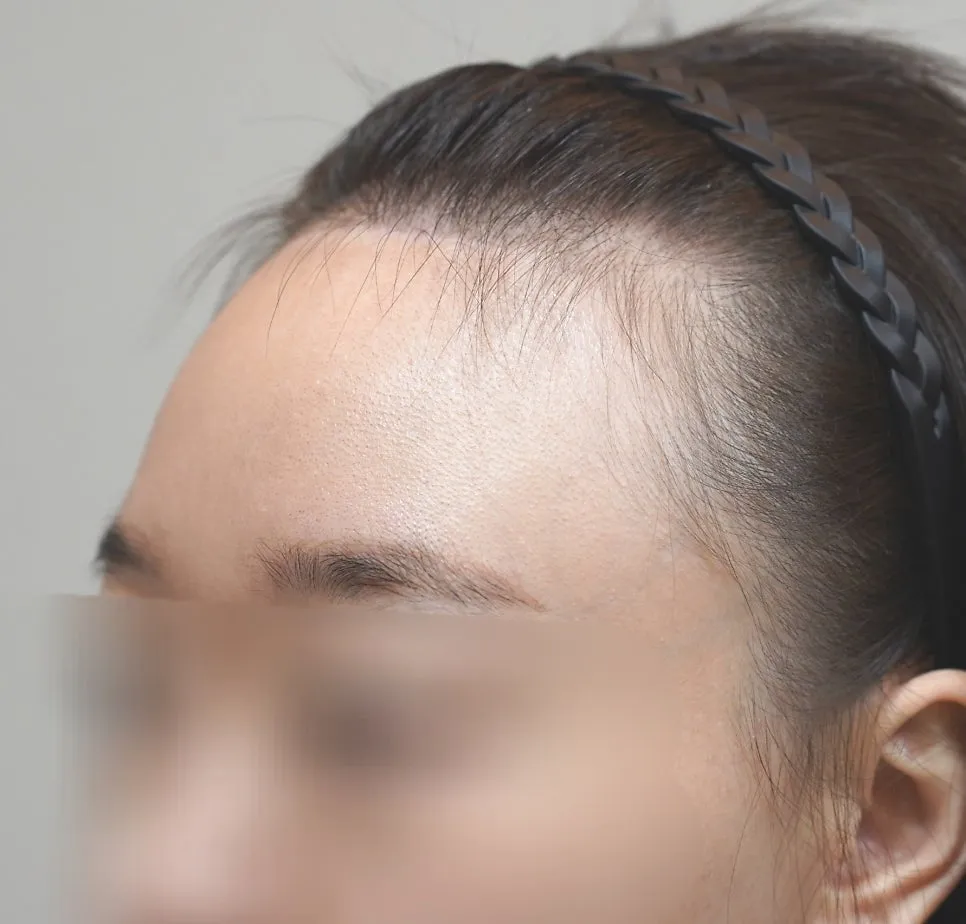
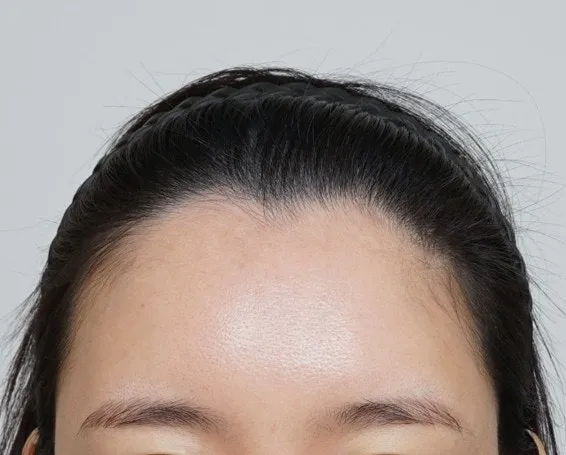
The patient above had a forehead reduction at another clinic two years ago, but still struggled with a wide forehead, so they came to BANAL. They said about 1.5 cm had been reduced, but when we checked scalp elasticity, we felt about 1 cm more could have been reduced, and a clearly visible scar line was also disappointing.
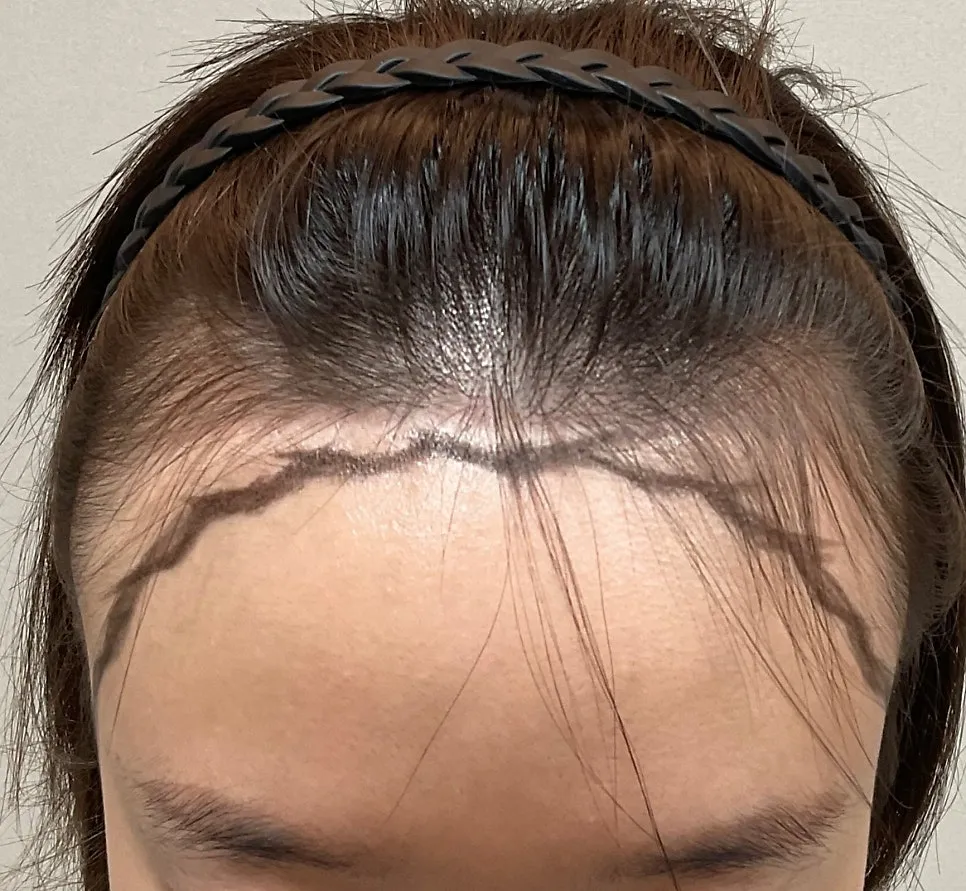
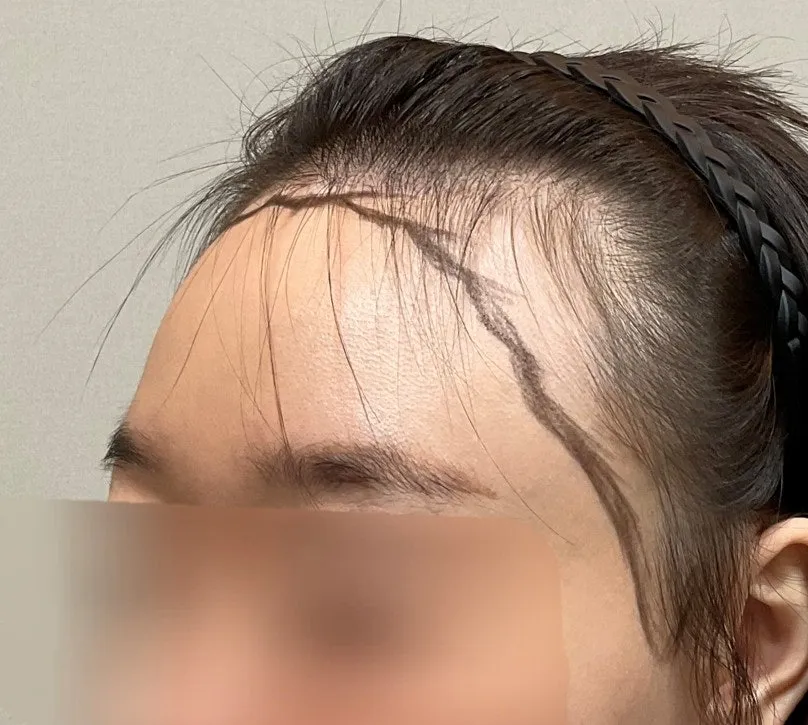
The design they wanted would cover the scar line while lowering the forehead height a bit more, fill in the deep M-shape while pulling the side line, and create the temporal peak and sideburn. We estimated it would require more than 5,000 hairs.
4,500 hairs by the incisional method, and the insufficient hairs by the non-incisional method
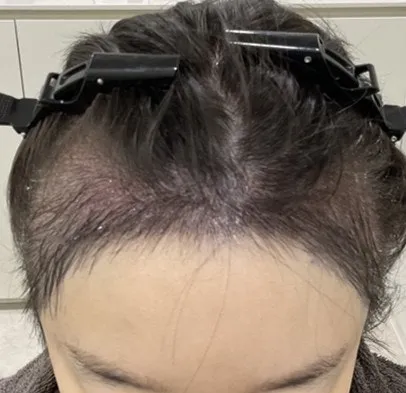
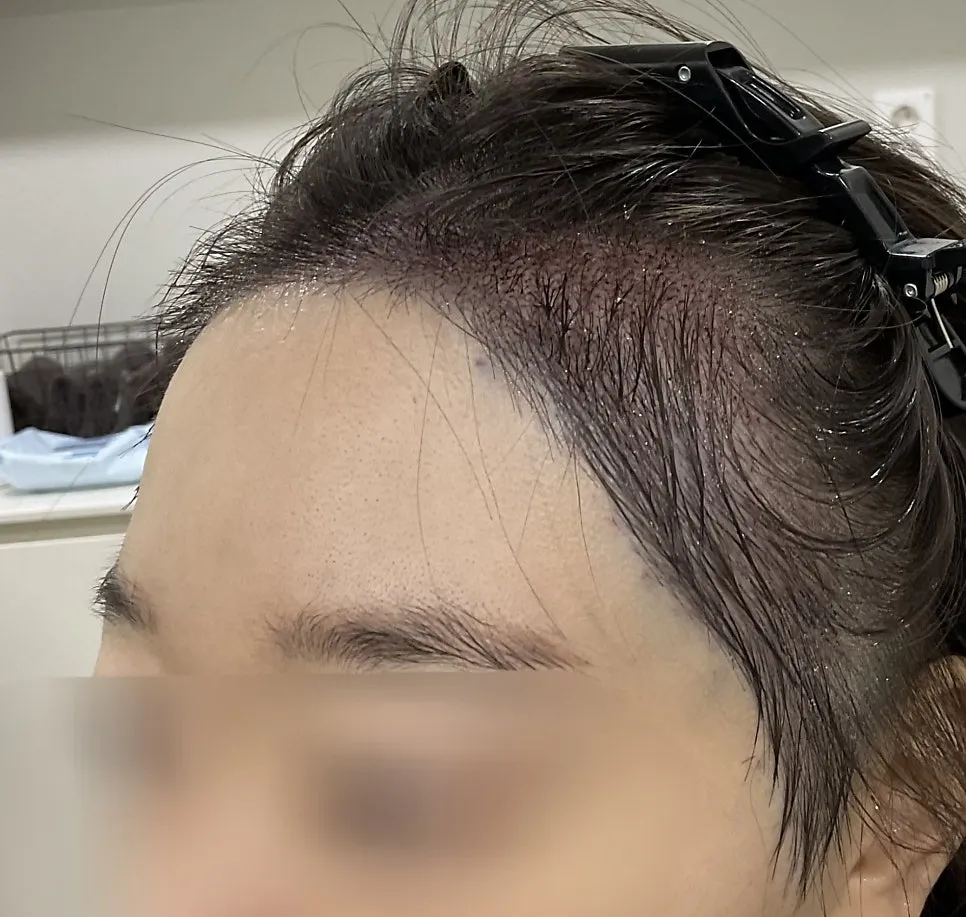
Scalp elasticity allowed for about 4,000 hairs with the incisional method, so we decided to transplant the remaining 1,000 hairs harvested non-incisionally at the same time. In the actual surgery, about 4,500 hairs were harvested with the incisional method, so a total of 5,500 were transplanted.
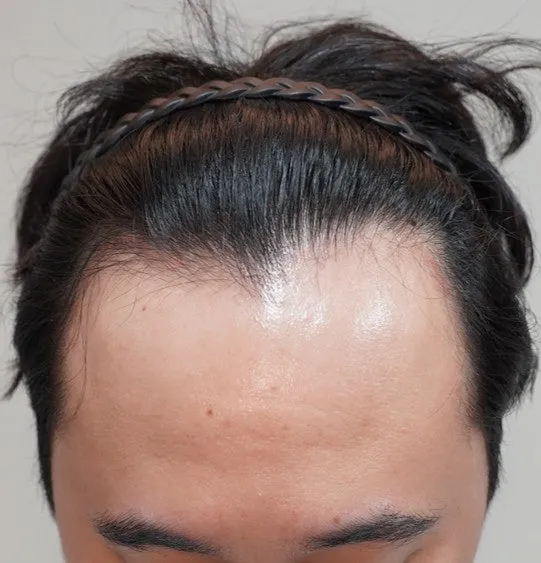
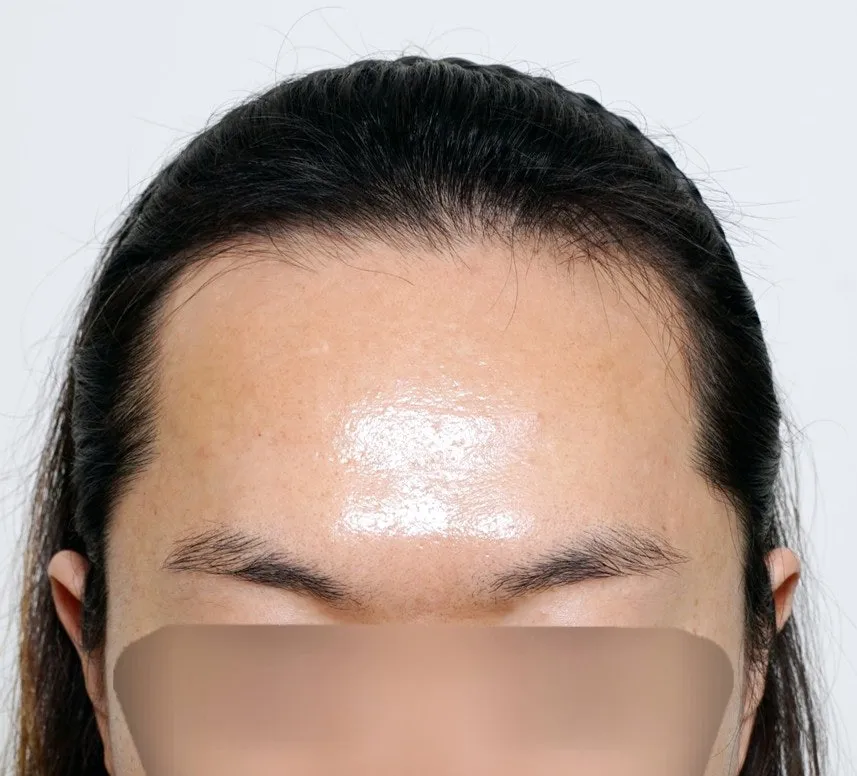
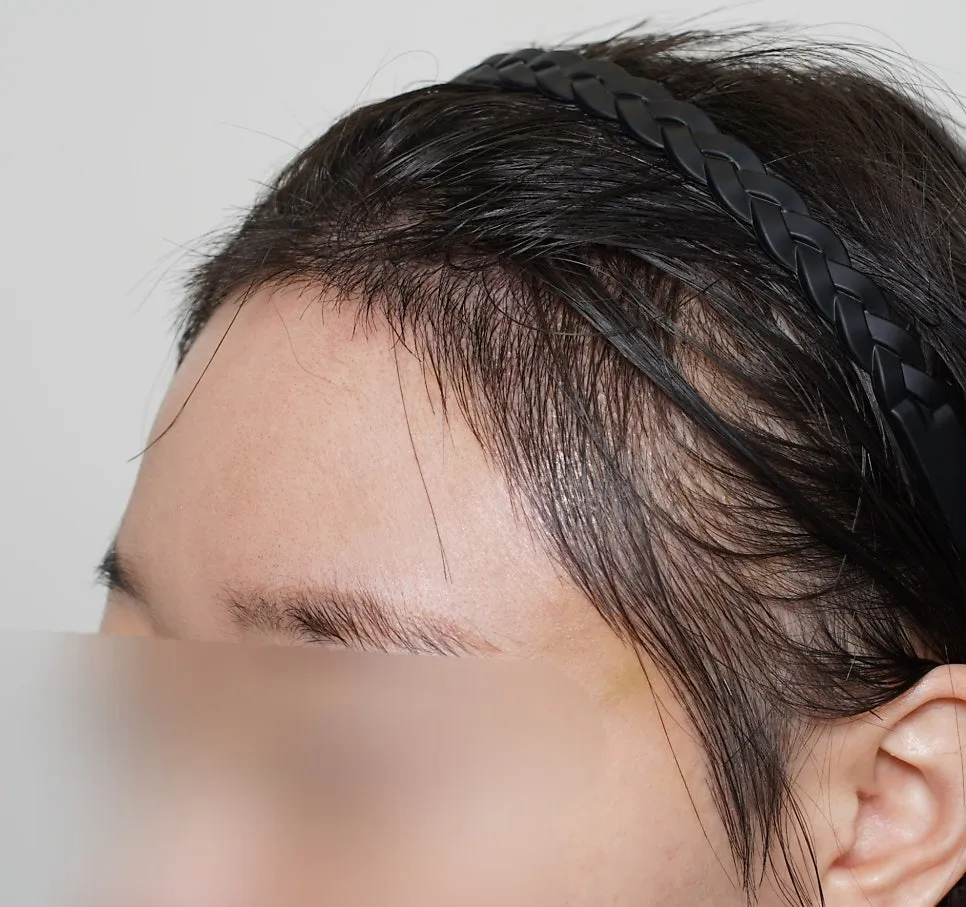
In the photo, the faint-looking area behind the M-shape is where the hairs harvested non-incisionally were planted. The hairs harvested with the incisional method are long, so they look darker, while the hairs harvested non-incisionally are short and look lighter by comparison, but they become similar as they grow.
Stitch Removal on Day 9
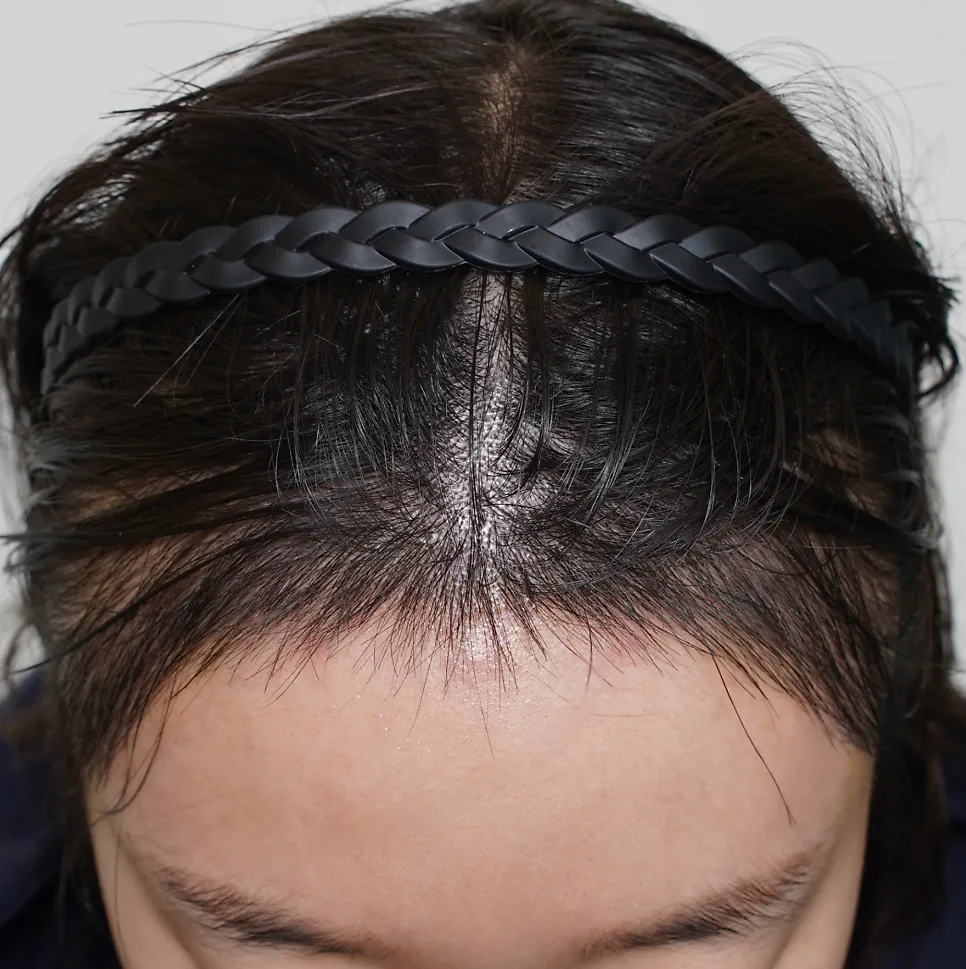
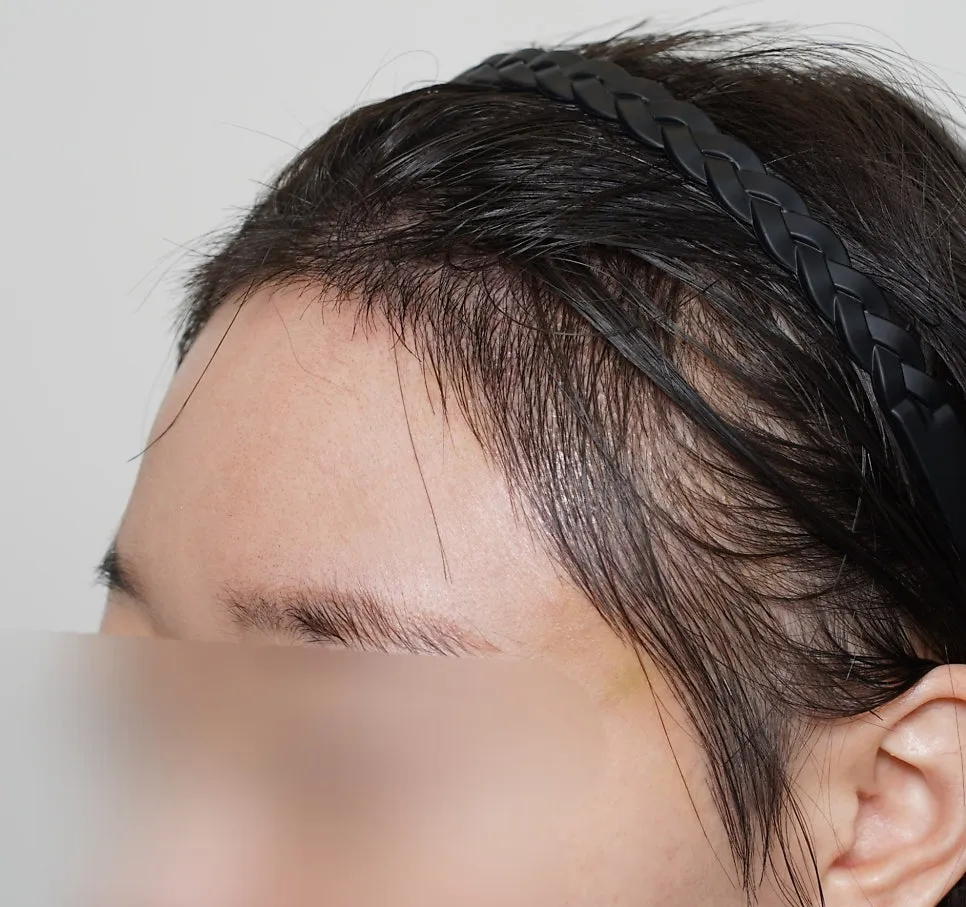
These are from the day-9 suture removal visit. The area where long hair was planted with the incisional method has already settled nicely like fine stray hairs, and the area behind it that was planted non-incisionally is hard to see once you lightly lower the hair.
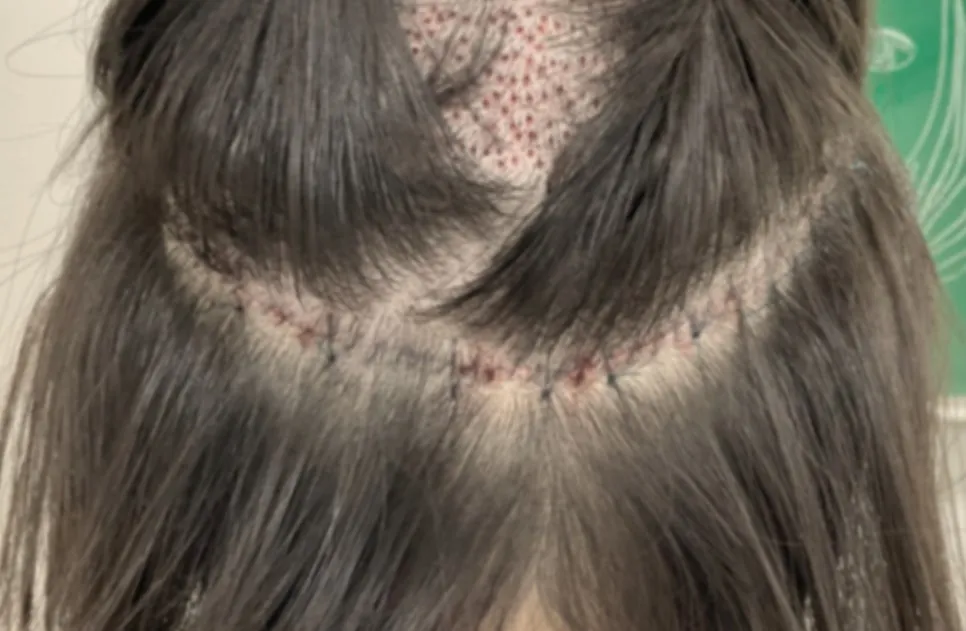
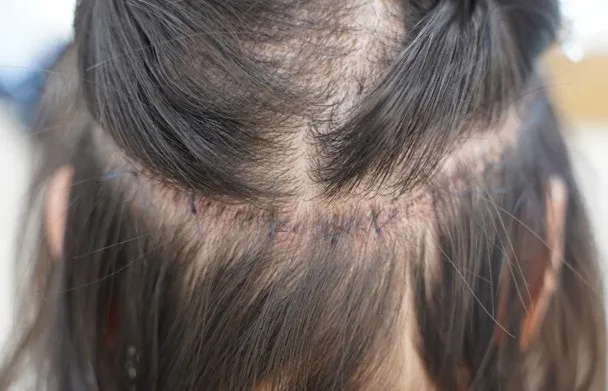
This is a photo of the donor area: on the left is right after surgery, and on the right is day 9, before the stitches were removed. In the non-incisional area, we shave only the minimum by lifting the hair line by line, so even right after surgery it is hard to see when you lower your hair, and about a week later it is hard to see even when the hair is lifted.
Hair planted in the forehead reduction scar
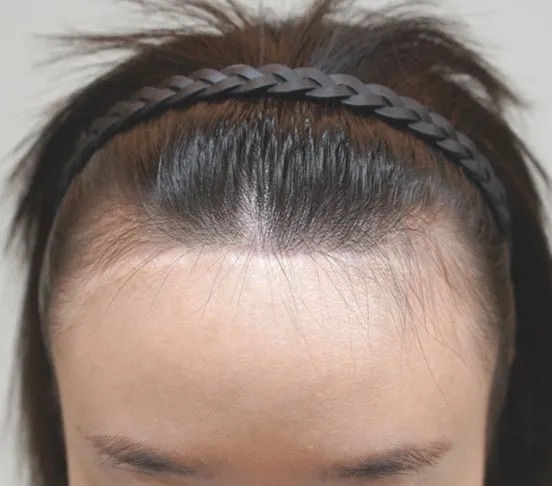
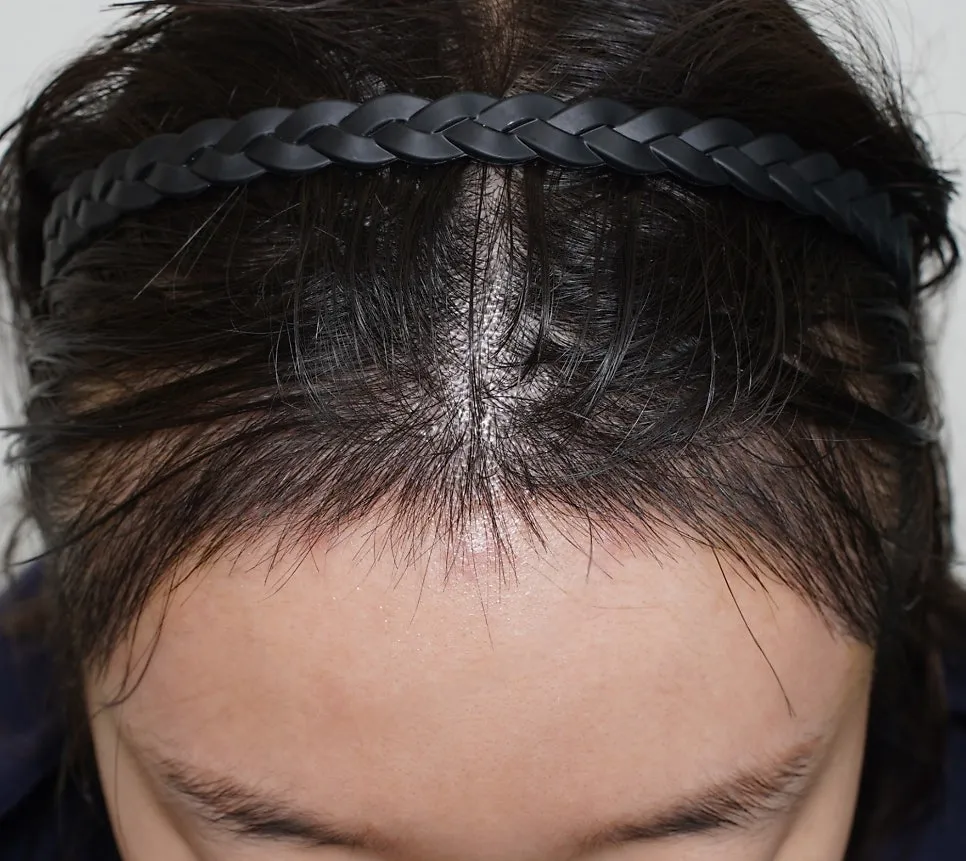
The scar from the forehead reduction had spread to a wider area beneath the skin than it appeared on the surface, probably because the scalp fixation was weak after the forehead reduction. If the hair planted in the scar engrafts well, the hairline is completed without a second surgery. If density is a little lacking, a light retouch of that area is all that is needed, so there is no need to worry too much.
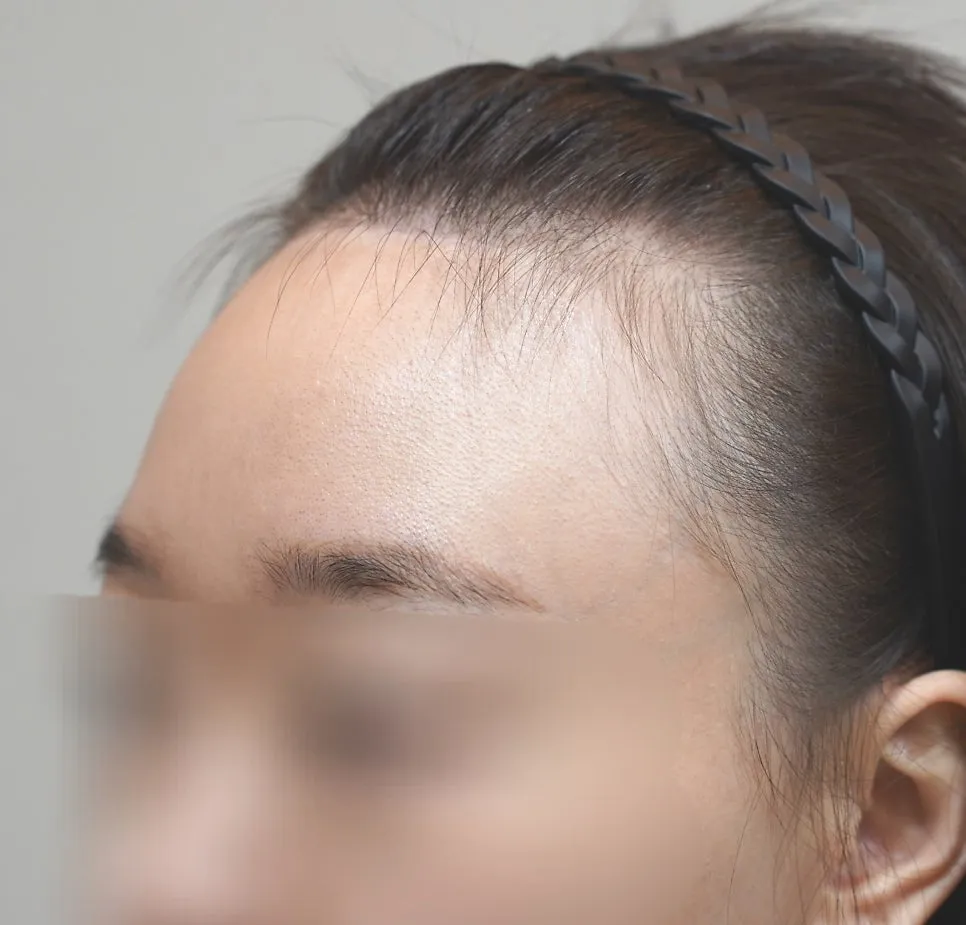
Cases where many hairs are needed for women too
To lower the height, fill in the M-shape, pull the sides, and create the sideburns, many hairs are needed, including for women.
In such cases, since there is not enough hair at the back, one option is to plant slightly less than the desired design. But by using both incisional and non-incisional harvesting, we can also create the hairline you want.
※ After a hair transplant, as with this patient, there may be no pain or side effects, but depending on the individual, swelling, bruising, pain, bleeding, and infection may occur. All photos are used with the patient's consent.