By Dr. Park Sooho · 2025.03.09
Hair Transplant to Fill the Remaining Areas After Forehead Reduction
Forehead reduction has the effect of dramatically lowering the forehead height. However, since there is a limit to reducing the sides and M-shaped areas, after forehead reduction a hair transplant is sometimes used to fill in the remaining areas.
If you have an M-shaped hairline or wide sides, you can fill in the remaining areas with a hair transplant after forehead reduction. If the M-shape is not very deep, the fine hairs at the back move forward and cover the sides considerably, so many people do not need a hair transplant.
Let's look at the case of someone who had a forehead reduction last year and recently had a hair transplant.
Forehead reduction lowering the height by about 2 cm
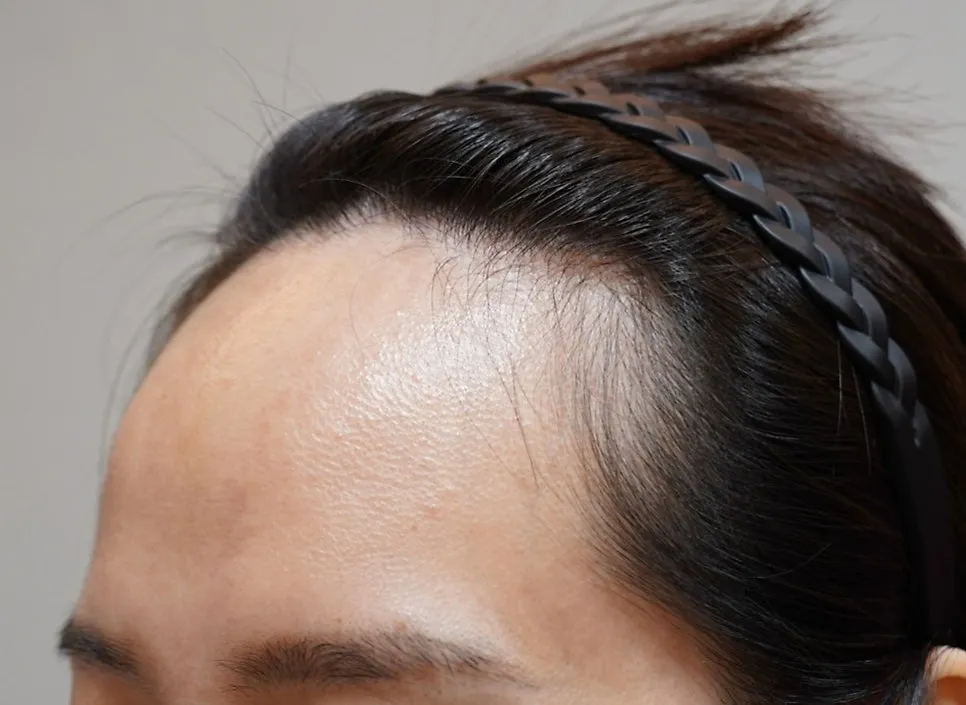
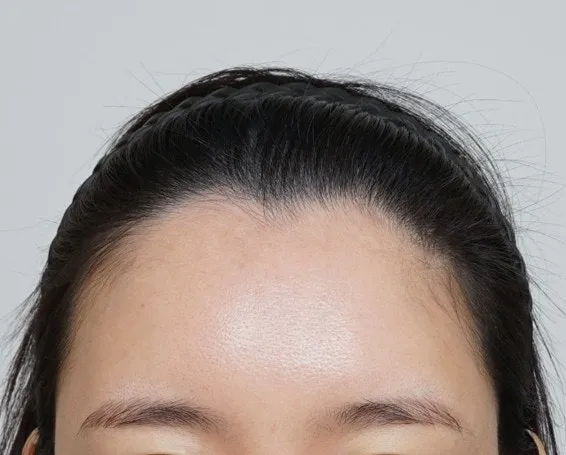
This patient had a high forehead, and seen from the side, a strong sloping-forehead look, so we thought lowering the height by about 2 cm would be good. When lowering the height this much, forehead reduction can produce better results than a hair transplant, so we decided to do the forehead reduction first, because with a hair transplant the density at the parting area is often insufficient.
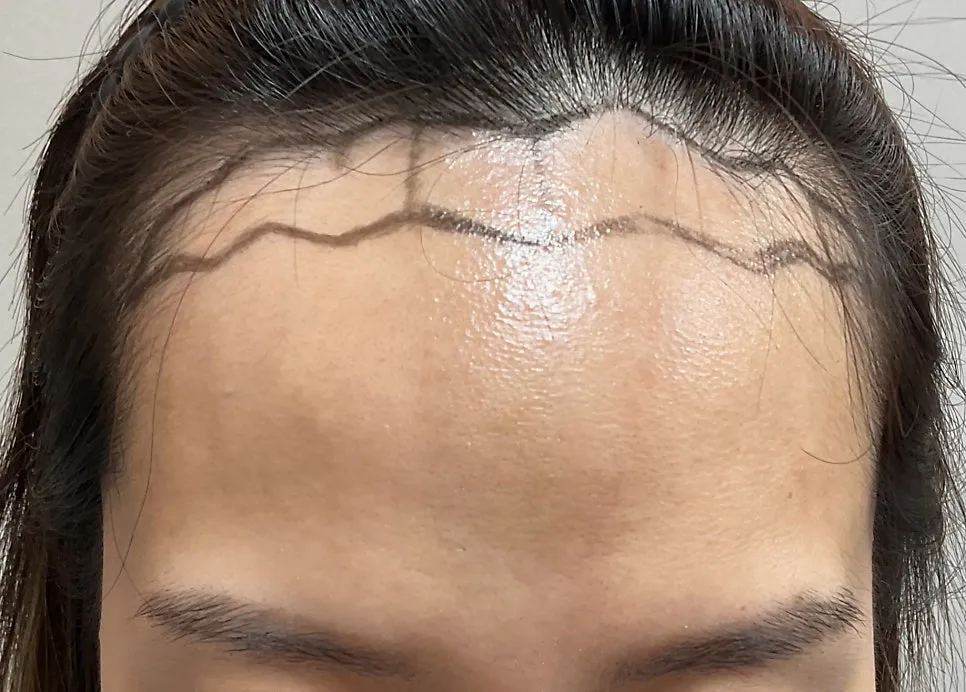
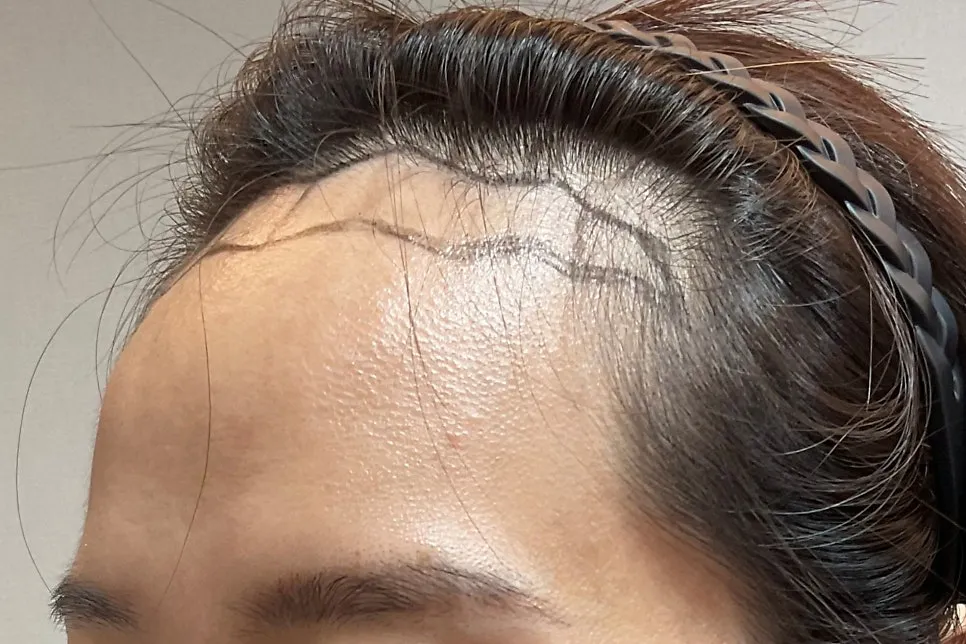
To reduce the forehead up to the point where the sloping forehead begins, we planned a reduction of about 2 cm at the center and about 2.5 cm at the left parting area. Fortunately, the patient's scalp elasticity was good, so with only a sufficient galeal incision, it appeared it would come down as planned.
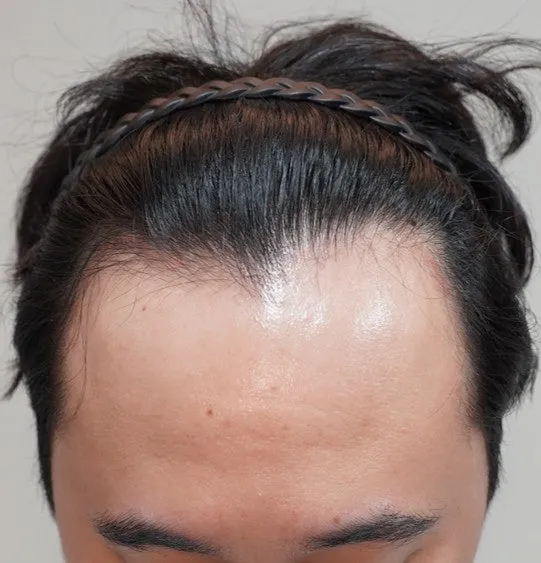
Right after surgery
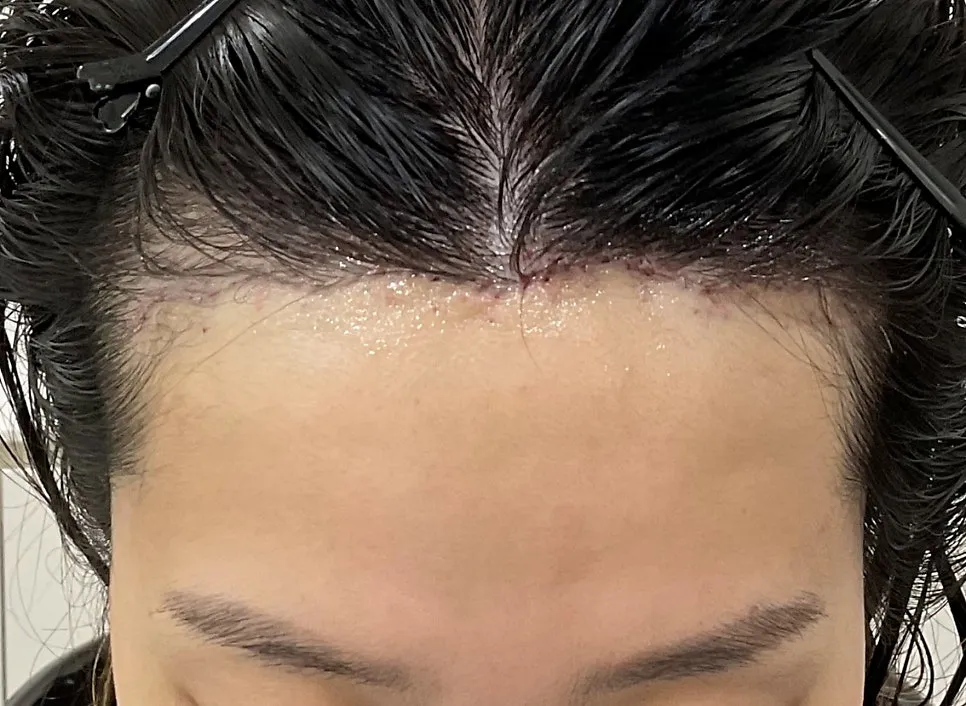
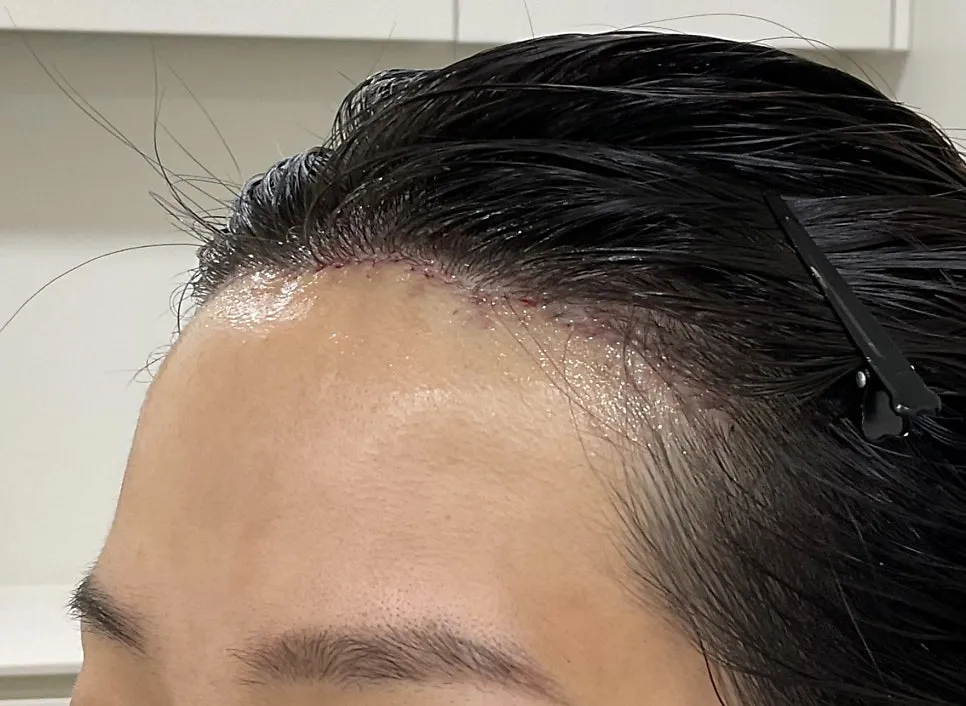
We were able to lower it as planned before surgery. The photo above shows the state right after the hair was washed following surgery. It is slightly swollen because of the anesthetic, but once the anesthetic wears off, this swelling will go away quickly.
Suture removal one week later
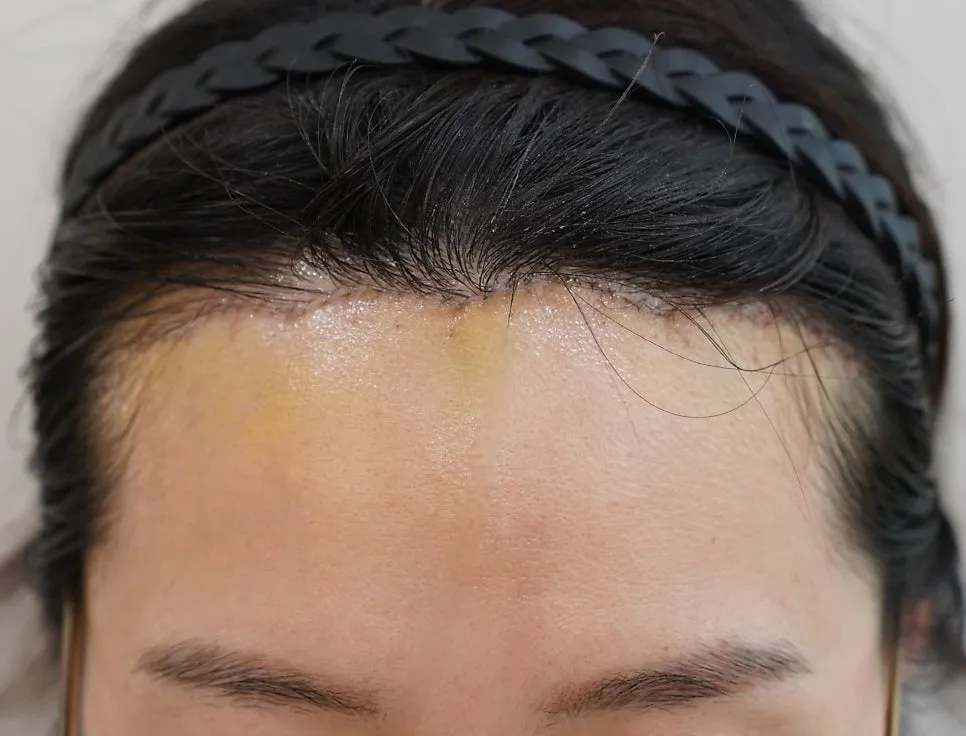
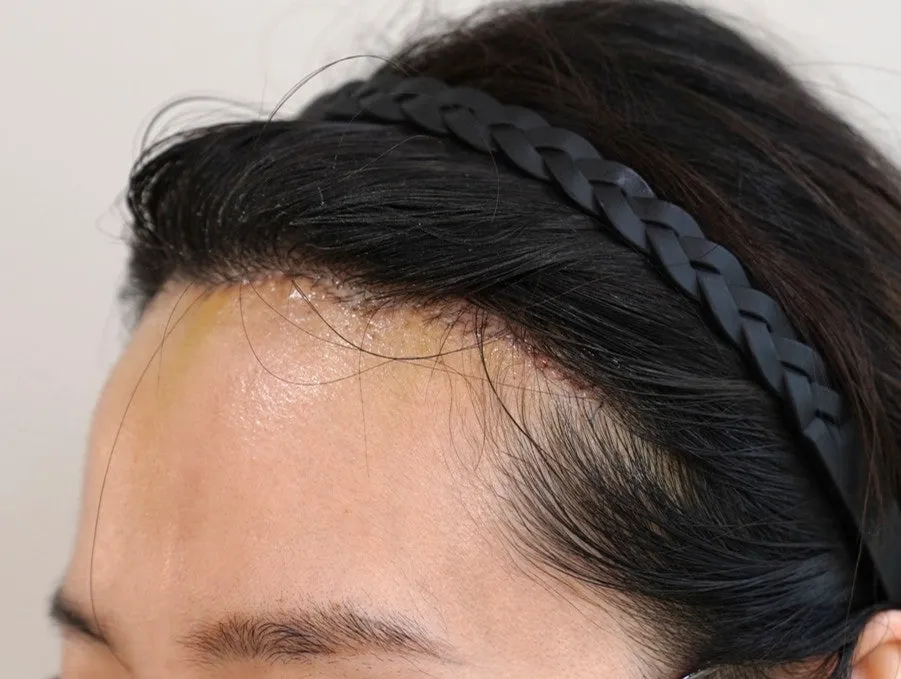
These are photos from the suture removal visit one week later. As the photos show, from right after surgery you only need to apply ointment well, without bandages or dressings, and if you let your hair down a little, the scar is barely visible. Since the fine hairs have not yet grown in front of the suture line, the M-shaped area looks less covered.
As in the photos, yellow bruising sometimes forms around the suture site, but it is very rare for bruising to extend down to around the eyes.
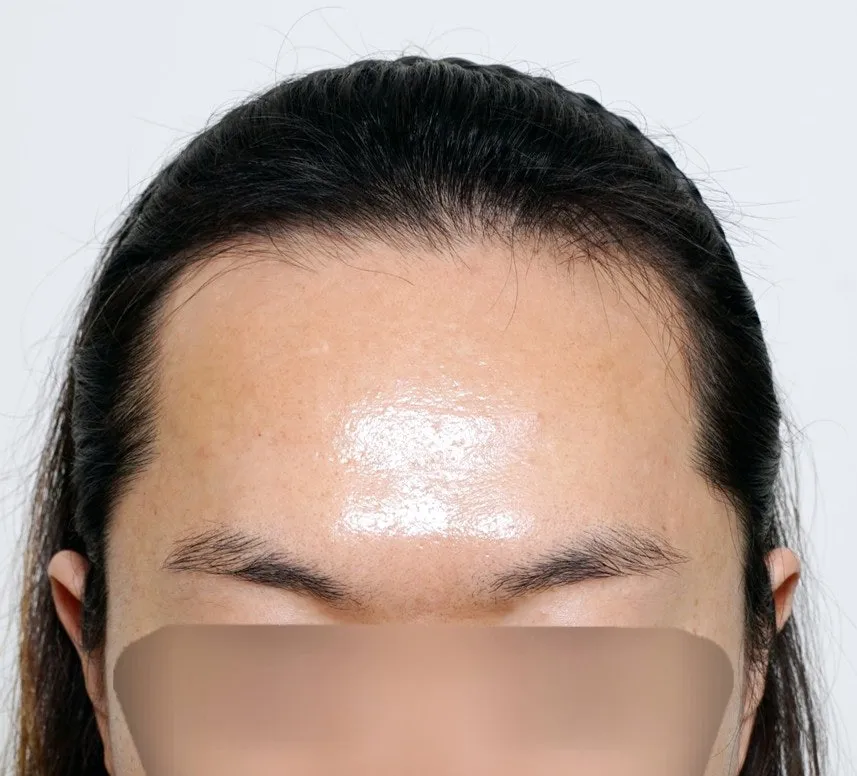
Six-month final follow-up
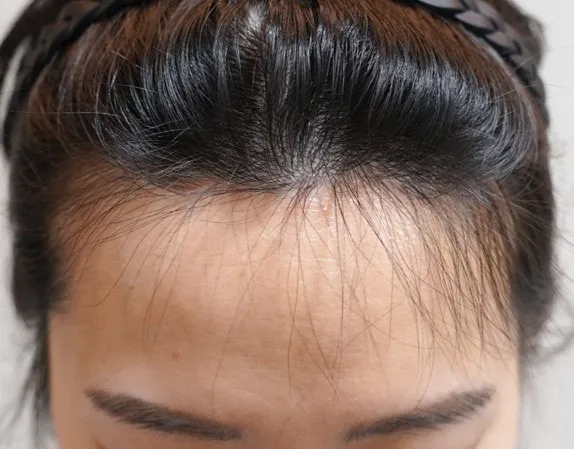
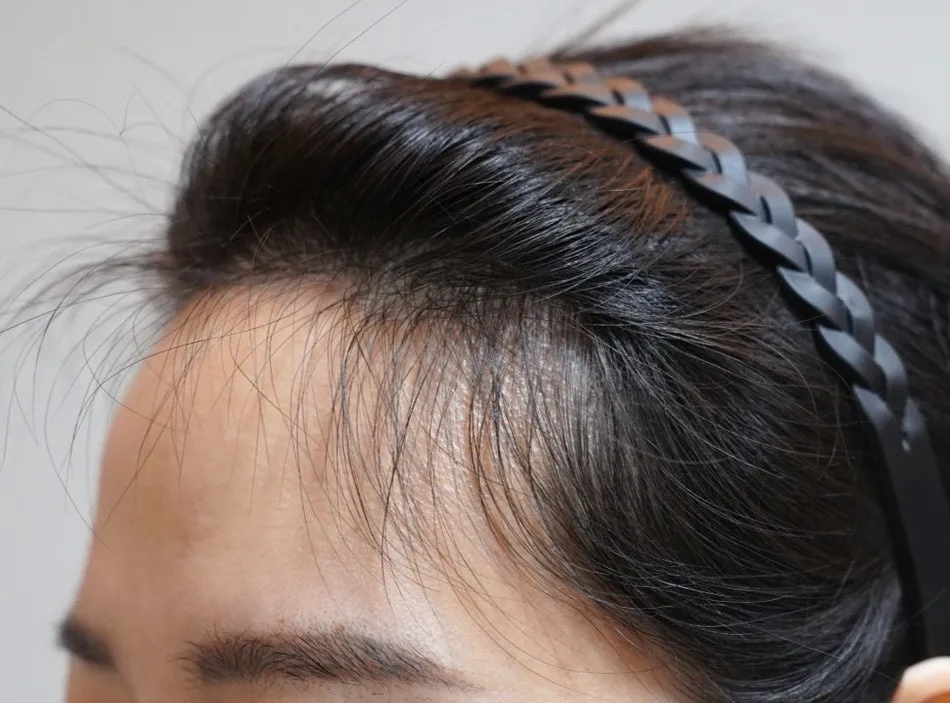
After forehead reduction, patients come in for a final follow-up after six months. As I said at the beginning, forehead reduction alone has its limits in the M-shaped area and sides, so a hair transplant is planned if needed. In this patient's case, many fine hairs grew around the forehead reduction suture line, so much of the M-shaped area that looked empty right after surgery is now covered.
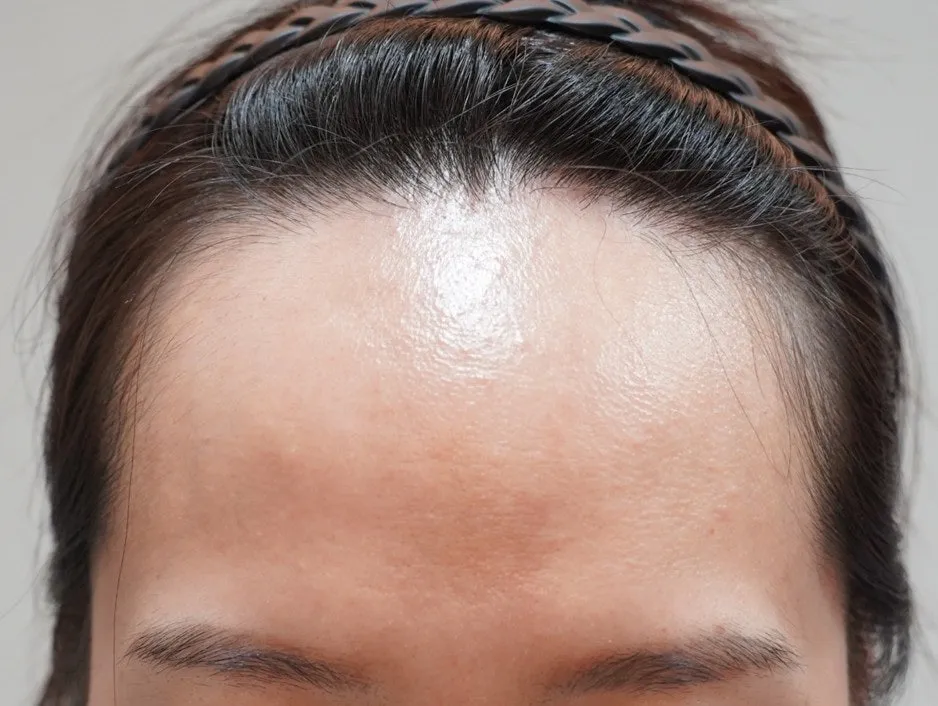
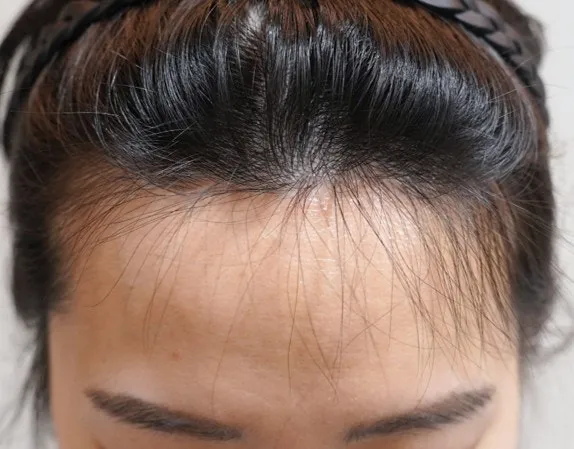
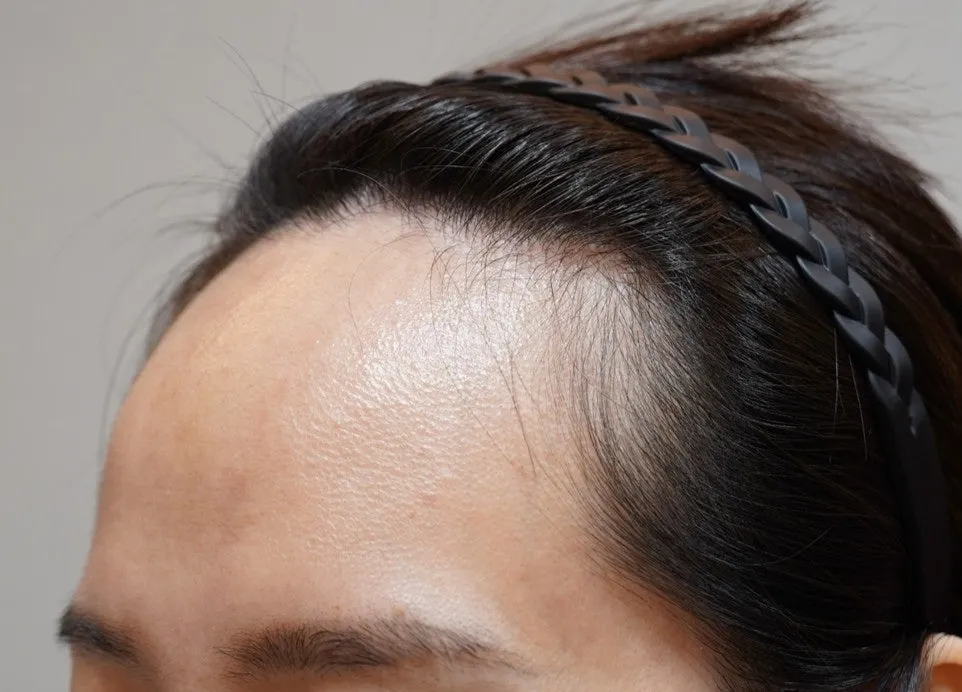
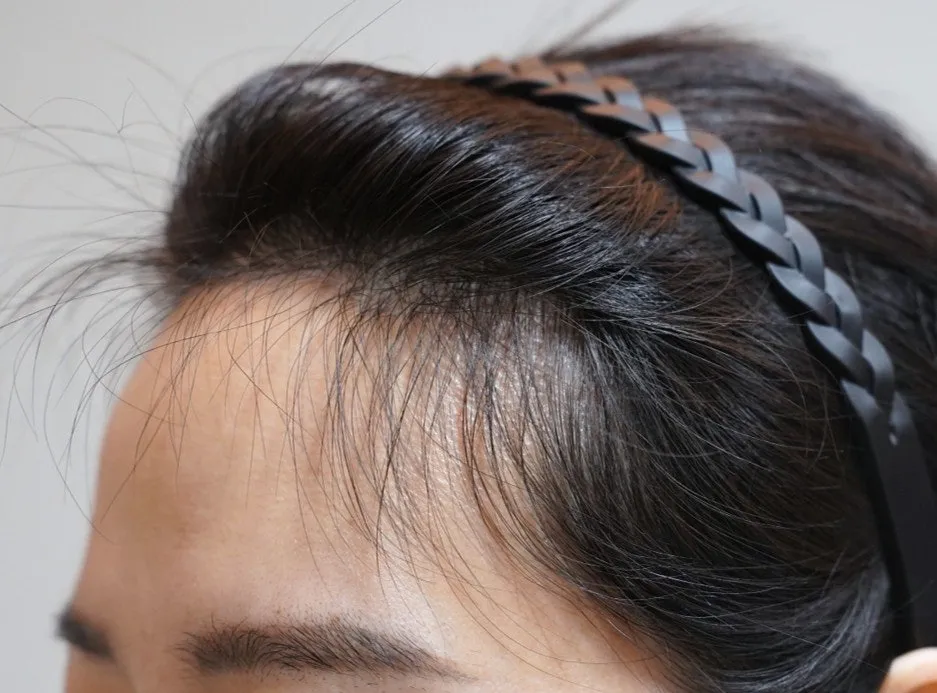
As with the patient above, when forehead height and the flat forehead are greatly improved by forehead reduction and the M-shaped area is partly covered by fine hairs, many people choose not to have a hair transplant. This level alone means there is no major inconvenience, unless you wear a fully slicked-back style.
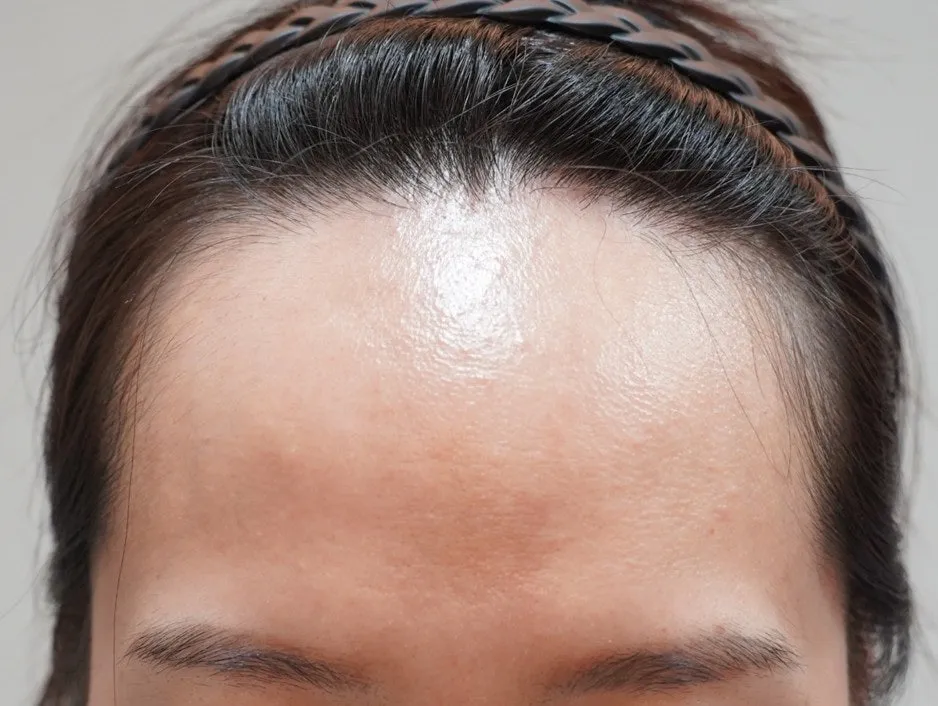
Remaining M-shaped area with an incisional hair transplant
This patient also wanted to fill in the remaining M-shaped area, so we created the desired line with about 2,000 hairs using an incisional hair transplant.
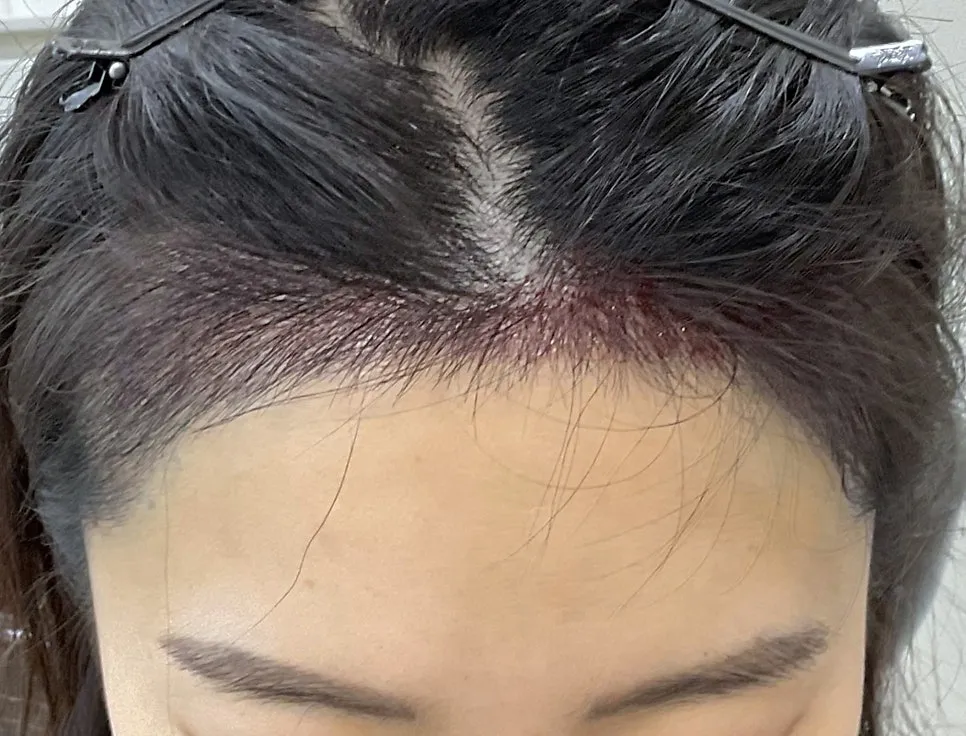
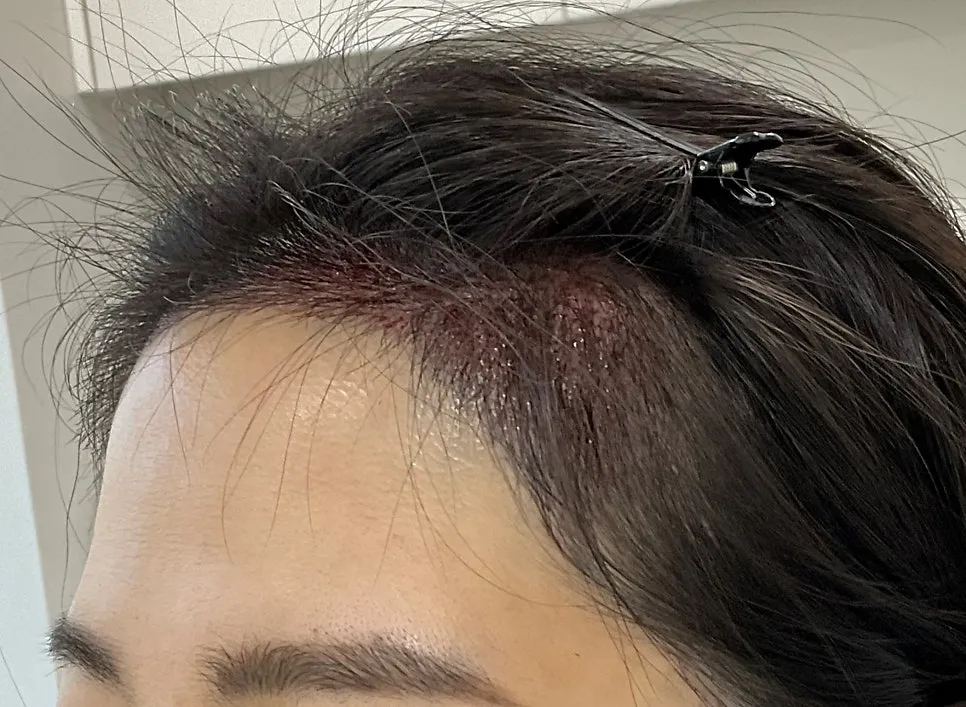
※ After forehead reduction and hair transplant, side effects such as pain, swelling, inflammation, and bleeding may occur.