By Dr. Shin Seungkyu · 2025.03.03
Possible discomfort in the early stage
Forehead reduction can lower the height substantially, so it is a surgery with a very large effect, where the forehead looks much smaller. However, like any surgery, there may be some discomfort in the early stage. Most of it may be symptoms or phenomena that pass quickly, but I will explain the things that are good to know using one patient's case.
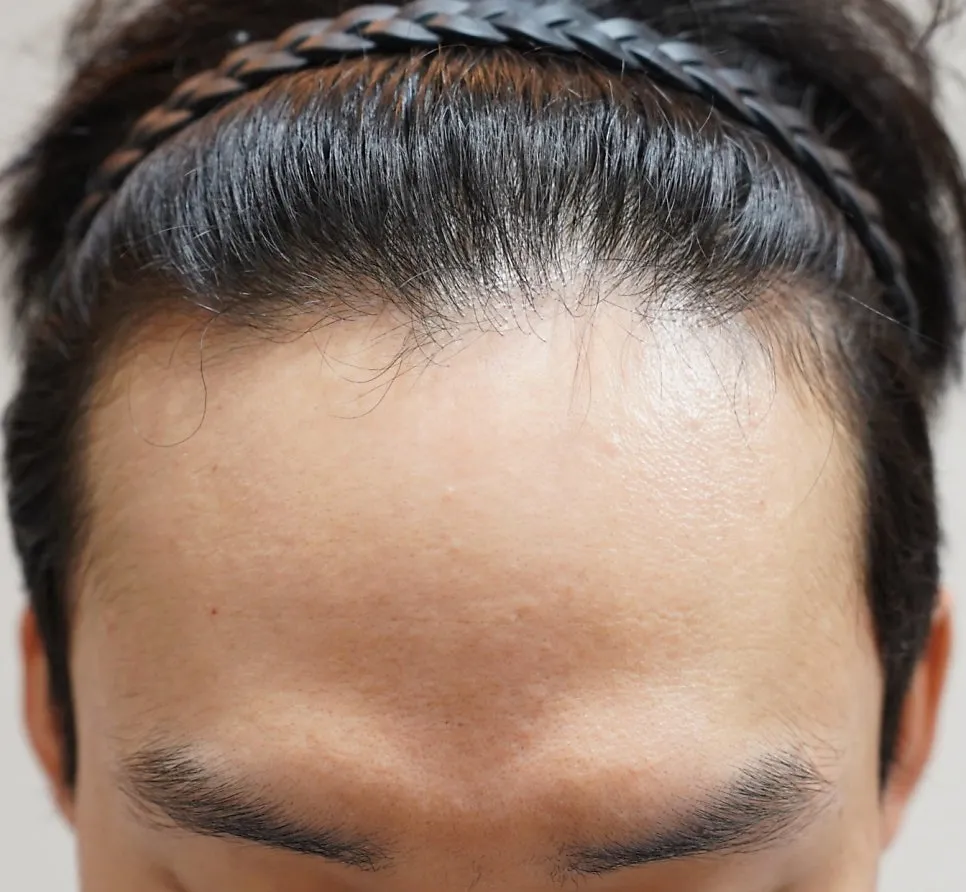
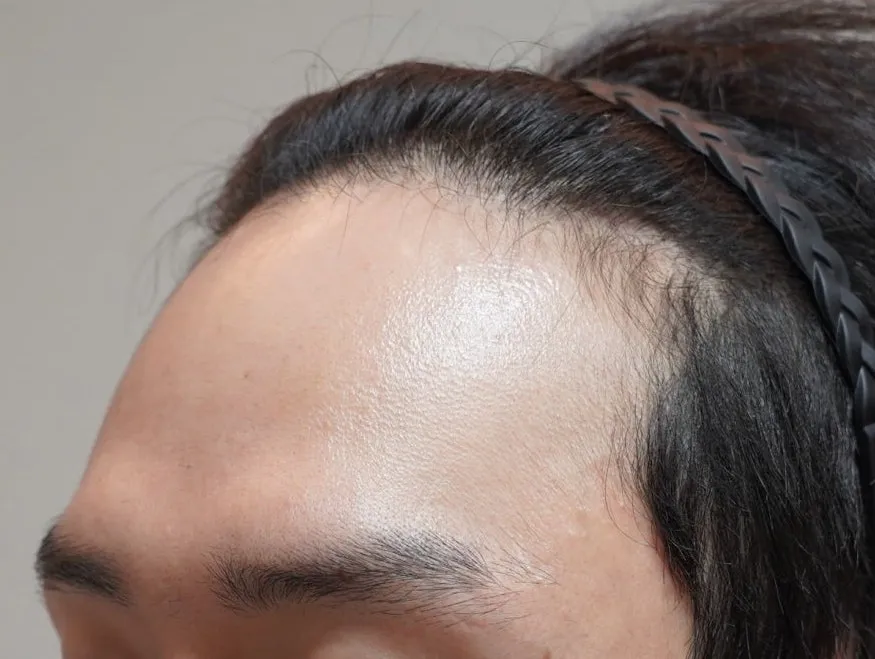
Sloping forehead, forehead reduction of 1.7 cm
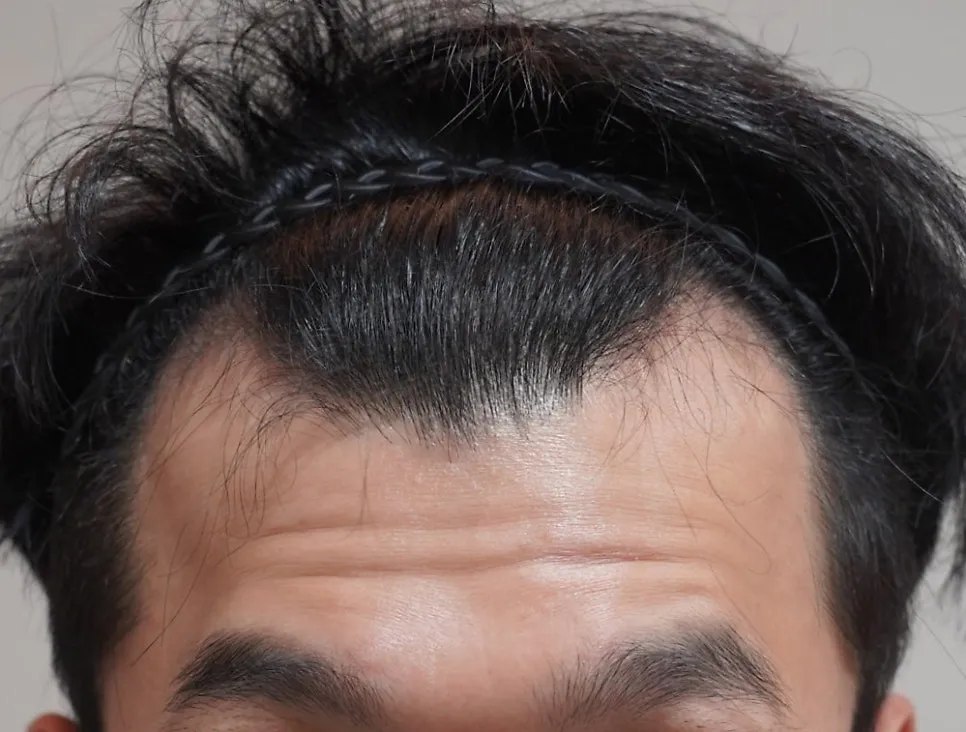
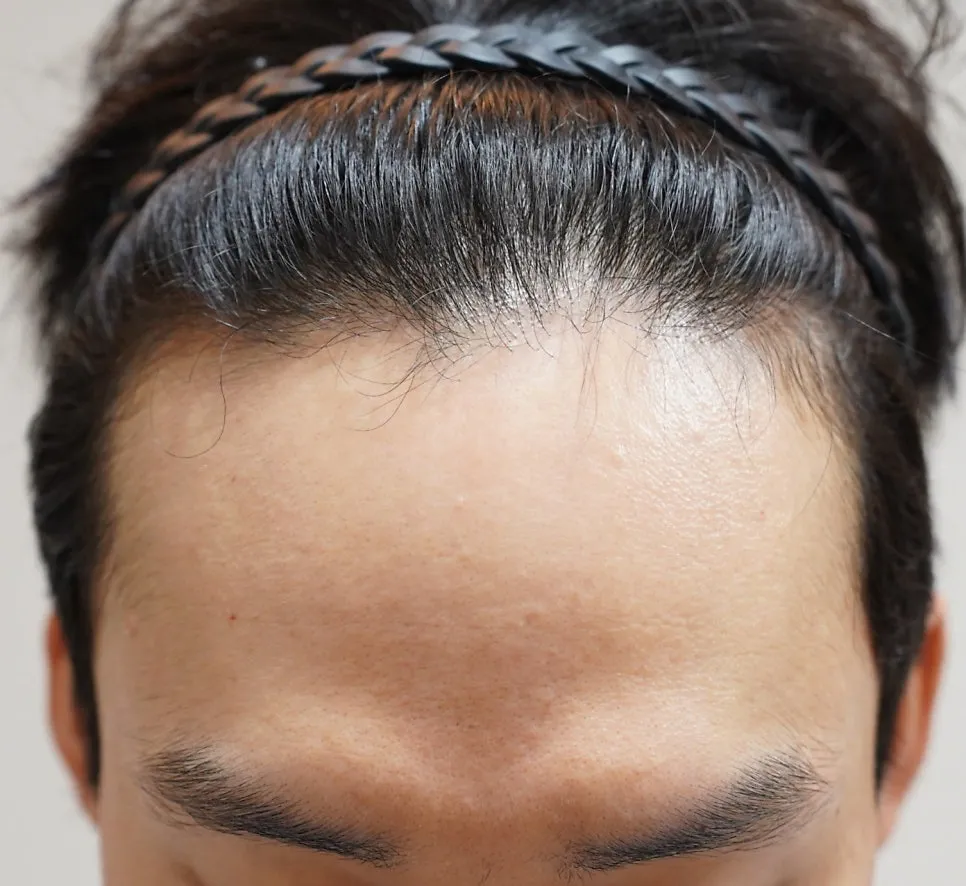
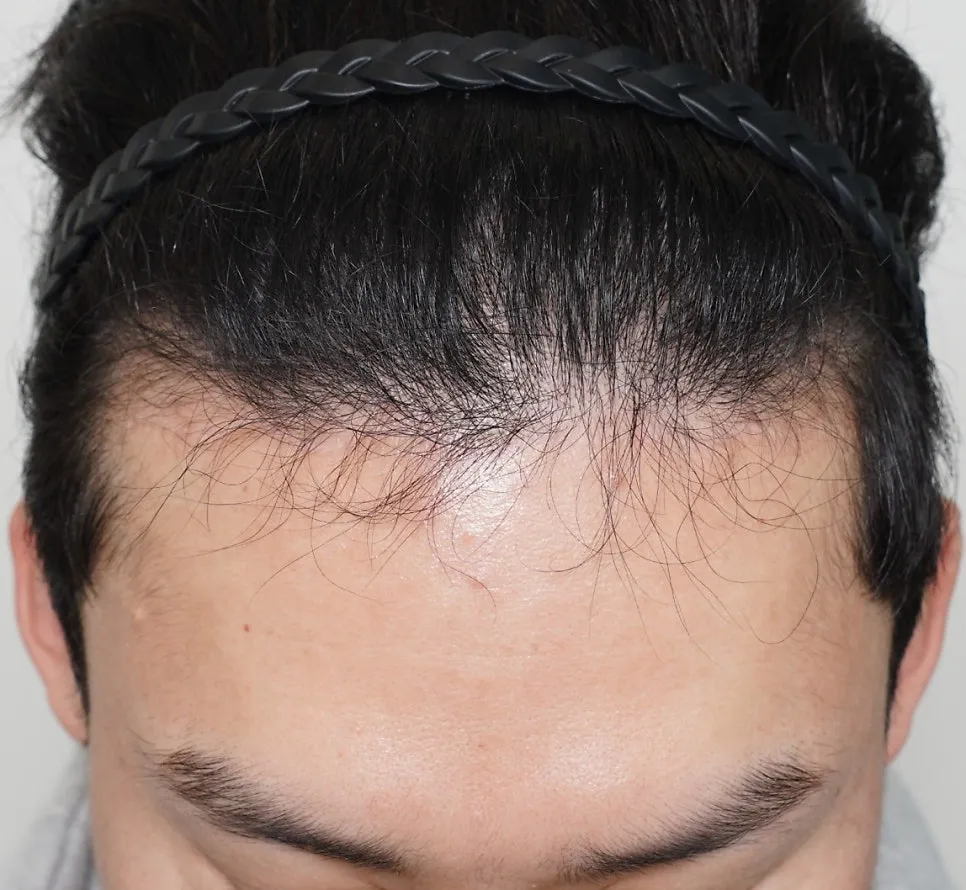
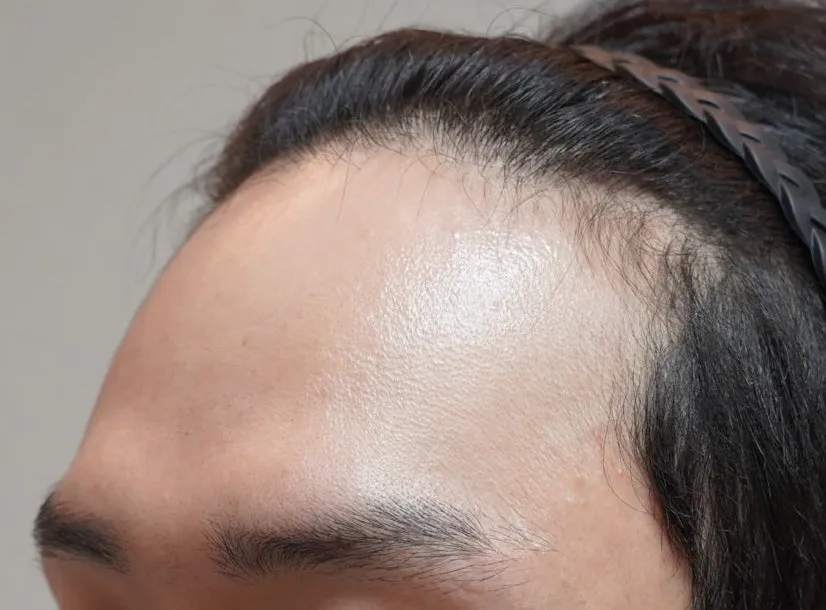
This patient was troubled by a high forehead. After searching around, they found a clinic that does both hair transplant and forehead reduction, and visited BANAL to find out which method would be appropriate. As you can see in the photos, the forehead recedes backward, and in cases like this it looks wider than the actual forehead height and gives a slightly receded impression. So we recommended a forehead reduction that could lower the height as much as possible.
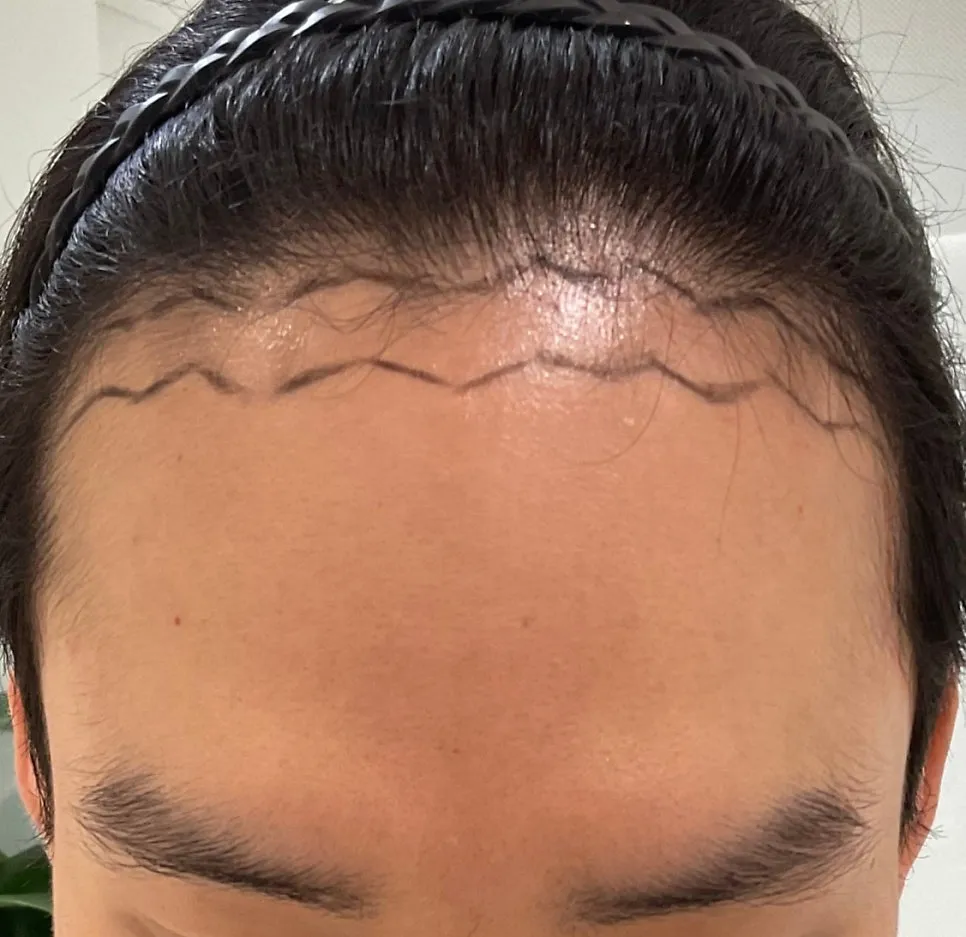
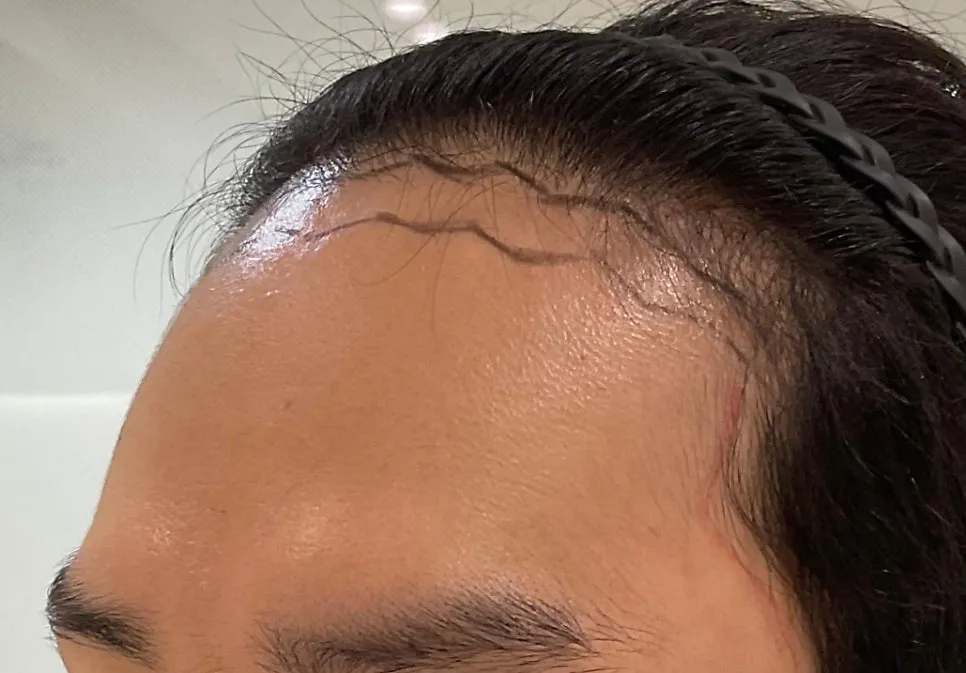
The scalp was not particularly firm, but in men the forehead often does not come down as much as one would expect. So we designed a reduction of about 1.5 cm, and explained that we would try to lower it further during surgery if possible.
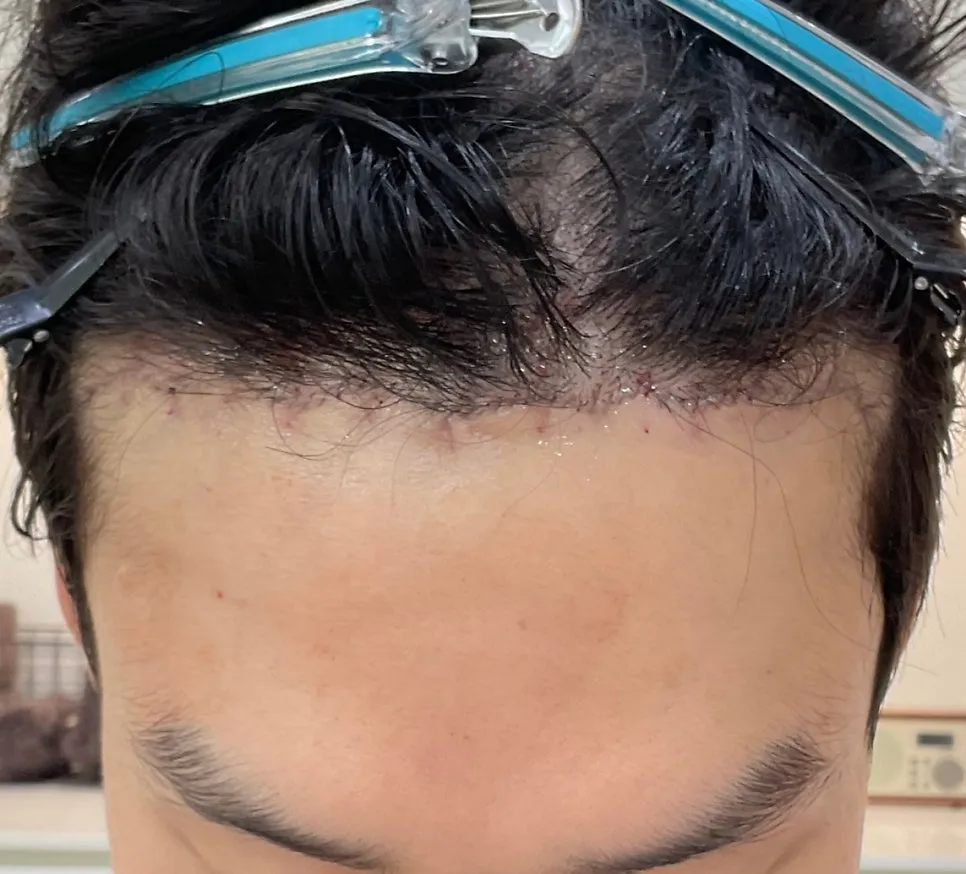
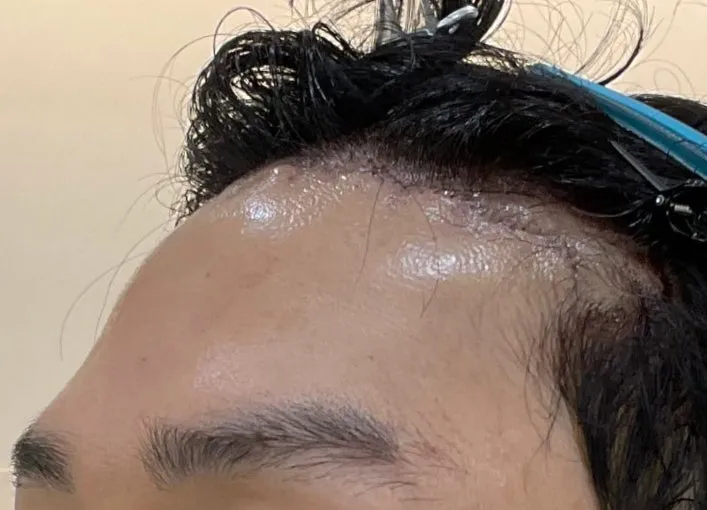
The scalp was thin, so we operated carefully. This is the photo right after surgery, where the forehead was lowered by about 1.7 cm.
Bumpiness of the suture line and eyebrows
The discomfort right after surgery is that the skin along the suture line may look slightly bumpy. Because of the nature of the suturing method used for a firm closure, it looks a bit bumpy at first, but it smooths out quickly.
Also, the eyebrows may look slightly pulled up. Because we do not dissect below the suture area, this is temporary, and this part will also return to its original position.
Pain and a soft feeling on the day of surgery
On the day of surgery there was slight pain, and after taking painkillers (Tylenol) it improved to some extent, the patient said. Since it is surgery, it cannot be completely comfortable. Some people say they had no pain at all, while others feel pain or discomfort, and it seems to be controllable to some extent with painkillers.
The patient also said that from the first or second day after surgery, the scalp felt slightly soft, as if filled with water. To lower the scalp, a certain range of dissection is needed, and when that area is pressed, air may be pushed and cause a crackling sound, or even a small amount of fluid can make it feel squishy.
Most of the time it is absorbed on its own, but sometimes if fluid collects a lot, there may be cases where it needs to be drained. Most people seem to feel only a slight sensation like that, and it passes without any problem.
Suture removal and wound care
After going through this, they came in to have the sutures removed.
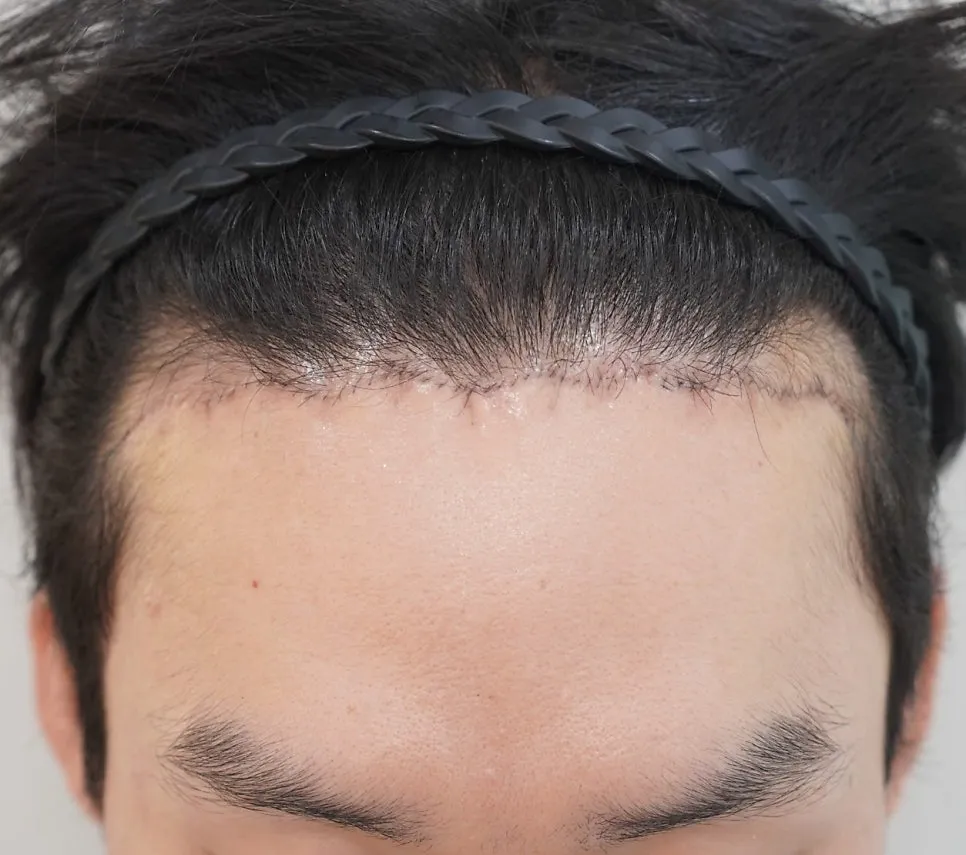
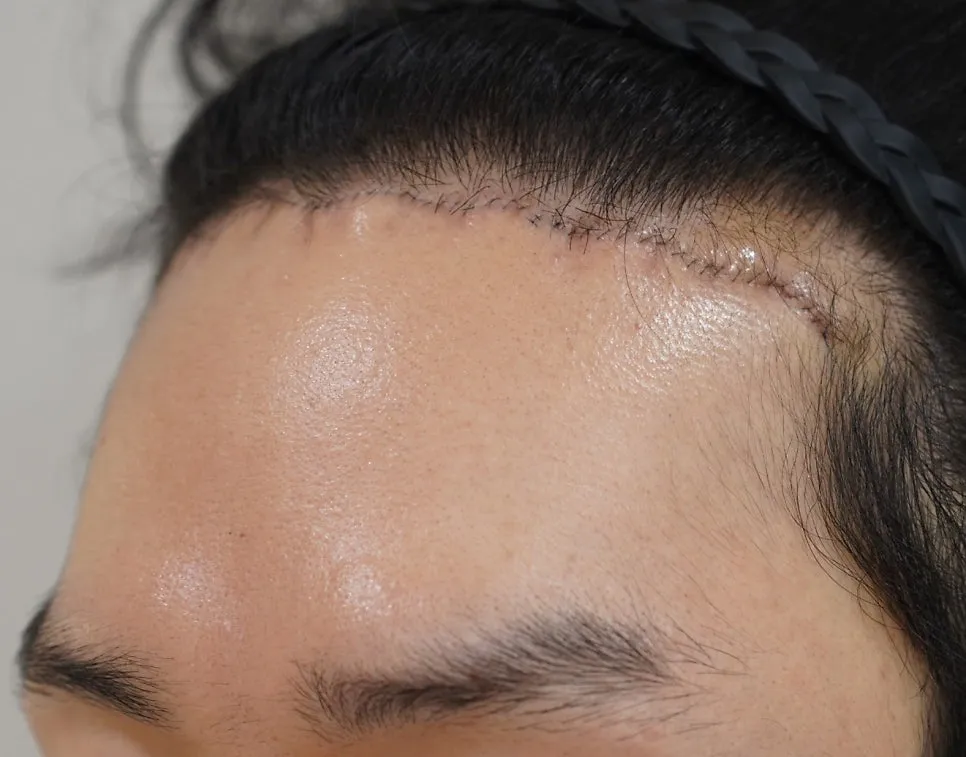
Because they took good care of it, the wound was in good condition. From right after surgery, we instruct people to apply ointment along the suture line, but if you apply too much, it clumps and can look messy. So it is best to apply just a small amount, as this patient did, to keep it in this condition.
Also, some people are afraid and do not wash their hair, but please be sure to wash your hair properly and keep your scalp clean.
210 Days After Surgery
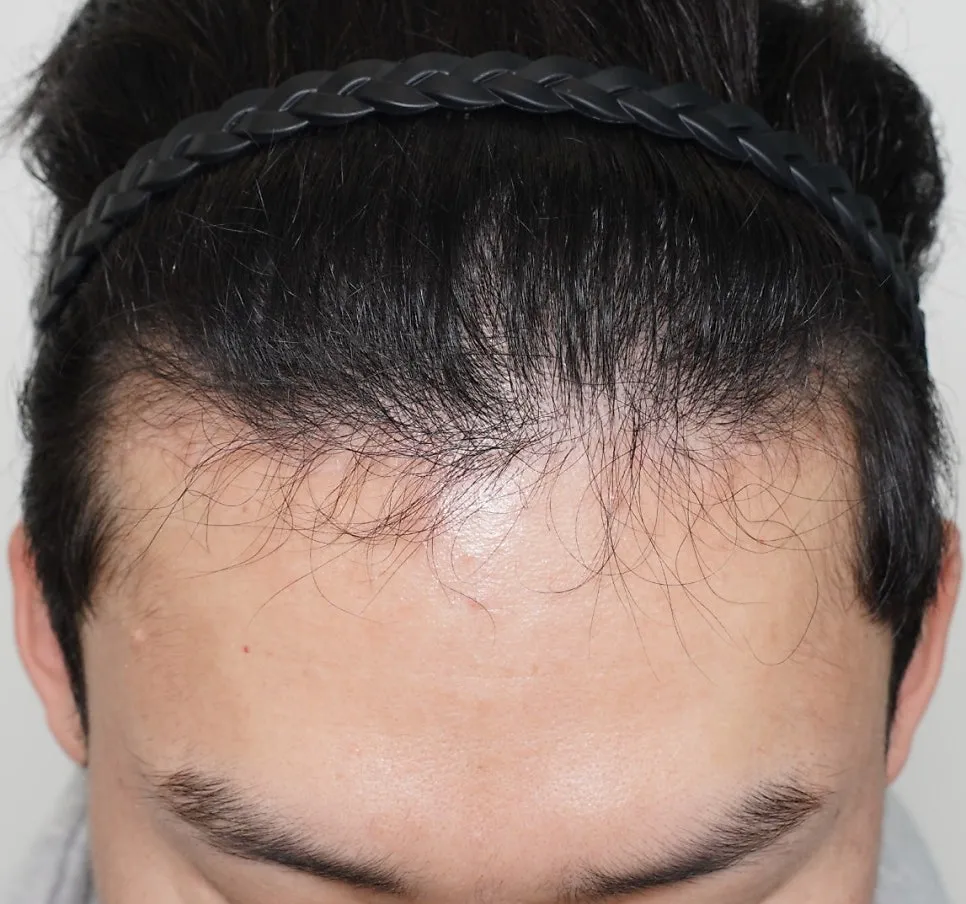
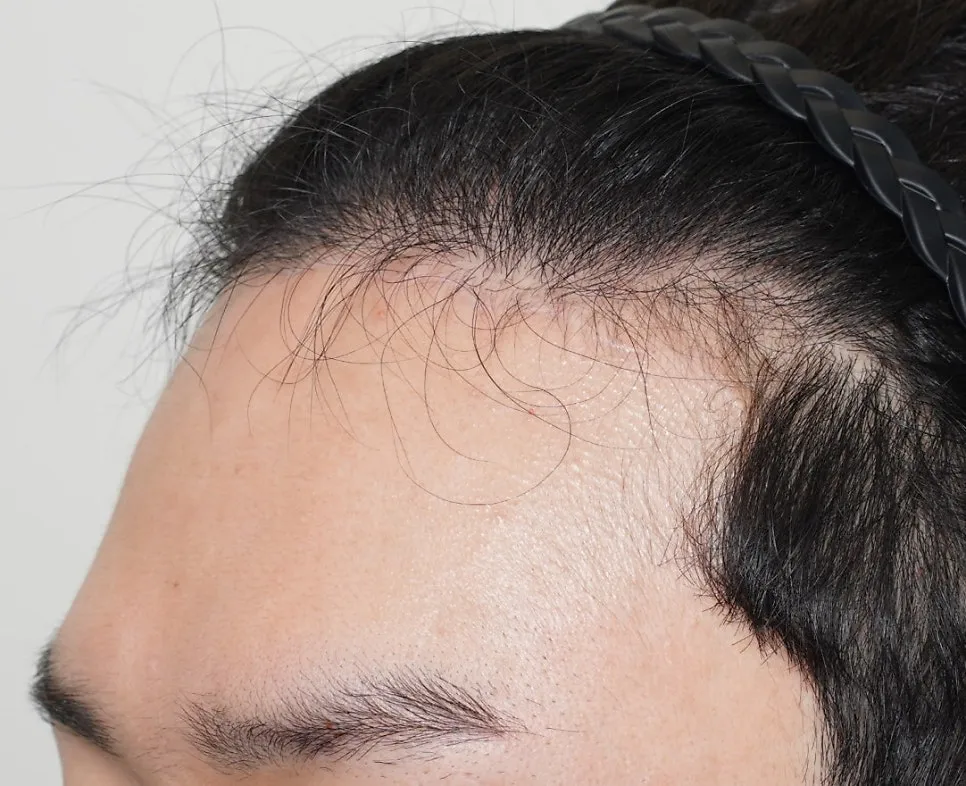
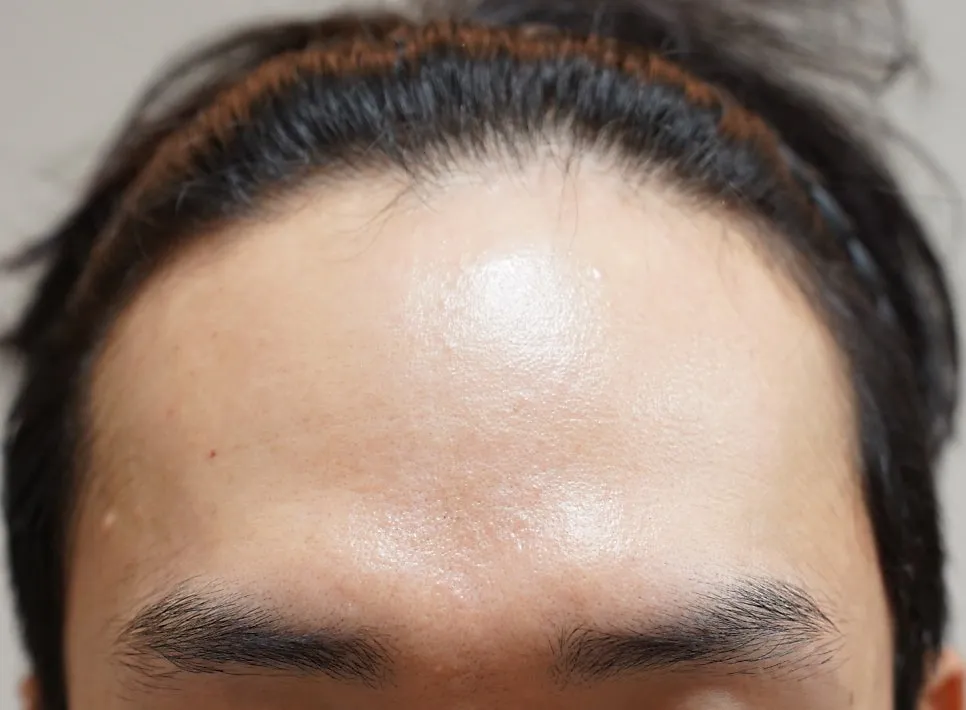
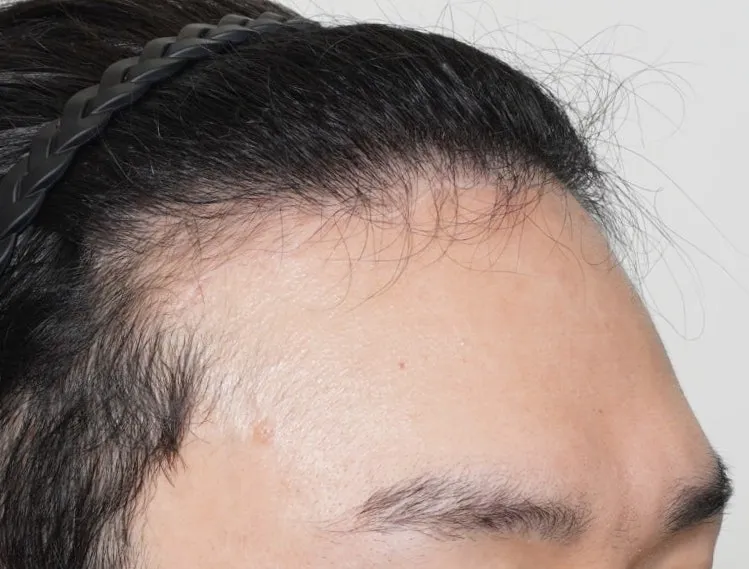
About 210 days after surgery, they came in for a follow-up. They were satisfied with the much narrower forehead, and they did not pay much attention to the scar, which looks like a white solid line.
Sometimes they say that when they touch the forehead inside the M-shaped lines on both sides, they feel a tingling sensation. Abnormal sensations or reduced sensation can be felt during the stage when the nerves are recovering. Some people recover nerve function quickly, but for others it takes about 1 to 1.5 years, so I told them it will improve soon.
Sometimes people with a thin scalp at this stage feel the Endotine used to secure the scalp. But Endotine starts to dissolve from the sixth month and is completely gone by one year.
Let me compare the photos before and after surgery once more.
Slightly tilted head view
Front view
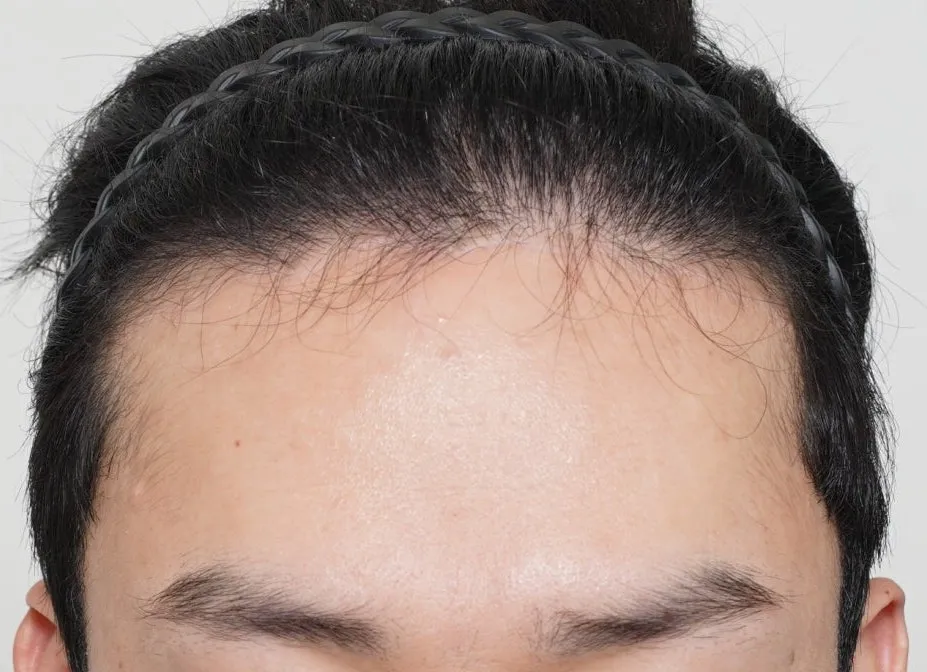
Left side view
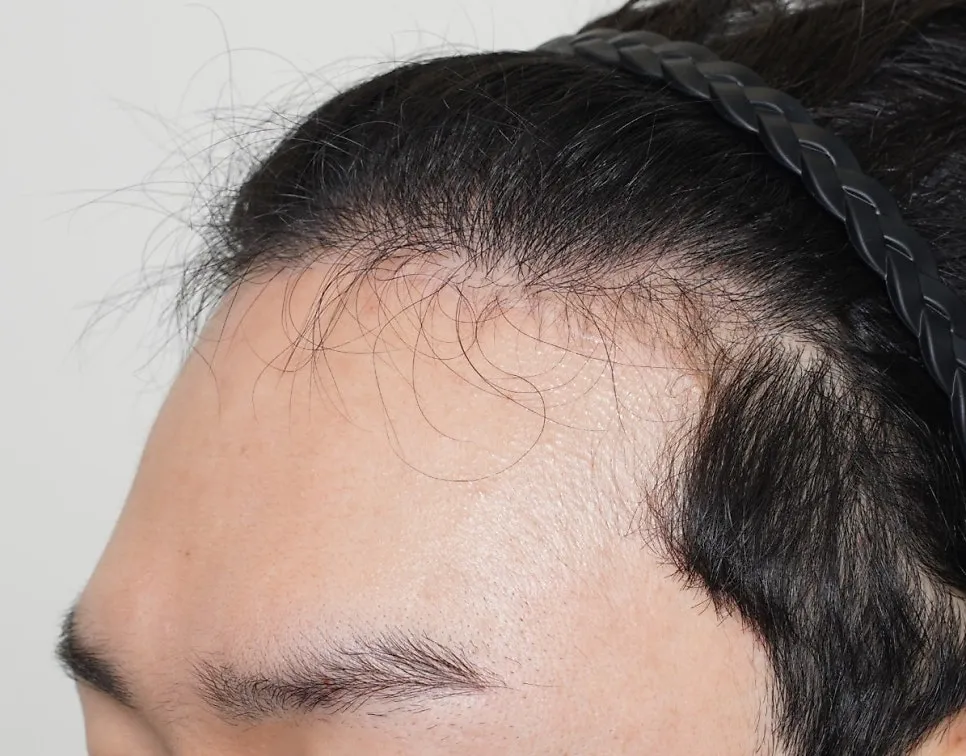
Right side view
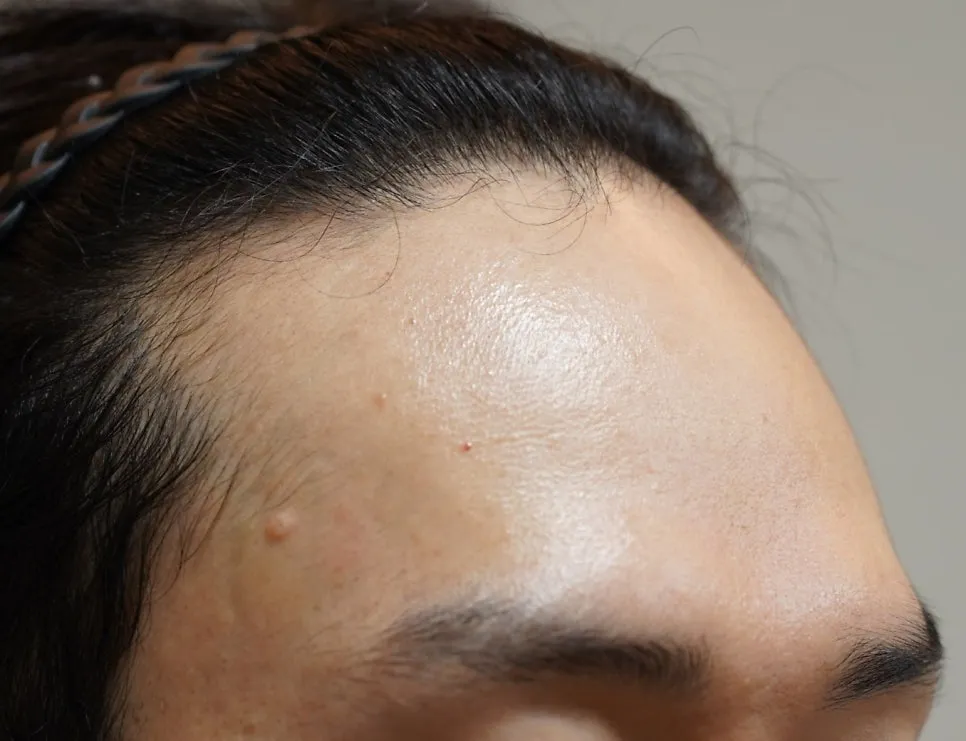
Temporary and manageable discomforts
As this shows, forehead reduction is a good method for reducing forehead height, and most of the discomforts after surgery are temporary and manageable. If you expect to see the clearly changed look six months after surgery, the early discomforts seem to be within the range that can be overcome.
We will strive to provide the greatest possible results with the least possible discomfort.
※ After surgery, side effects such as pain, infection, bleeding, and swelling may occur.