By Dr. Park Sooho · 2024.11.03
A Welcome Visitor Back After Six Months
Yesterday, a welcome visitor came in. This is the patient who had forehead reduction and a hair transplant at the same time six months ago. Because bleeding occurred at the suture site the day after surgery and the sutures had to be redone, the patient had been worried about the scar, but now they cheerfully said the scar no longer bothers them.
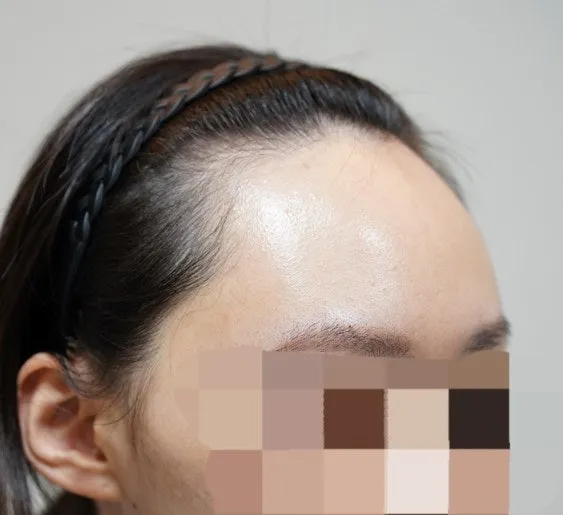
Forehead Reduction and Hair Transplant at the Same Time
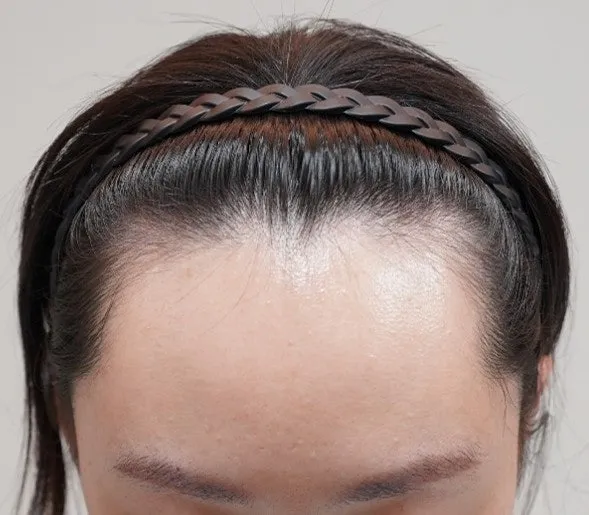
Because the forehead was high and looked receding, and the sideburns were thin while the temple side looked wide, I recommended dual forehead reduction, which can reduce the high forehead with forehead reduction surgery and the temples and sideburns with a hair transplant at the same time. The patient lives far away and said it is hard to come to Seoul often, so it would be good to resolve everything in one go.
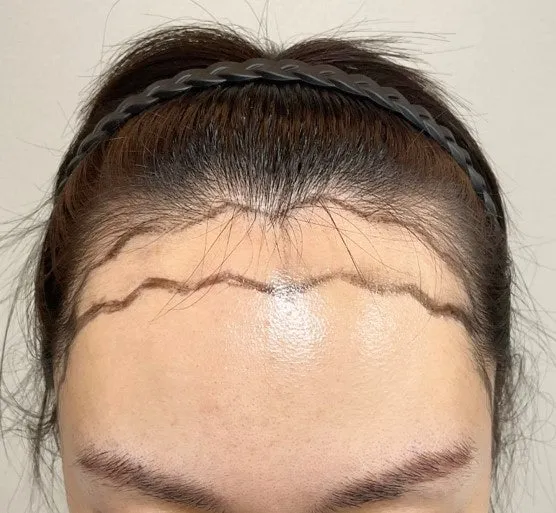
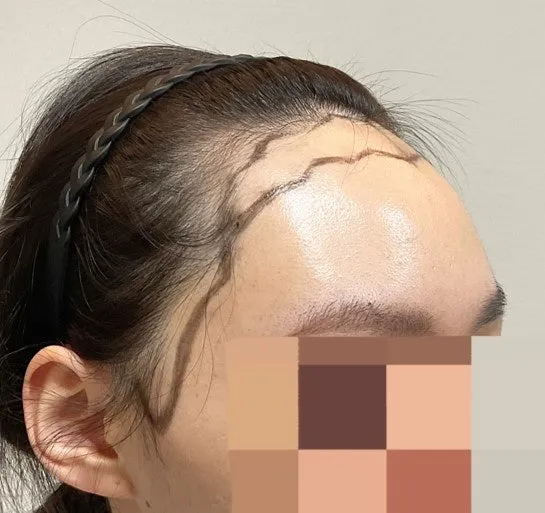
Because the scalp is not very elastic, I designed the forehead reduction to lower the hairline by about 1.8~2.0 cm, and decided to transplant the temporal peak and sideburns along lines that do not overlap with the forehead reduction incision. If the forehead reduction incision and the hair transplant area overlap a lot, it is better to do the hair transplant six months after the forehead reduction rather than doing both at the same time. There was also a slight M-corner, so I planned to use the existing baby hairs well to cover the M-shaped forehead.
During surgery, I felt that lowering it only 1.8 cm would be somewhat insufficient, so I made the galeal incision more thoroughly and in the end was able to lower it by 2.2 cm. It took a bit longer.
Six Months Later
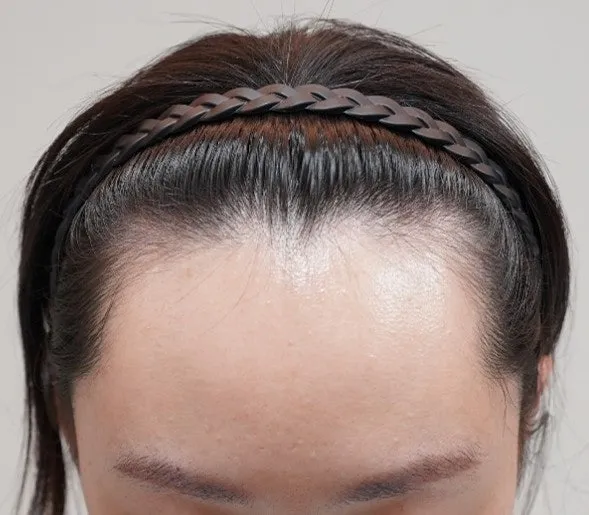
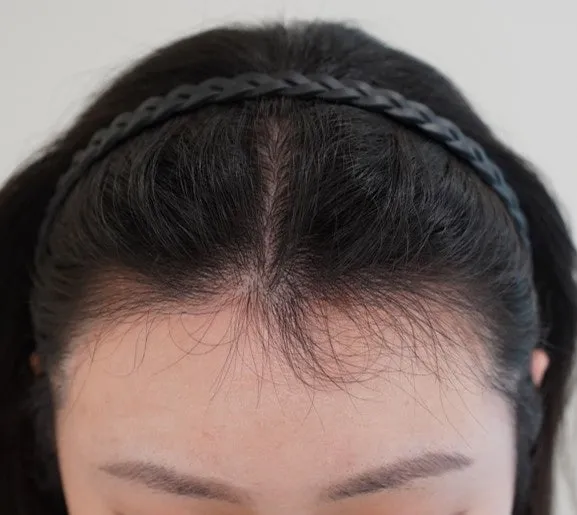
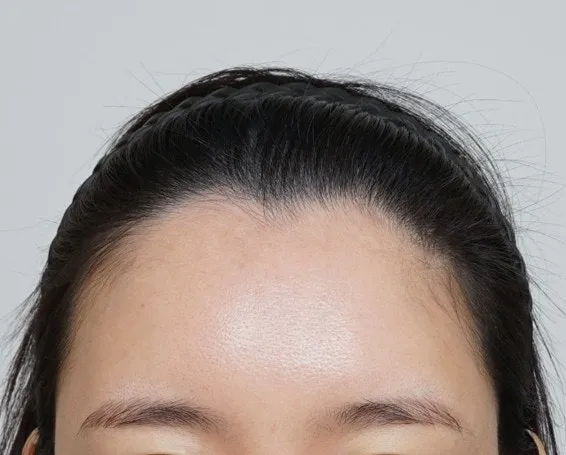
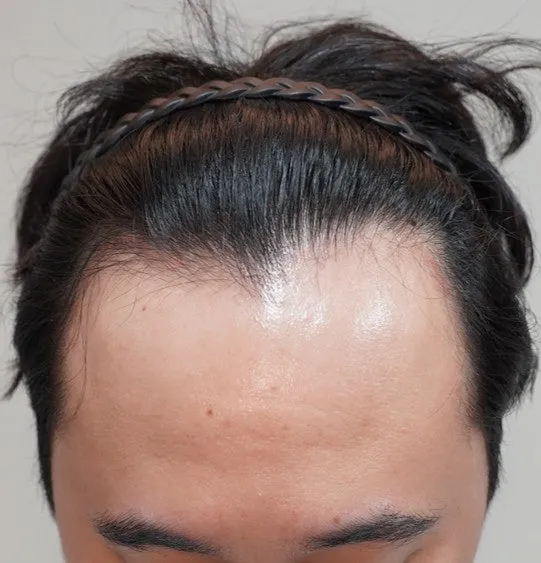
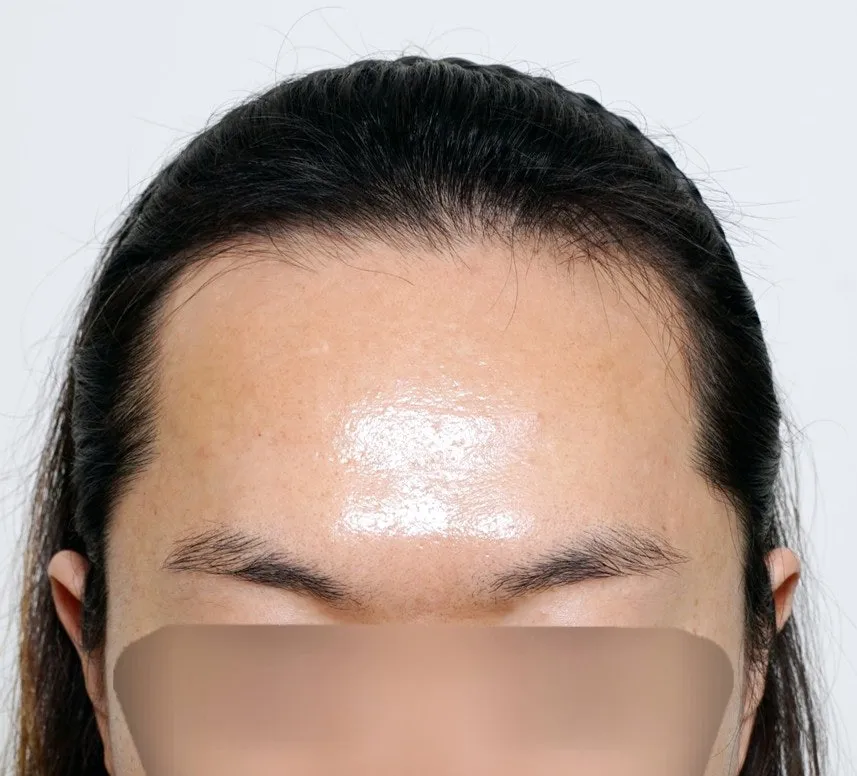
These are yesterday's photos, taken six months after surgery. A slight pinkish tint still remains across the scar, but the patient said it does not bother them much. With a little more time, the remaining pinkish tint will disappear and the scar will be even less visible. The surgery took a long time and the sutures had to be redone the next day, so the patient went through a lot, but I still felt it was worth lowering it by 2.2cm.
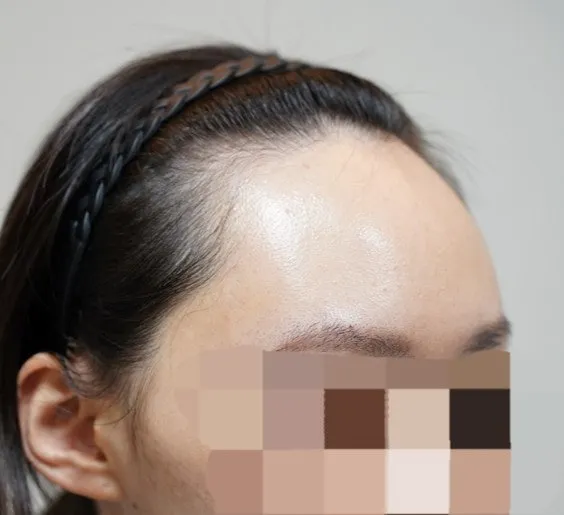
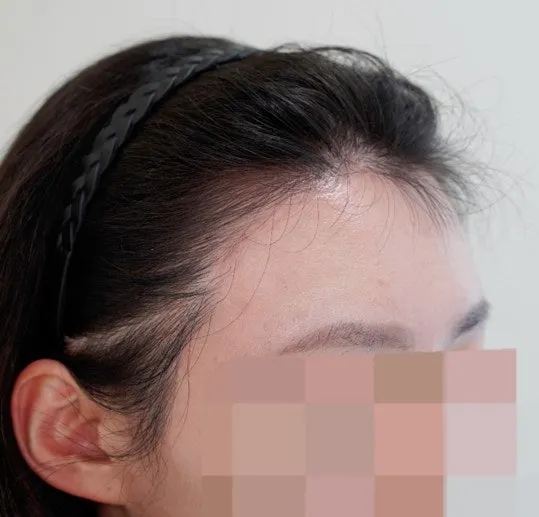
As planned, the existing baby hairs are covering the M-zone well, and the patient said a hair transplant may not be needed there. The one thing they wished for was a smoother connection at the boundary where the forehead reduction line ends and the side line created by the hair transplant meets. That can be easily resolved with a hair transplant, and only 100~200 hairs needed to be transplanted, so I quickly transplanted them using the non-incisional method.
Now, all that is left is to wait for the transplanted hairs to grow, and a comfortable hairline will be complete.