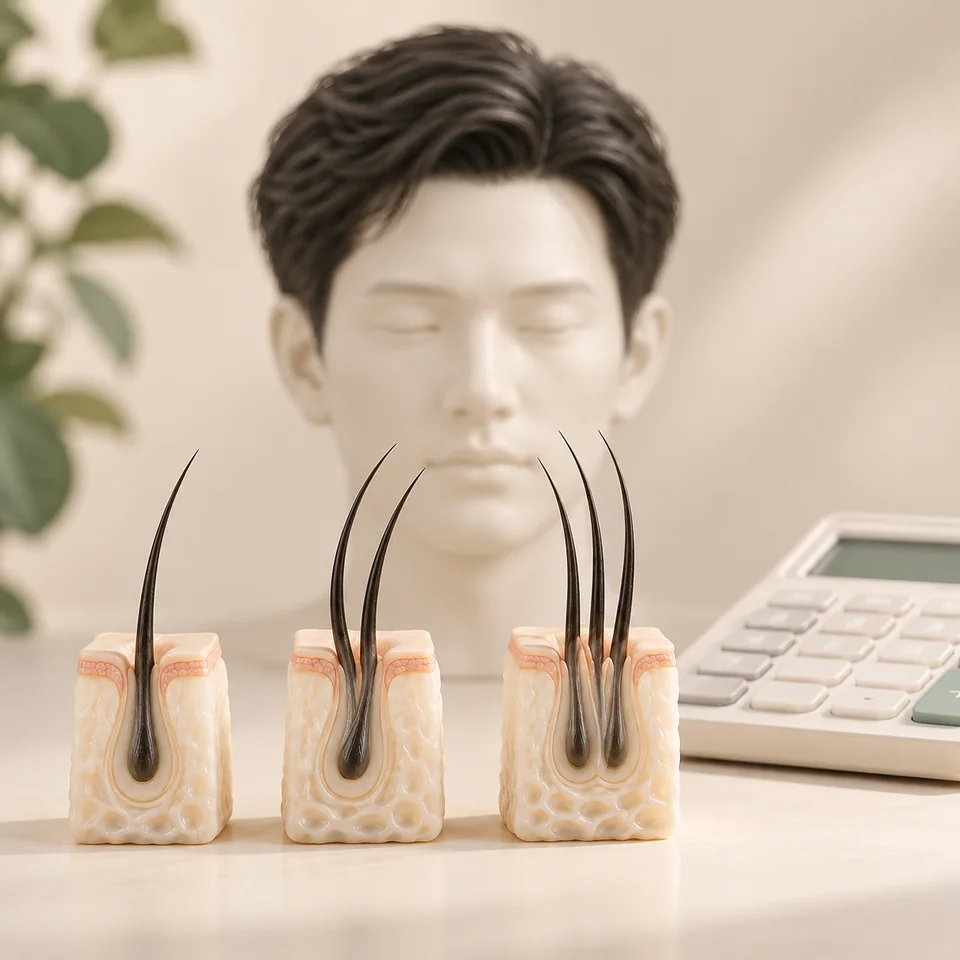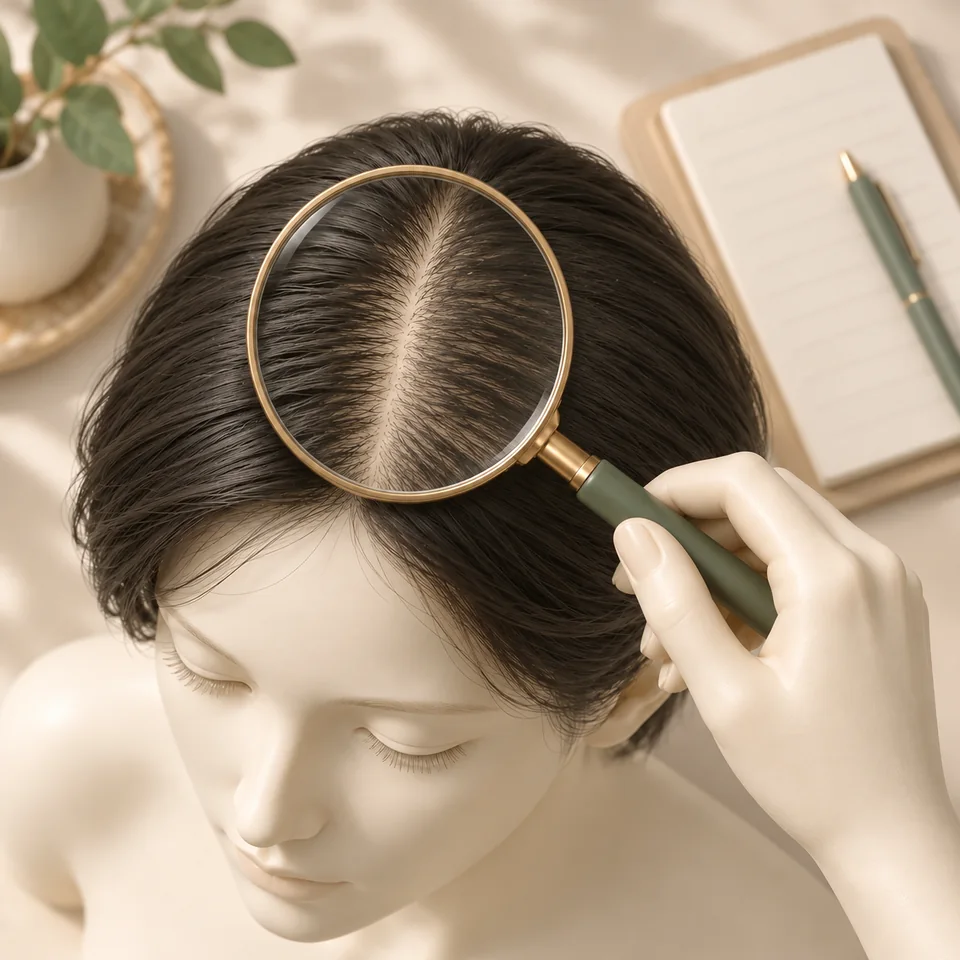
If your scalp is itchy or your crown looks thin, prepare for your visit by noting when symptoms started, changes in itching and in the amount of hair shedding, comparison photos, and a list of medications and products you use. Itching alone cannot determine the cause of hair loss, and a wider-looking parting in women does not mean it is the same type of hair loss for everyone.[1][2] Before changing products or choosing surgery, it is enough to first organize materials that explain what has changed.
Clinic-edited general educational information · Materials verified 2026.10.19. This is a guide to help record symptoms and is not a standard for self-diagnosis or self-prescribing.
1. Are itching and hair shedding the same problem?
Even when two symptoms occur together, do not conclude there is a single cause. Scalp itching can appear in many situations, including dandruff, reactions to products, and skin conditions or infection.[1] First, record "itching" and "shedding" separately, and describe when they overlap.
Note whether the itching is at the crown, at the hairline, or across the whole scalp. Also note any other changes you noticed or observed, such as redness, flaking, oozing, or pain. Even if it started after a particular shampoo or hair coloring, it is better to share the date of use and the date of symptoms separately, rather than concluding that the product is the confirmed cause.
In particular, if oozing, pus, pain, or a rapidly spreading area of hair loss is present, seek care rather than comparing products and waiting. In the clinic, we can check whether there is a problem on the scalp surface together with hair changes. You do not need to intentionally scratch or pick off flakes to show your condition.
2. When did changes start, and in what order did they happen?

The day you first noticed a change may not be the actual start date. If you cannot remember the exact date, write an approximate period first, such as "since spring," "after giving birth," or "after changing medication." Describe whether the amount of shedding suddenly increased, whether hair looked gradually thinner in photos, or whether it recurs.
Recent childbirth, major illness or surgery, high fever, and weight changes are important information to share during your consultation. Some types of excessive hair shedding may occur after a delay following these events.[3] That said, do not assume it is temporary just because you can recall one such event, and do not attribute every symptom to stress.
You do not need to make counting every hair shed each day a required task. It is enough to note the changes you noticed and the situations in which you observed them. Descriptions with a point of comparison, such as "suddenly more when shampooing" or "parting looks wider than before," are a good way to start the conversation at your visit.
3. How should I prepare photos of the crown and parting?
Photos are a supporting aid for explaining how changes progressed. Because differences in brightness or parting can easily be mistaken for real change when shooting conditions vary, take photos in the same place, angle, and distance if possible. Also record whether your hair was dry or wet, where you parted it, and whether you used hair-thickening powder or styling products.
Rather than choosing just one photo of your crown, prepare a front view, a photo with your usual parting, and a photo of your crown from above. If itching or redness is in a specific area, it is easier to explain if you separate a photo that shows the location from a close-up. You do not need to send photos that unnecessarily include your face or other people.
If you have older photos, bring them with dates marked. Everyday photos you already have can also help show when changes began. However, photos alone do not confirm the condition of the follicles or a diagnosis, so do not measure the area that looks thin on your own to judge its severity.
4. What additional information should I share about female hair loss?
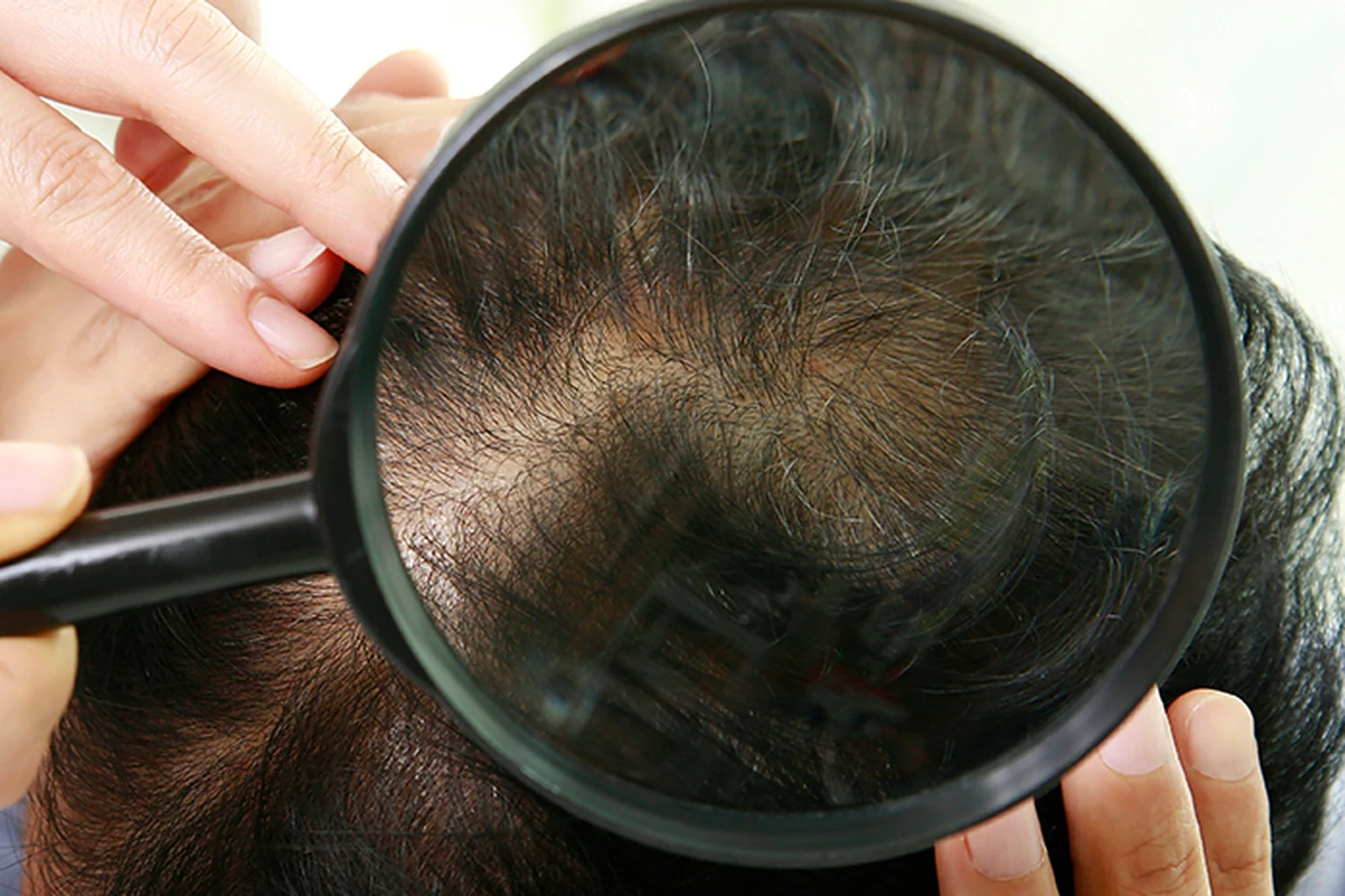
Female-pattern hair loss can appear as a wider parting or overall thinning, but other causes can look similar, so a diagnosis is needed.[2] Being a woman does not by itself determine a single treatment, and seeing the crown does not by itself make someone an immediate transplant candidate.
Please tell your medical team about childbirth, breastfeeding, and pregnancy status, any pregnancy plans, recent changes in menstrual patterns, weight changes, and family history. Not every item is a cause; this is information to prepare so nothing is missed during the medical history. If you are unsure what to share, you can ask at the start of your visit.
Before choosing medication, the possibility of pregnancy and breastfeeding plans can be especially important. The American Academy of Dermatology also addresses pregnancy, breastfeeding, and medication selection in its guidance on female hair loss treatment.[2] Do not share medication prescribed to someone else or apply men's guidance as is; check with your medical team whether a treatment is usable for you.
5. What should I write down about medications, supplements, and shampoo?
List not only prescription medications, but also topical hair loss products, supplements, scalp tonics, and shampoo and hair coloring products. If you cannot remember names, prepare photos of the containers or ingredient labels. It is also helpful to record when you started, how often you used each, and any discomfort after changing.
Even if you think medication is causing hair loss, do not stop prescription medication on your own; discuss it with the medical team who prescribed it. The American Academy of Dermatology advises that even when a drug or treatment is suspected as the cause, abrupt discontinuation can be problematic.[3] When booking a consultation about your symptoms, also let us know that you would like to ask whether you should continue your current medication.
Starting several products at once makes it hard to explain what was changed and what reaction followed. This article does not recommend any specific ingredient, dose, or number of uses. Its purpose is to accurately report what you are currently using and to have the decision to continue or change it explained after diagnosis.
6. What will the clinic check, and what questions should I ask?

The medical team asks about the course of symptoms and examines the scalp and hair. Depending on the suspected cause, a blood test or scalp tissue biopsy may be needed, but not everyone requires the same tests.[4] If a test is suggested, ask what possibility it is meant to check and how the results would change the treatment plan.
After your visit, separately note "what was confirmed today" and "what needs further observation." If a treatment is proposed, confirm whether its goal is to relieve itching, reduce shedding, or change hair. Even when several treatments are explained together, distinguishing the purpose of each makes it easier to understand what will be evaluated at the next visit.
- What is the most likely cause at this point? — distinguish between confirmed findings and possibilities
- If a test is needed, what will be checked? — test purpose and next steps
- What is the goal of the treatment proposed now? — symptoms and changes to be evaluated
- What discomfort should prompt you to get in touch? — criteria for contacting us or visiting
- When and how is progress compared? — plans for photos, examinations, and additional tests
Pre-Visit Checklist
Record what you were told, and carry any items you have not yet confirmed into your next question.
- I noted separately when the itching, the amount of shedding, and changes in hair volume began.
- I noted accompanying symptoms such as redness, flaking, oozing, and pain.
- I selected recent photos taken under similar conditions and dated past photos.
- I prepared medical history information, including recent childbirth, illness, surgery, and weight changes.
- I organized my prescription medications, supplements, and topical products along with their start dates.
- I prepared to share my pregnancy or breastfeeding status and any pregnancy plans.
- I wrote down my most bothersome symptom and the questions I want to ask at the visit.
FAQ: Does an itchy scalp mean hair loss is progressing?
It is not possible to determine the cause from itching alone. There are many possible causes, and whether hair changes are also present needs to be assessed by examining the scalp and hair. If the itching recurs or you are unsure of the cause, please seek medical care.[1]
FAQ: If my crown looks thin in photos, should I consult about hair transplantation right away?
It is advisable to first have your current condition and its cause evaluated. Check why the photos look different and whether the condition is actually progressing, then decide with your medical team whether treatment, observation, or a surgical consultation is needed. We do not decide the method based on a single photo.
FAQ: Should I try switching hair loss shampoo or supplements first?
Do not assume that changing products alone will solve the problem when the cause of your symptoms is unknown. Bring a record of the products you use and how your skin reacted, and ask for an explanation of any care or treatment needed at the exam. This article does not judge the effectiveness of any specific product or whether you need to take a medication.
Primary sources referenced
- Several causes of scalp itching · American Academy of Dermatology · Accessed 2026.10.19
- Patterns of female pattern hair loss and considerations for diagnosis and treatment · American Academy of Dermatology · Accessed 2026.10.19
- Diagnosing increased hair shedding versus hair loss · American Academy of Dermatology · Accessed 2026.10.19
- Diagnosis and treatment of hair loss · American Academy of Dermatology · Accessed 2026.10.19
This article is general medical information and does not replace an individual's diagnosis or treatment plan. Suitability, outcomes, and recovery process for surgery and treatment vary by person. For an accurate judgment, please confirm through consultation and examination with your medical team.